The Museum of Everyday Living · Education · The News
Writing and counting
Every record system was invented to keep track of something: grain, debts, kings, gods, stars
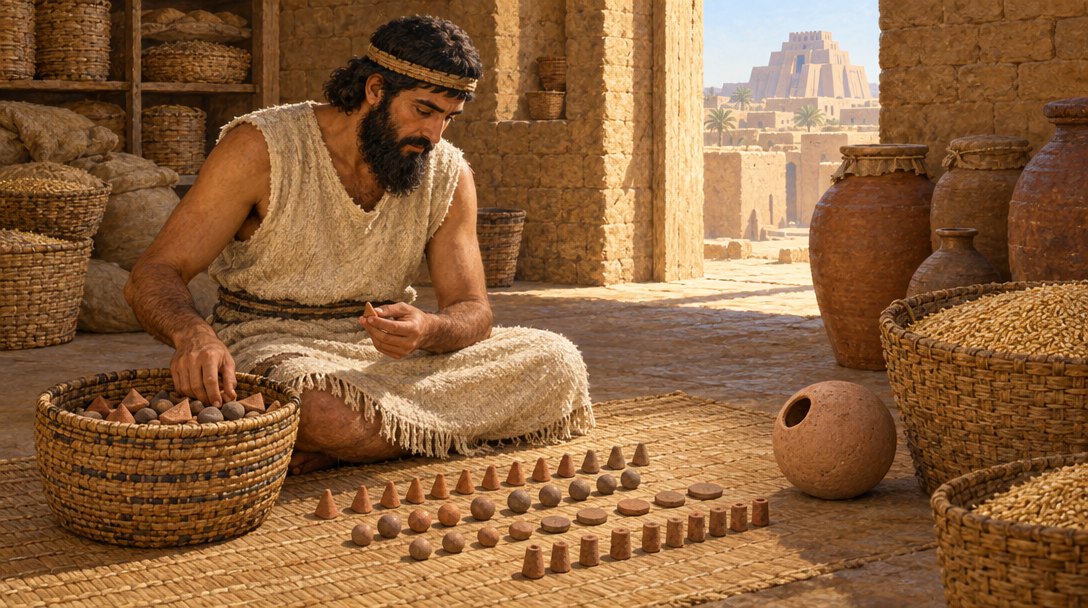
SI painting, made for this explainer: an illustration, not a photograph.
Writing was invented at least four separate times: in Mesopotamia, in Egypt (perhaps), in China and in Mesoamerica. In the first case we can watch it happen: clay counting tokens became marks on clay envelopes, then signs on tablets that recorded barley, beer and sheep. Stories, laws and letters came later. Counting kept pace: base 60 in Babylon, base 20 among the Maya, knotted cords in the Andes, and the Indian place-value numerals with zero that you use every day.
Part oneFrom clay tokens to tablets
c. 8000–3500 BCE · Fertile Crescent
Clay tokens: counting before writing
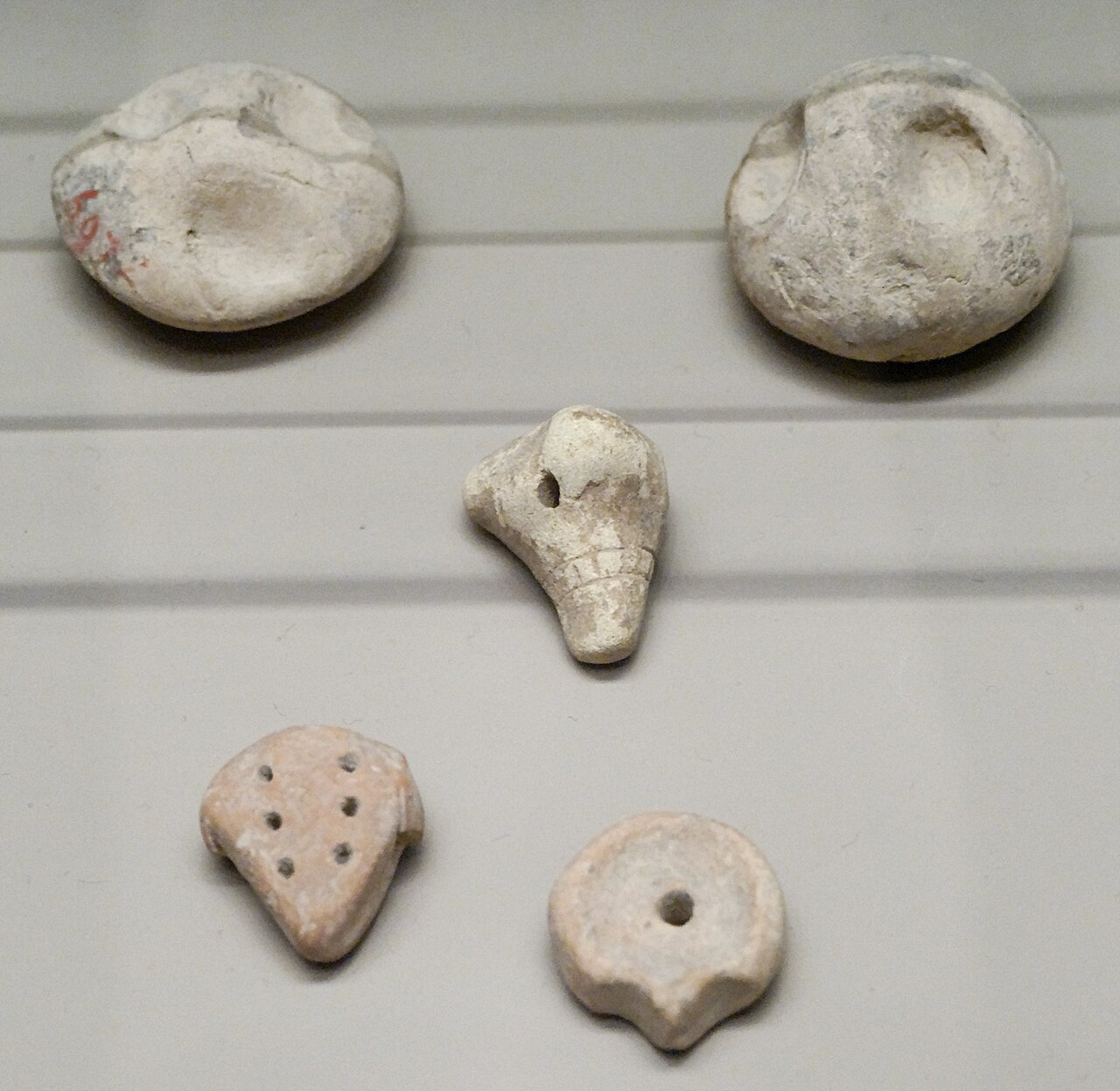
Small clay cones, spheres, discs and cylinders turn up at farming villages across the Near East from about 8000 BCE. The archaeologist Denise Schmandt-Besserat argued that each shape stood for a counted good: a measure of grain, a jar of oil, a sheep. Her token theory is widely taught; some scholars think it explains numbers better than it explains writing.
Figures marked ≈ or "about" are estimates or disputed.
Traders sealed tokens inside hollow clay balls so no one could change the count. To show what was inside, they pressed the tokens into the outside before it dried. Soon the marks alone were enough, and the tokens inside became unnecessary: a step from objects to signs.
Figures marked ≈ or "about" are estimates or disputed.
c. 3300–3100 BCE · Uruk, southern Iraq
Uruk: writing begins as bookkeeping
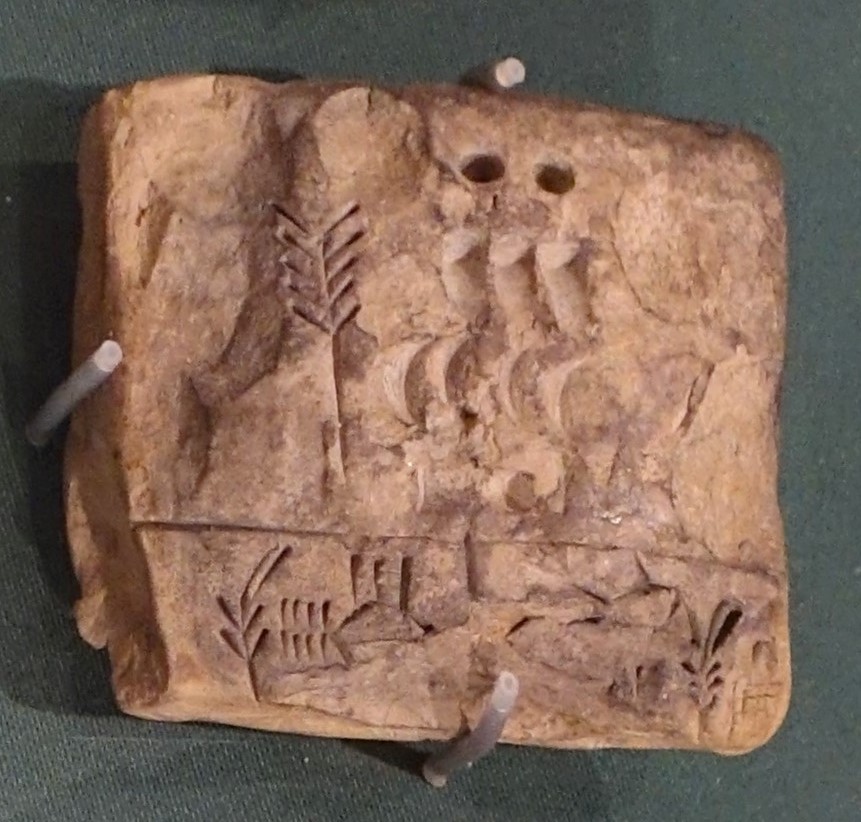
The oldest tablets from the Eanna temple district at Uruk are almost all accounts: rations of barley and beer, herds, fields and workers. Writing was invented to keep track of goods and debts, not to tell stories. Literature, letters and law came centuries later.
Original: Daderot Derivative work : Zunkir (Wikimedia Commons) · CC BY-SA 4.0
c. 3200 BCE – 75 CE · Mesopotamia
Cuneiform: wedges in wet clay
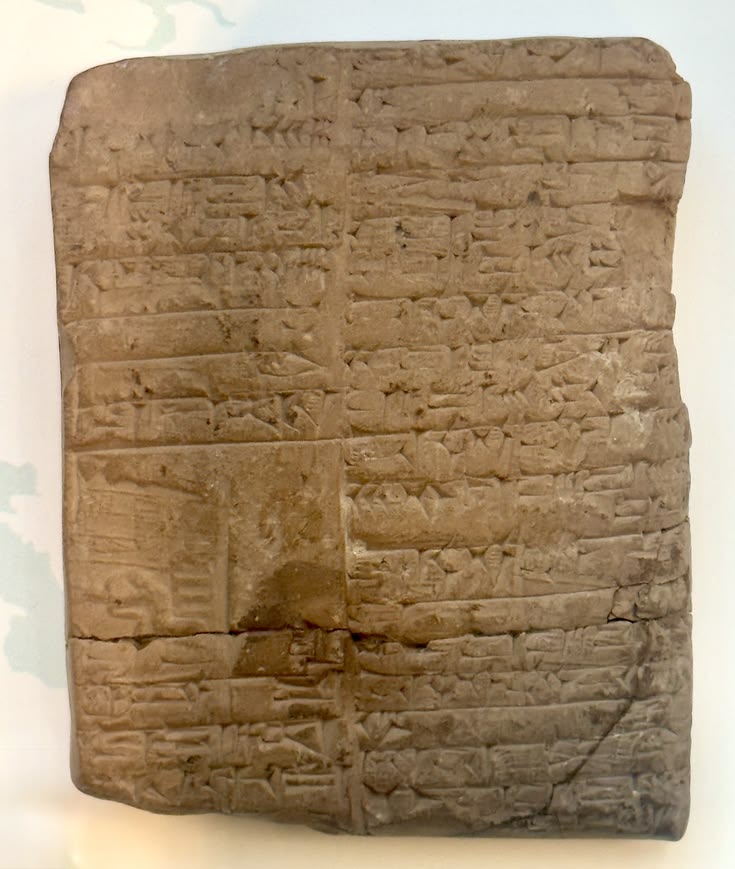
Scribes pressed a cut reed into clay to make wedge-shaped marks. The same script wrote Sumerian, Akkadian, Hittite and other languages for more than 3,000 years. The last tablets that can be dated are astronomical texts from about 75 CE. Scribes trained for years in schools called tablet houses.
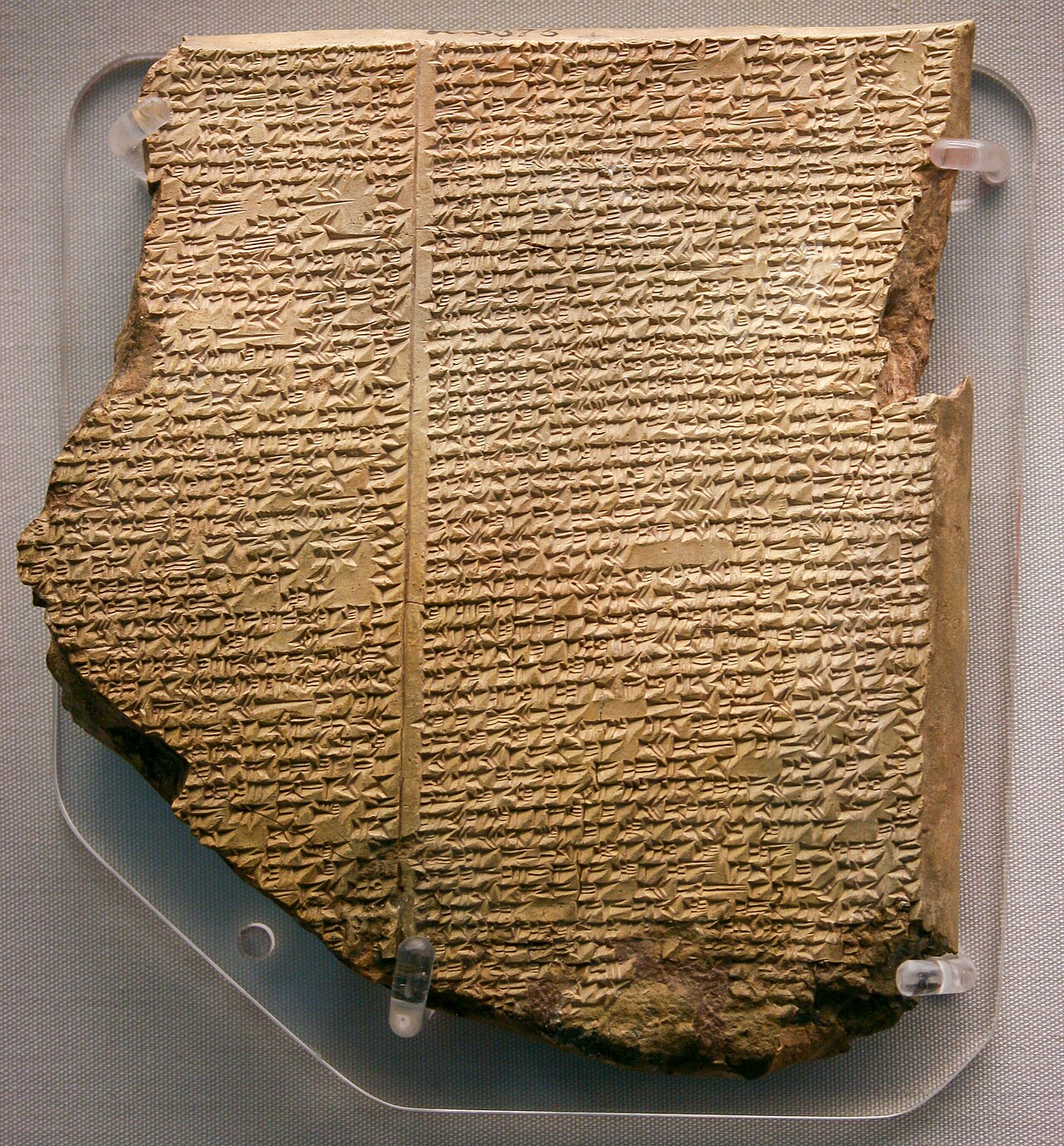
Poems about the king of Uruk circulated in Sumerian by about 2100 BCE. The best-known version, on twelve tablets, was found in the library of the Assyrian king Ashurbanipal at Nineveh, written in the 600s BCE. Its flood story was read aloud to a startled London audience in 1872.
Photograph by Mike Peel (www.mikepeel.net). (Wikimedia Commons) · CC BY-SA 4.0
c. 1800 BCE · Iraq; now Columbia University
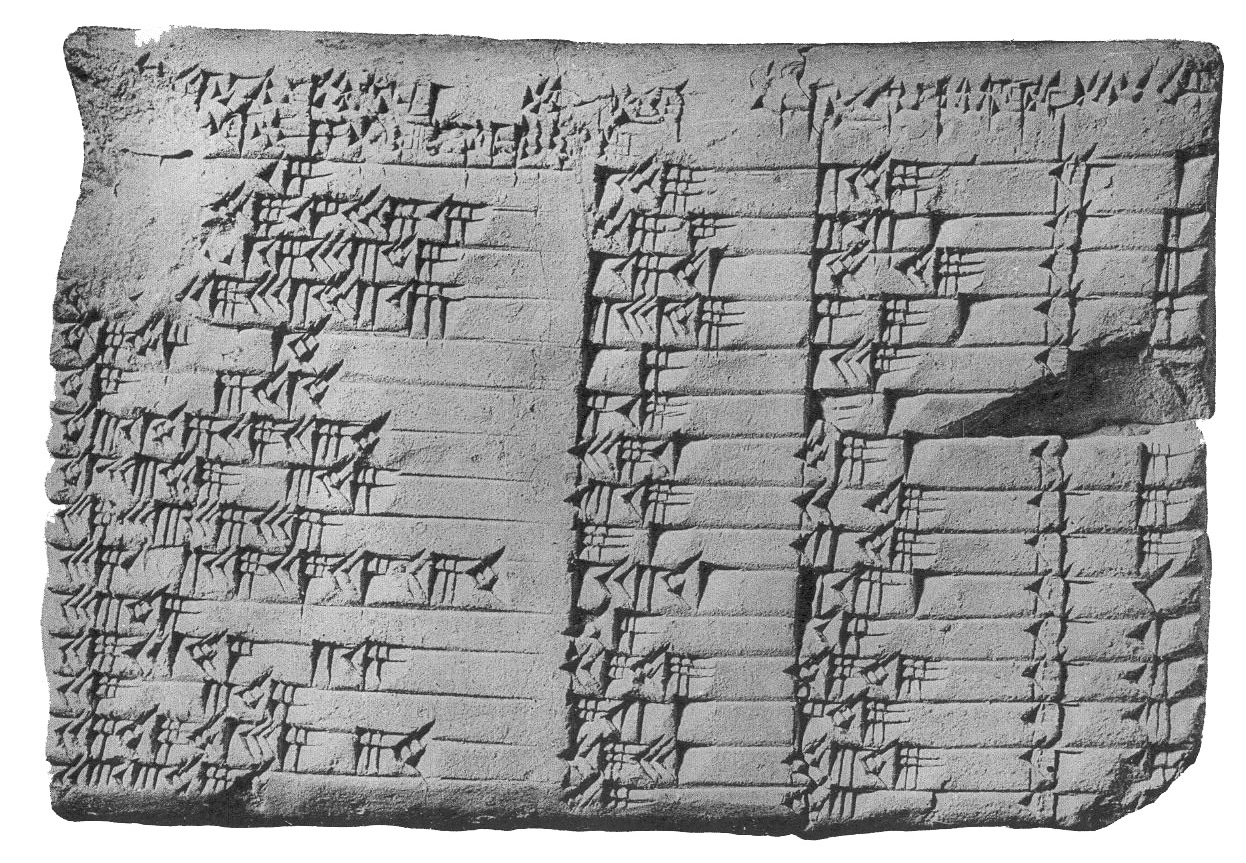
Plimpton 322: Babylonian number theory
This broken tablet lists 15 rows of number pairs that fit what we now call Pythagorean triples, more than a thousand years before Pythagoras. Scholars still argue about what it was for: a teacher's table of exercises, or a trigonometric table.
Figures marked ≈ or "about" are estimates or disputed.
photo author unknown (Wikimedia Commons) · Public domain
c. 2000 BCE onward · Babylon
Why an hour has 60 minutes
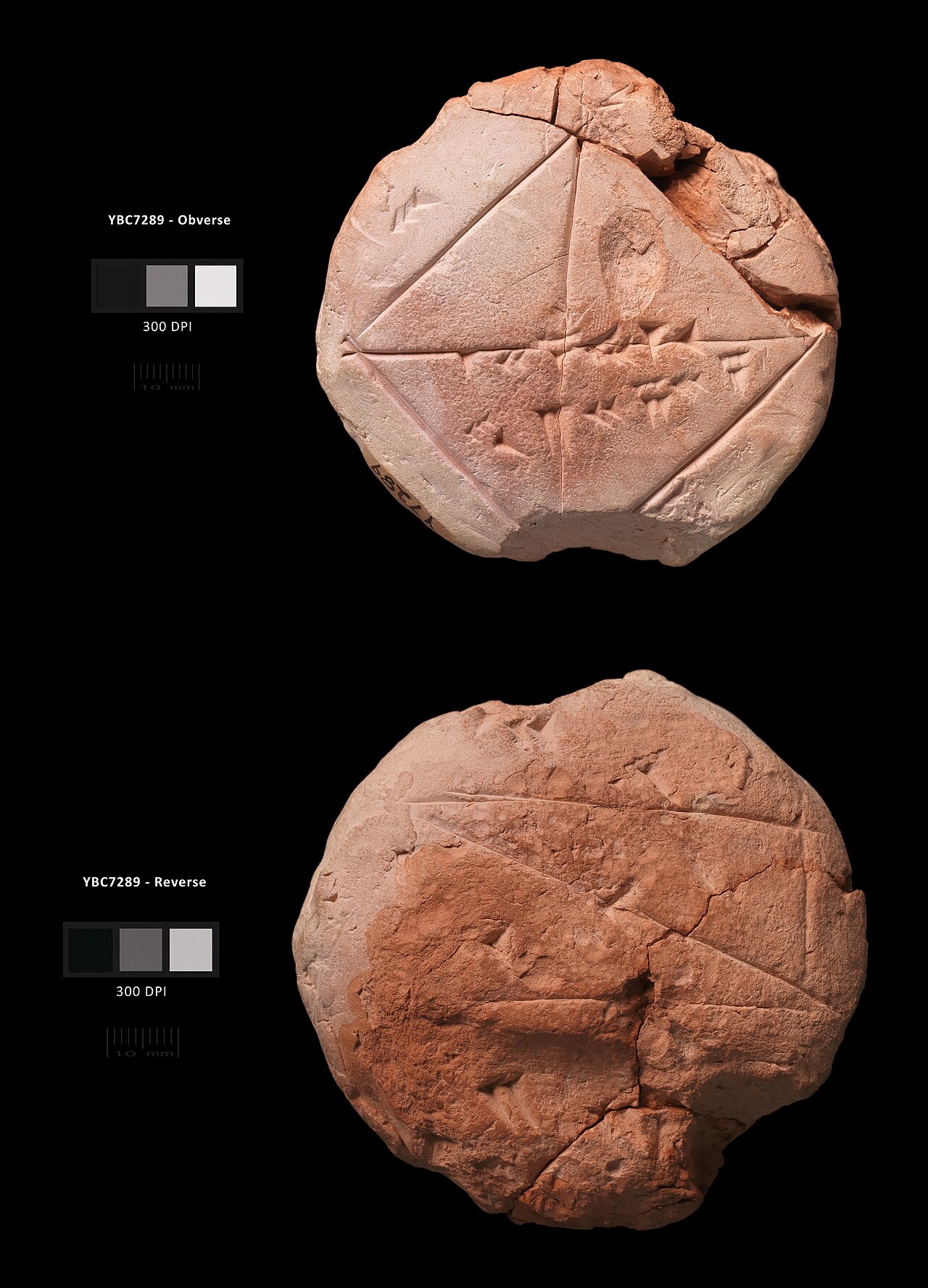
Mesopotamian mathematicians counted in base 60. Sixty divides evenly by 2, 3, 4, 5, 6, 10, 12, 15, 20 and 30, which makes fractions easy. The habit passed through Greek astronomers to us: 60 seconds in a minute, 60 minutes in an hour, 360 degrees in a circle.
Urcia, A., Yale Peabody Museum of Natural History, http://peabody.yale.edu, http://hdl.handle.net/10079/8931zqj derivative work, user:Theodor Langhorne Franklin (Wikimedia Commons) · CC0
Go deeper
Lessons:HT1 10 · Accounts at UrukPreviewE03 6 · The tablets speakPreviewE04 9 · The granary and the tabletPreview
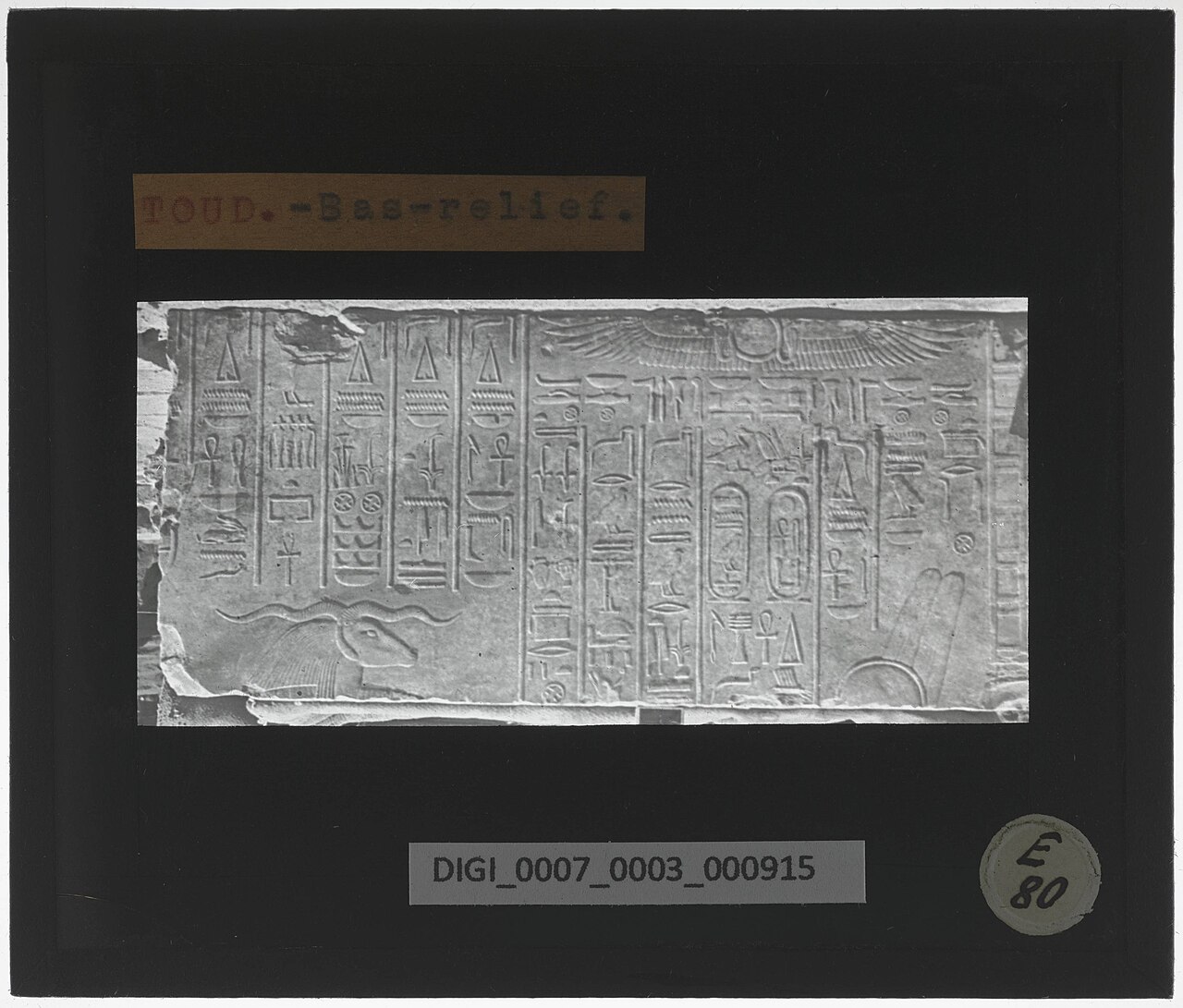
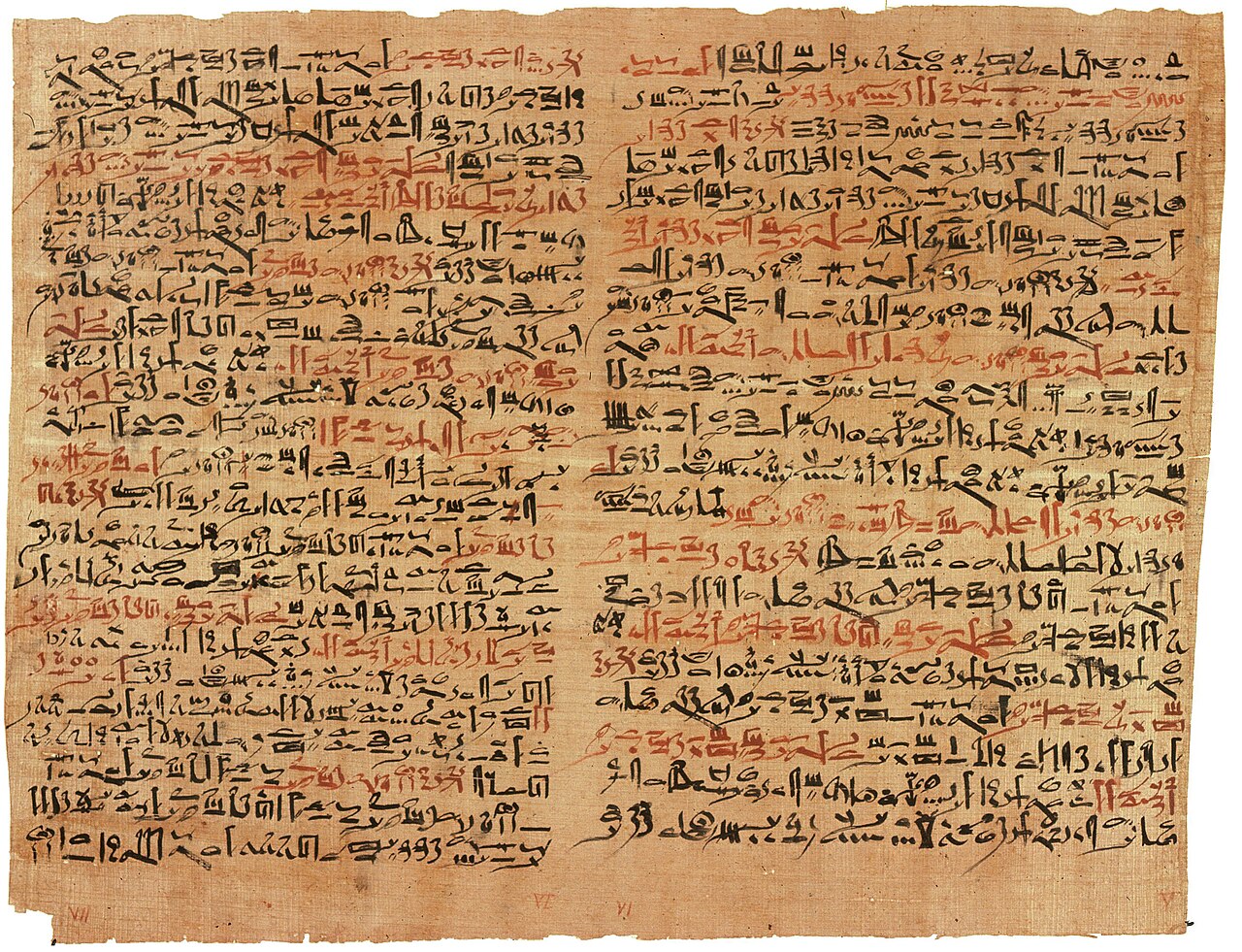
Small bone labels from tomb U-j at Abydos are among the earliest Egyptian writing, about 3250 BCE. Hieroglyphs mixed signs for sounds with signs for whole words and helper signs that showed meaning. The last known hieroglyphic inscription was carved at Philae in 394 CE.
Figures marked ≈ or "about" are estimates or disputed.
Carved hieroglyphs were slow. Scribes writing with reed brushes on papyrus used hieratic, a flowing hand. From about 650 BCE an even faster script, demotic, took over for contracts, letters and tax records. The last known demotic graffito at Philae dates to 452 CE.
196 BCE; deciphered 1822 · Rashid (Rosetta); now British Museum
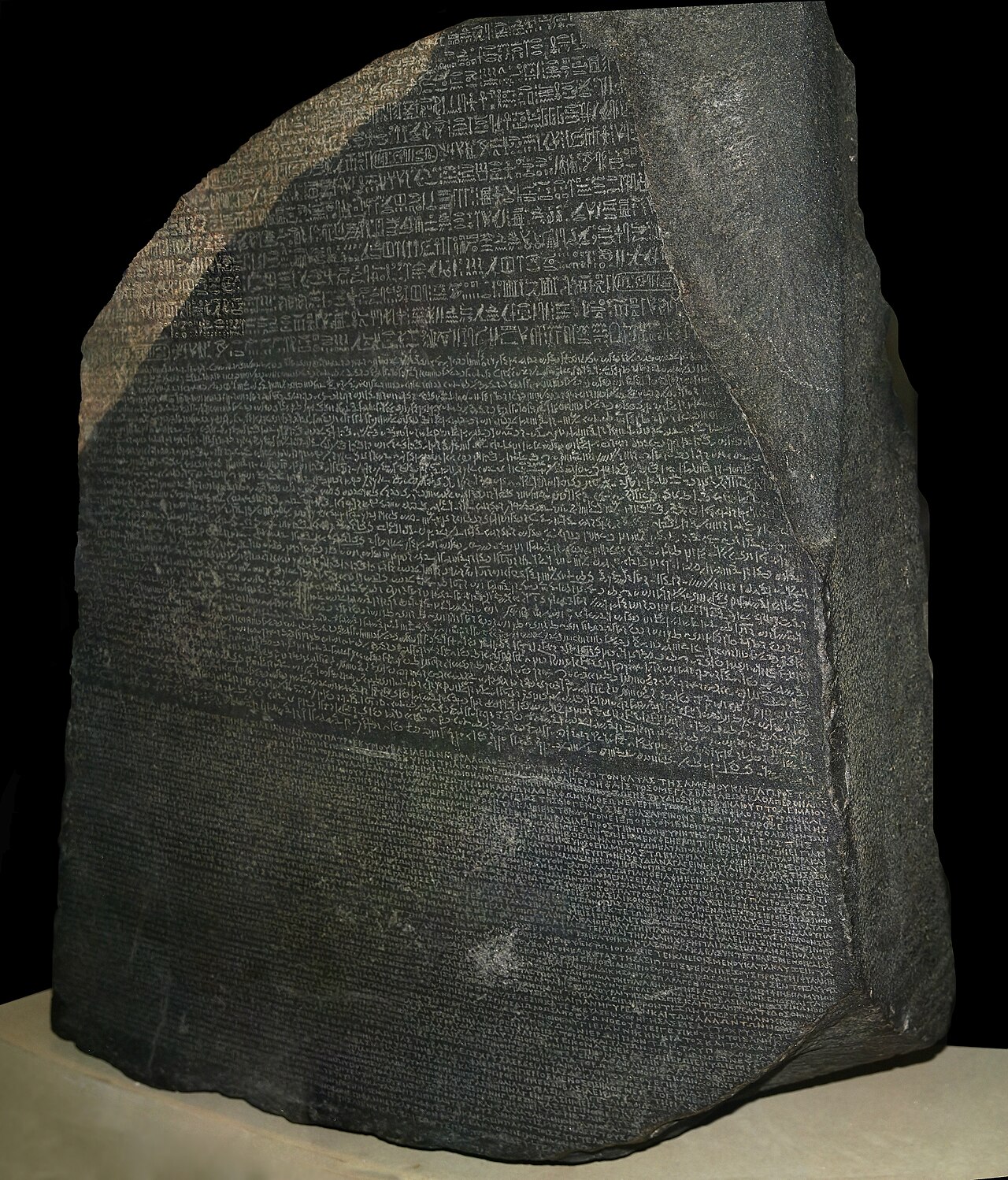
The Rosetta Stone and Champollion
A priestly decree for Ptolemy V was carved in hieroglyphs, demotic and Greek. French soldiers found the stone in 1799. Using the Greek as a key, and building on Thomas Young's work with royal names, Jean-François Champollion showed in 1822 that hieroglyphs recorded sounds as well as ideas.
Hans Hillewaert (Wikimedia Commons) · CC BY-SA 4.0
c. 1250–1050 BCE · Anyang, China
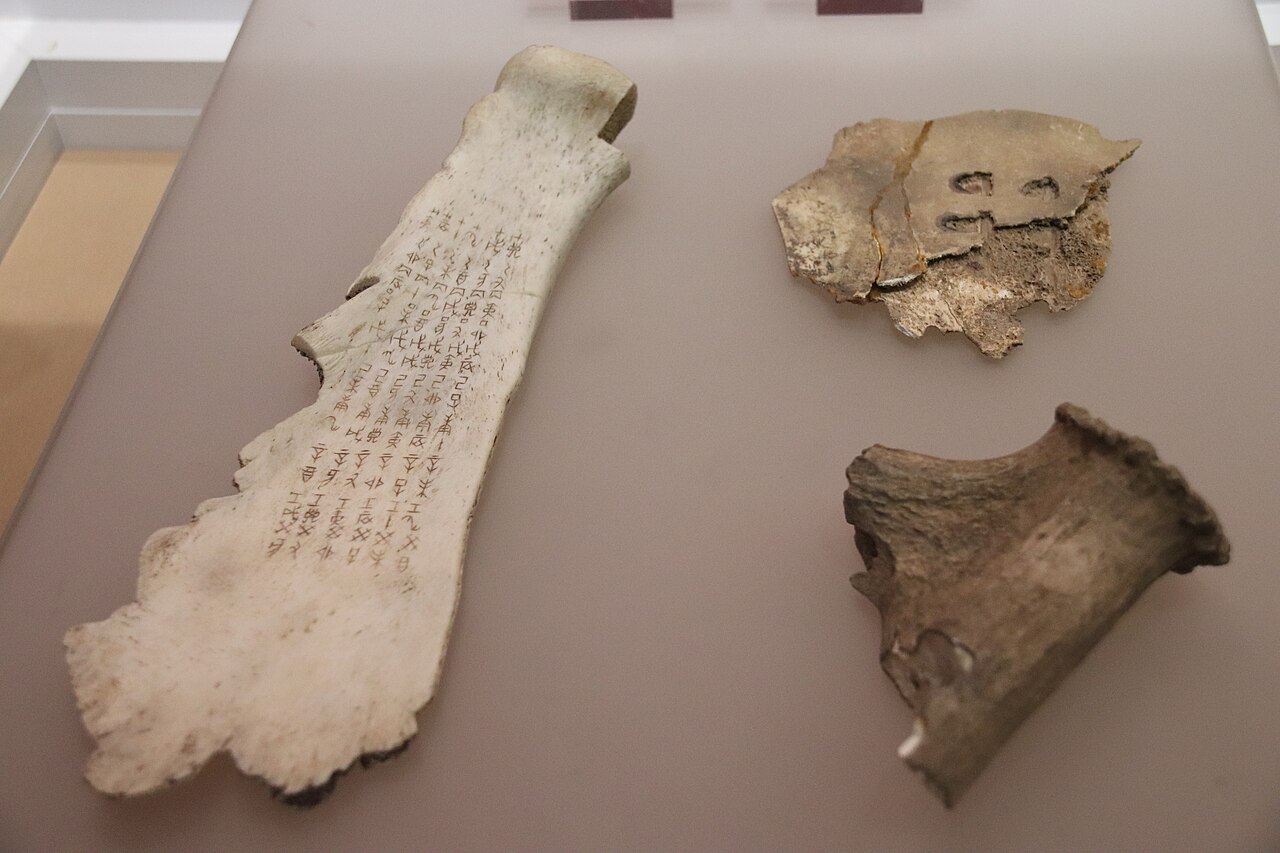
Shang oracle bones
Diviners for Shang kings carved questions on ox shoulder blades and turtle shells, heated them and read the cracks: Will it rain? Will the harvest be good? The inscriptions are the oldest large body of Chinese writing, and many of their characters are ancestors of characters still read today. Scholars recognized them in 1899.
Gary Lee Todd, Ph.D. Complete indexed photo collection at WorldHistoryPics.com. (Wikimedia Commons) · CC0
c. 2600–1900 BCE · Indus Valley, Pakistan and India
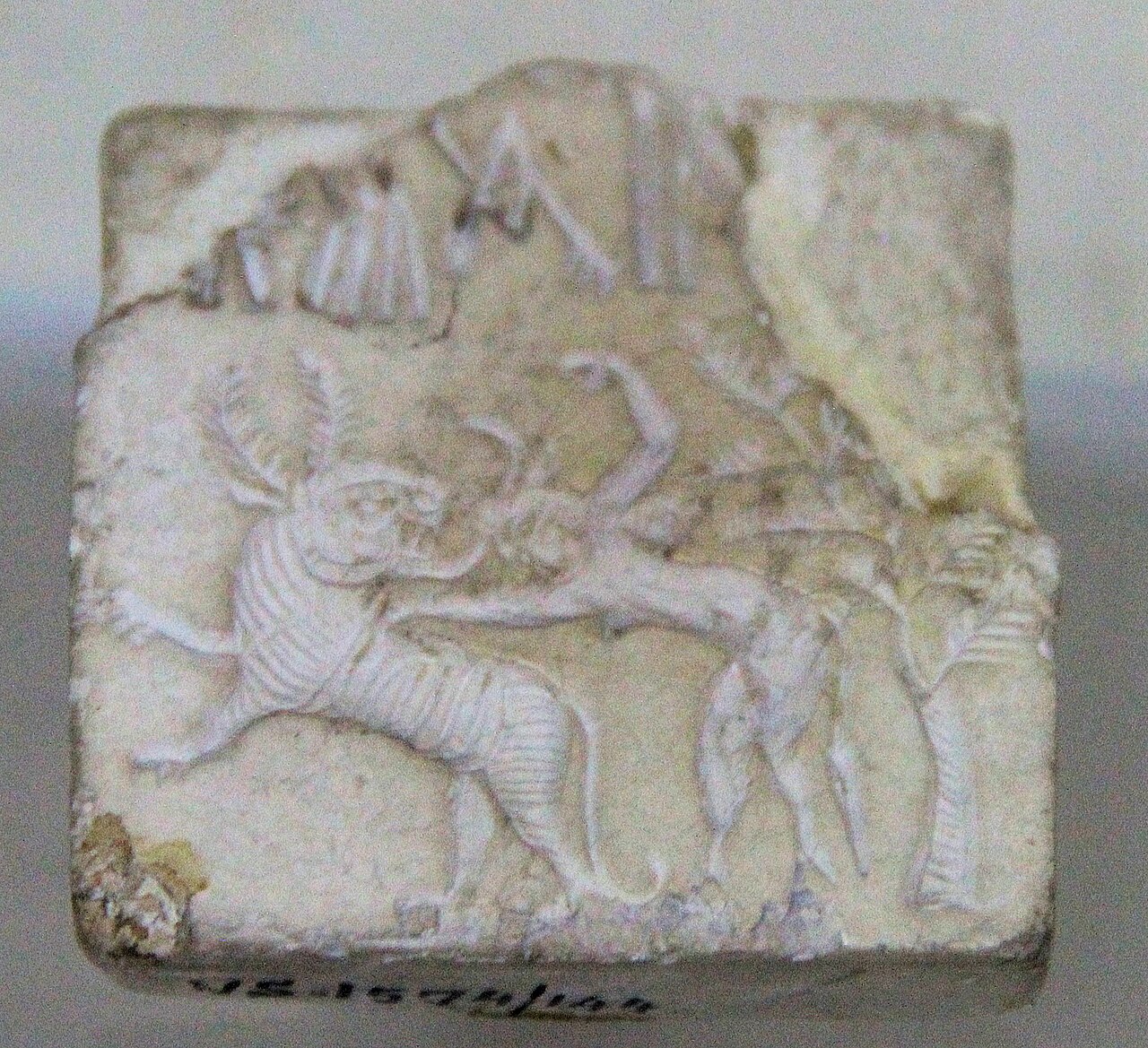
The Indus script: still unread
More than 4,000 inscribed seals and objects survive, but most inscriptions are only about five signs long and no bilingual text has been found. In 2004 three scholars argued the signs were not writing at all; others answered with statistical studies of sign order. The question is open.
Figures marked ≈ or "about" are estimates or disputed.
One invention, a few dozen signs for sounds, spread from Sinai miners to Phoenician traders and on to Greek, Latin, Hebrew, Arabic, Cyrillic and the scripts of India. The letters you are reading are its descendants: A began as an ox head turned on its side.
c. 1850–1500 BCE · Serabit el-Khadim, Sinai
Proto-Sinaitic: the first alphabet
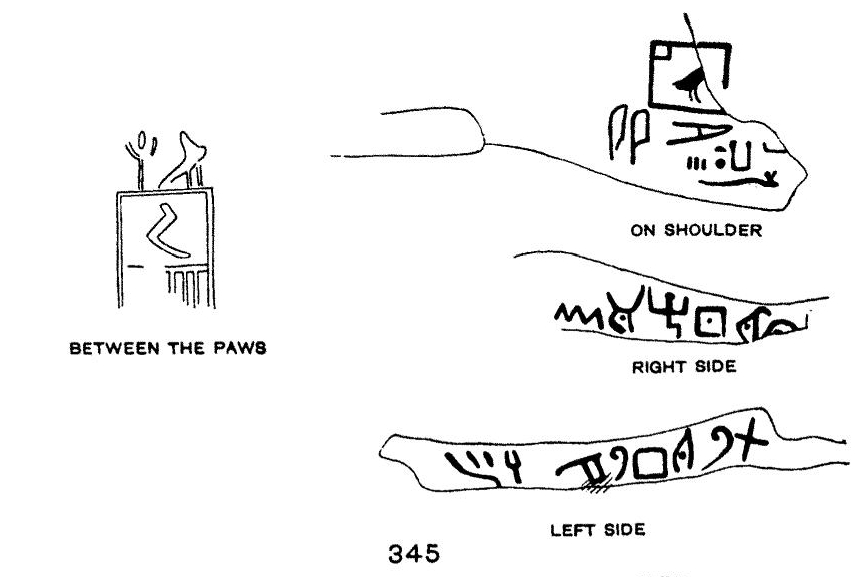
Workers at Egyptian turquoise mines in Sinai scratched short texts using pictures borrowed from hieroglyphs, but each picture stood for the first sound of a Semitic word: an ox head (alp) for a, a house (bet) for b. A few dozen signs could write any word. The dating is debated.
Figures marked ≈ or "about" are estimates or disputed.
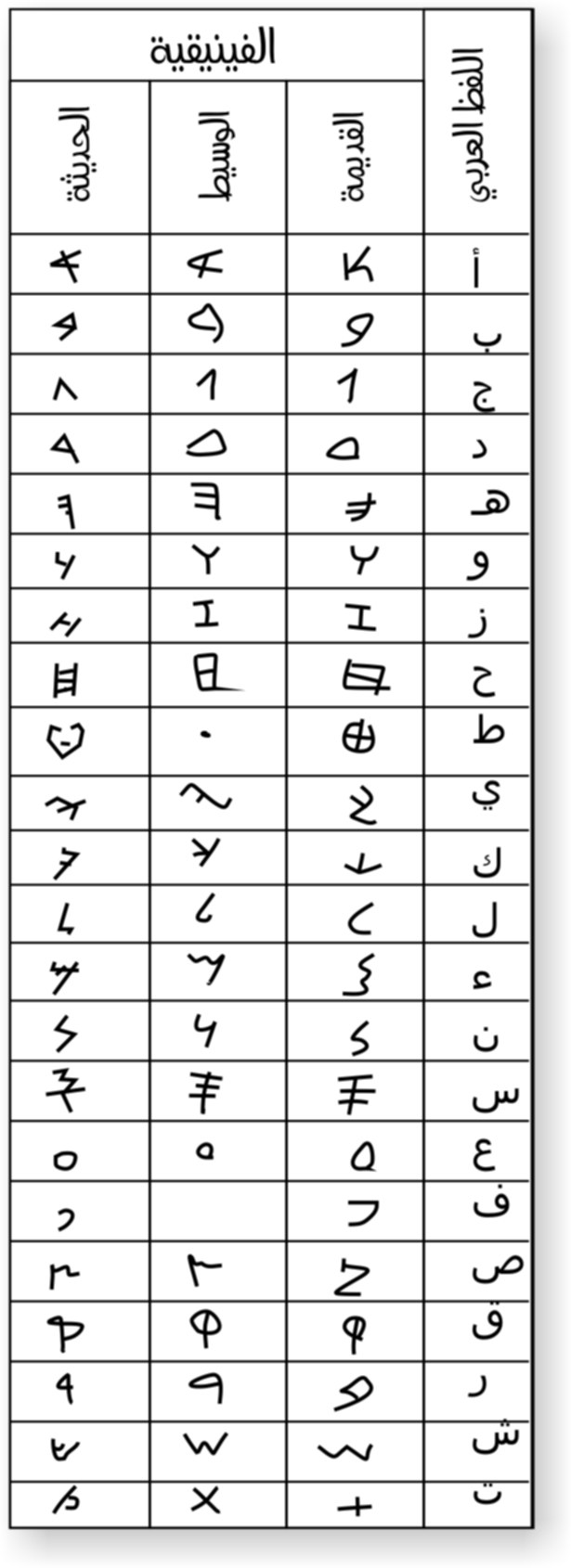
Phoenician merchants used 22 letters, all consonants, written right to left. Their trade spread the alphabet around the Mediterranean, and it became the parent of Hebrew, Aramaic, Arabic, Greek and Latin scripts.
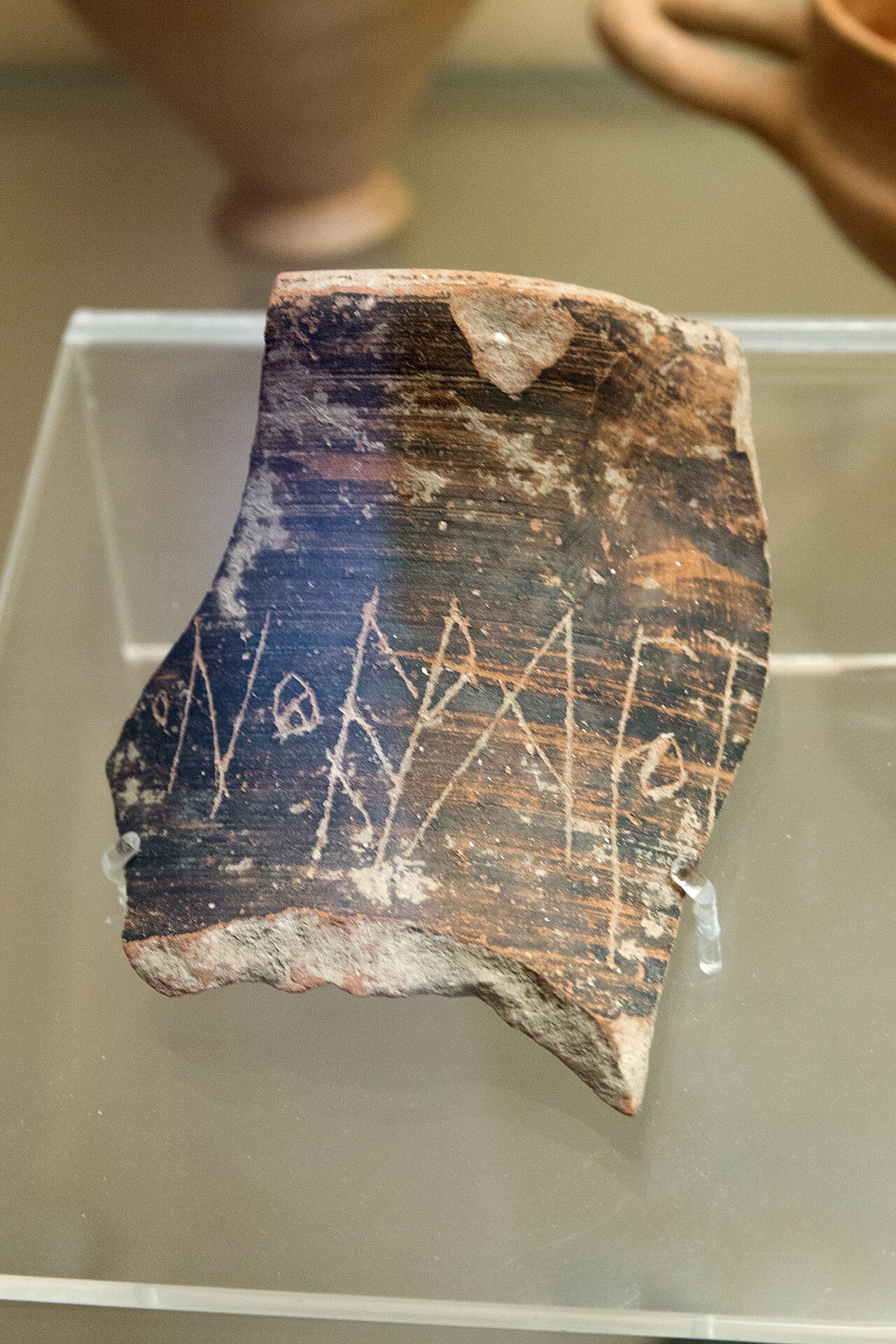
Greeks borrowed the Phoenician letters and turned some signs for sounds Greek did not use into vowels: alpha, epsilon, omicron. For the first time each vowel and consonant had its own letter.
Figures marked ≈ or "about" are estimates or disputed.
c. 700 BCE; c. 900 CE · Rome; First Bulgarian Empire
Latin and Cyrillic
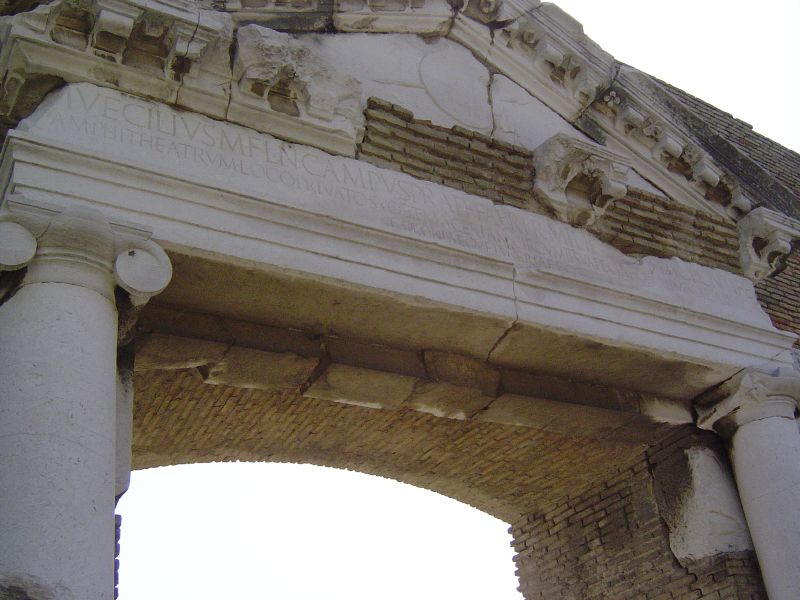
Romans took the alphabet from the Etruscans, who had it from Greeks; Latin letters now write hundreds of languages. Cyrillic was created in the late 800s or 900s CE by followers of the missionaries Cyril and Methodius, using Greek letters plus new ones for Slavic sounds.
Figures marked ≈ or "about" are estimates or disputed.
Maarten from Netherlands (Wikimedia Commons) · CC BY 2.0
c. 300 BCE onward · Arabia, Levant, South Asia
Arabic, Hebrew and Brahmi
Aramaic letters became the square Hebrew script and, through the Nabataean script, Arabic. In India the Brahmi script of the emperor Ashoka's edicts (third century BCE) became the parent of Devanagari, Tamil, Thai, Tibetan and many more.
Lessons:APARTH 2 · Kings, gods and scribes: Near East and EgyptPreviewAR1 11 · The Seated ScribePreviewLAT4 22 · Reading an inscription and Roman numeralsPreviewAPCHI 6 · Two scripts and a namePreview
Type a name. The tool spells it by sound, the way a scribe would have, not letter by letter. Each script works differently, so the results look different even for the same name.
Egyptian hieroglyphs
Phoenician (right to left)
Linear B (syllables)
Signs are real Unicode characters drawn with Google's Noto fonts. Egyptian: the single-sound signs scribes used to spell foreign names. Phoenician had no vowels, so they are left out except at the start. Linear B wrote syllables and had no l (it uses r) and dropped many final consonants. A real scribe would also add a sign showing what kind of word it was.
Part fourCracking the code
c. 1450–1200 BCE; read 1952 · Knossos and Pylos
Linear B: Alice Kober and Michael Ventris
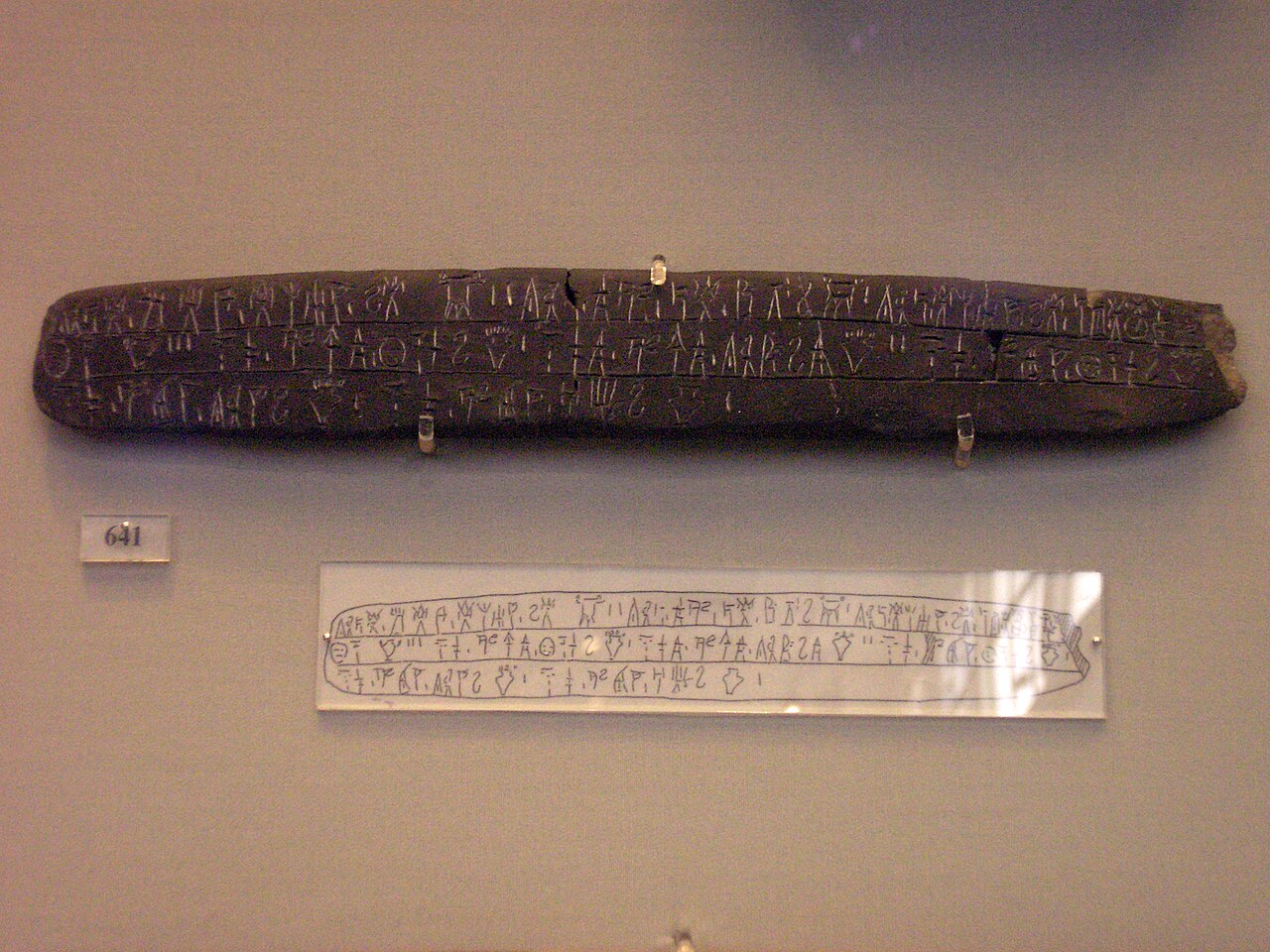
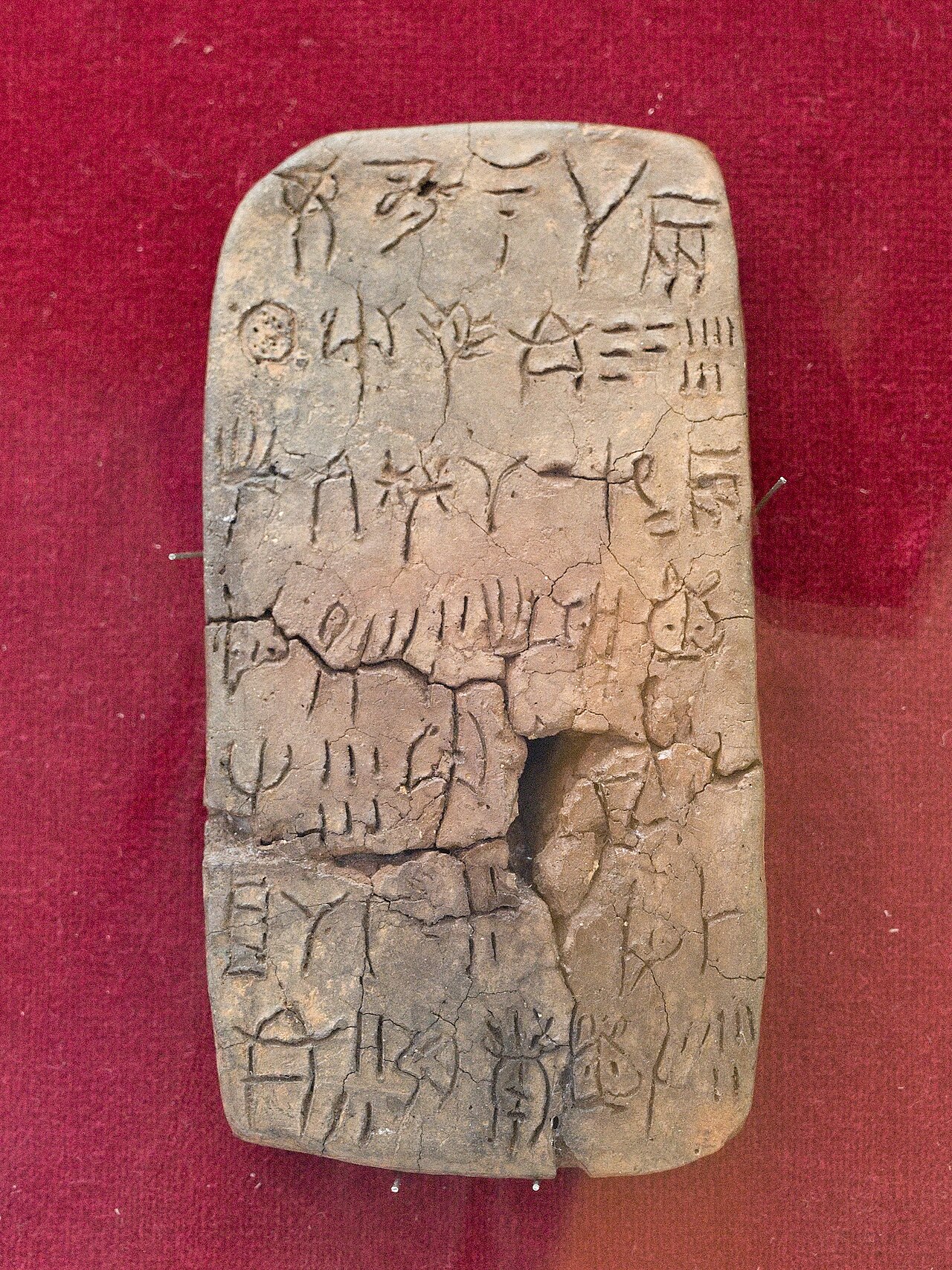
Arthur Evans found clay tablets at Knossos in 1900. Alice Kober spent years charting how signs changed at word endings, groundwork she did not live to finish (she died in 1950). In 1952 the architect Michael Ventris showed the script wrote an early form of Greek, mostly palace inventories.
Linear B grew out of an older Cretan script, Linear A. Many signs look the same and can be given sound values, but the words make no sense in any known language. Without a longer text or a bilingual, it stays unread.
Part fiveThe Americas and two scripts made on purpose
SI painting, made for this explainer: an illustration, not a photograph.
300s BCE – 1500s CE · Mesoamerica
Maya glyphs and the people who read them
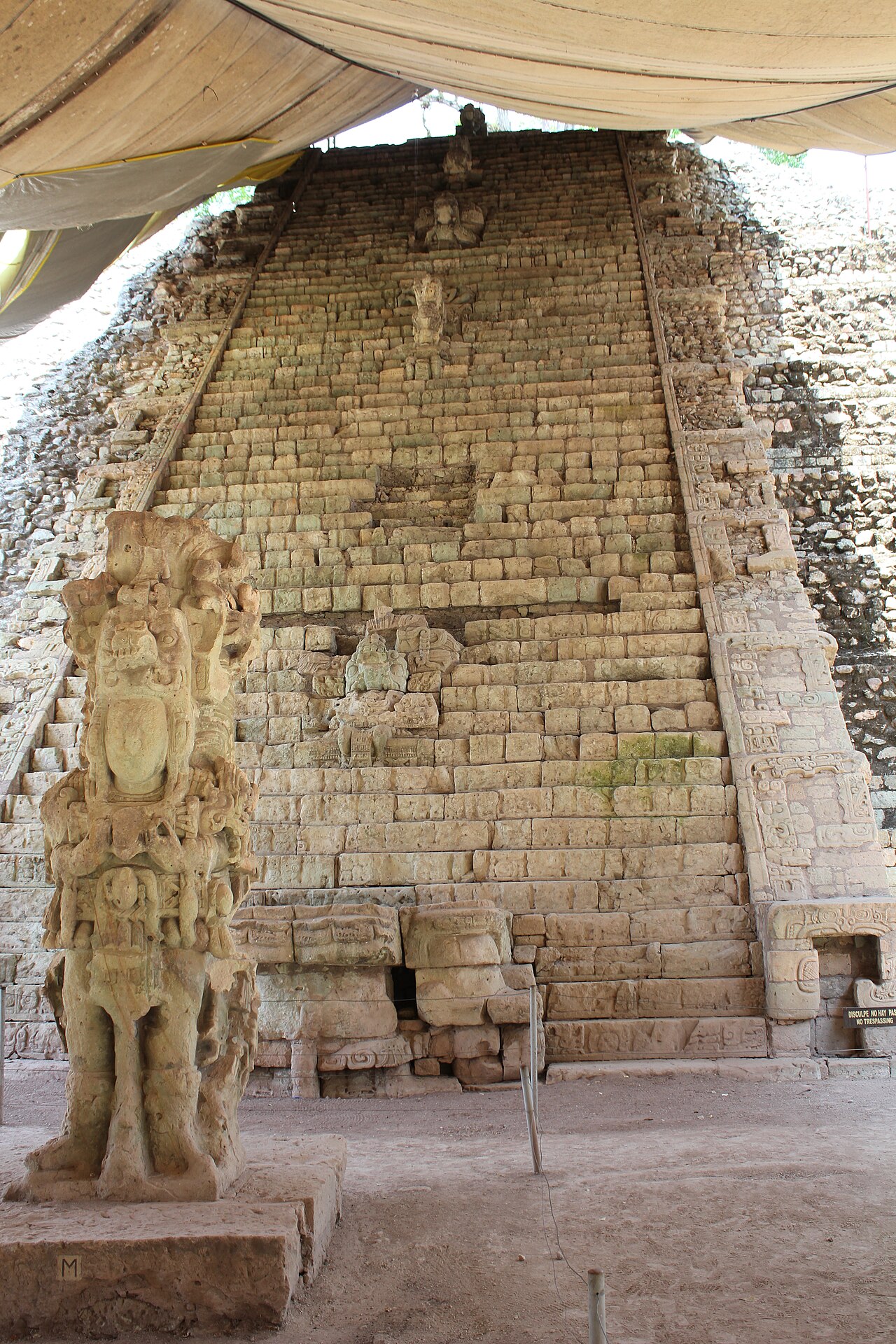
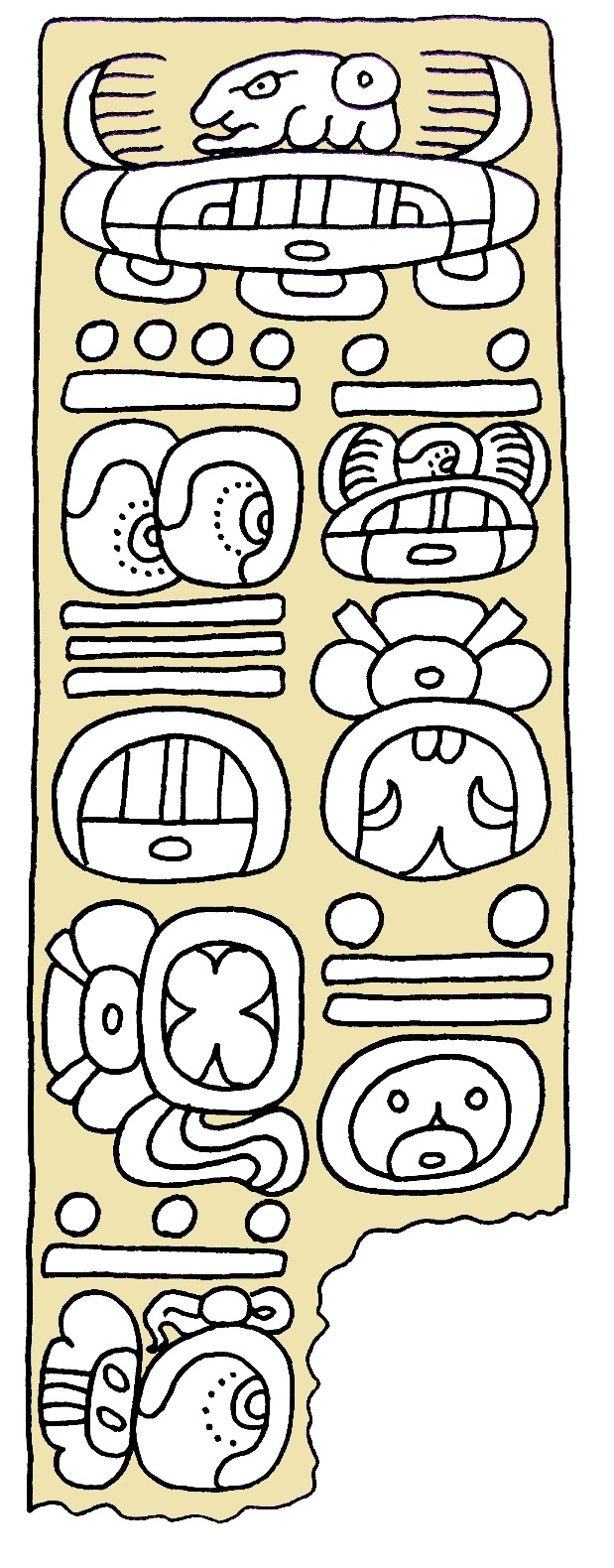
Maya scribes combined word signs with syllable signs. In 1952 Yuri Knorozov showed the syllables worked by sound; in 1960 Tatiana Proskouriakoff showed that carved monuments recorded the lives of real rulers; from 1973 Linda Schele and colleagues read whole dynasties at Palenque. Today most Maya texts can be read.
Arian Zwegers from Brussels, Belgium (Wikimedia Commons) · CC BY 2.0
1st century BCE onward · Mesoamerica
The Maya Long Count and zero
The Long Count counted days from a starting point in 3114 BCE using base 20 (with one place of 18). It needed a sign for zero, often a shell. The earliest surviving Long Count dates come from the first century BCE in the Olmec and Maya region.
Figures marked ≈ or "about" are estimates or disputed.
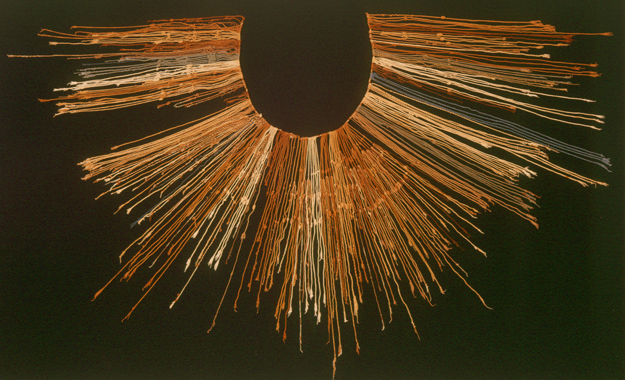
The Inca state ran without a known script. Officials kept records on khipus, cords with hanging strings tied in knots. In 1912 Leland Locke showed that many knots record numbers in base 10. About 1,000 khipus survive. Whether some also record words or stories is an open question.
Figures marked ≈ or "about" are estimates or disputed.
Claus Ableiter nur hochgeladen aus enWiki (Wikimedia Commons) · CC BY-SA 3.0
1821 · Cherokee Nation
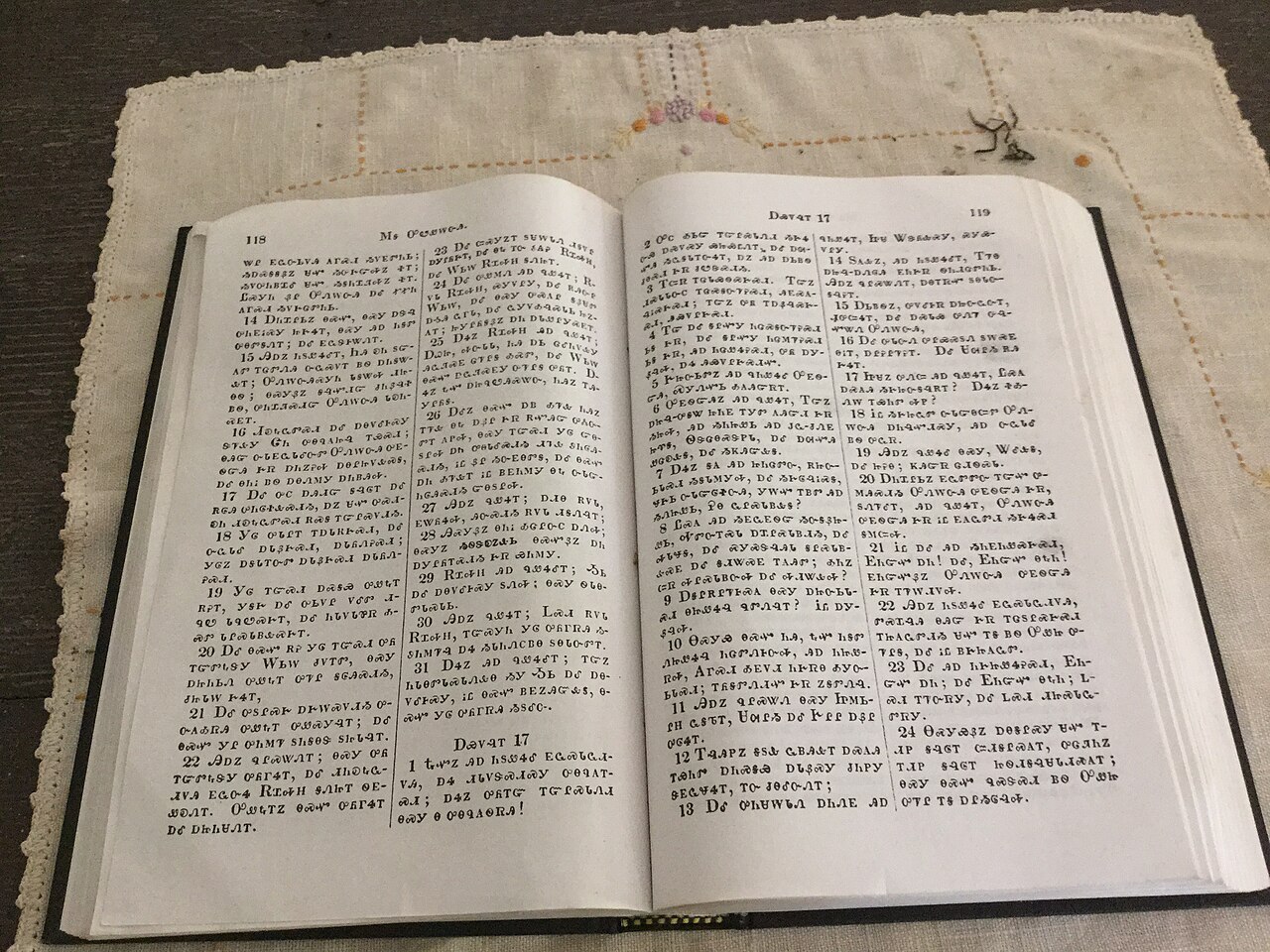
The Cherokee syllabary
Sequoyah, who did not read English, created a set of 86 signs, one for each syllable of Cherokee. Within a few years many Cherokee could read and write their language, and the Cherokee Phoenix newspaper began printing in 1828.
Wesley Fryer from Oklahoma City, Oklahoma, USA (Wikimedia Commons) · CC BY 2.0
1443; published 1446 · Korea
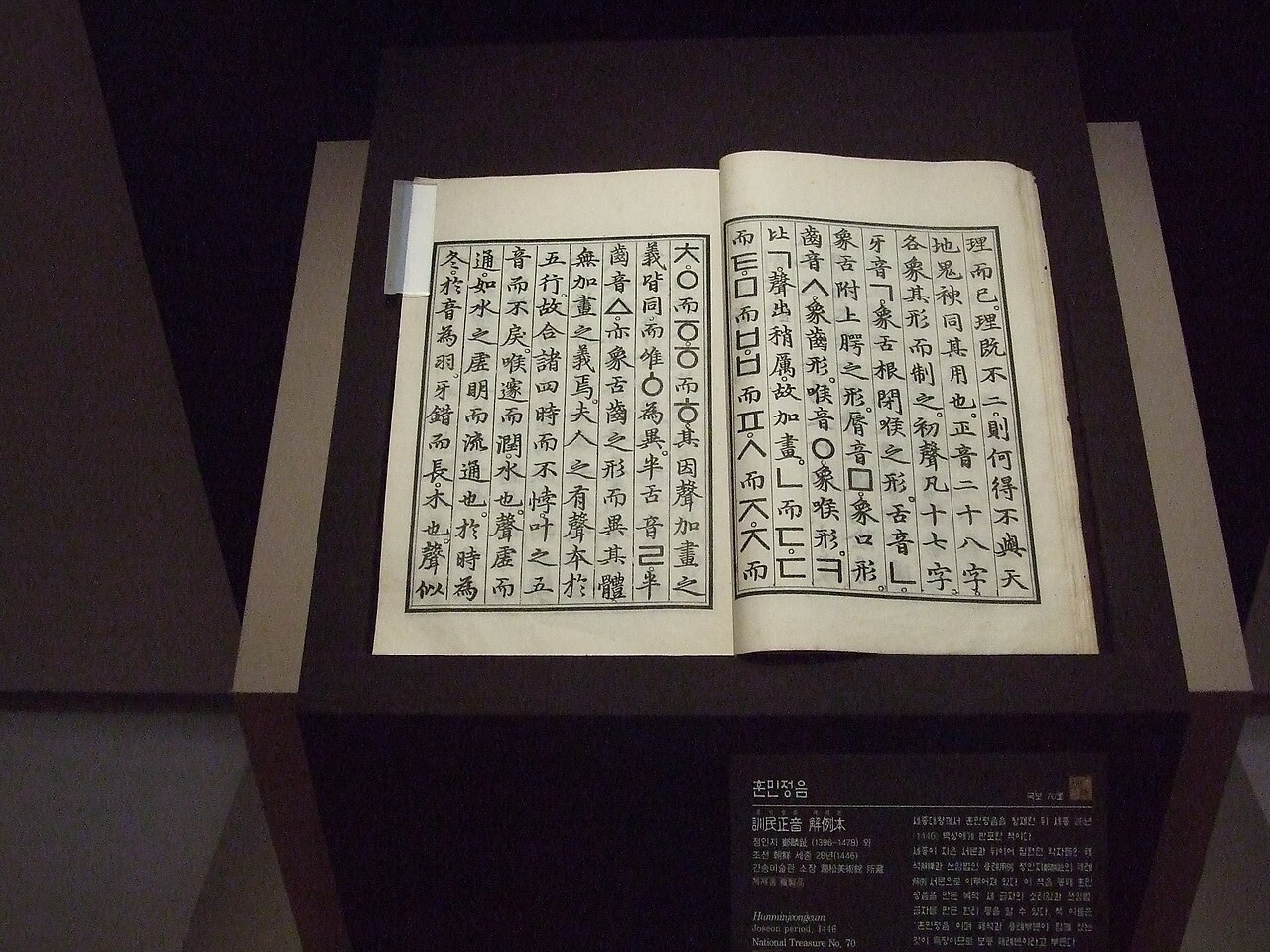
Hangul: an alphabet by design
King Sejong and his scholars designed Hangul so ordinary people could learn to read in days. Consonant shapes picture the mouth and tongue making each sound. Korea celebrates Hangul Day on October 9.
Kbarends at English Wikipedia (Wikimedia Commons) · Public domain
Go deeper
Lessons:AR1 16 · A Maya stelaPreviewMH3 46 · The Classic Maya questionPreviewAM0 5 · Cherokee towns and Sequoyah's writingPreview
Inca record keepers hung counting cords from a main cord. Knots near the bottom are ones, the next group up tens, then hundreds, then thousands. Ones are long knots (a twisted knot with several turns, or a figure-eight knot for exactly one); higher places are single knots; an empty space is zero. A top cord often held the total of the cords below. Enter up to five numbers.
Part sixNumbers, zero and machines
628 CE · India
Zero and the Hindu-Arabic numerals
The mathematician Brahmagupta gave rules for calculating with zero in 628 CE. Indian place-value numerals passed to Baghdad, where al-Khwarizmi explained them about 825; his name gives us the word algorithm. A dot for zero in the Bakhshali manuscript may be older, but its dating is disputed.
Figures marked ≈ or "about" are estimates or disputed.
Augustus Hoernle (1841-1918) (Wikimedia Commons) · Public domain
1202 · Pisa
Fibonacci brings the numerals to Europe
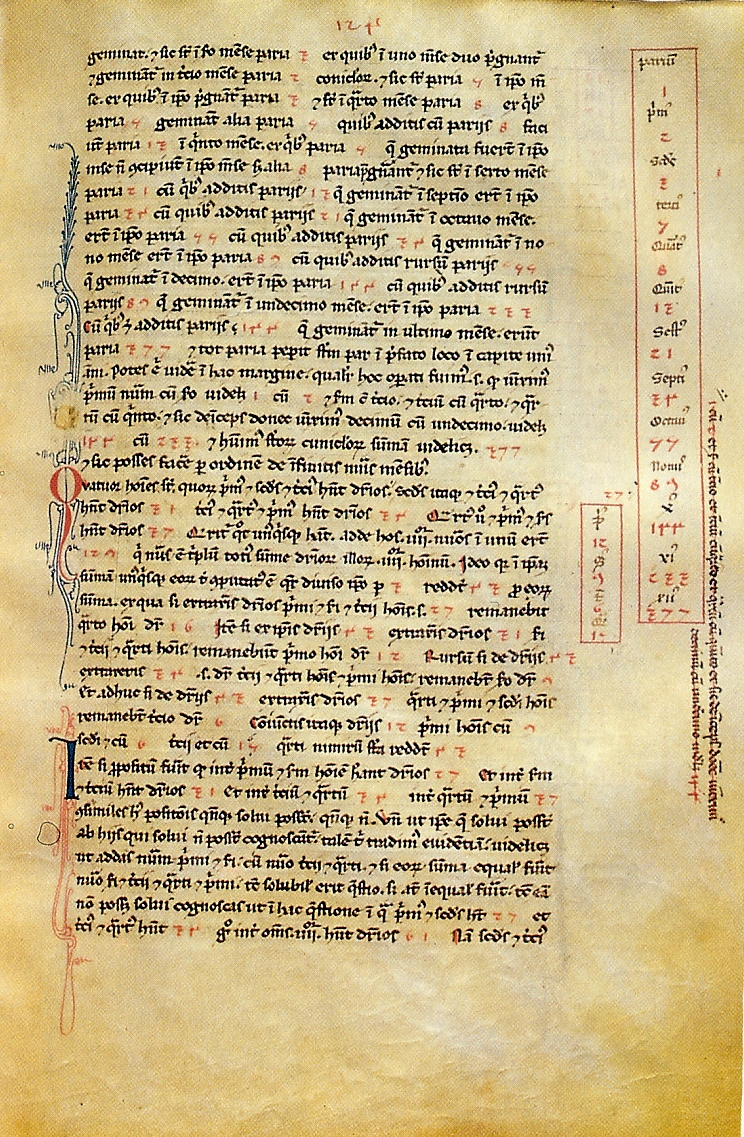
Leonardo of Pisa, later called Fibonacci, learned Arabic numerals while growing up in North Africa. His Liber Abaci (1202) showed merchants how they made bookkeeping easier than Roman numerals. Some cities still banned them in official accounts for a time, worried they were too easy to alter.
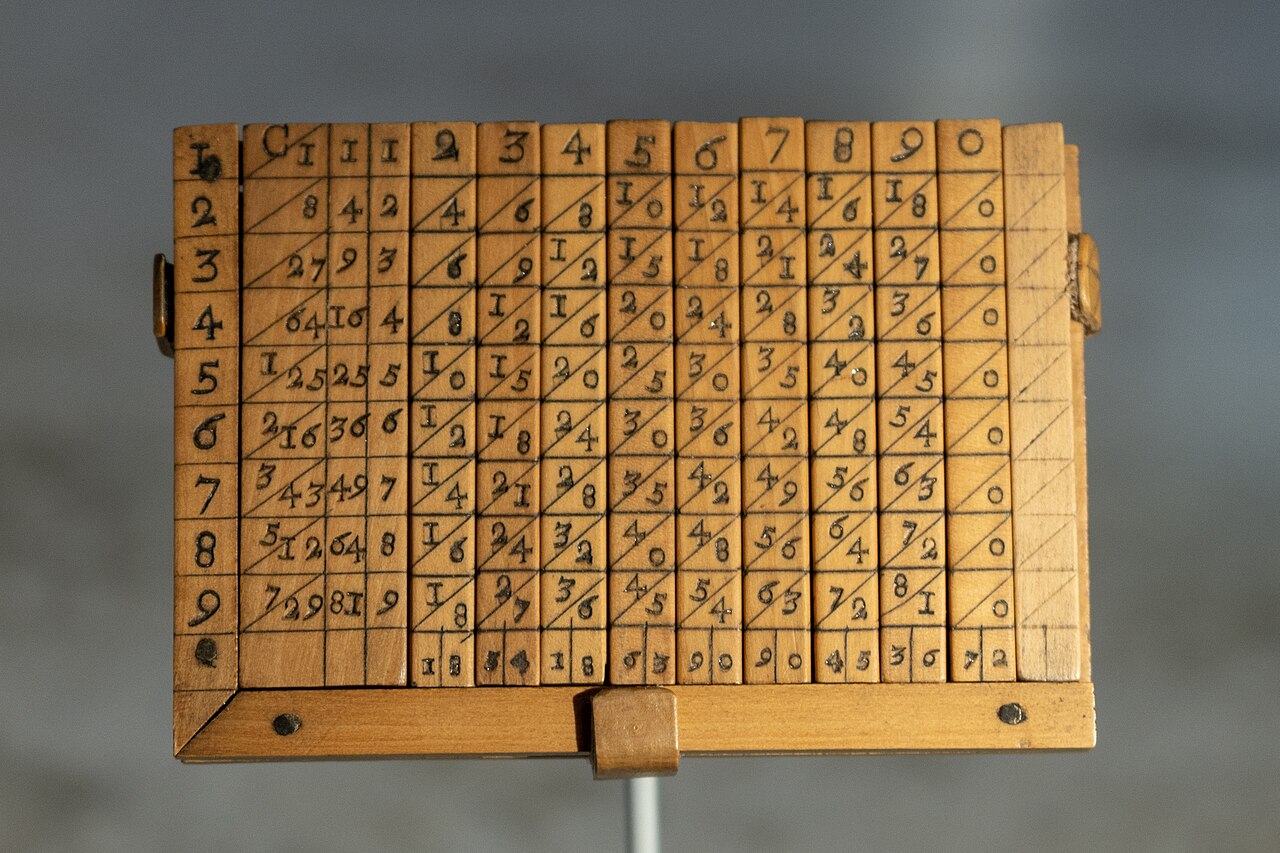
Counting boards with pebbles gave us the word calculate (from Latin calculus, a small stone). The Chinese suanpan and Japanese soroban are still used. In 1617 John Napier published rods marked with multiplication tables, called Napier's bones, three years after his logarithms.
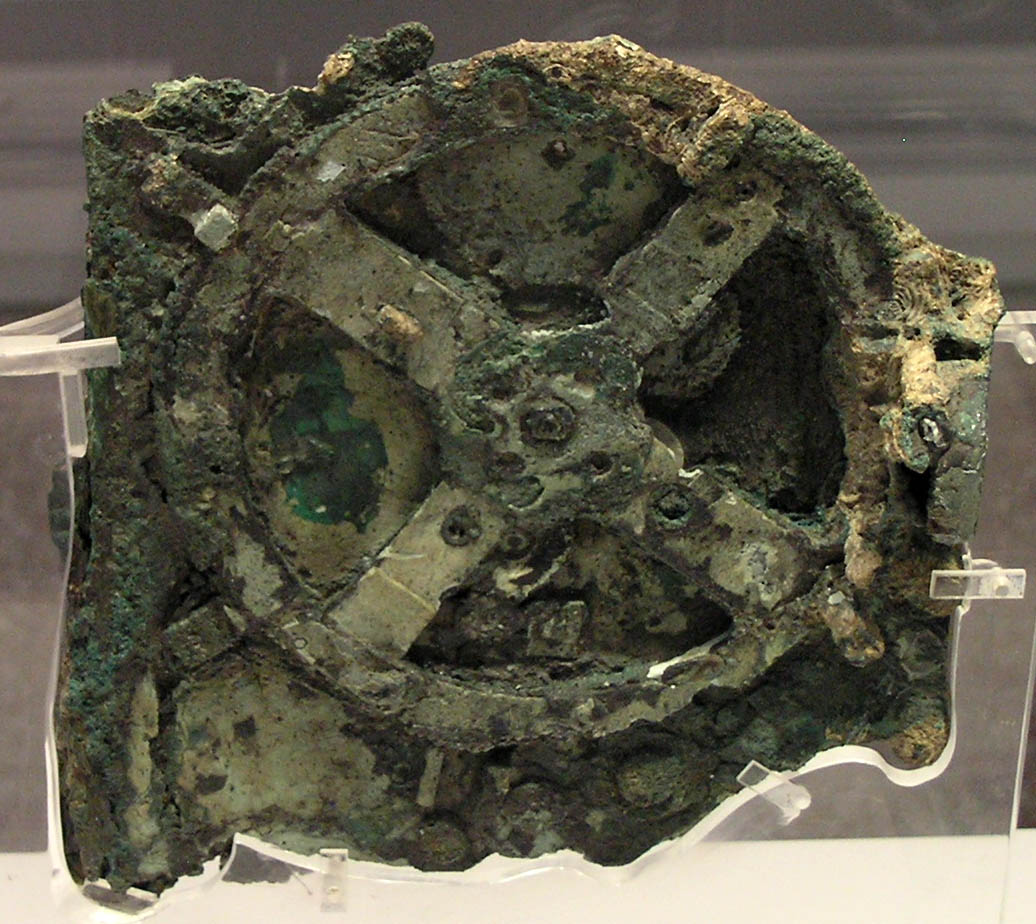
Divers found corroded bronze lumps in a shipwreck in 1901. X-ray and CT scans show a box of at least 30 interlocking gears that modeled the sun, moon and eclipses: the oldest known geared calculator. It is in the National Archaeological Museum in Athens.
Figures marked ≈ or "about" are estimates or disputed.
No machine-readable author provided. Marsyas assumed (based on copyright claims). (Wikimedia Commons) · CC BY 2.5
Try itOne number, three ways of counting
We count in tens because we have ten fingers. Babylonians counted in sixties (with signs for 1 and 10 inside each place); the Maya counted in twenties with dots for one, bars for five and a shell for zero, stacked from bottom to top.
Base 10 (ours)
Base 60 (Babylon)
Base 20 (Maya)
The Babylonian drawing uses simple wedge shapes for clarity; Babylonian scribes long had no zero sign and later used a placeholder. The Maya calendar's Long Count used 18 instead of 20 in its third place; this tool shows pure base 20.
Go deeper
Lessons:MA1 48 · What zero isPreviewMG3 9 · Hundreds, tens and onesPreview
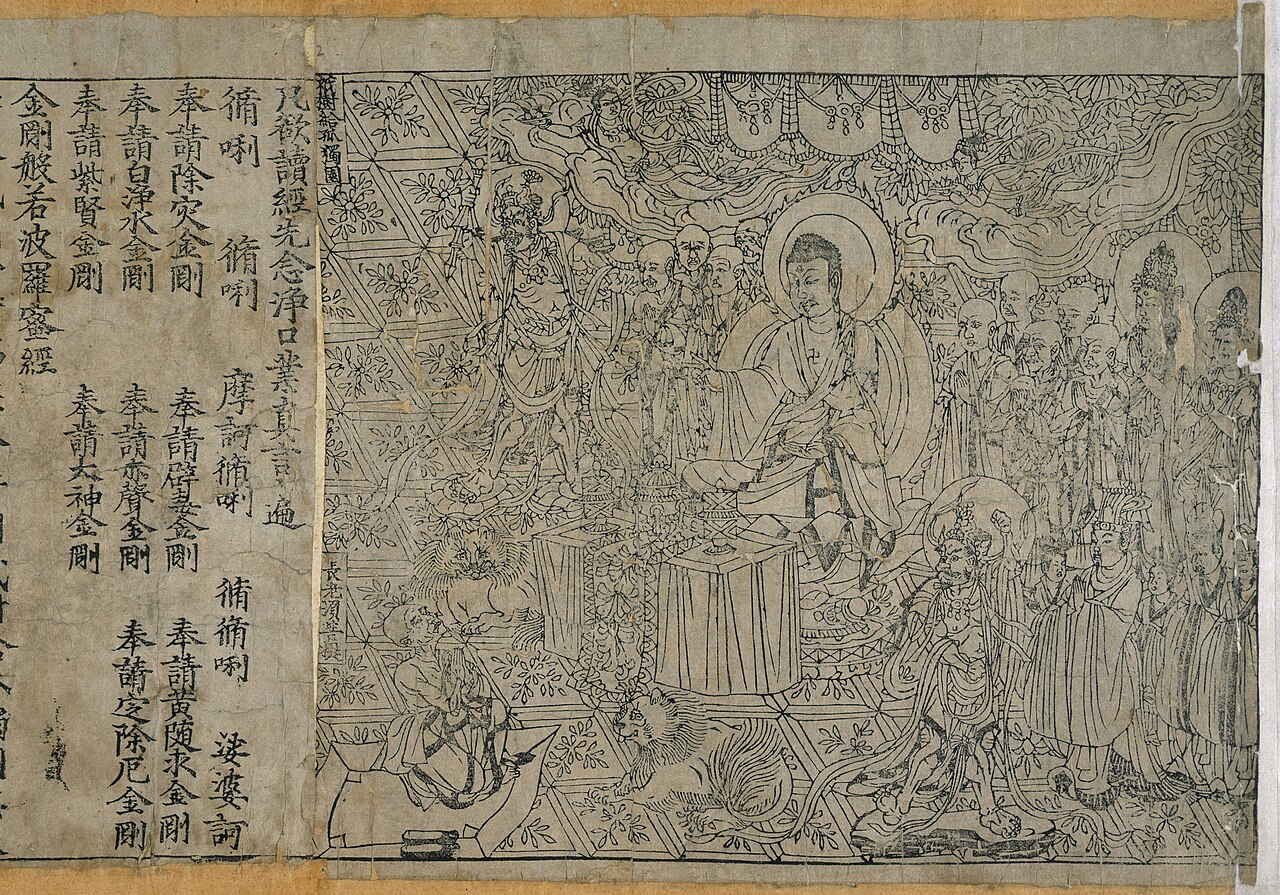
Chinese printers carved a whole page into a block of wood, inked it and pressed paper on it. A copy of the Buddhist Diamond Sutra printed in 868 is the oldest dated printed book that survives.
The colophon, at the inner end, reads: Reverently [caused to be] made for universal free distribution by Wang Jie on behalf of his two parents on the 13th of th (Wikimedia Commons) · Public domain
c. 1040s · Song China
Bi Sheng's movable type
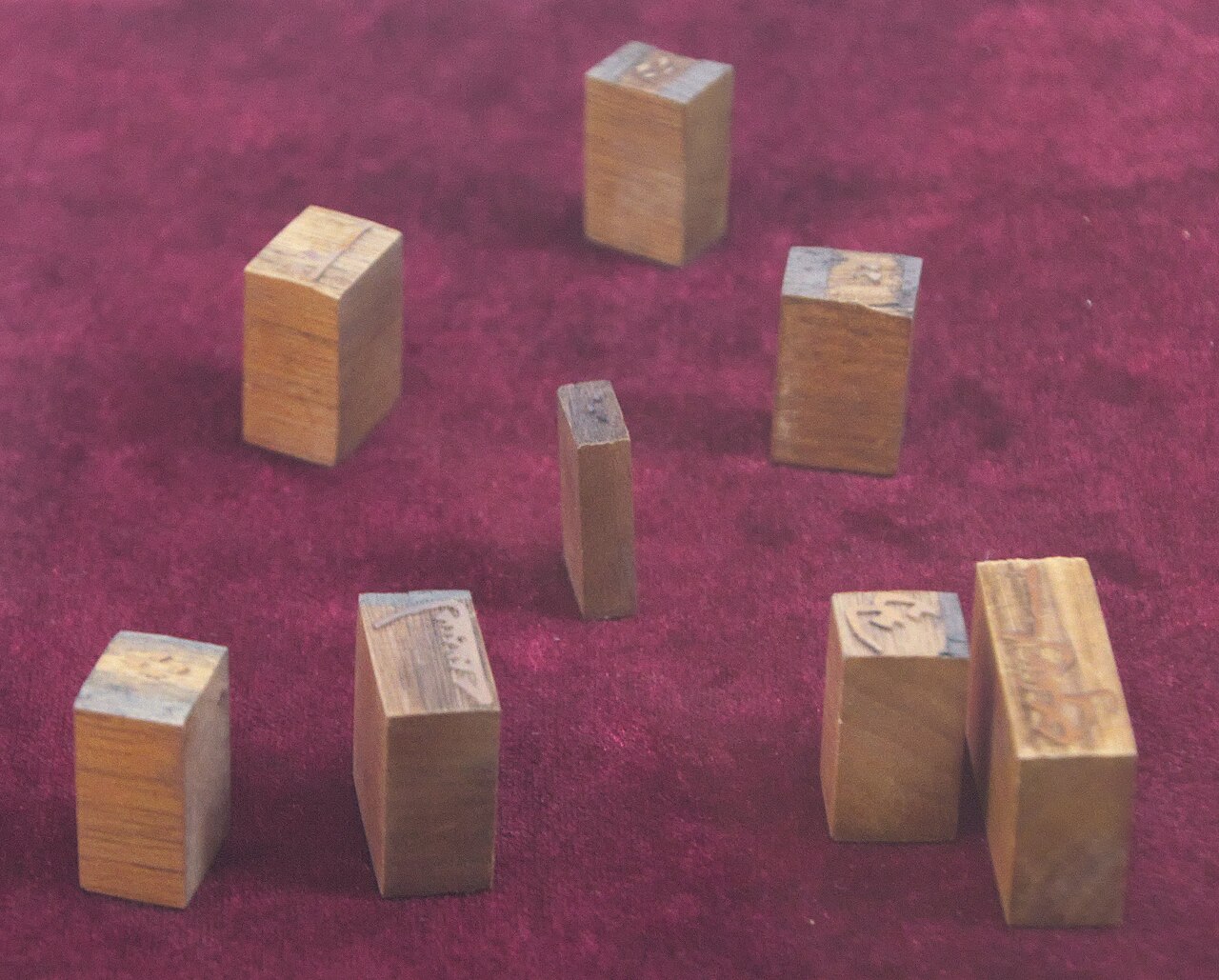
The scholar Shen Kuo described how a craftsman named Bi Sheng made individual characters from baked clay and arranged them in an iron frame. Chinese needs thousands of characters, so woodblocks stayed common.
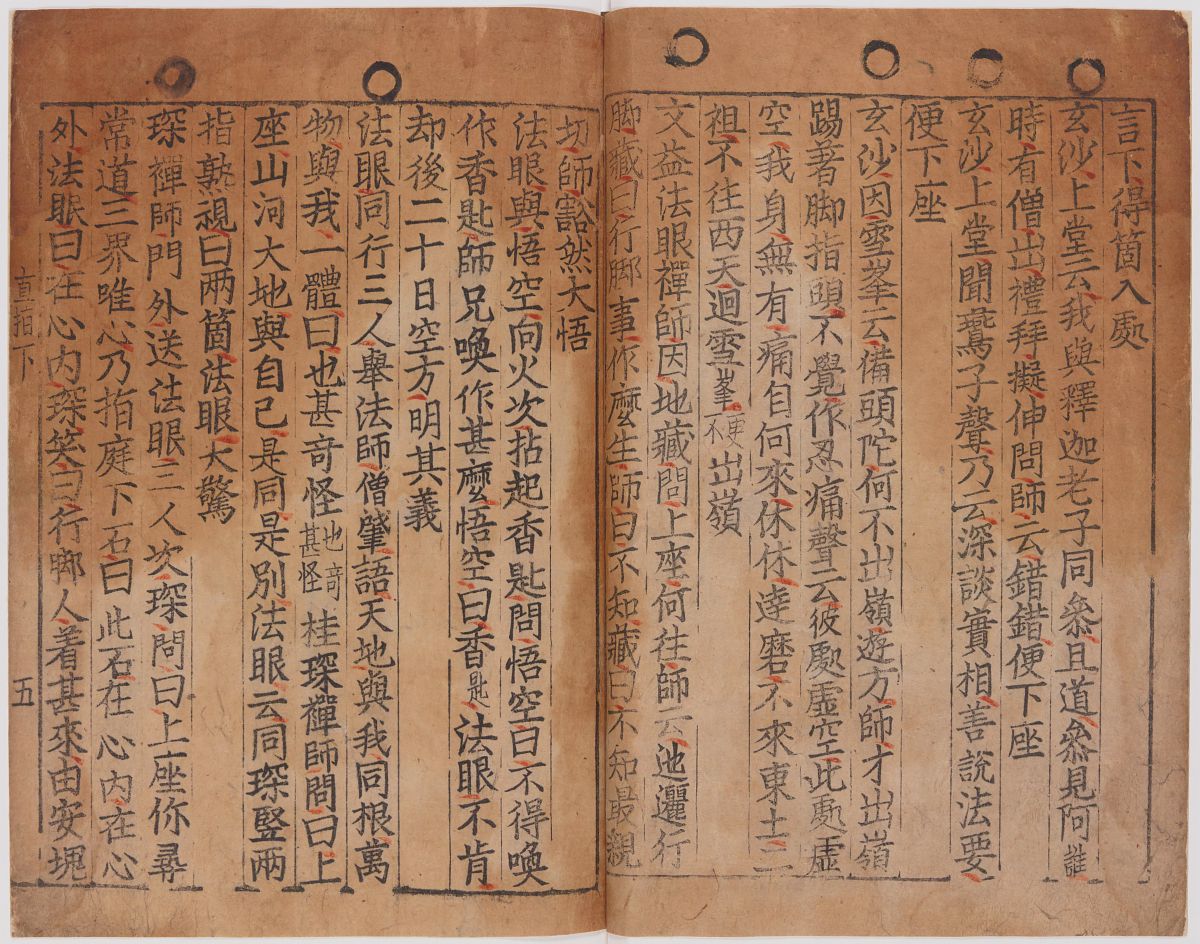
Korean printers cast type in metal. Jikji, a Buddhist text printed in 1377, is the oldest surviving book printed with movable metal type. The only known copy is in the National Library of France.
Unknown authorUnknown author (Wikimedia Commons) · Public domain
c. 1454–1455 · Mainz, Germany
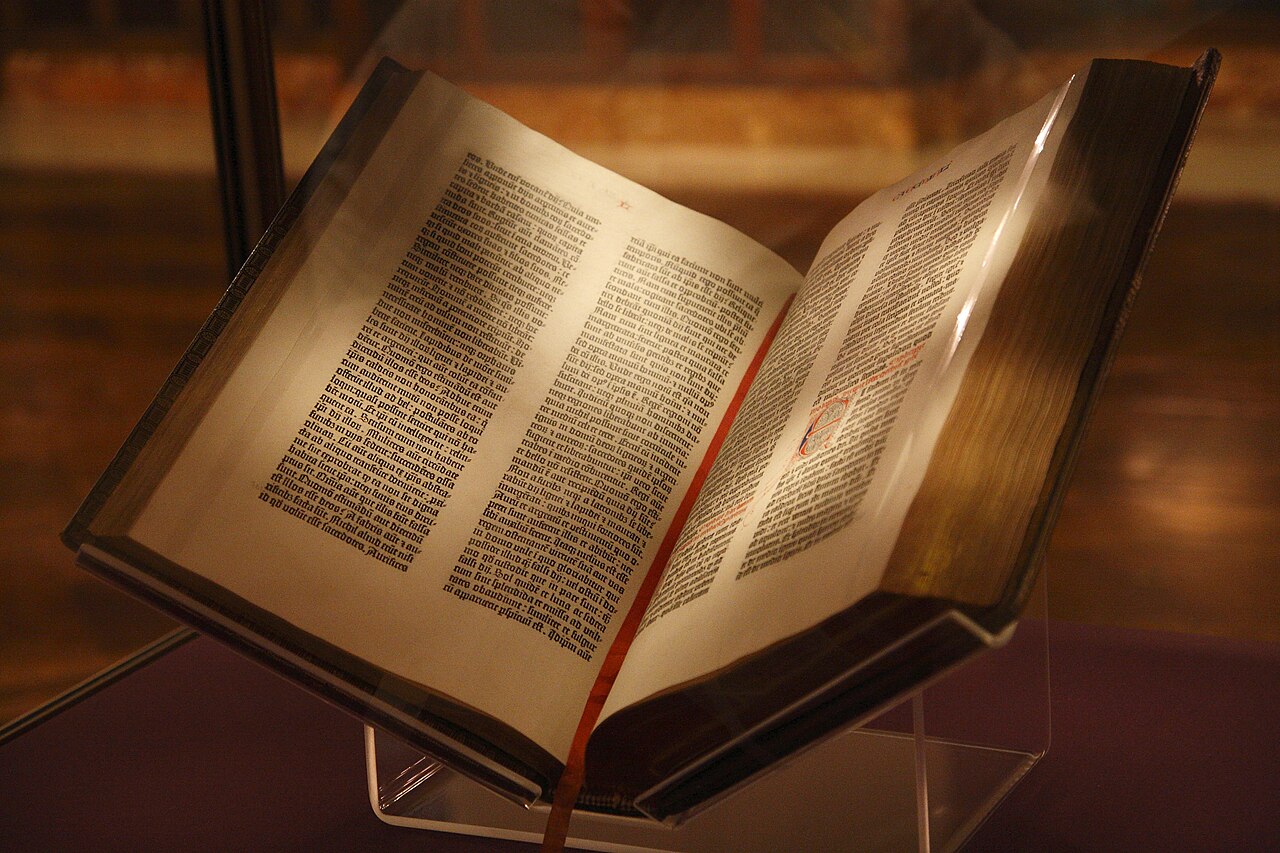
Gutenberg's press
Johannes Gutenberg combined metal type cast in a hand mold, oil-based ink and a screw press. His Bible was printed in about 180 copies; about 49 survive, some on paper and some on vellum. Printing shops spread to more than 200 European towns within 50 years.
Figures marked ≈ or "about" are estimates or disputed.
Lessons:HT1 12 · Take the other side: movable type in KoreaPreviewHT1 13 · Print a broadsidePreviewHT1 14 · The verdict: the press and the ReformationPreviewGER3 5 · Gutenbergs PressePreview
For younger visitors (K–5): Count it, then write it
Long ago, farmers kept track of their sheep with little clay shapes, one for each sheep. Later they pressed marks into clay instead. That was the start of writing! In the mountains of South America, people tied knots in strings to count.
Try this: tie knots in a piece of yarn to show how many people live in your home, then how many pets. Can a friend read your string? Then make up your own picture-sign for your name.
Three quick questions (3 questions · runs in your browser, nothing is sent)
Lessons:MG3 9 · Hundreds, tens and ones (3–5)PreviewAM0 5 · Sequoyah's writing (3–5)PreviewHT1 8 · Open the case: clay, scroll and pagePreviewHT1 10 · Accounts at UrukPreviewMA1 48 · What zero isPreviewAPARTH 2 · Kings, gods and scribesPreview
Read: James Rumford, Sequoyah: The Cherokee Man Who Gave His People Writing (2004) for younger readers; Zilpha Keatley Snyder, The Egypt Game (1967), where friends invent their own Egyptian rites and writing; Margalit Fox, The Riddle of the Labyrinth (2013), the true story of Alice Kober and Linear B; for older readers Umberto Eco, The Name of the Rose (1980), a mystery set among medieval copyists and a library.
Quiz: Writing and counting (10 questions · runs in your browser, nothing is sent)
Denise Schmandt-Besserat, How Writing Came About (University of Texas Press, 1996); critiques in Piotr Michalowski, "Tokenism", American Anthropologist 95 (1993).
Hans J. Nissen, Peter Damerow and Robert K. Englund, Archaic Bookkeeping (Chicago, 1993); Cuneiform Digital Library Initiative.
Eleanor Robson, "Words and Pictures: New Light on Plimpton 322", American Mathematical Monthly 109 (2002).
British Museum, the Rosetta Stone (EA 24); Andrew Robinson, Cracking the Egyptian Code (2012).
Günter Dreyer, Umm el-Qaab I (1998), tomb U-j labels; the Philae inscriptions of 394 and 452 CE.
David N. Keightley, Sources of Shang History (1978).
Steve Farmer, Richard Sproat and Michael Witzel, "The Collapse of the Indus-Script Thesis" (2004); Rajesh Rao et al., Science 324 (2009).
Orly Goldwasser, "How the Alphabet Was Born from Hieroglyphs", Biblical Archaeology Review 36 (2010).
John Chadwick, The Decipherment of Linear B (1958); Margalit Fox, The Riddle of the Labyrinth (2013).
Michael D. Coe, Breaking the Maya Code (3rd ed., 2012).
Gary Urton, Signs of the Inka Khipu (2003); L. Leland Locke, The Ancient Quipu (1923); Sabine Hyland, Current Anthropology 58 (2017).
MacTutor History of Mathematics (University of St Andrews): Babylonian numerals, Indian numerals, Fibonacci, Napier.
Antikythera Mechanism Research Project; Tony Freeth et al., Scientific Reports 11 (2021).
British Library, the Diamond Sutra (Or.8210/P.2); UNESCO Memory of the World, Jikji (2001); Library of Congress, Gutenberg Bible census.
newSchoolWorks.com · The Museum of Everyday Living · Bradenton, FL · SI paintings made for this explainer (reconstructions, not photographs, with no writing shown in them); photographs of real inscriptions from Wikimedia Commons under the licences shown on each card.