The Museum of Everyday Living · Leisure · Technology
Sound of the ages
People have made music for at least 40,000 years; the oldest instruments are older than farming, cities or writing
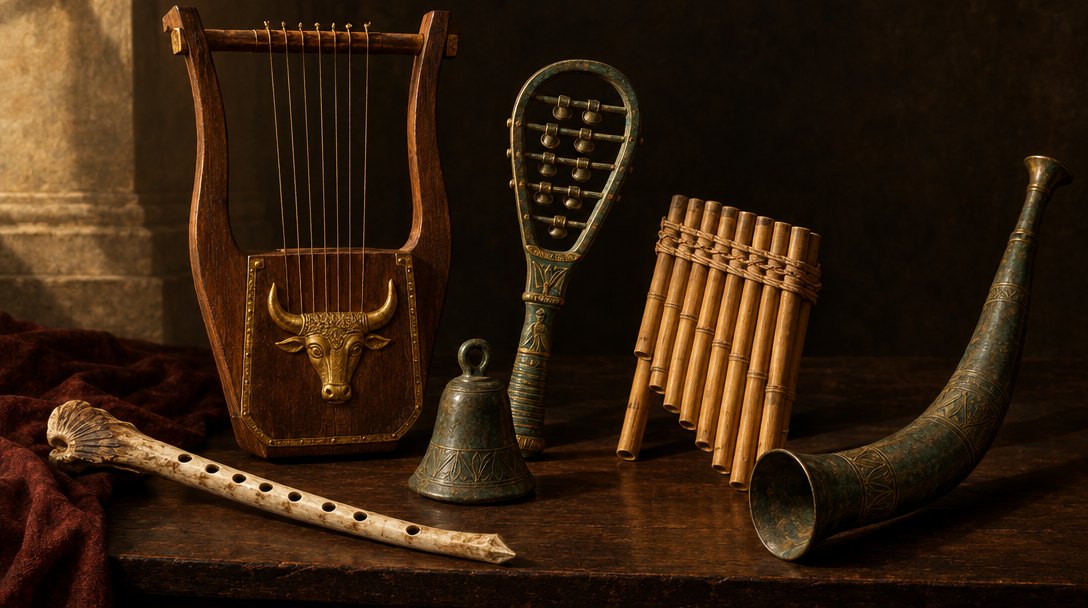
SI painting, made for this explainer: an illustration, not a photograph.
Music leaves few traces. Songs vanish when the singers stop, and most instruments were made of wood, skin and gut that rot away. What survives are bone and ivory flutes, bronze bells and horns, pictures of players on pots and walls, and, from about 3,400 years ago, a handful of melodies written down. Alongside them runs a second story: the discovery that musical intervals are simple ratios of numbers, which made music one of the first sciences.
Sound on this page plays only when you press a button. Start with the volume low.
Part oneThe oldest instruments
c. 50,000–60,000 years ago · Divje Babe cave, Slovenia
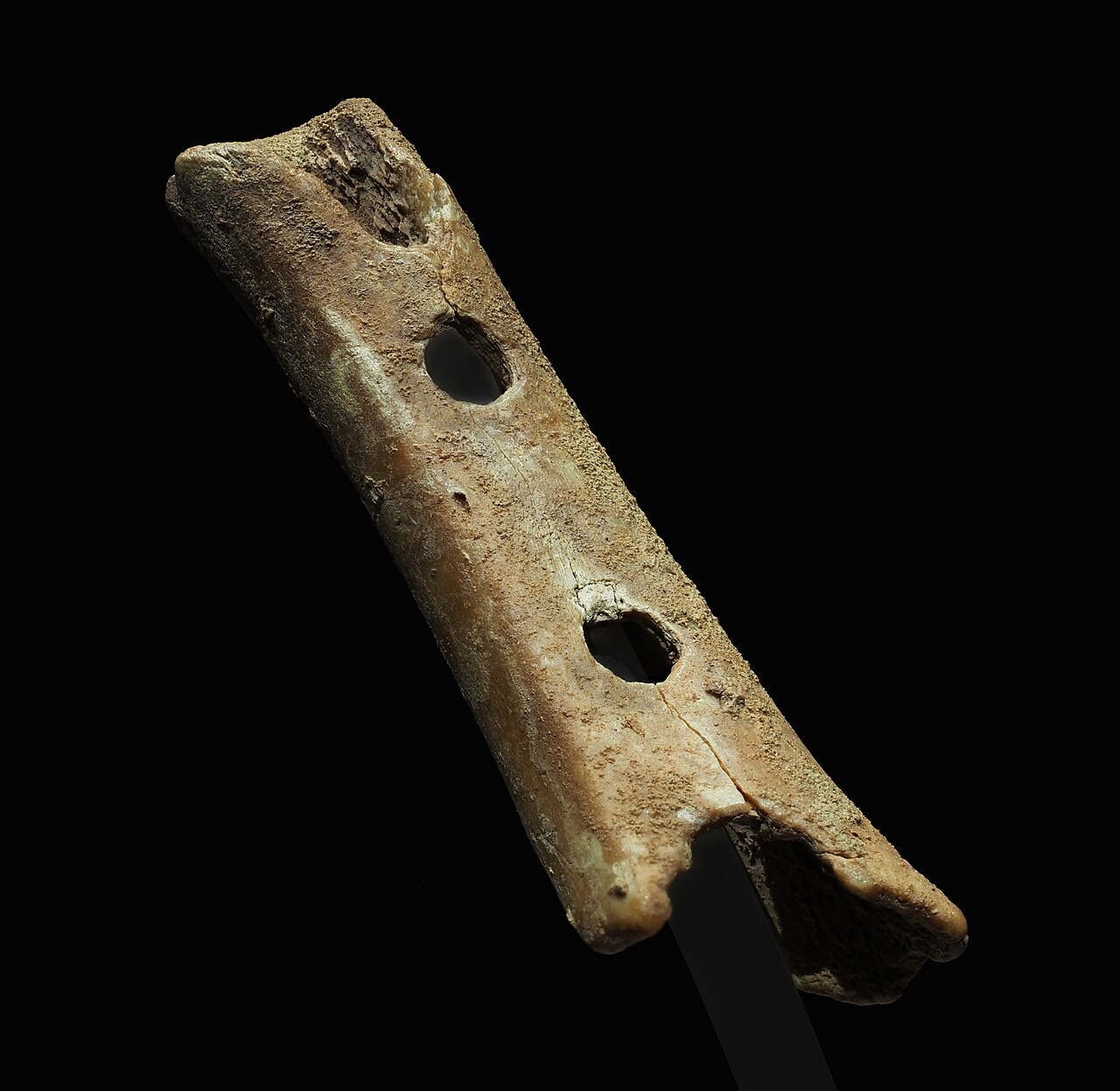
Divje Babe: the "Neanderthal flute"?
A cave bear thigh bone with two round holes was found in 1995 in a layer with Neanderthal tools. Some researchers say the holes were made on purpose and the bone can be played. Others say a hyena or other carnivore chewed it. The debate is unresolved.
Figures marked ≈ or "about" are estimates or disputed.
Petar Milošević (Wikimedia Commons) · CC BY-SA 4.0
c. 40,000 years ago · Geissenklösterle and Hohle Fels caves, Germany
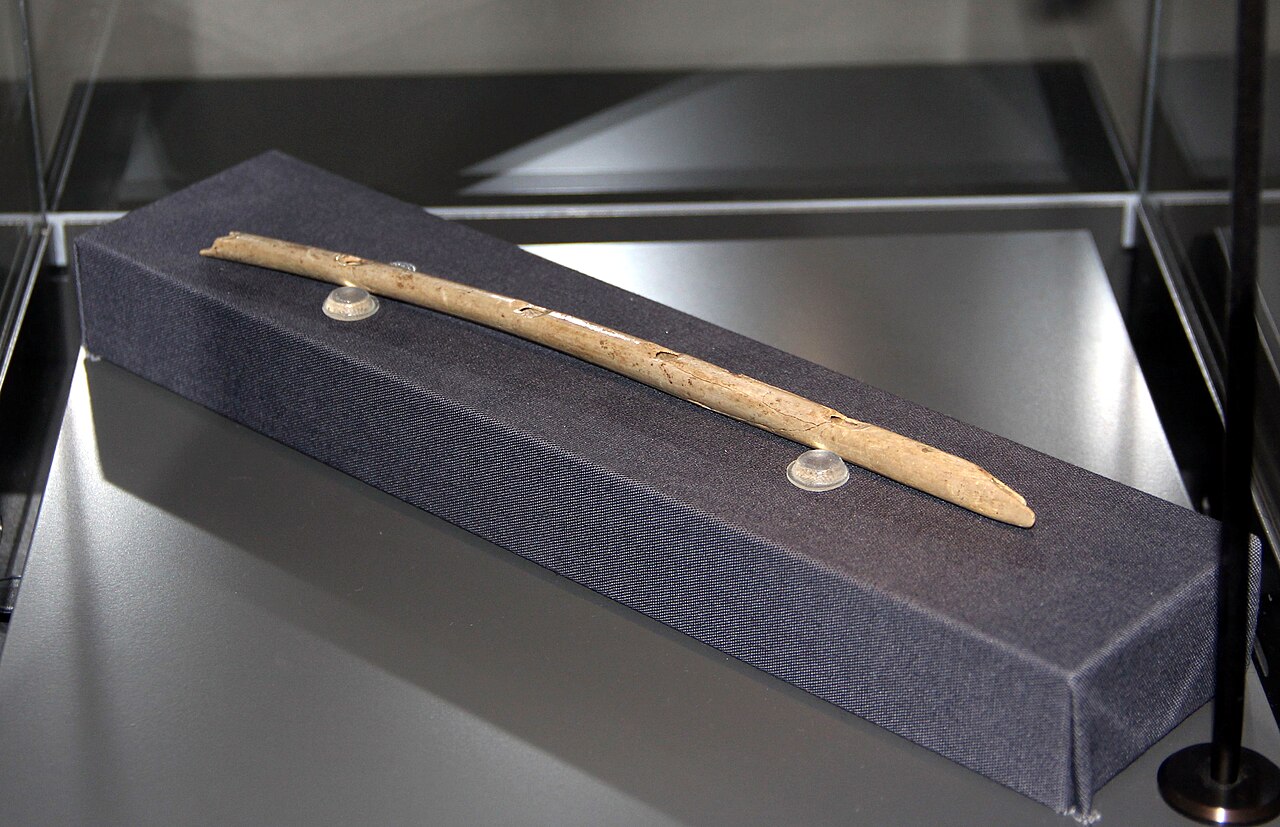
The Swabian flutes
Early modern humans carved flutes from swan and griffon vulture wing bones and from mammoth ivory. Dates of about 40,000 years make them the oldest accepted musical instruments. Copies have been played and sound clear tones.
Figures marked ≈ or "about" are estimates or disputed.
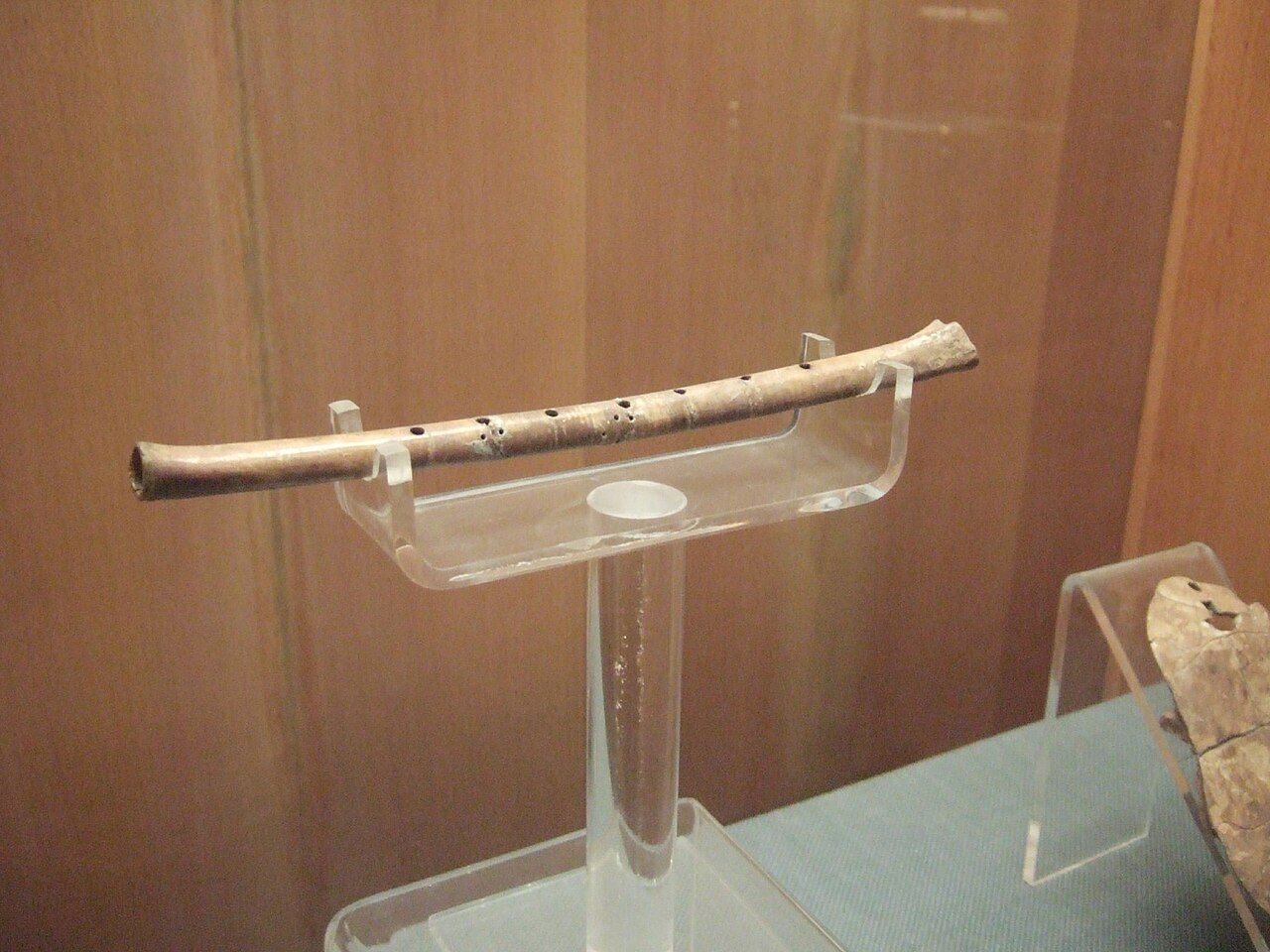
More than 30 flutes made from the wing bones of red-crowned cranes were found at this Neolithic village. One was still playable when tested in 1999, about 9,000 years after it was made.
Figures marked ≈ or "about" are estimates or disputed.
Part twoLyres, bells, pipes and the first written songs
SI painting, made for this explainer: an illustration, not a photograph.
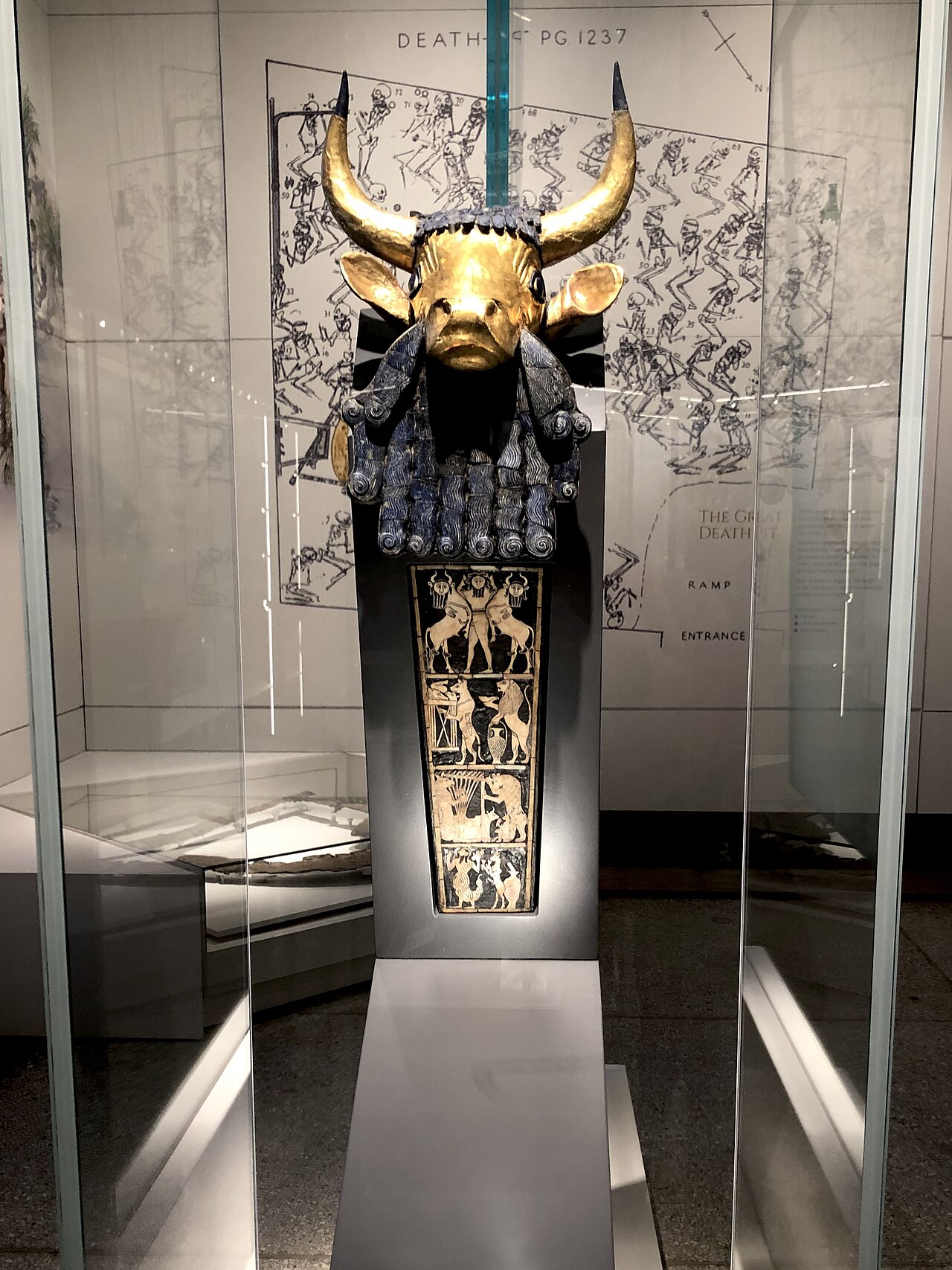
c. 2500 BCE · Royal Cemetery of Ur, Iraq
The Lyres of Ur
Leonard Woolley excavated lyres with sound boxes decorated with gold and lapis lazuli bull heads in the 1920s. They are shared among the British Museum, the Penn Museum and the Iraq Museum.
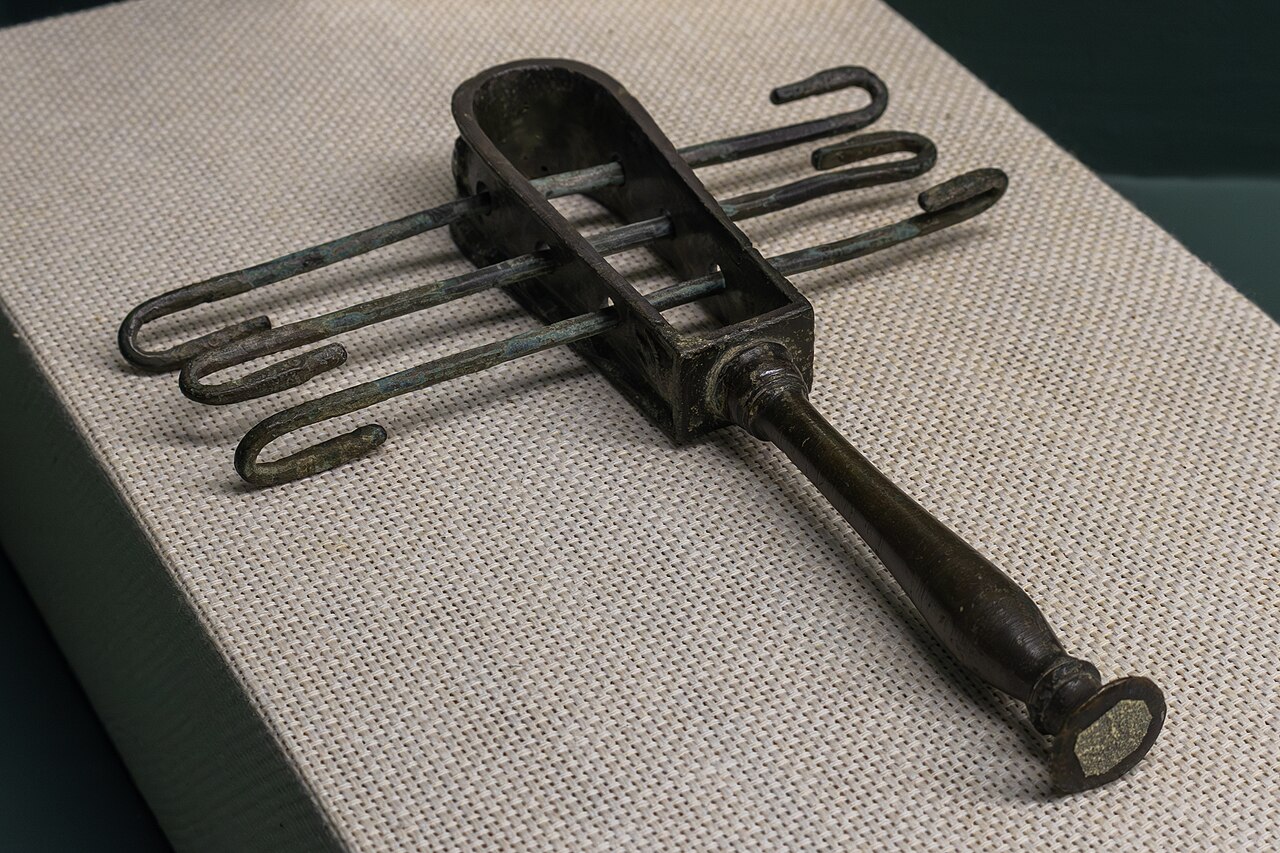
A bronze rattle with loose metal bars that jingle when shaken, played in temples of the goddess Hathor and later Isis. Versions are still used in Ethiopian Orthodox church music.
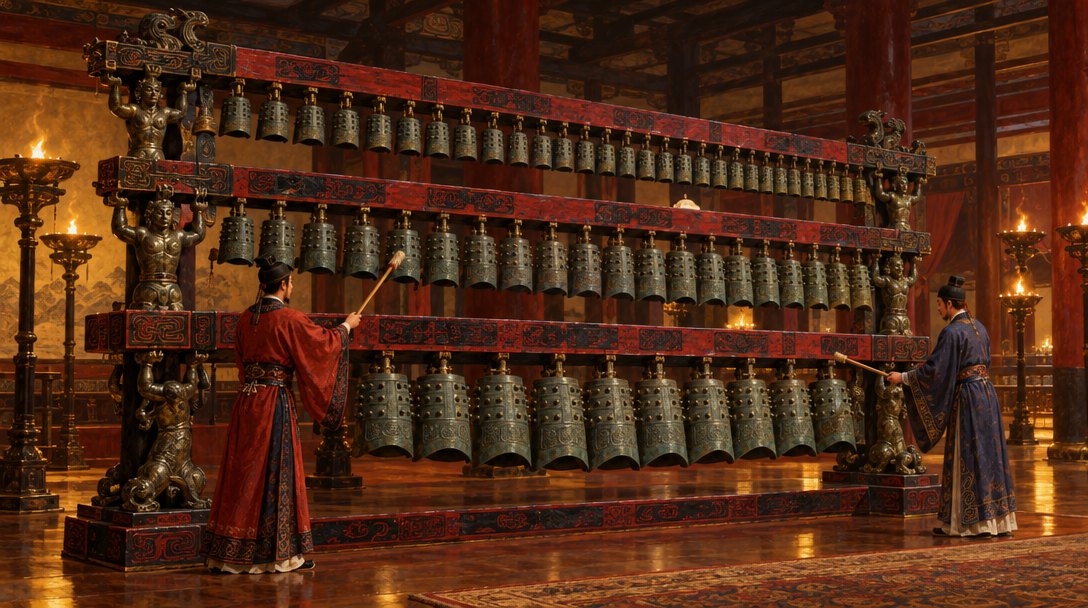
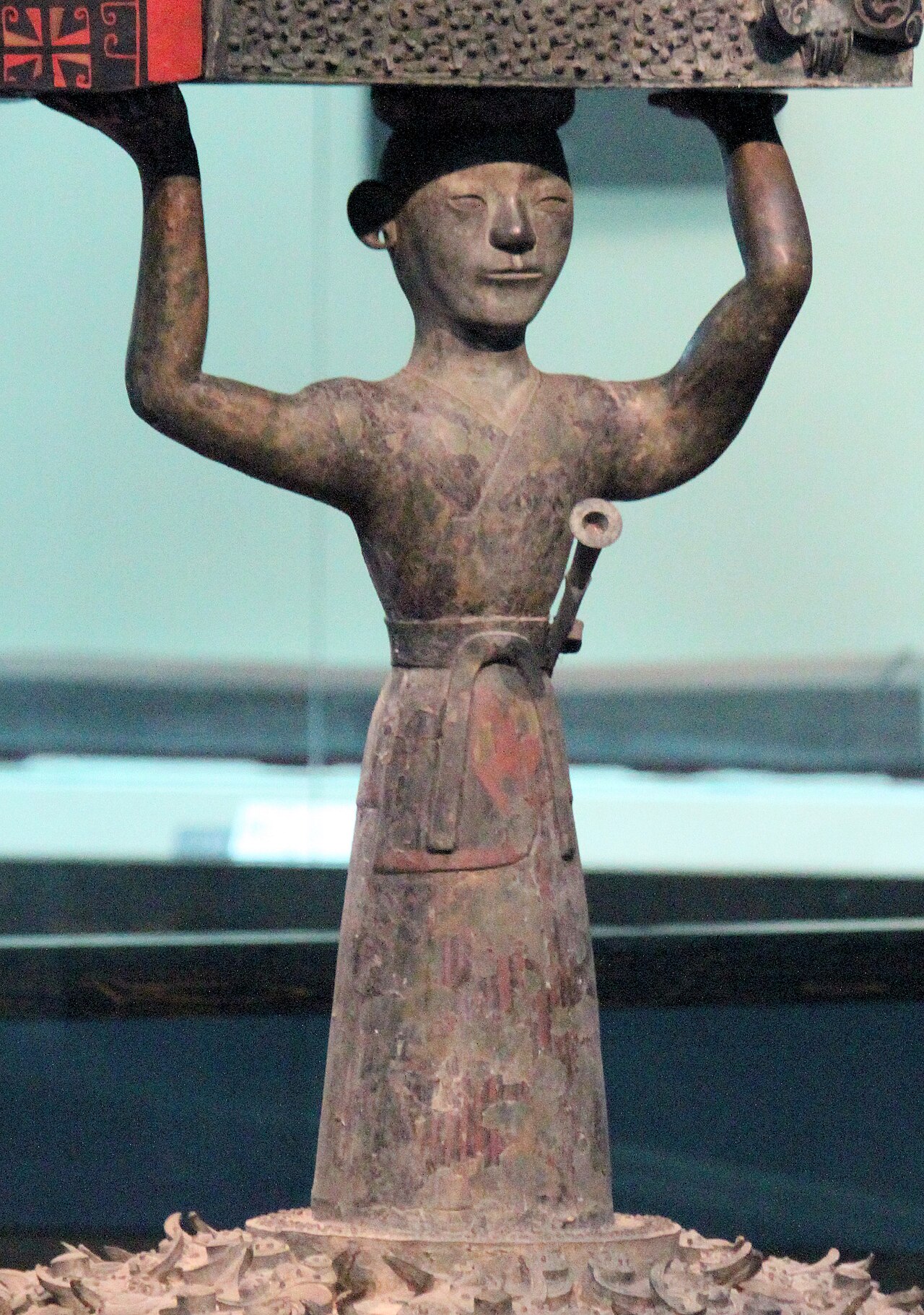
buried 433 BCE; excavated 1978 · Suizhou, Hubei, China
The bells of the Marquis Yi of Zeng
A set of 65 bronze bells hung on a three-tier rack in this tomb. Each bell is shaped so that striking the center and the side gives two different notes. The set covers about five octaves. It is in the Hubei Provincial Museum.
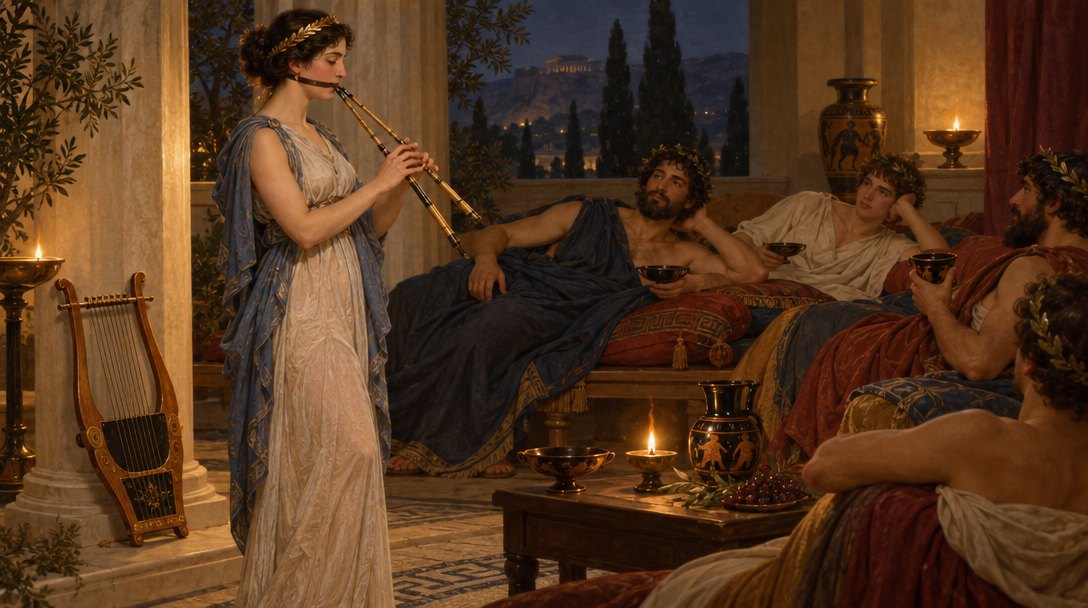
Not a flute: a pair of reed pipes played at once, often held with a leather mouth strap. It played at sacrifices, theater, athletics and dinner parties. Greeks argued over whether its wild sound was good for the soul.
c. 1400 BCE · Ugarit, Syria
The Hurrian hymn: the oldest notated melody
Clay tablets found at Ugarit in the 1950s include a hymn to the goddess Nikkal with instructions for a lyre player. It is the oldest substantially complete written melody, but scholars disagree on how to read the notation, so modern versions sound quite different.
Figures marked ≈ or "about" are estimates or disputed.
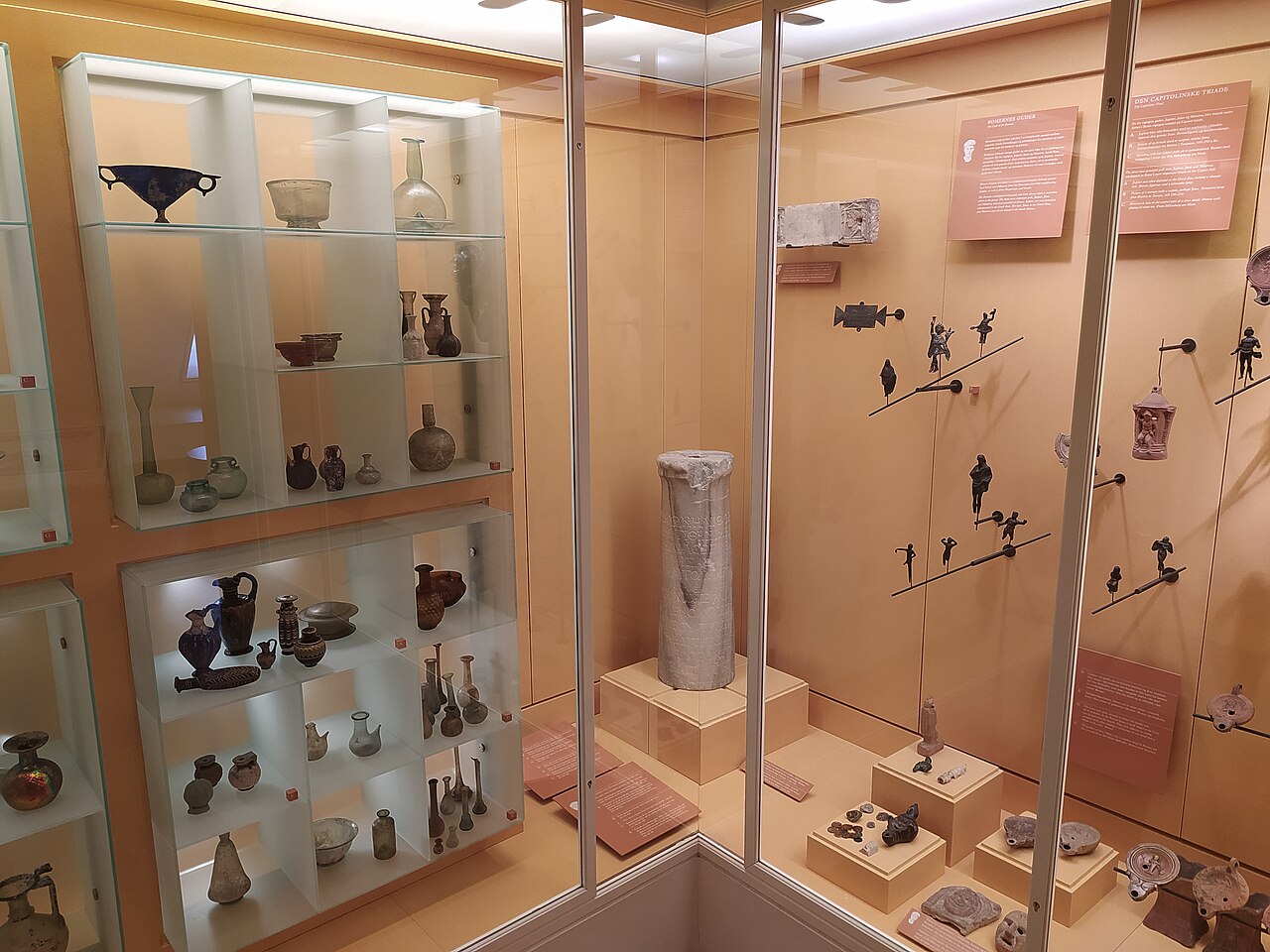
1st–2nd century CE · Tralles (Aydın), Turkey; now National Museum of Denmark
The Seikilos epitaph: the oldest complete song
A marble grave column carries a short song with Greek letters above the words showing pitch and marks showing rhythm. It is the oldest complete musical composition with its notation intact. Its message: while you live, shine; do not grieve too much; life is short and time takes its due.
Figures marked ≈ or "about" are estimates or disputed.
3rd century BCE – 3rd century CE · Alexandria, Rome
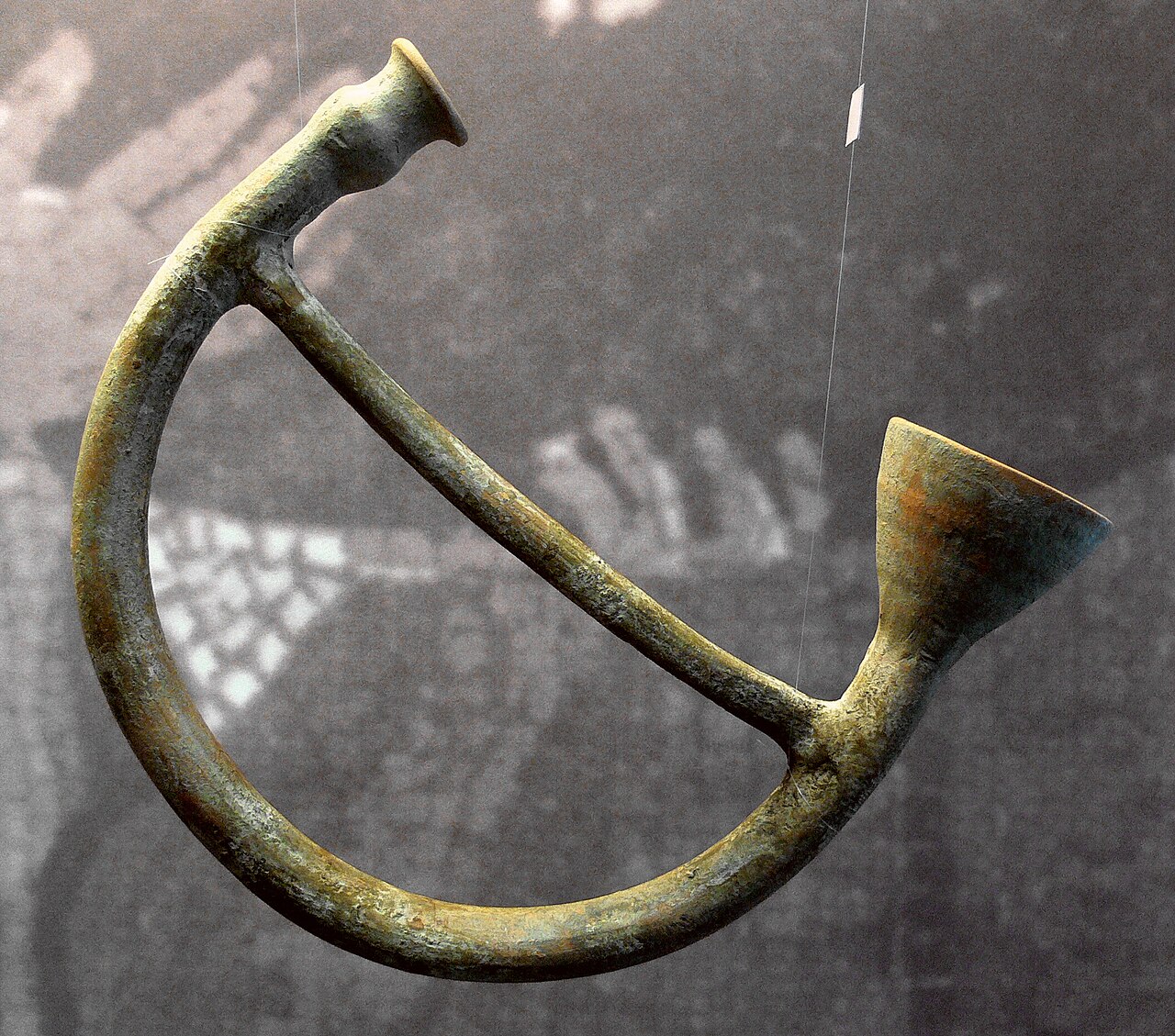
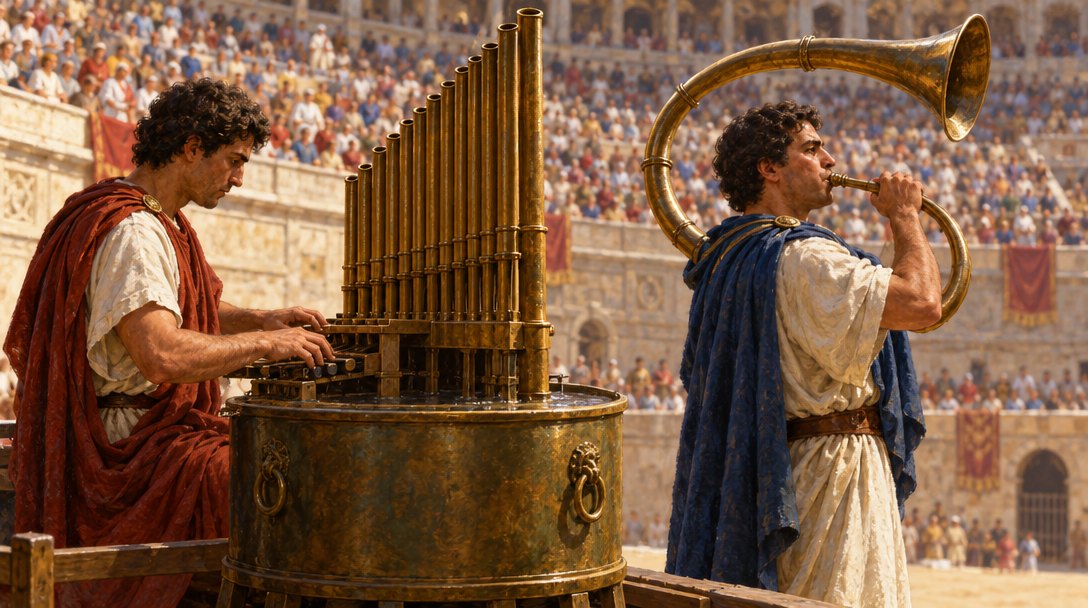
Roman cornu and water organ
The cornu was a huge bronze horn curved like a G, used for army signals and arena shows. The hydraulis, invented by Ctesibius of Alexandria in the 200s BCE, used water pressure to keep air steady in its pipes. Remains of an organ from 228 CE were found at Aquincum, now Budapest.
SI painting, made for this explainer: an illustration, not a photograph.SI painting, made for this explainer: an illustration, not a photograph.
ListenThe notes of the Seikilos song
The Seikilos epitaph marks each syllable with a Greek letter for pitch. In the usual modern transcription the song moves within an octave from E to E, with two home tones, A and E. This button plays the set of notes the song uses and its home tones, so you can hear its scale. It is not the melody itself; for the whole song, listen to the performances linked below, which also differ from each other because the rhythm and tuning have to be reconstructed.
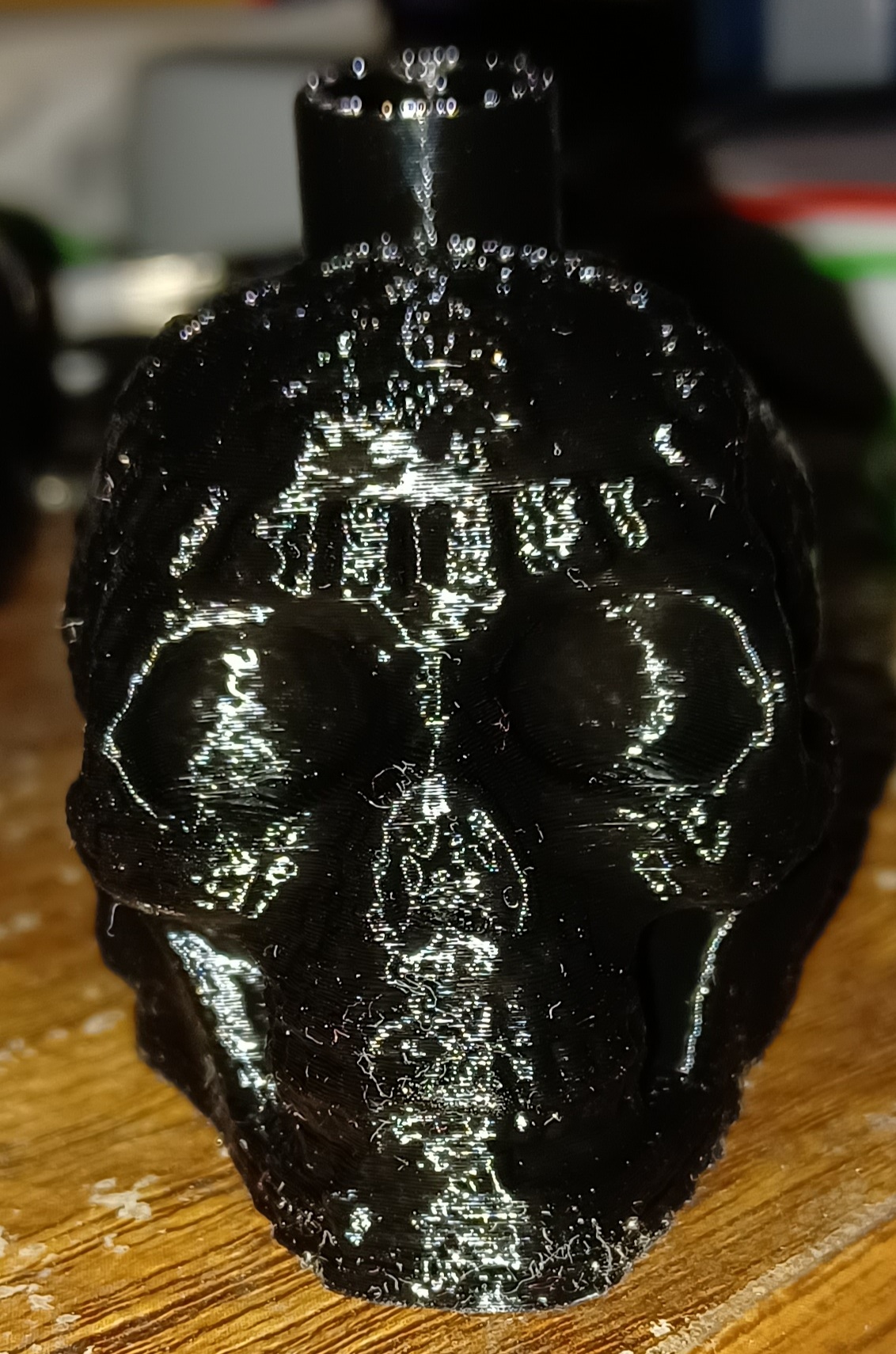
Clay whistles shaped like skulls were found in 1999 at a temple in Tlatelolco. Blown hard, they make a sound like a scream. Whether they were used in ceremonies, burials or war is debated.
Figures marked ≈ or "about" are estimates or disputed.
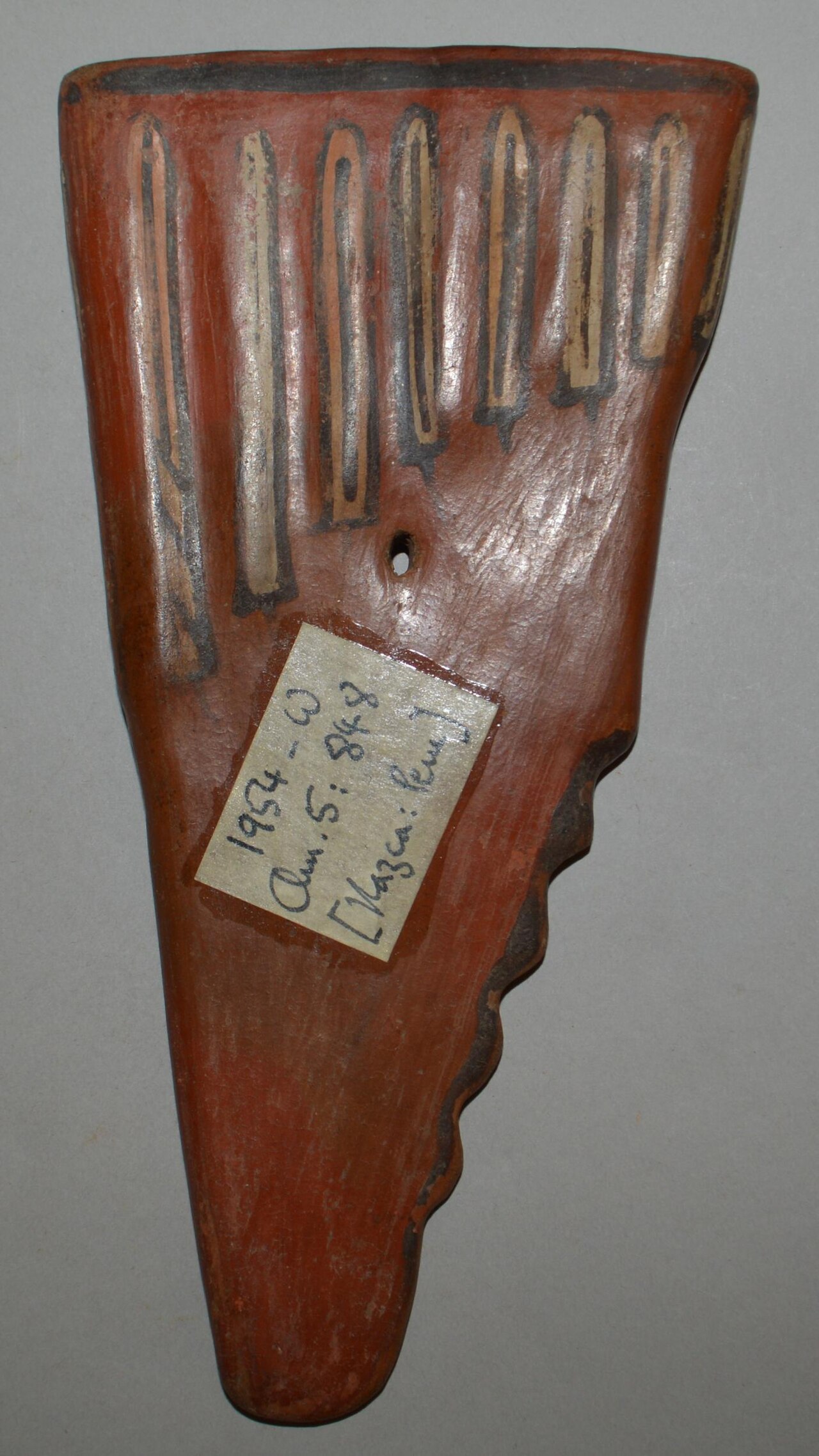
Nasca potters made panpipes of clay; later players used cane. In the Andes two players often share one melody, each playing every other note on a half-set of pipes, a practice called hocket.
at least 1,000 years old · Zimbabwe and southern Africa
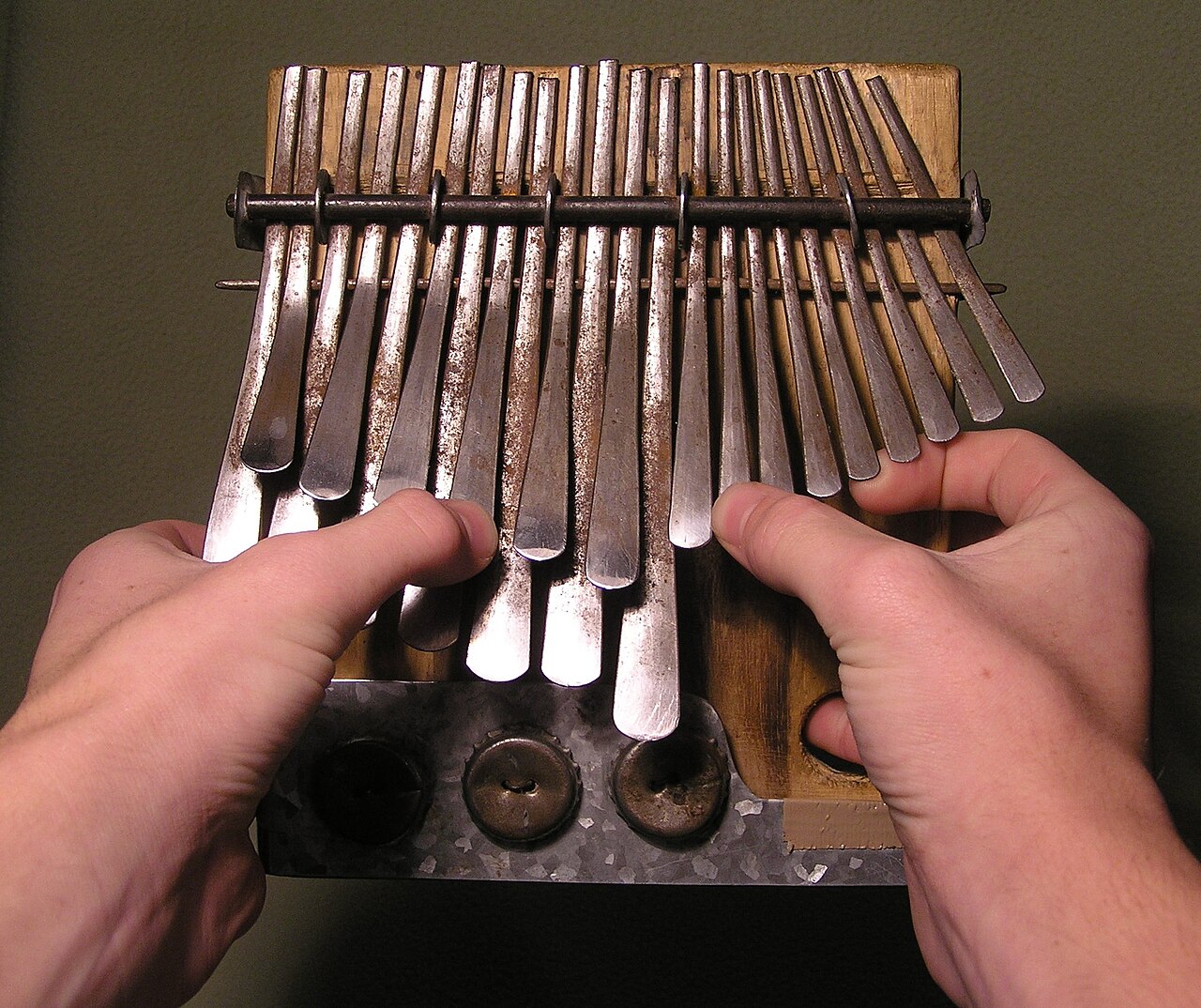
The mbira
Metal tongues fixed to a wooden board are plucked with the thumbs. For the Shona people, mbira music is played at ceremonies to call on ancestors. Older versions used tongues of cane or wood.
Figures marked ≈ or "about" are estimates or disputed.
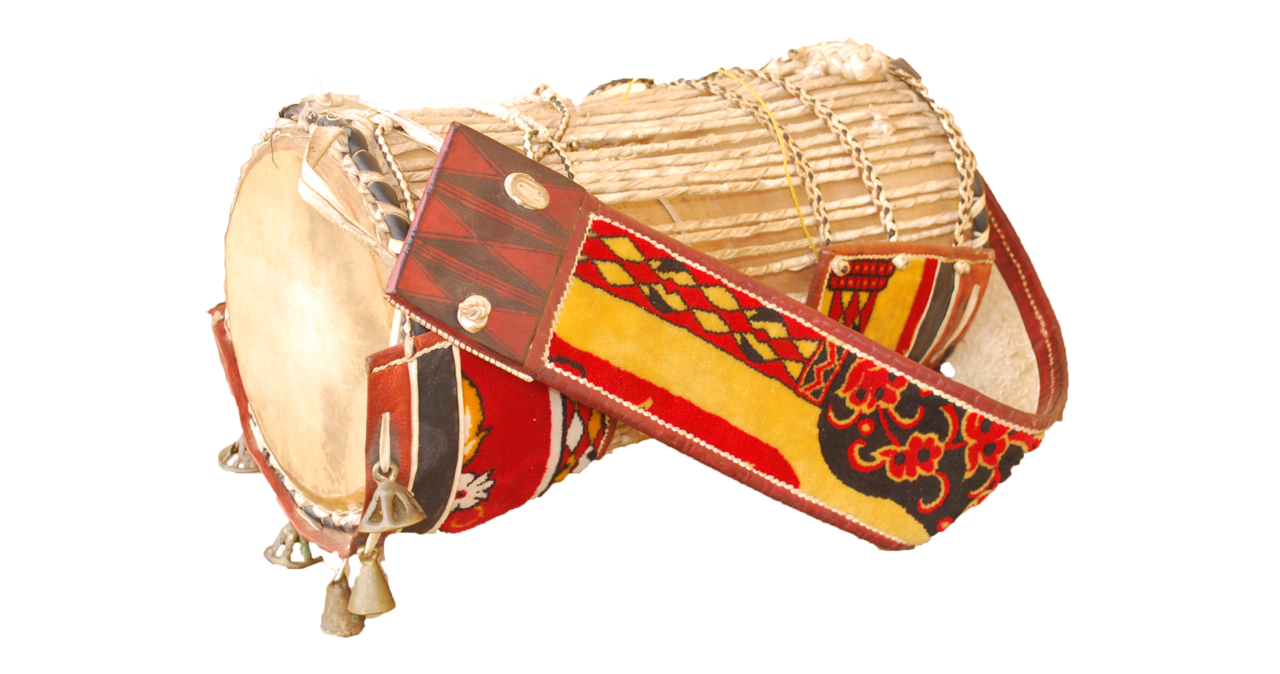
Yoruba, Akan and other languages are tonal: pitch changes meaning. Squeezing the cords of an hourglass-shaped drum such as the Yoruba dùndún changes its pitch, so drummers can imitate speech and send messages.
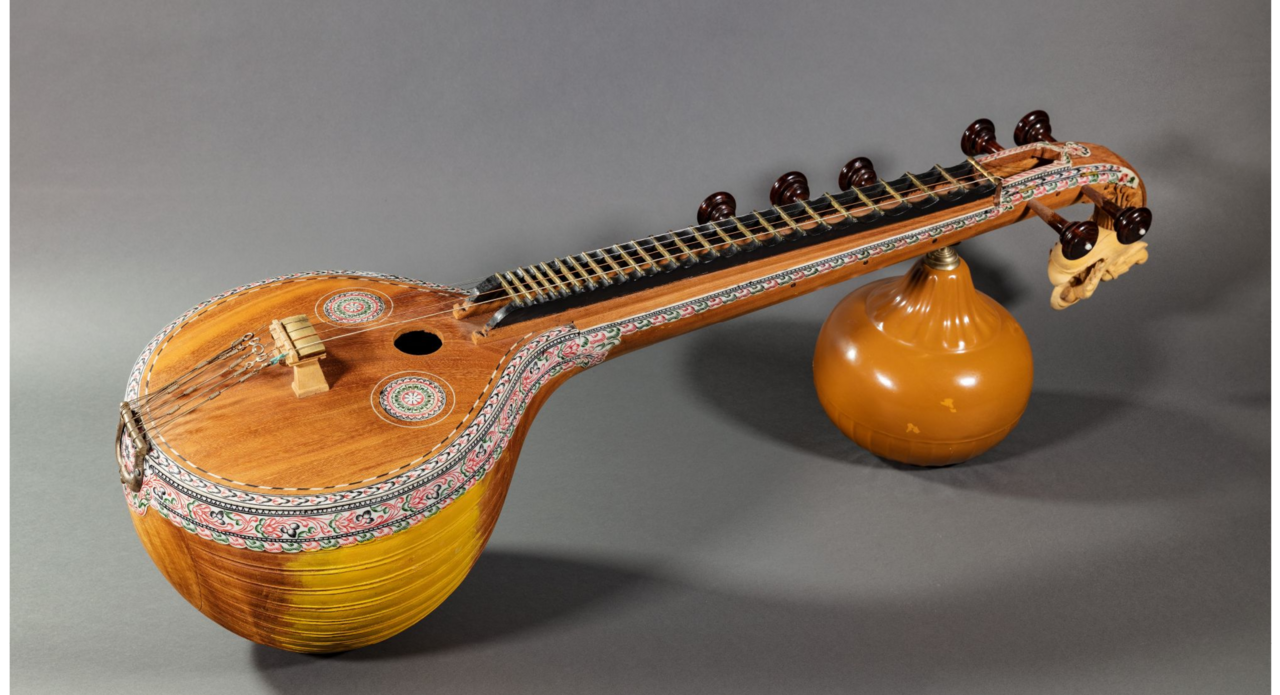
The Natya Shastra, an ancient treatise on drama and music, describes stringed instruments and the system of scales that grew into the raga. A raga is a set of notes with rules for how to move between them and a mood or time of day.
Figures marked ≈ or "about" are estimates or disputed.
Original: unknownPhotograph: Katharina Common (Wikimedia Commons) · CC BY-SA 4.0
c. 800s CE onward · Java and Bali
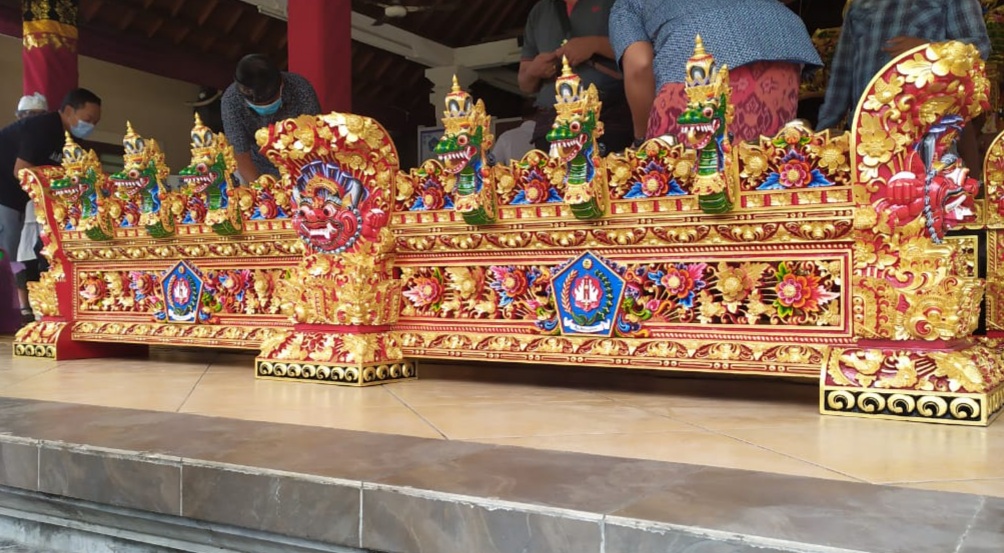
Gamelan
Ensembles of tuned bronze gongs, metallophones and drums play interlocking patterns. Gamelan tunings differ from Western scales and from one village set to another. UNESCO added gamelan to its list of intangible cultural heritage in 2021.
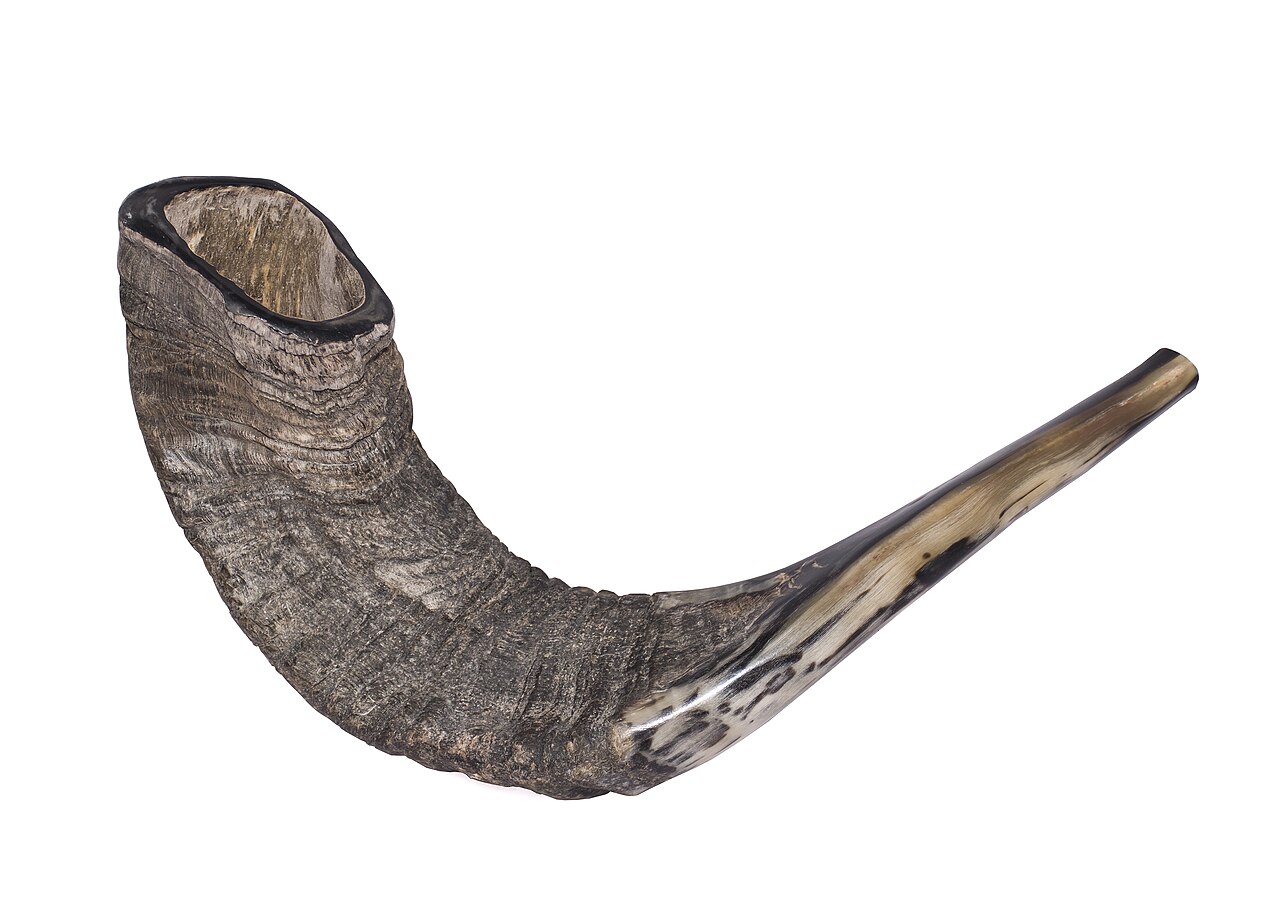
A ram's horn mentioned in the Hebrew Bible and still blown today on Rosh Hashanah and at the end of Yom Kippur. It has no finger holes; the player changes notes with the lips.
Sound is a wave of pressure moving through air. Frequency, counted in hertz (cycles per second), is heard as pitch: concert A is 440 Hz. Most people hear from about 20 Hz to 20,000 Hz when young, and lose the top as they age.
A single string stretched over a movable bridge. Stop it at half its length and the note rises an octave (2:1); at two thirds, a fifth (3:2); at three quarters, a fourth (4:3). Greek tradition credits Pythagoras; Chinese theorists found the same ratios.
Figures marked ≈ or "about" are estimates or disputed.
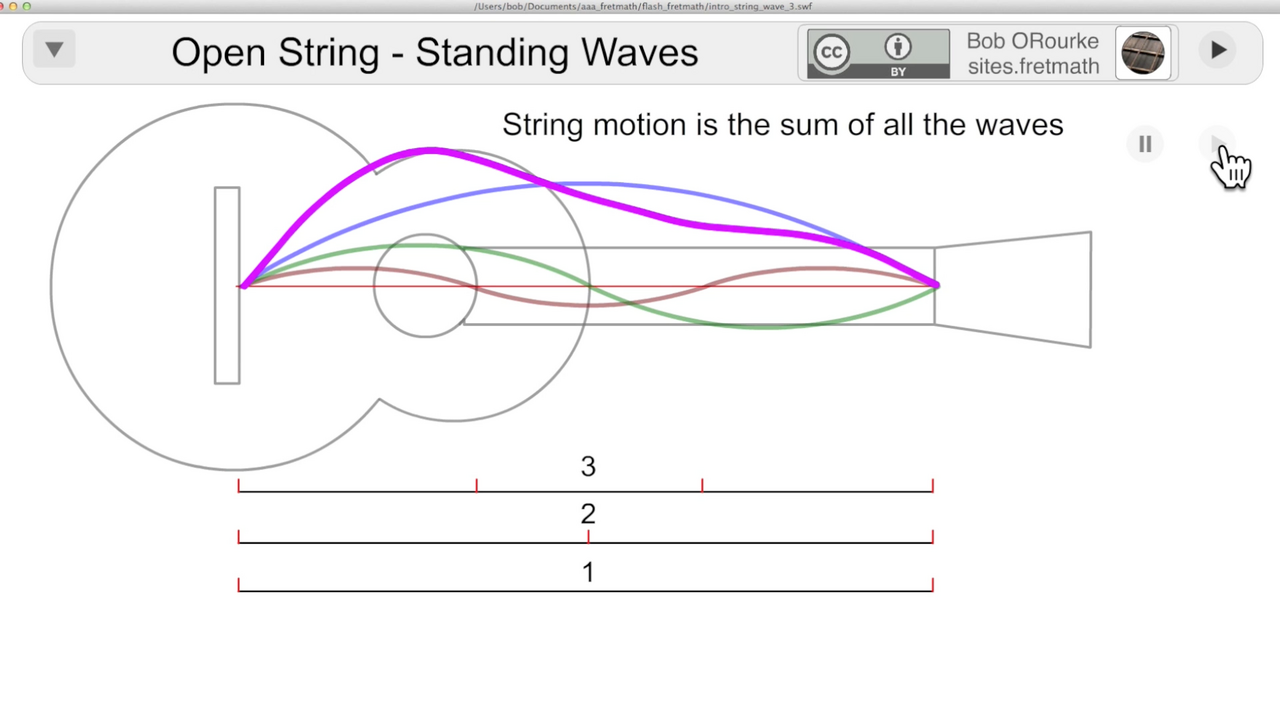
A plucked string vibrates as a whole and in halves, thirds and quarters at the same time. These overtones at 2, 3 and 4 times the base frequency mix in different strengths in a flute, a violin or a voice. That mix is called timbre.
Pure Pythagorean fifths do not add up neatly to an octave. Equal temperament divides the octave into 12 equal steps, each 2 to the power of 1/12 (about 1.0595) times the last. The Chinese prince Zhu Zaiyu calculated it precisely in 1584; it became the Western standard in the 1800s.
Jan Honvehlmann (Wikimedia Commons) · CC BY-SA 4.0
— · —
Five instrument families
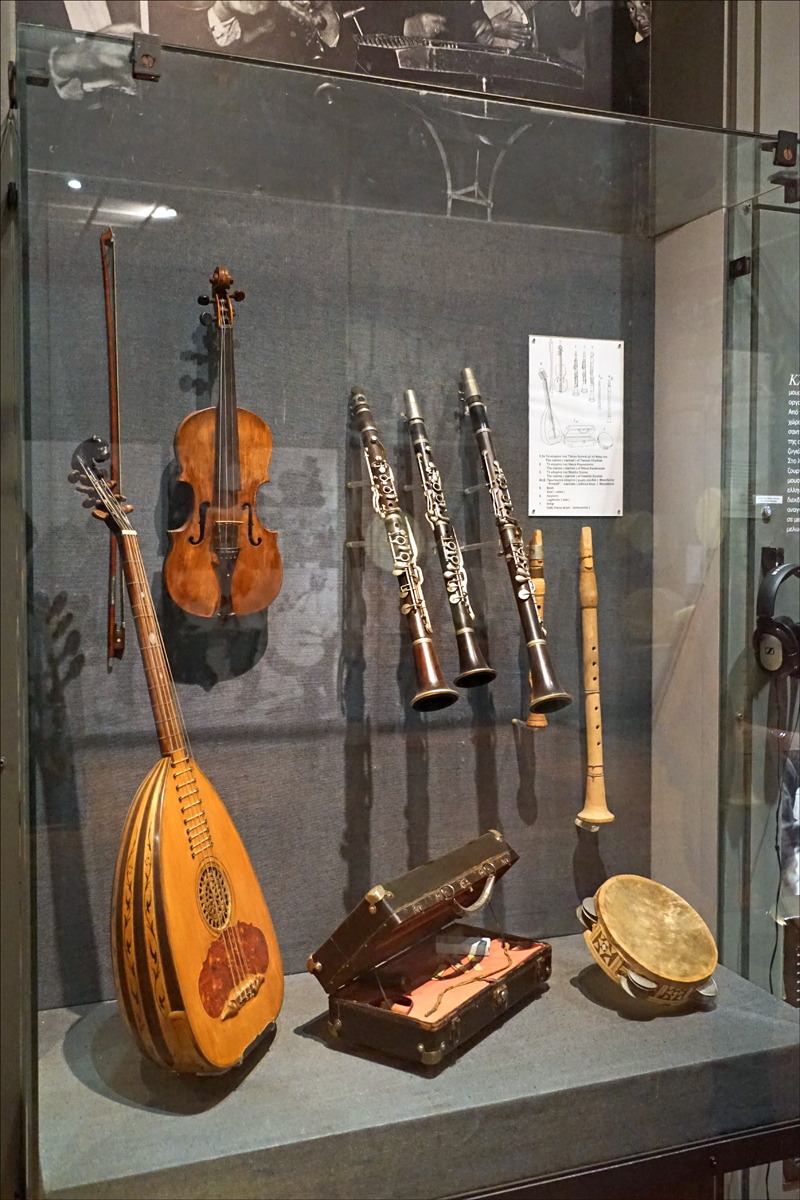
Musicologists Hornbostel and Sachs (1914) sorted instruments by what vibrates: idiophones (the body itself, like a bell or sistrum), membranophones (a stretched skin, like a drum), chordophones (strings, like a lyre), aerophones (air, like a flute or aulos), and later electrophones.
Jean-Pierre Dalbéra from Paris, France (Wikimedia Commons) · CC BY 2.0
Try itPluck a monochord
Move the bridge to shorten the vibrating part of the string, or press a ratio. Then pluck the whole string and the shortened part together and listen for the intervals the Greeks and the Chinese both found: half the string gives an octave, two thirds a fifth, three quarters a fourth.
Try itThree ways to tune a scale
Stacking pure 3:2 fifths gives the Pythagorean scale; five of its notes give a pentatonic scale like those heard from China to West Africa to Scotland. Pianos use equal temperament, twelve equal steps. The differences are small but you can hear them, especially in the major third.
The major third three ways (C with E played together; listen for the slow wobble, called beating):
Try itHarmonics make the color of a sound
Switch harmonics on and off and watch the shape of the wave change. A flute is close to a pure wave; a clarinet is strong in odd harmonics; a bowed string has many.
Go deeper
Lessons:MU1 3 · Pitch and the scalePreviewMU1 4 · IntervalsPreviewMU1 7 · Timbre and the overtone seriesPreviewPHYS1 14 · Waves on a slinkyPreviewPHYS1 15 · Sound with phyphoxPreview
For younger visitors (K–5): Make a sound you can see
Every sound is a shake, or vibration. A fast shake makes a high sound; a slow shake makes a low sound. The very first flutes were made from bird bones about 40,000 years ago!
Try this: stretch a rubber band over an open box. Pluck it. Now press it down halfway and pluck again. Which sound is higher? Then fill glasses with different amounts of water and tap them gently with a spoon.
Three quick questions (3 questions · runs in your browser, nothing is sent)
Lessons:MU1 1 · The pulsePreviewMU1 3 · Pitch and the scalePreviewMU1 7 · Timbre and the overtone seriesPreviewMU1 16 · Gamelan, raga and West African drummingPreviewPHYS1 15 · Sound with phyphoxPreviewMA9 14 · Log scales: quakes, sound and pHPreview
Read: Robert Browning, The Pied Piper of Hamelin (1842, public domain), a tale about music's power; the myth of Orpheus in Ovid's Metamorphoses, Book 10 (public domain); George Selden, The Cricket in Times Square (1960), where a cricket's music fills a subway station; Rachel Isadora, Ben's Trumpet (1979) for younger readers.
Quiz: Sound of the ages (9 questions · runs in your browser, nothing is sent)
Ivan Turk, ed., Mousterian "Bone Flute" (1997); Cajus Diedrich, "Neanderthal bone flutes: simply products of Ice Age spotted hyena scavenging activities", Royal Society Open Science 2 (2015).
Nicholas J. Conard, Maria Malina and Susanne C. Münzel, "New flutes document the earliest musical tradition in southwestern Germany", Nature 460 (2009); Thomas Higham et al., Journal of Human Evolution 62 (2012).
Juzhong Zhang et al., "Oldest playable musical instruments found at Jiahu early Neolithic site in China", Nature 401 (1999).
Penn Museum and British Museum, the Lyres of Ur; Leonard Woolley, Ur Excavations II: The Royal Cemetery (1934).
Hubei Provincial Museum, the bianzhong of the Marquis Yi of Zeng; Lothar von Falkenhausen, Suspended Music (1993).
M. L. West, Ancient Greek Music (Oxford, 1992), on the aulos, the Seikilos epitaph and notation; National Museum of Denmark (inv. 14897).
Anne Draffkorn Kilmer, "The Discovery of an Ancient Mesopotamian Theory of Music", Proceedings of the American Philosophical Society 115 (1971); M. L. West, "The Babylonian Musical Notation and the Hurrian Melodic Texts", Music & Letters 75 (1994).
Aquincum Museum, Budapest, the organ of 228 CE; Vitruvius, On Architecture 10.8 (the hydraulis).
Instituto Nacional de Antropología e Historia (INAH), Tlatelolco whistles; Arnd Adje Both, studies of Aztec sound instruments.
Paul Berliner, The Soul of Mbira (1978); UNESCO Representative List, gamelan (2021).
Erich von Hornbostel and Curt Sachs, "Systematik der Musikinstrumente" (1914); Kenneth G. Robinson, A Critical Study of Chu Tsai-yü's Contribution to the Theory of Equal Temperament (1980).
newSchoolWorks.com · The Museum of Everyday Living · Bradenton, FL · SI paintings made for this explainer (reconstructions, not photographs); photographs from Wikimedia Commons under the licences shown on each card. All sounds are synthesized in your browser.