Rice is a grass that people learned to grow in standing water, twice, on two continents. Wherever it went it asked for the same things: level fields, controlled water and a great deal of shared, hard labor. On the coast of South Carolina and Georgia, that labor was the labor of enslaved Africans.
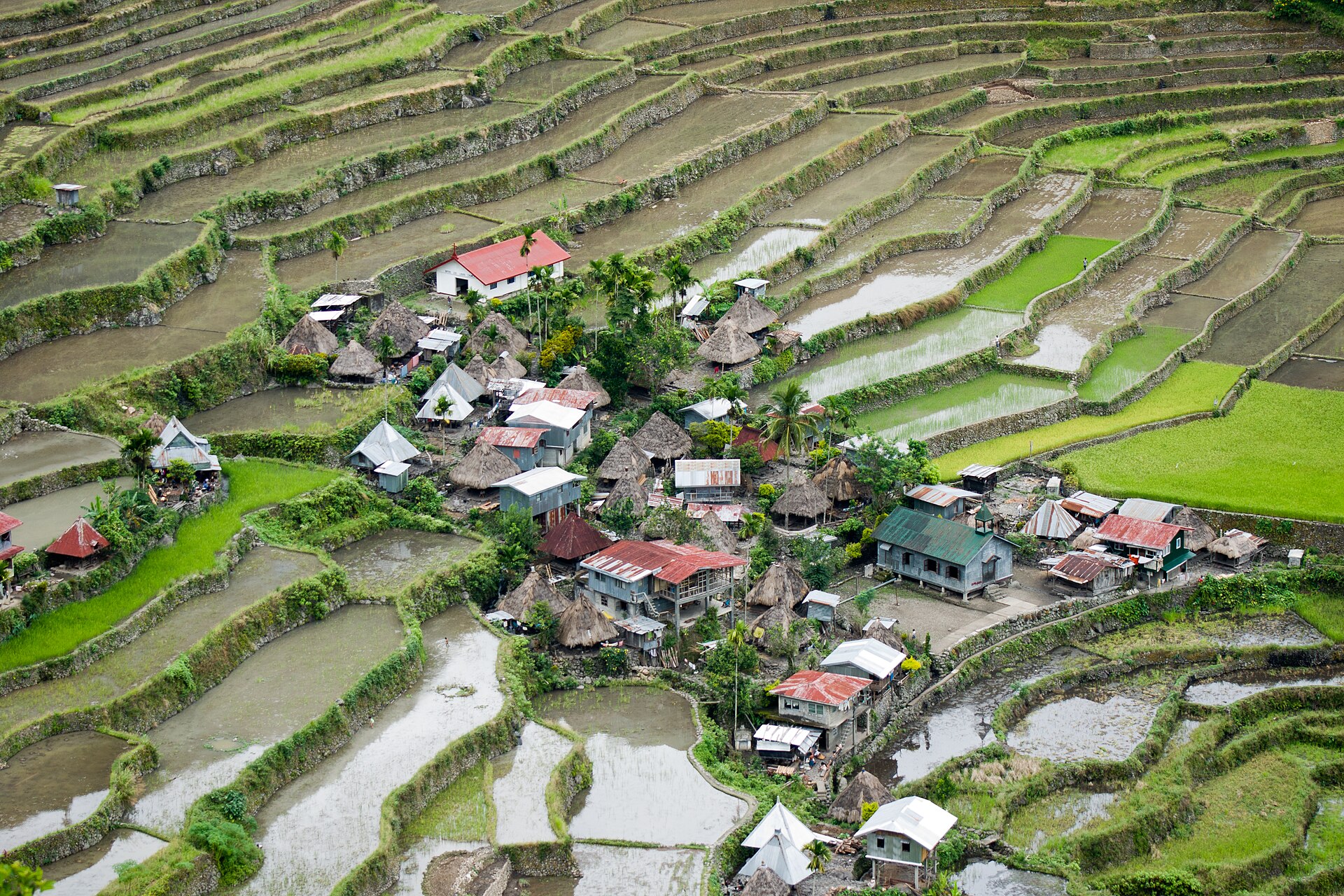
The Ifugao terraces · CEphoto, Uwe Aranas · Wikimedia Commons, CC BY-SA 4.0
Drawer:Rice: Asia, Africa and the Lowcountry · Quiz:Rice, 8 questions
Lessons:MH4 46 · The Rice Revolution (6–8)PreviewWH4 46 · The Rice Revolution (6)PreviewPC0 15 · Archimedes counts the rice (K–2)PreviewMA6 41 · Rice on the boardPreviewAPHG 9 · The agricultural revolutionsPreviewAPWH 10 · The Atlantic systemPreviewAPUSH 10 · Slavery and its enemiesPreviewE05 26 · Price controls and black marketsPreview
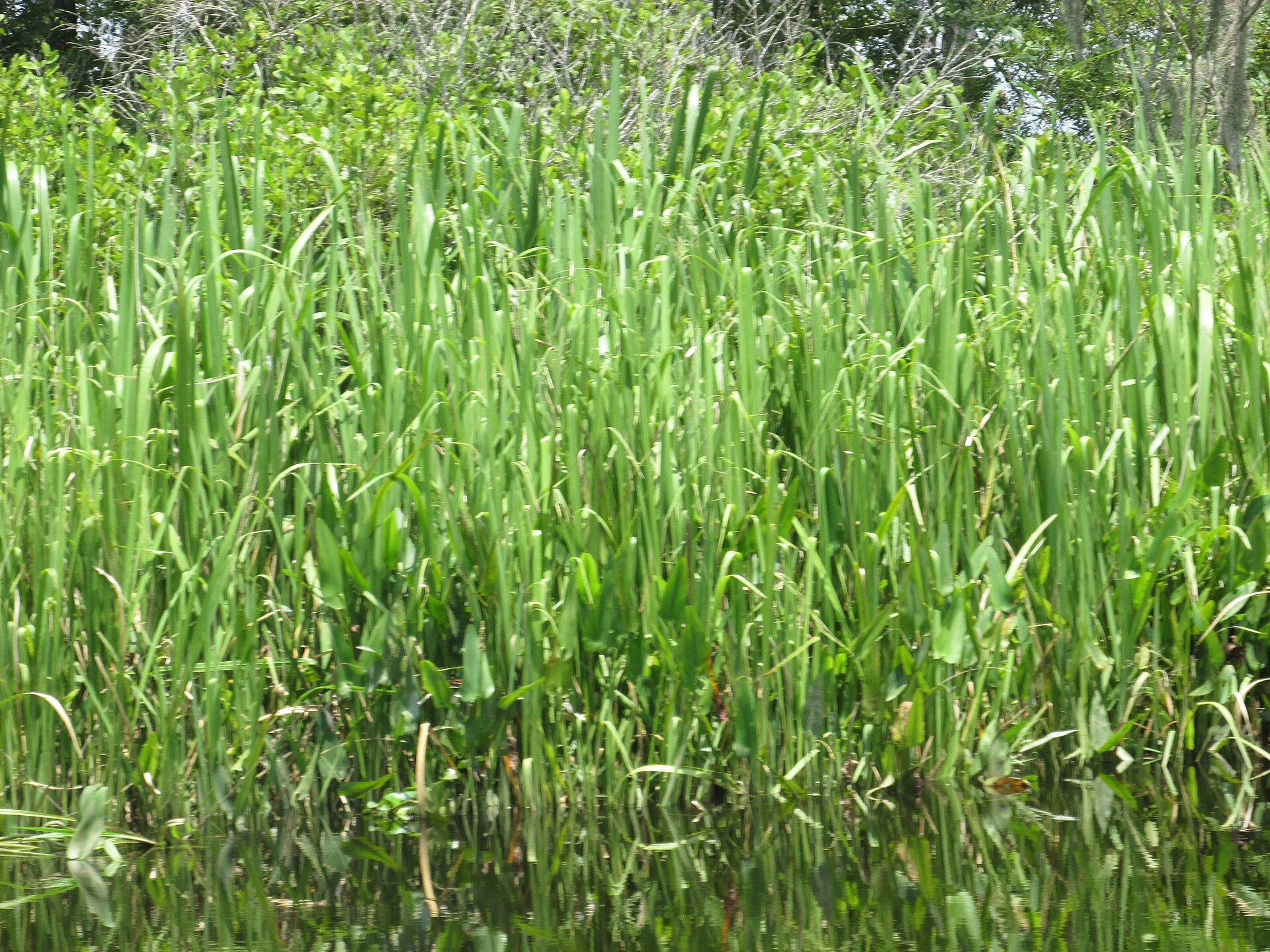
Rice is a grass. Each grain is a seed. Farmers plant rice in fields full of water, called paddies. In China, India, Africa and long ago in South Carolina, people built walls and gates so the water would come in and go out at just the right time. Count it: one rice plant can give a hundred grains or more.
Room 1Where rice began
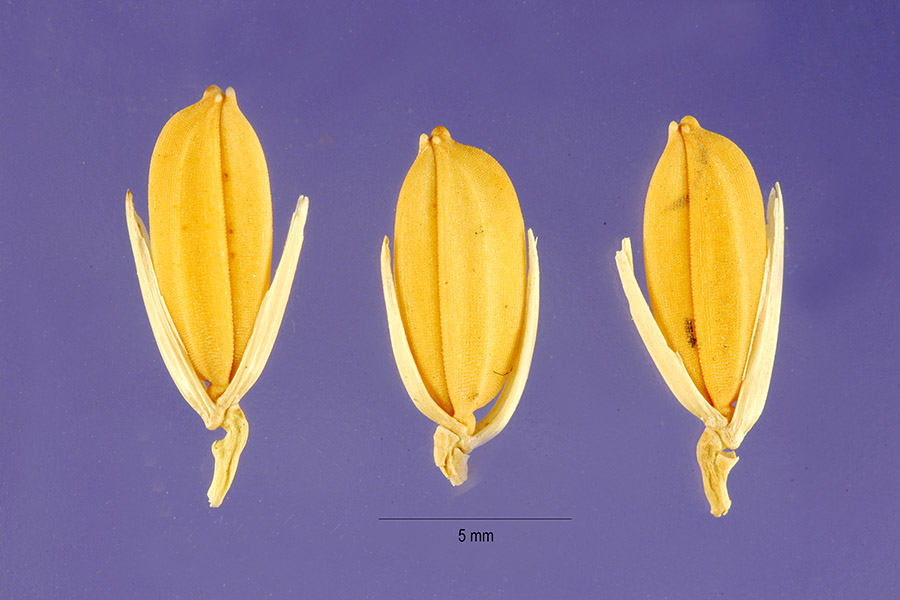
Photo: Jose Hernandez @ USDA-NRCS PLANTS Database · Wikimedia Commons, Public domain
Two rices, two continents
There are two domesticated rices. Asian rice (Oryza sativa) was first cultivated from wild rice in the lower Yangtze valley of China roughly 9,000 to 10,000 years ago, and it took thousands of years more for fully domesticated plants, whose grains stay on the stalk, to appear. African rice (Oryza glaberrima) was domesticated separately, about 3,000 years ago, in the inner delta of the Niger River in today’s Mali.
Photo: Basile Morin · Wikimedia Commons, CC BY-SA 4.0
Why rice changed history
Rice can feed more people per acre than almost any other grain, but wet rice asks for flat fields, steady water and a great deal of shared labor. Where people grew it, they built canals, terraces and village rules for sharing water. Today rice is the main food of more than half the people on Earth.
Photo: FBenjr123 · Wikimedia Commons, CC BY-SA 4.0
What a paddy is
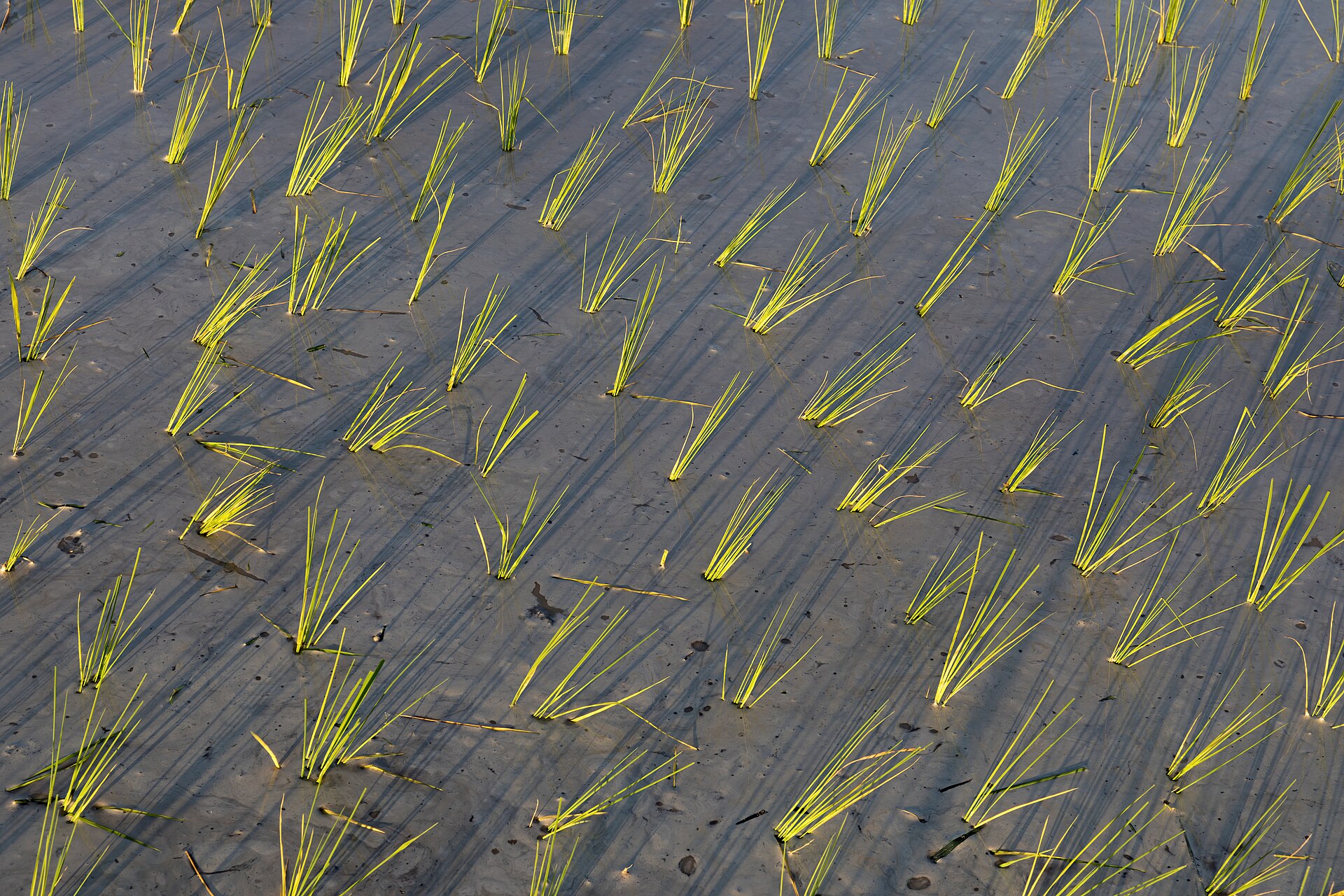
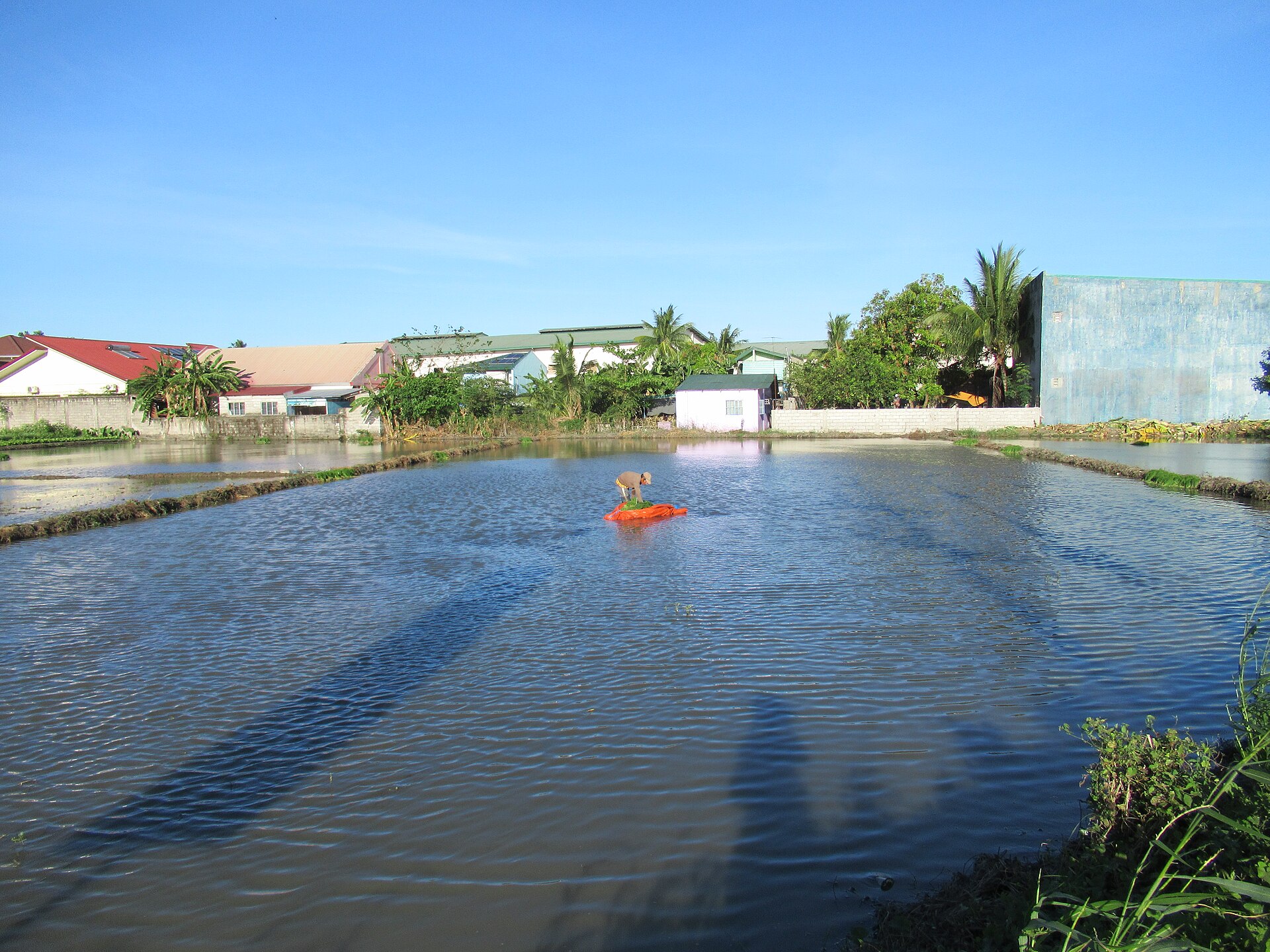
A paddy is a level field ringed by low earth walls (bunds) so that it can be flooded. Standing water drowns most weeds, keeps the soil warm and steady, and lets the roots breathe through the plant’s own air channels. Farmers grow seedlings in a nursery, transplant them by hand or machine, then drain the field before harvest.
Photo: CEphoto, Uwe Aranas · Wikimedia Commons, CC BY-SA 4.0
The Ifugao terraces
In the mountains of northern Luzon, the Philippines, the Ifugao people carved rice terraces up whole valley walls, fed by forest streams and bamboo pipes. UNESCO listed the Rice Terraces of the Philippine Cordilleras in 1995. Their age is debated: the old story says 2,000 years, but archaeologists digging at Kiangan have found that many terraces were built after about 1600, perhaps as people fled Spanish rule into the highlands.
Photo: Jialiang Gao, www.peace-on-earth.org · Wikimedia Commons, CC BY-SA 3.0
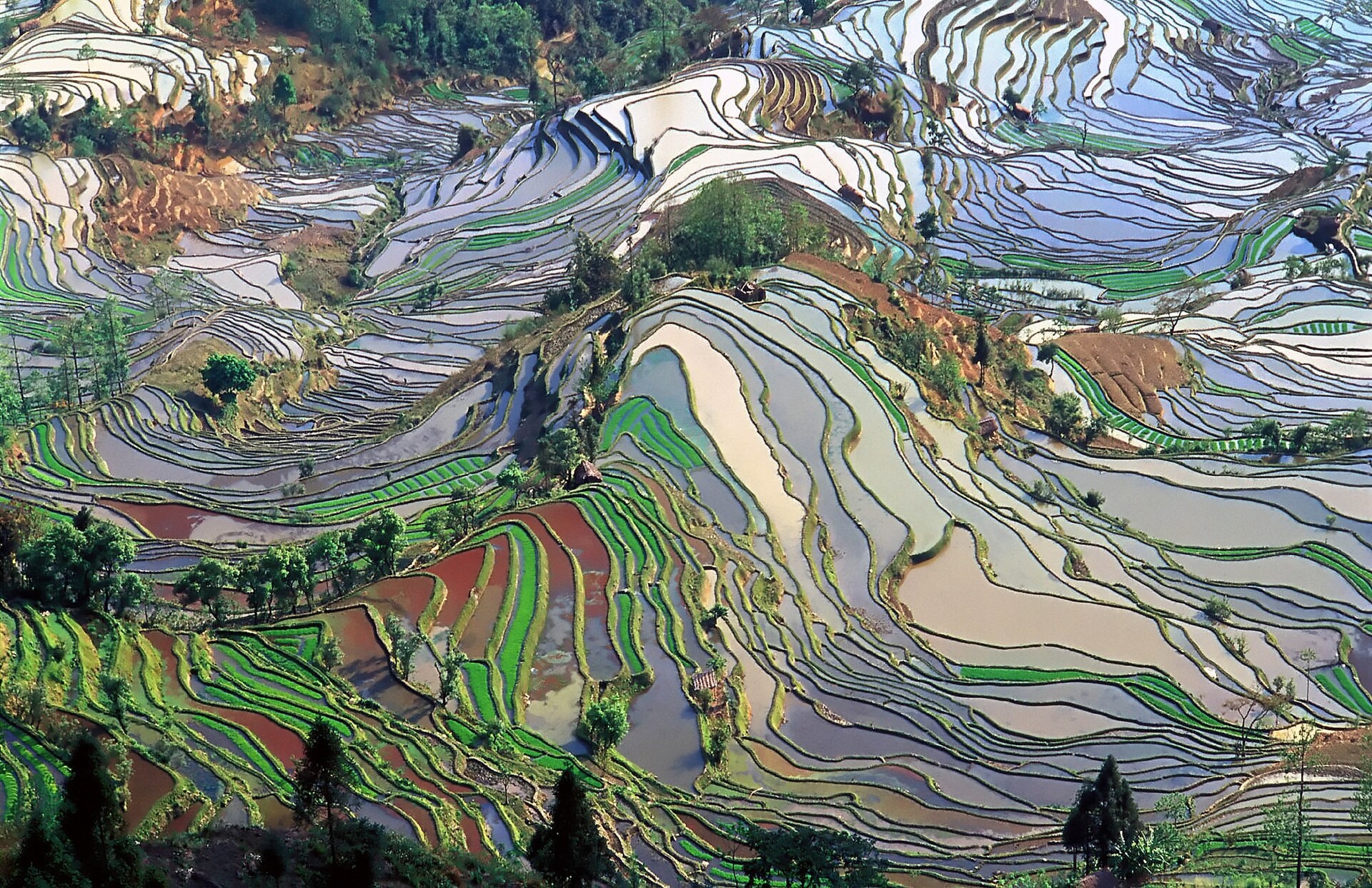
The Honghe Hani terraces
In Yunnan, southwest China, the Hani people have farmed terraces for about 1,300 years, climbing as many as 3,000 steps up the Ailao Mountains. Forest at the top catches rain, villages sit in the middle, and terraces run below: one system of water, people and fields. UNESCO listed it in 2013.
In 2014 the psychologist Thomas Talhelm and colleagues argued in Science that people from rice-growing south China think more interdependently than people from wheat-growing north China, because wet rice forced neighbors to share water and labor. Other researchers answer that climate, disease, history or the pace of modernization could explain the same pattern. Weigh it: what evidence would convince you either way?
Photo: Africa Rice Center · Wikimedia Commons, CC BY-SA 3.0
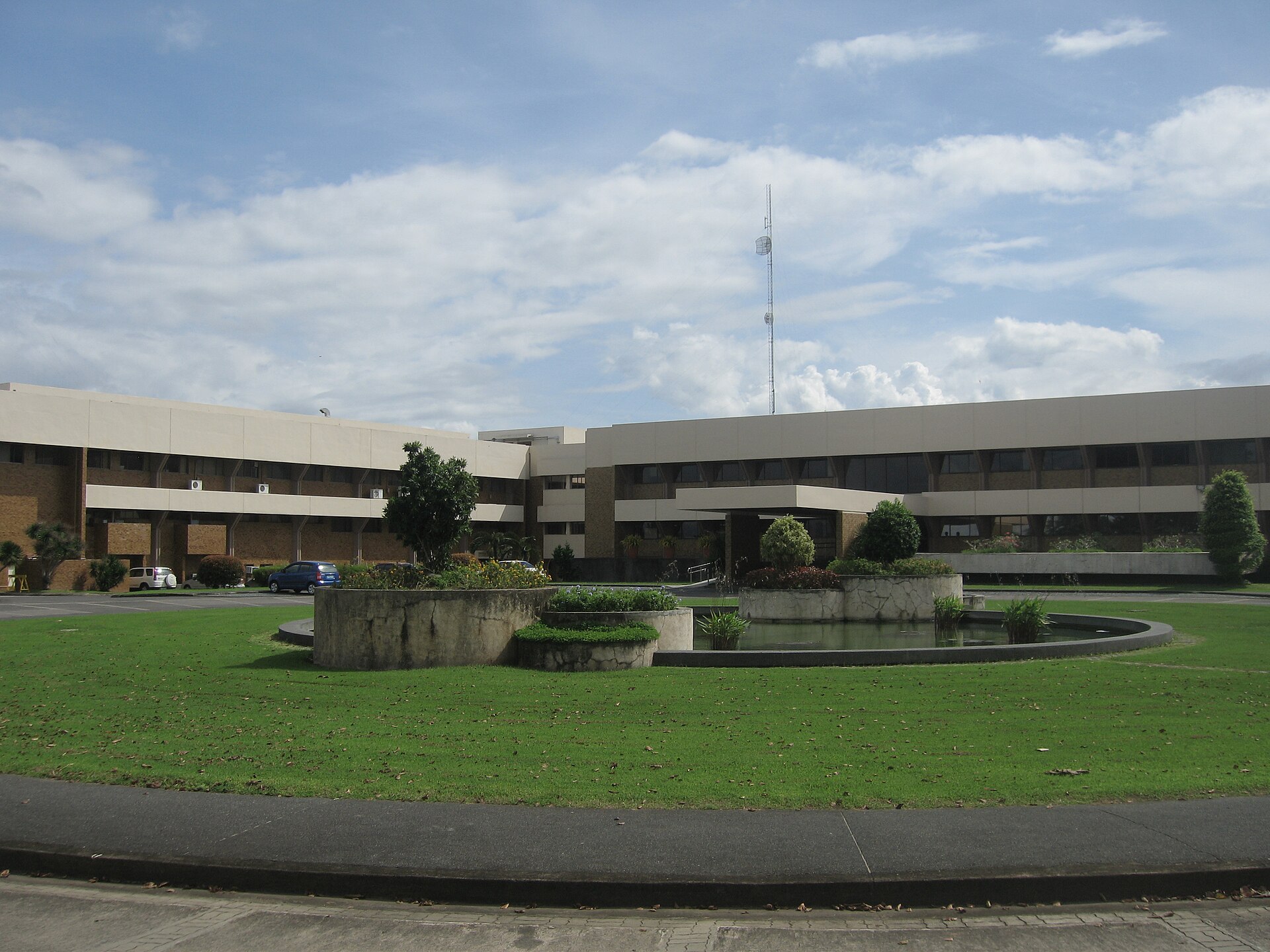
IR8 and the Green Revolution
In 1966 the International Rice Research Institute (IRRI), at Los Baños in the Philippines, released IR8, a short-stemmed rice that did not fall over under heavy grain and fertilizer. Called “miracle rice,” it could double yields. With new seeds, fertilizer and irrigation, Asian harvests climbed fast; critics point to costs for poorer farmers, groundwater and soil.
Photo: International Rice Research Institute (IRRI) · Wikimedia Commons, CC BY 2.0
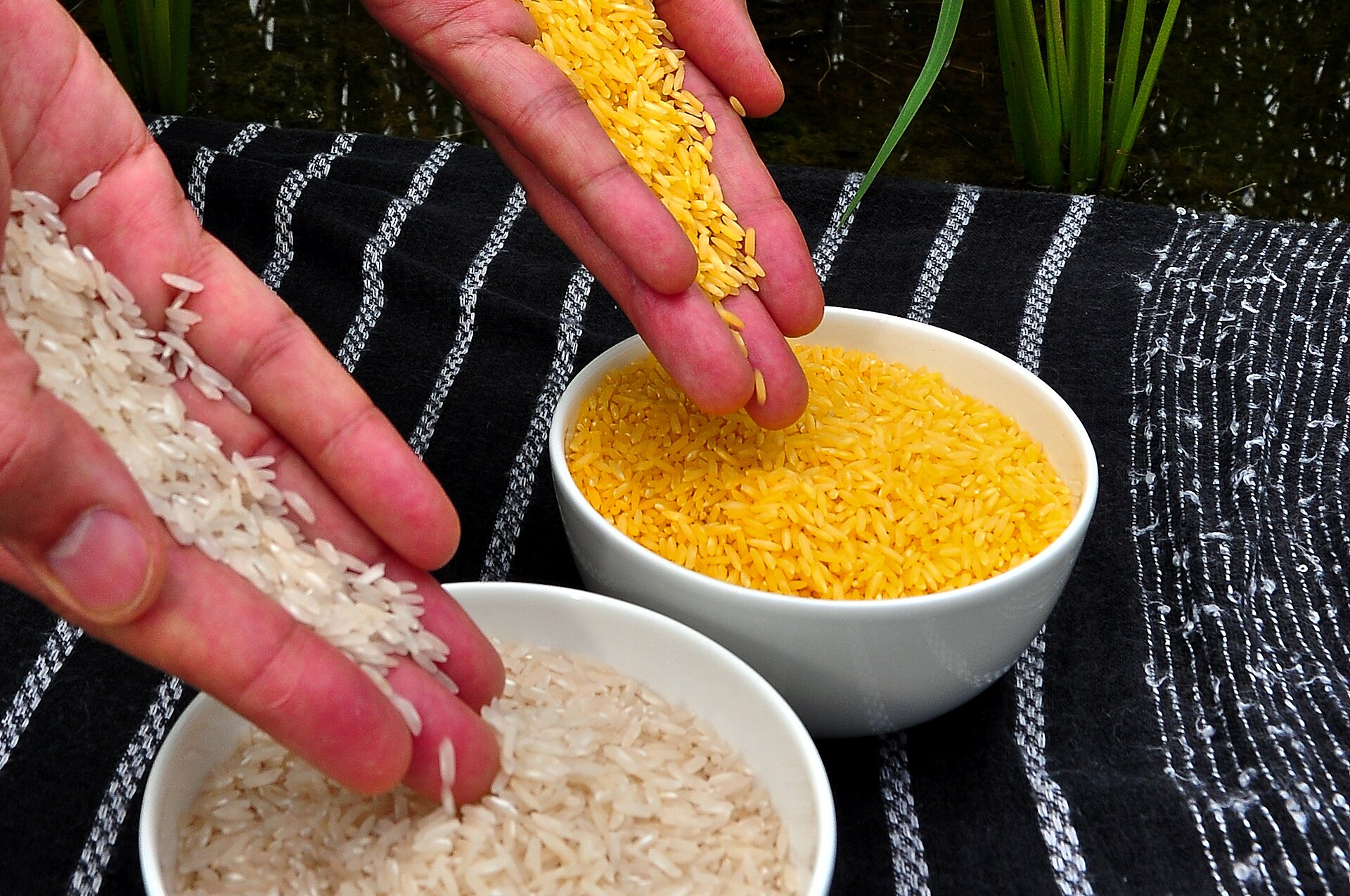
Golden Rice
Golden Rice is rice engineered to make beta-carotene, which the body turns into vitamin A; the grain is yellow. Its makers hoped to fight childhood blindness from vitamin A deficiency. The Philippines approved it for planting in 2021, but in 2024 a court there stopped its commercial planting after a challenge by farmer and environmental groups. Supporters and opponents still argue over risk, benefit and who controls seed.
Photo: Vasco Pessoa Jorge · Wikimedia Commons, CC BY-SA 4.0
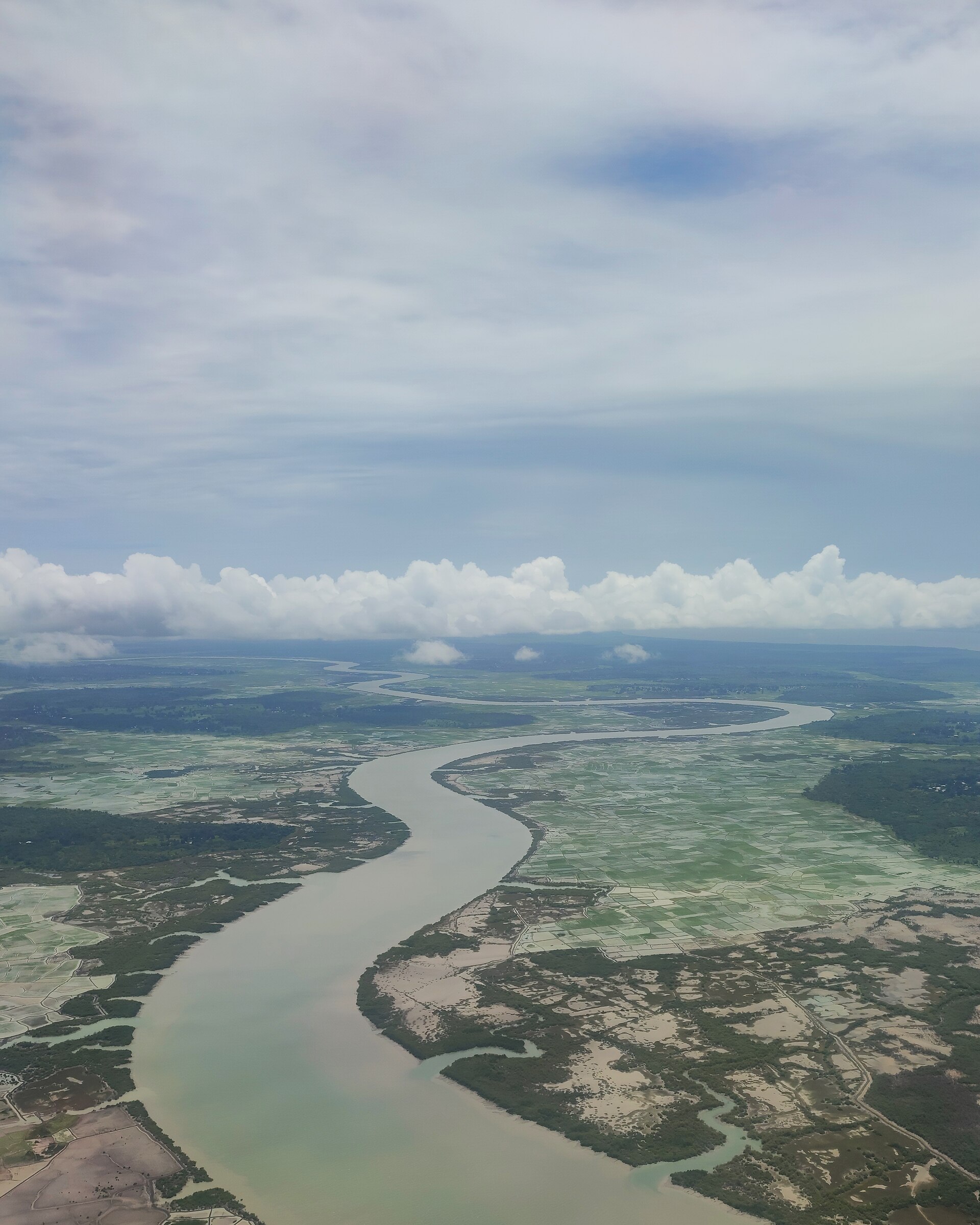
Mangrove rice
On the coasts of Guinea-Bissau, Guinea and Senegal, farmers such as the Balanta and Baga turned mangrove swamp into rice fields. They built dikes against the tide, let rain wash the salt out of the soil for a season or more, and used gates in the dikes to let fresh water in and keep sea water out. It is hard, skilled engineering, done with long-handled shovels.
Along the inner Niger delta in Mali, some African rice varieties can grow taller as the yearly flood rises around them, keeping their heads above water. Farmers sow before the flood and harvest by canoe or after the water falls. African rice tolerates poor soil, drought and weeds better than Asian rice, though it yields less grain.
In Black Rice (2001), the geographer Judith Carney argued that enslaved West Africans brought the knowledge of growing rice to the Carolina Lowcountry, and that planters bought captives from rice-growing regions for that skill. In 2007 the historians David Eltis, Philip Morgan and David Richardson answered that shipping records do not show planters favoring the rice coast, and that the tide-irrigation system grew out of many sources. Most historians now agree enslaved Africans did the work and brought real skill; they still argue over how much of the system came from Africa.
This room tells the history of slavery directly. The rice fields of the Lowcountry were cleared, built and worked by enslaved people of African descent, whose descendants, the Gullah Geechee people, still live on this coast, from North Carolina into northeast Florida.
How a rice trunk works
The ocean tide pushes a fresh-water river up and down twice a day. A wooden trunk with a flap gate at each end sits in the earth bank. Press a button to work the gate.
Schematic, not to scale. Real trunks were hollowed cypress boxes with hanging gates; fields were flooded and drained several times in a season (the “sprout,” “stretch,” “long” and “harvest” flows).
Photo: Miles Buddy · Wikimedia Commons, CC BY-SA 3.0
Rice and slavery in the Lowcountry
From about 1700 to the Civil War, rice made the coast of South Carolina and Georgia, from Georgetown to the St. Marys River, one of the richest places in British North America. The wealth came from enslaved people of African descent, who cleared cypress swamps, built miles of banks and canals, and planted, flooded, weeded, harvested and threshed the rice, in heat, disease and danger. In many rice districts enslaved people made up most of the population.
On many rice plantations enslaved people worked by the task: a set piece of work for the day, often a quarter acre of hoeing, after which the rest of the day was theirs. People used that time to grow their own food, raise animals, make baskets and trade. The task system did not soften slavery; it was a way planters ran huge fields, and it also let families and communities hold on to language, craft and faith.
Lowcountry planters used the tide. Rivers like the Cooper, Combahee and Savannah run fresh near the coast, but the ocean tide pushes them up and down twice a day. Fields were walled with earth banks, and wooden gates called trunks were set into the banks: open one at high tide and fresh river water floods the field; open it at low tide and the field drains. Watch the animated trunk on this page.
“Carolina Gold” was the long-grain rice that made Charleston famous, named for the golden color of its hulls in the field. Tradition says its seed came to Charleston around 1685 on a ship from Madagascar; the story cannot be proved. Commercial growing ended in the early 1900s, and the Carolina Gold Rice Foundation, founded in 1998, has brought it back on small farms.
Photo: Don McCullough · Wikimedia Commons, CC BY 2.0
Gullah Geechee
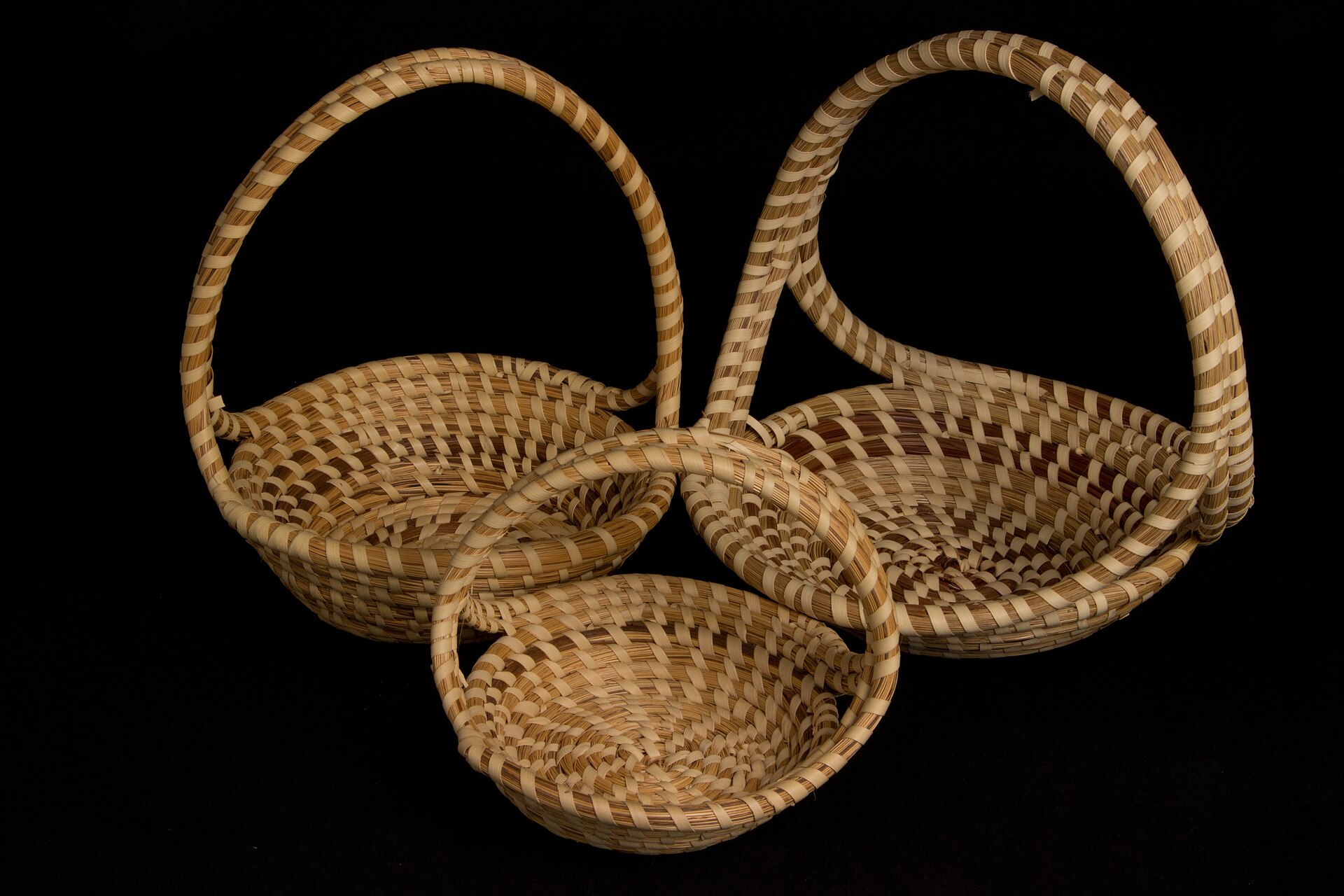
The descendants of the enslaved people of the rice coast are the Gullah Geechee people. Their language, foods (red rice, okra soup, Hoppin’ John), sweetgrass baskets, music and faith carry West and Central African roots. In 2006 Congress created the Gullah Geechee Cultural Heritage Corridor, from Wilmington, North Carolina, to St. Johns County, Florida, to help protect that culture and the land families still hold.
After emancipation in 1865, freedpeople would not work the rice fields under the old terms, and planters had little money to rebuild banks. Mechanized rice farms in Louisiana, Arkansas and Texas grew rice more cheaply on dry, firm land. Then hurricanes broke the banks: the Sea Islands hurricane of 1893 killed some 2,000 people, and the storm of 1911 is often said to have ended commercial rice on the Carolina coast. Many old fields are now marsh and wildlife refuges.
≈ million tonnes (milled), crop year 2023/24. Source: USDA FAS, Grain: World Markets and Trade, Grain: World Markets and Trade. Figures are revised every month.
China and India together grow over half of the world’s rice. In the 2023/24 crop year China harvested about 145 million tonnes (milled) and India about 137 million, followed by Bangladesh, Indonesia, Vietnam and Thailand. Most rice is eaten in the country where it is grown: only about a tenth of it crosses a border.
Photo: Ark. Agricultural Experiment Station · Wikimedia Commons, CC BY 2.0
American rice
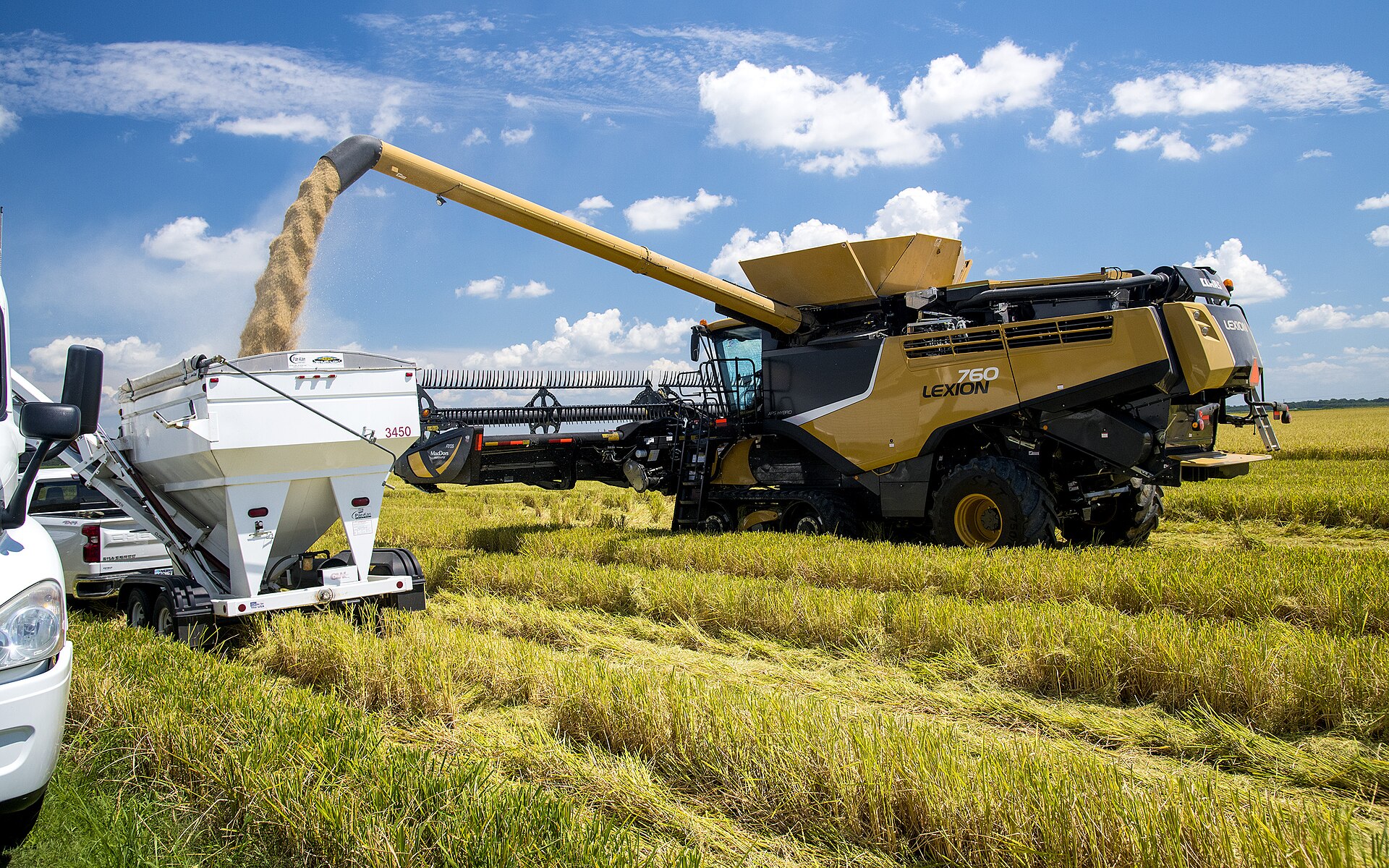
The United States grows rice in the Arkansas Grand Prairie and the Mississippi Delta (Arkansas alone grows close to half), the Sacramento Valley of California (short and medium grains for sushi), Louisiana, Texas, Missouri and Mississippi. Florida grows some rice too, in the Everglades Agricultural Area south of Lake Okeechobee, often between crops of sugarcane. The U.S. sells about half its rice abroad.
Flooded paddies are low on oxygen, and microbes in the mud make methane, a strong greenhouse gas. Rice fields produce roughly a tenth of the methane people cause. Farmers can cut it by draining fields partway through the season (“alternate wetting and drying”), which also saves water.
In late 2007 and 2008, after poor harvests, rising oil and fertilizer prices, and fear, India, Vietnam, Egypt and other exporters limited or banned rice exports. Importers panicked and bought. The export price of Thai white rice roughly tripled, to over $1,000 a tonne in May 2008, before falling back. Families in rice-importing countries such as the Philippines and Haiti paid the most.
When a big exporter bans exports, its own shoppers pay less for a while, but farmers there earn less and buyers abroad pay more. In July 2023 India banned exports of non-basmati white rice to hold down prices at home; world prices jumped, and India lifted the ban in 2024. Is an export ban fair to your own people, or a tax on poor countries? Use the market game to try it.