The mountains that build land, bury towns and keep them for us to find
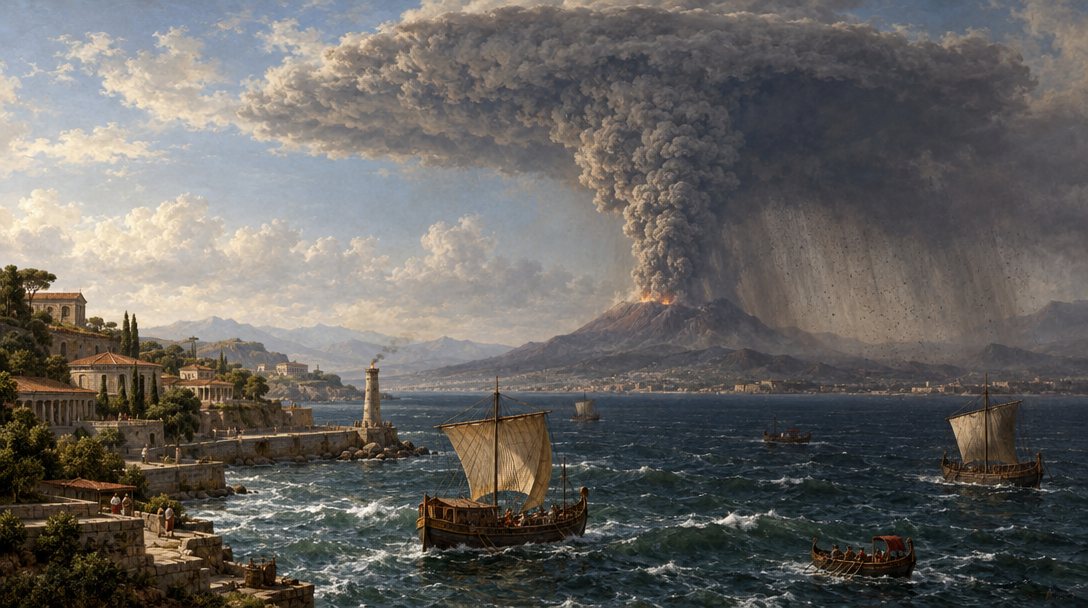
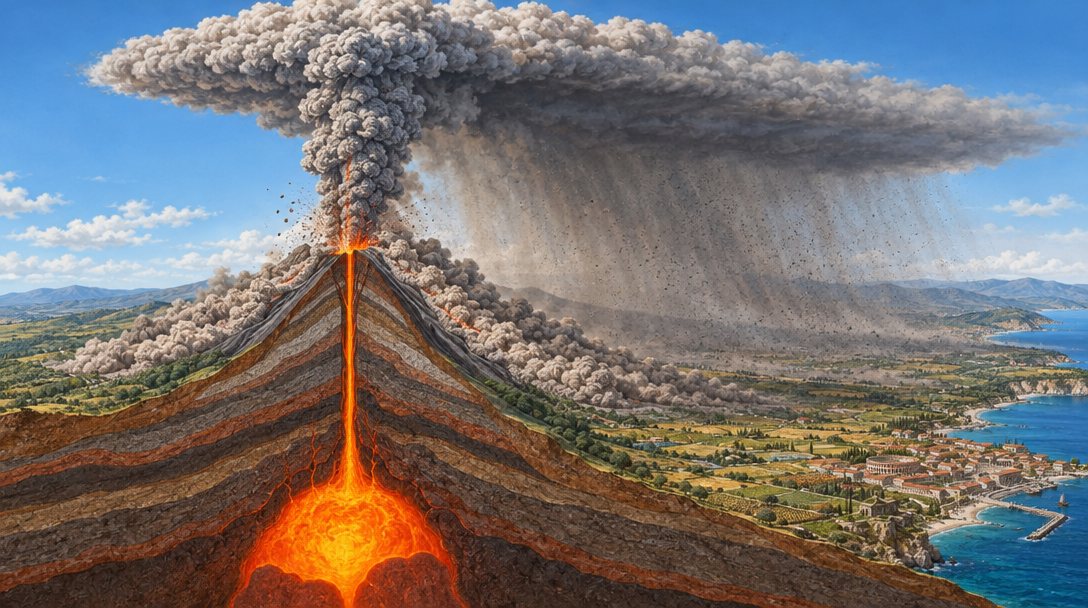
SI painting, made for this explainer: an illustration, not a photograph.
Volcanoes made the islands of Hawaiʻi, the soils of Italy and the air we breathe. They also bury towns in a morning. Because ash and hot flows seal everything at once, a buried town is a snapshot no ordinary ruin can match: bread in an oven, words on a wall, a scroll still rolled. This explainer starts with how volcanoes work, visits the lost cities, follows the eruptions that changed the world, and ends with how scientists watch volcanoes today. Next door, the Roman engineering wing shows how Pompeii was built before it was buried.
Part oneHow volcanoes work
Plate tectonics · Worldwide
Where volcanoes come from
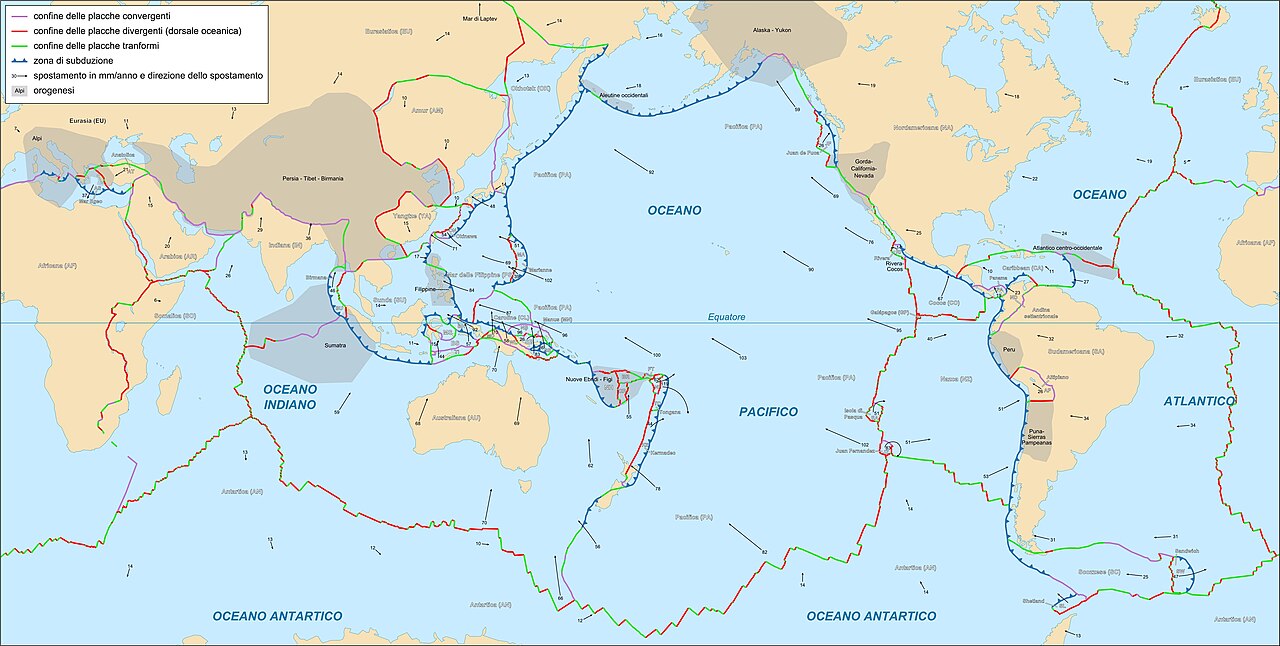
Earth’s outer shell is broken into moving plates. Most volcanoes sit where plates pull apart (mid-ocean ridges, Iceland) or where one plate dives under another and melts (the Andes, Japan, the Cascades). The rim of the Pacific is lined with so many that it is called the Ring of Fire; it holds roughly three-quarters of the world’s active volcanoes.
Figures marked ≈ or "about" are estimates or disputed.
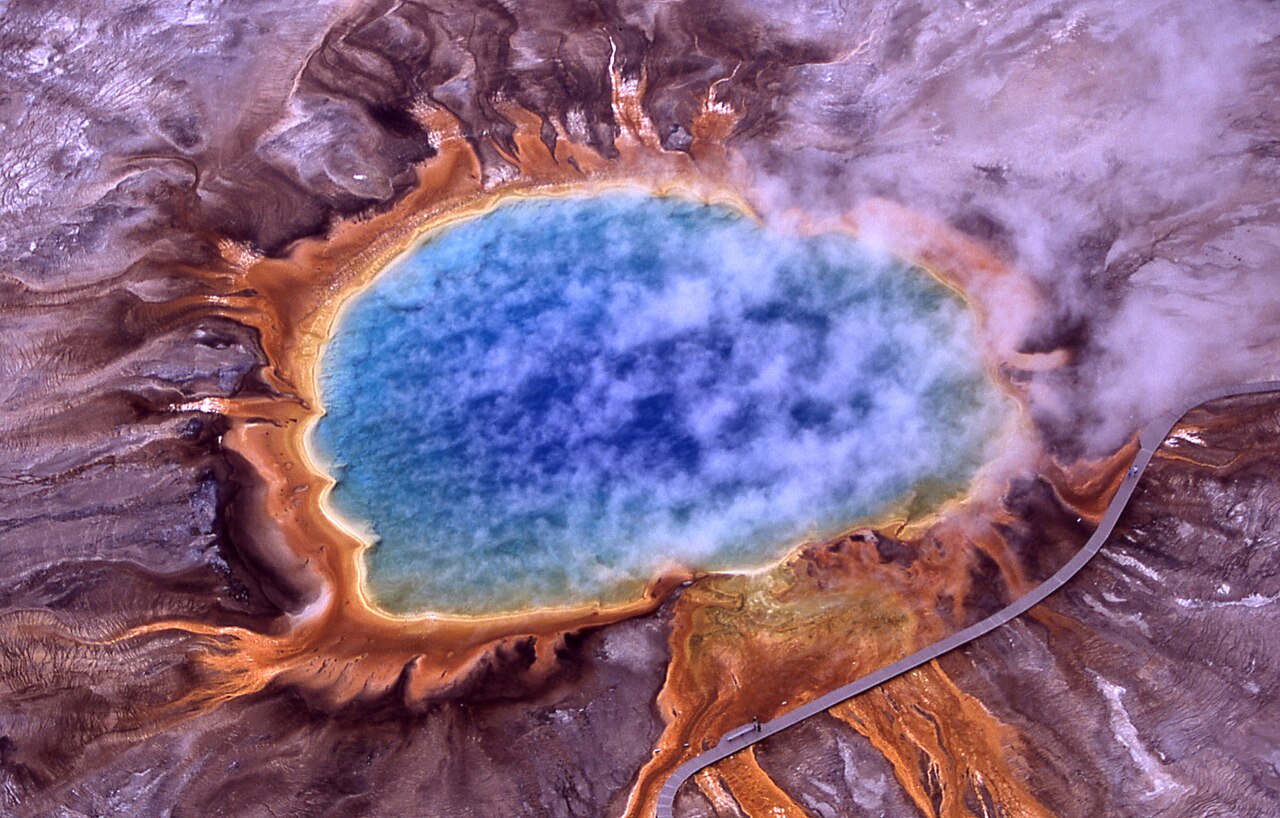
Some volcanoes sit far from any plate edge, above a hot plume rising from deep in the mantle. As the plate slides over the plume, a line of volcanoes forms like stitches from a sewing machine: the Hawaiian Islands get older toward the northwest. Yellowstone sits over a hotspot under North America.
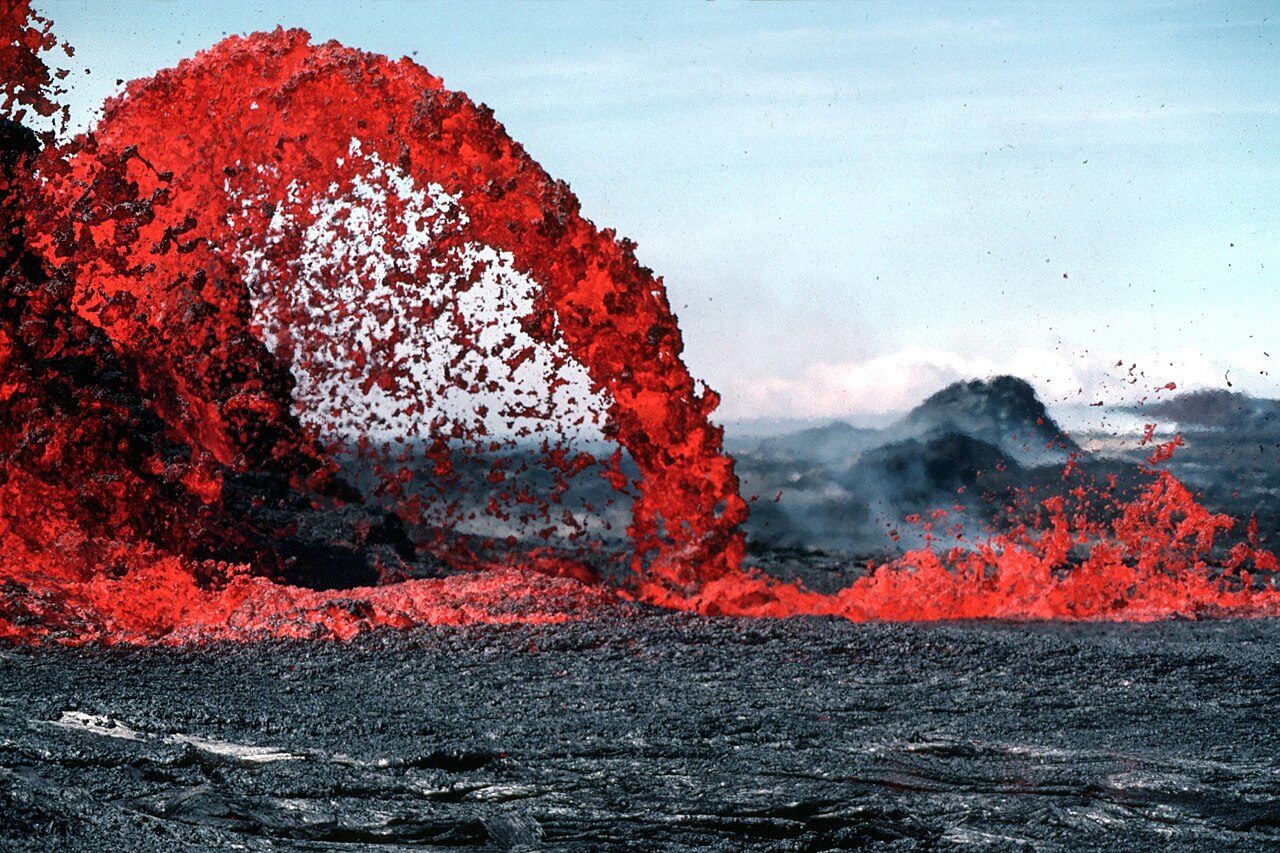
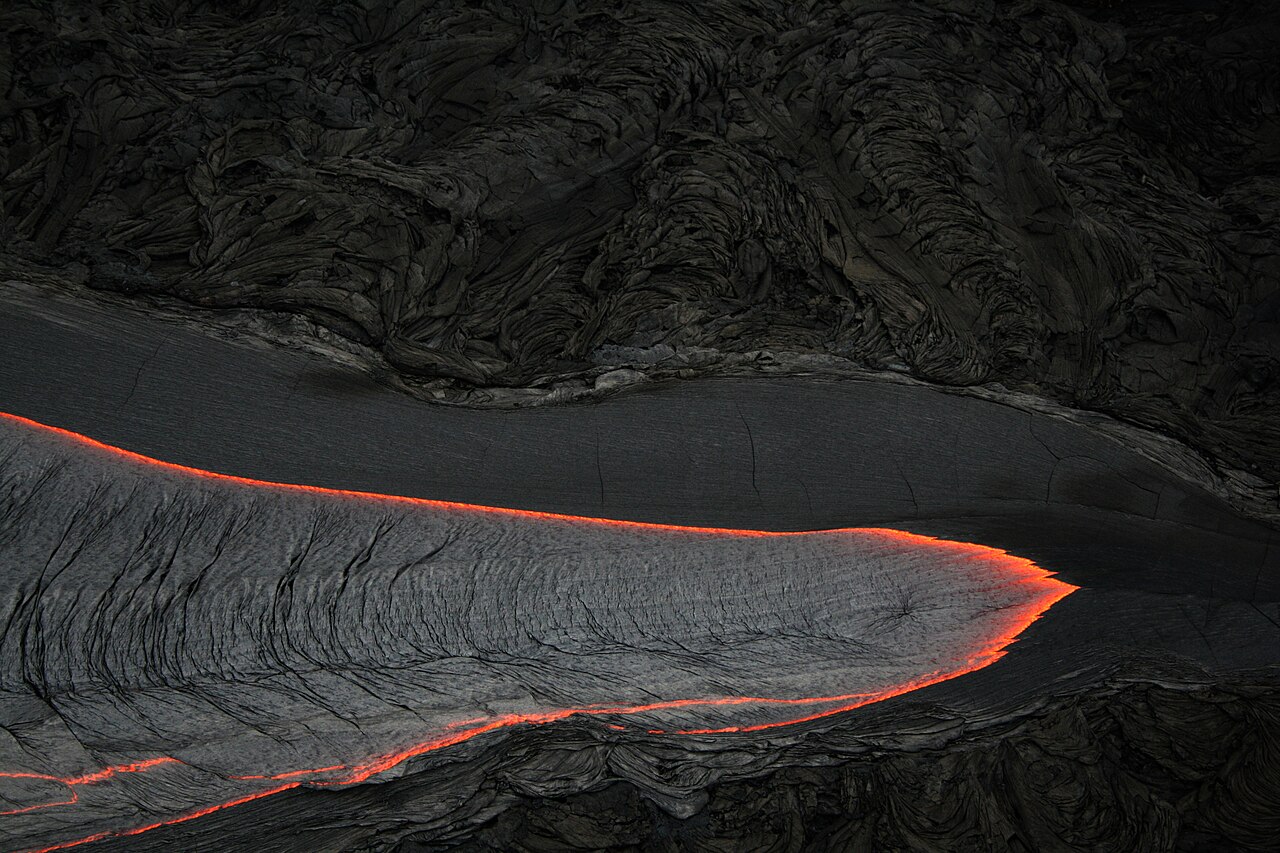
Magma low in silica (basalt) is runny, lets gas escape and flows as lava rivers, as in Hawaiʻi. Magma rich in silica (andesite, rhyolite) is thick and sticky; it traps gas until the pressure blows it apart into ash and pumice. Same heat, very different danger.
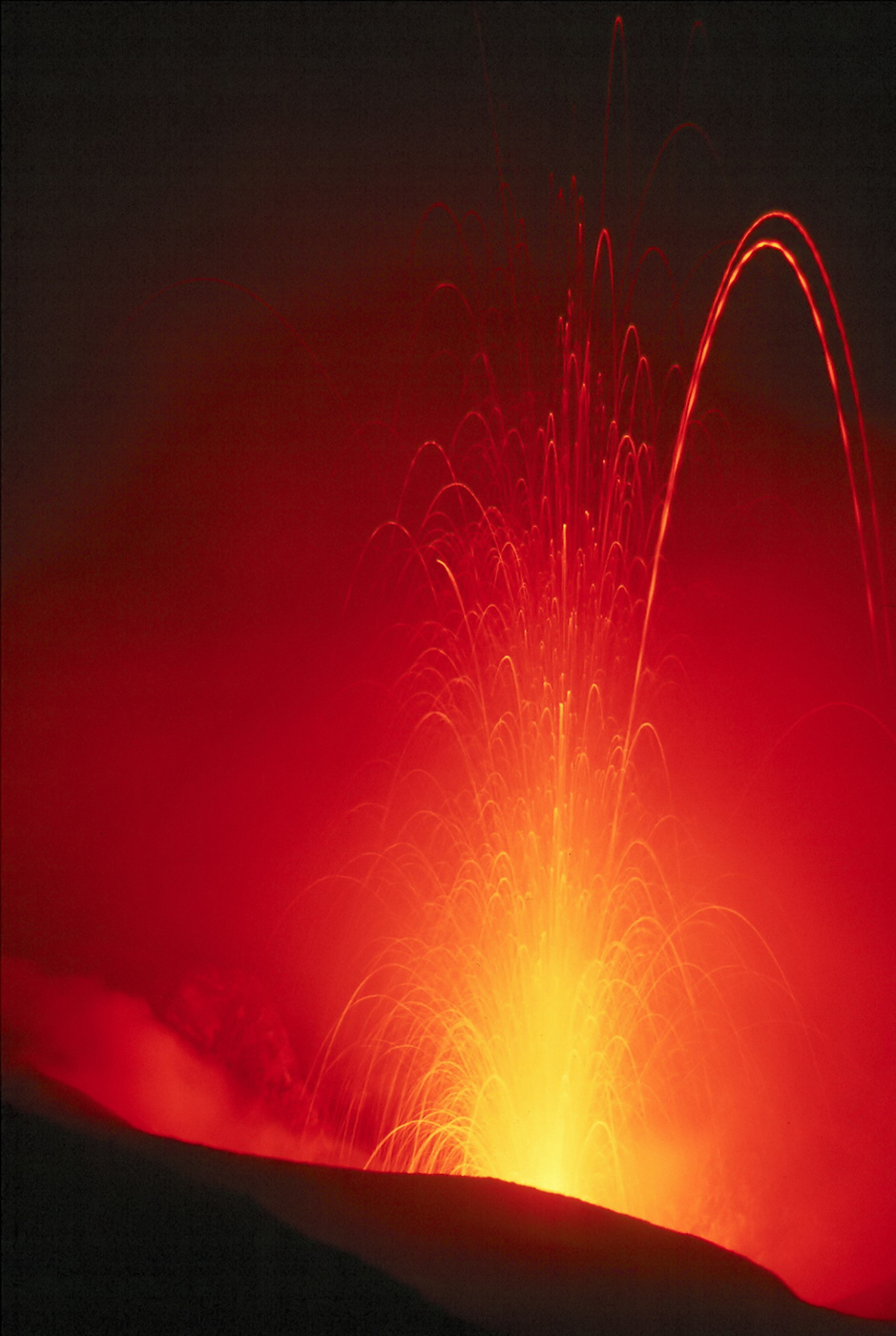
Brocken Inaglory (Wikimedia Commons) · CC BY-SA 3.0
Named types · Hawaiʻi · Stromboli · Vulcano · Vesuvius
Four kinds of eruption
Volcanologists name eruptions after famous examples. Hawaiian: fountains and lava flows. Strombolian: bursts of glowing bombs every few minutes, after Stromboli in Italy. Vulcanian: short, violent blasts, after Vulcano. Plinian: a towering column of ash and pumice, named for Pliny the Younger, who described the eruption of Vesuvius in 79 CE.
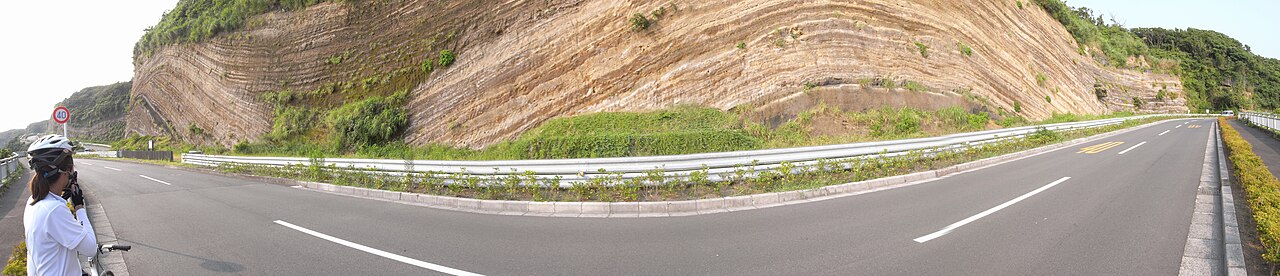
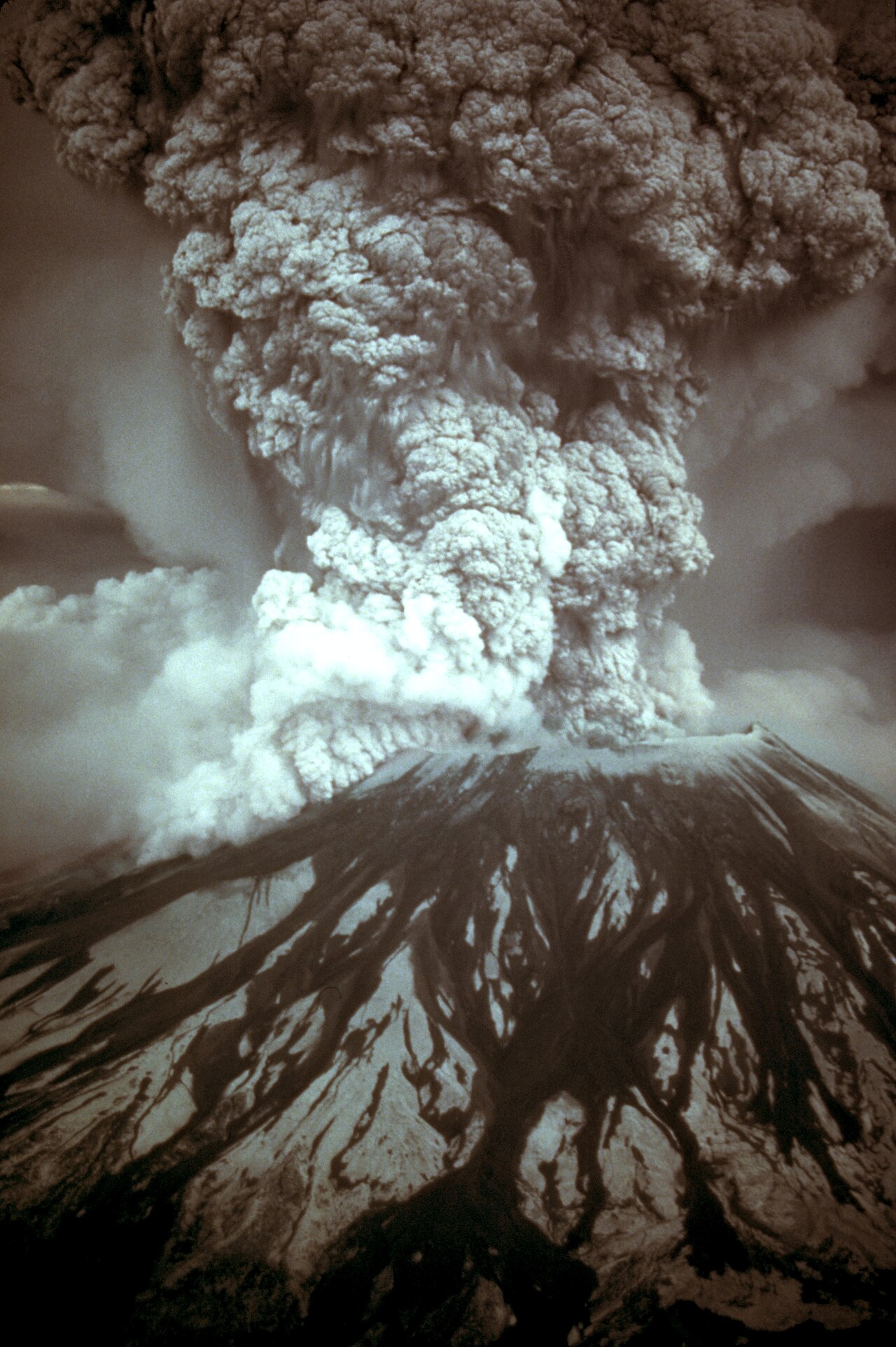
Chris Newhall and Stephen Self proposed the VEI in 1982. It ranks eruptions mostly by how much material they throw out and how high the column rises. Each step up is about ten times more material: Kīlauea’s flows are VEI 0–1, Mount St. Helens was VEI 5, Pinatubo VEI 6, Tambora VEI 7. No VEI 8 has happened in recorded history.
Taiyo FUJII (taiyofj on Flickr) https://www.flickr.com/people/t_trace/ (Wikimedia Commons) · CC BY 2.0
The deadliest hazard · Steep explosive volcanoes
Pyroclastic flows
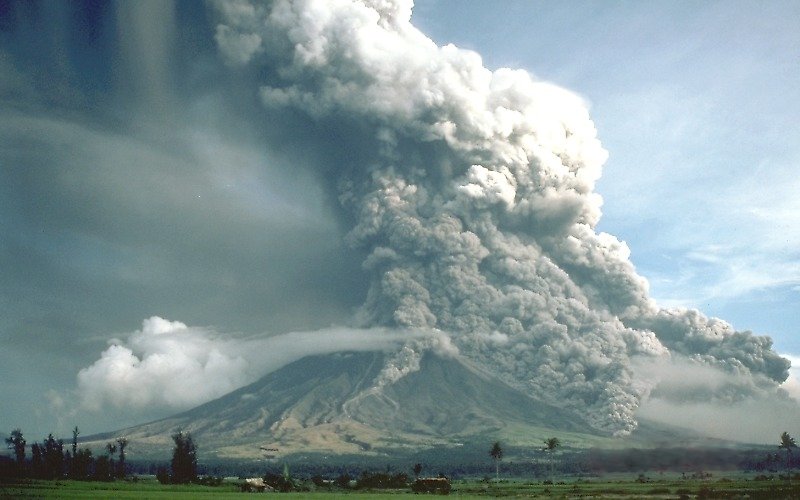
An avalanche of hot gas, ash and rock that rushes down a volcano’s slopes, often faster than 100 km an hour and hotter than 200 °C (estimates vary widely by eruption). Nothing can outrun one. Pyroclastic flows, not lava, killed the people of Herculaneum, Pompeii and Saint-Pierre.
Figures marked ≈ or "about" are estimates or disputed.
SI painting, made for this explainer: an illustration, not a photograph.
Try itThree ways to erupt
Choose an eruption style. Runny lava fountains and flows (Hawaiian); sticky magma throws bursts of glowing bombs (Strombolian); gas-rich, silica-rich magma blasts a column of ash and pumice kilometers high (Plinian).
Hawaiian: low-silica basalt lets gas escape gently, so lava fountains and flows. Kīlauea and Mauna Loa.
Part twoThe lost cities
79 CE · rediscovered 1748 · Bay of Naples, Italy
Pompeii
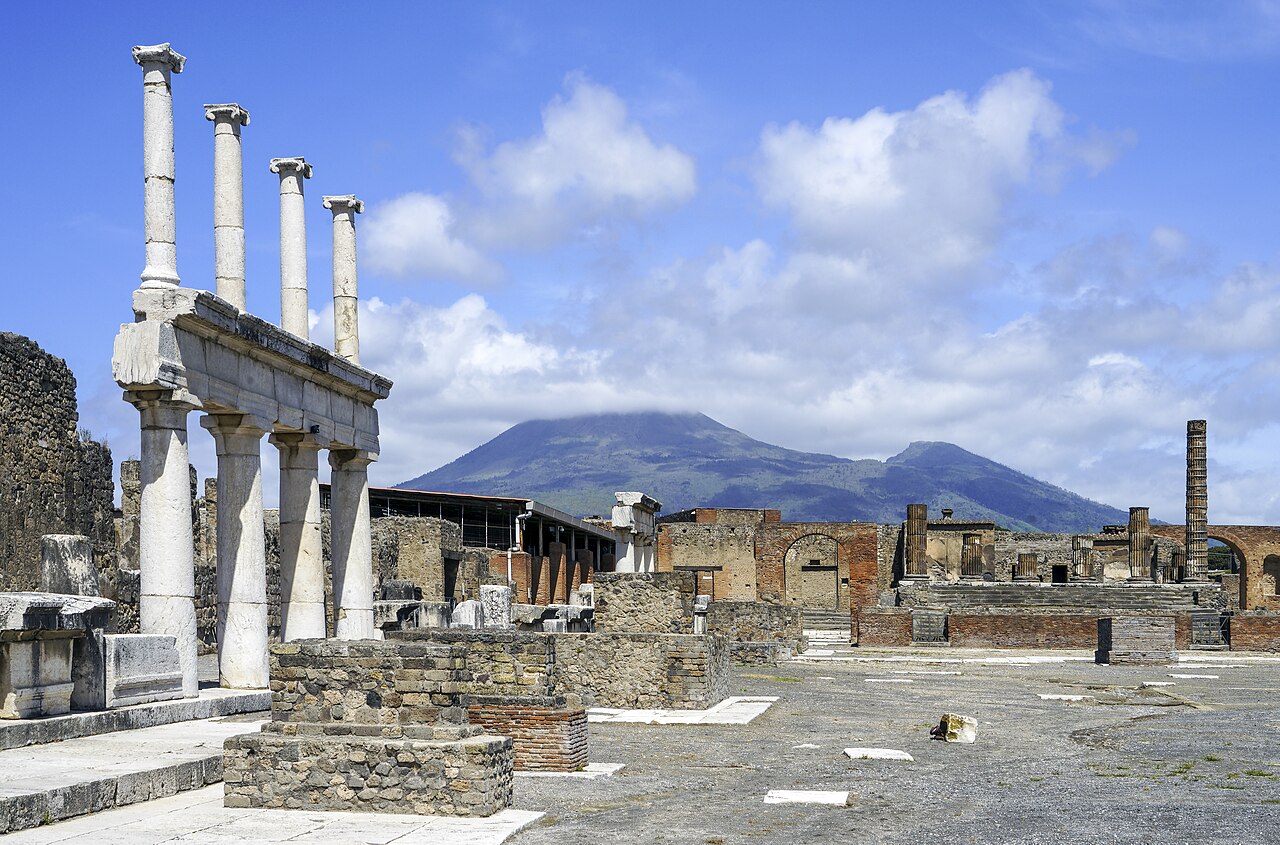
A busy Roman town of perhaps 10,000–12,000 people, with shops, bars, a forum, an amphitheater and painted houses. It was buried under about 4–6 m of pumice and ash. Excavation began in 1748; about two-thirds of the town has been uncovered, and digging still finds new rooms and paintings.
Figures marked ≈ or "about" are estimates or disputed.
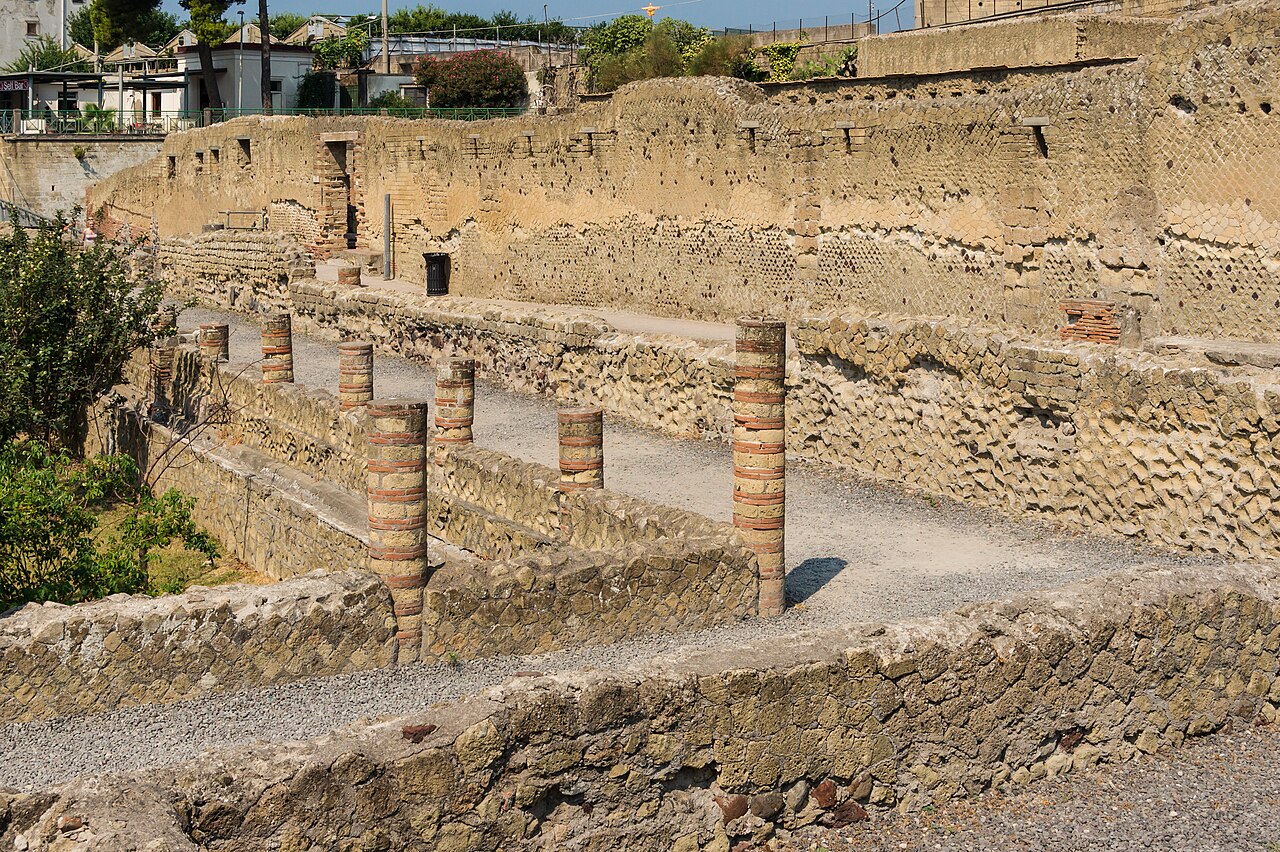
A smaller, richer seaside town buried much deeper, under about 20 m of hot volcanic flow deposits that hardened like rock. The heat carbonized and sealed wood, food, furniture and even a boat. In the 1980s archaeologists found the remains of about 300 people who had sheltered in the boathouses by the shore, waiting for rescue from the sea.
Figures marked ≈ or "about" are estimates or disputed.
Copies of Pliny’s letter give 24 August 79. But autumn fruits, braziers, wine sealed in jars and a charcoal note found on a wall at Pompeii in 2018, dated to the 16th day before the Kalends of November (17 October), suggest a later date. Many scholars now favor 24 October 79. The question is not closed.
Figures marked ≈ or "about" are estimates or disputed.
c. 106 CE · Misenum, across the bay
Pliny the Younger’s letters
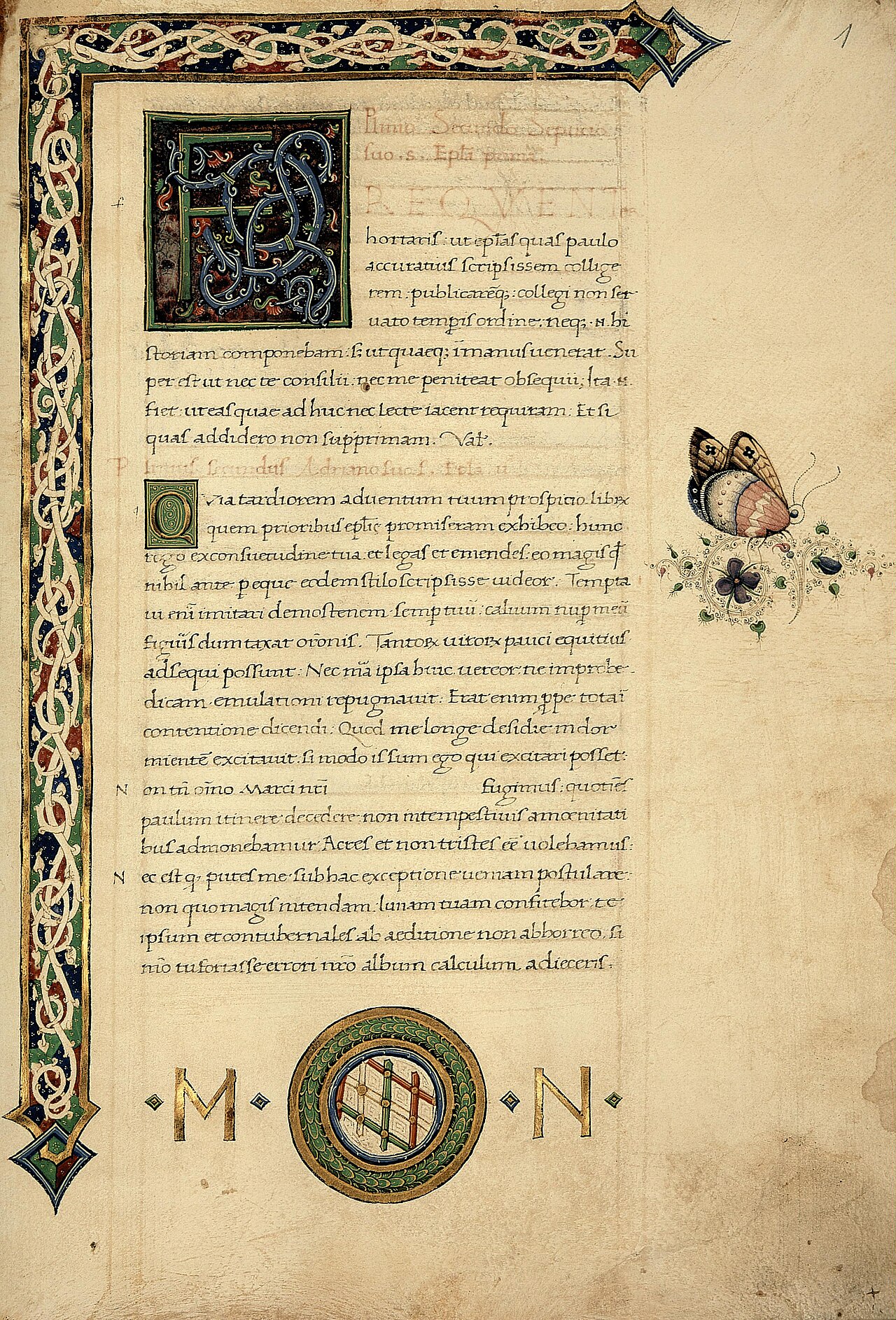
Pliny, then 17, watched from Misenum. Years later he wrote two letters to the historian Tacitus. He compared the cloud to a pine tree, a tall trunk spreading into branches, and described his uncle, Pliny the Elder, admiral of the fleet, sailing toward the eruption to rescue friends; the elder Pliny died on the beach at Stabiae. These letters are the first eyewitness account of an eruption.
Pliny the Younger (Wikimedia Commons) · Public domain
1863 · Pompeii
The empty spaces in the ash
Bodies buried in the ash decayed and left hollow shapes. In 1863 Giuseppe Fiorelli poured plaster into these hollows, making casts of real people at the moment they died. We describe the casts here rather than show them, out of respect. DNA studies published in 2024 showed that some long-told stories about who the casts were (a mother and child, for example) were wrong.
Figures marked ≈ or "about" are estimates or disputed.
2023–2024 · Villa of the Papyri, Herculaneum
Reading the burned scrolls
A Roman villa at Herculaneum held a library of about 1,800 papyrus scrolls, carbonized into lumps too fragile to unroll. In the Vesuvius Challenge, researchers scanned the scrolls with X-rays and used machine learning to find faint ink. In 2023 a student read the first word, “purple”; in early 2024 a team won the grand prize for revealing passages of a Greek philosophical text. SI is helping read a library lost for nearly 2,000 years.
Figures marked ≈ or "about" are estimates or disputed.
From Pliny’s first letter (William Melmoth’s translation, 1746, public domain): the cloud rose “of a very unusual size and appearance… I cannot give you a more exact description of its figure, than by resembling it to that of a pine-tree, for it shot up a great height in the form of a trunk, which extended itself at the top into a sort of branches.” Students in Latin read the original with LAT1 · Pliny and the eruption of VesuviusPreview and AP Latin · Pliny’s eruption lettersPreview.
SI painting, made for this explainer: an illustration, not a photograph.
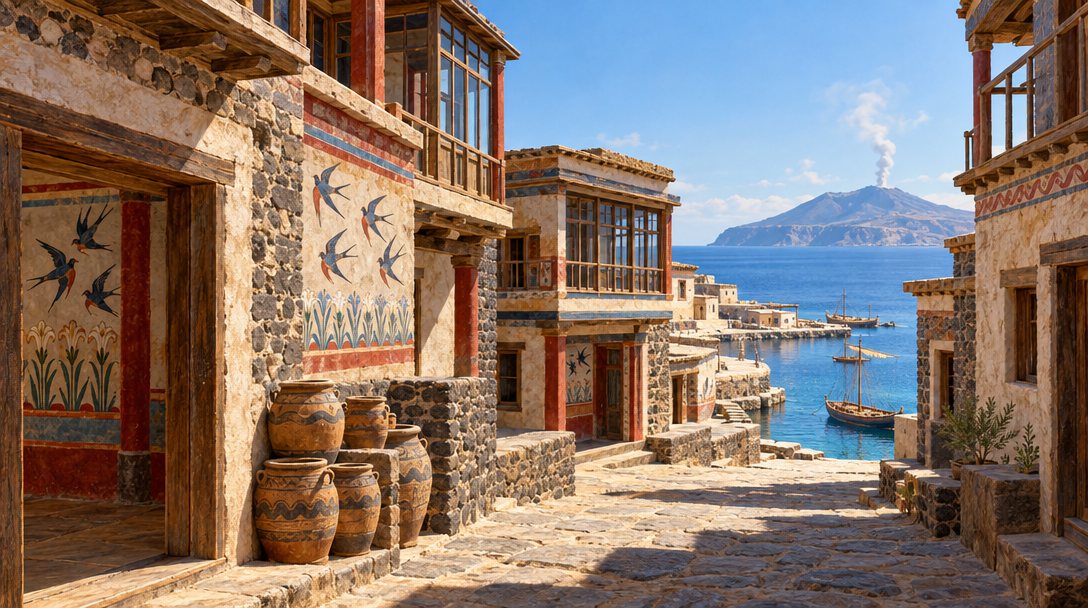
c. 1600 BCE · Thera (Santorini), Greece
Akrotiri
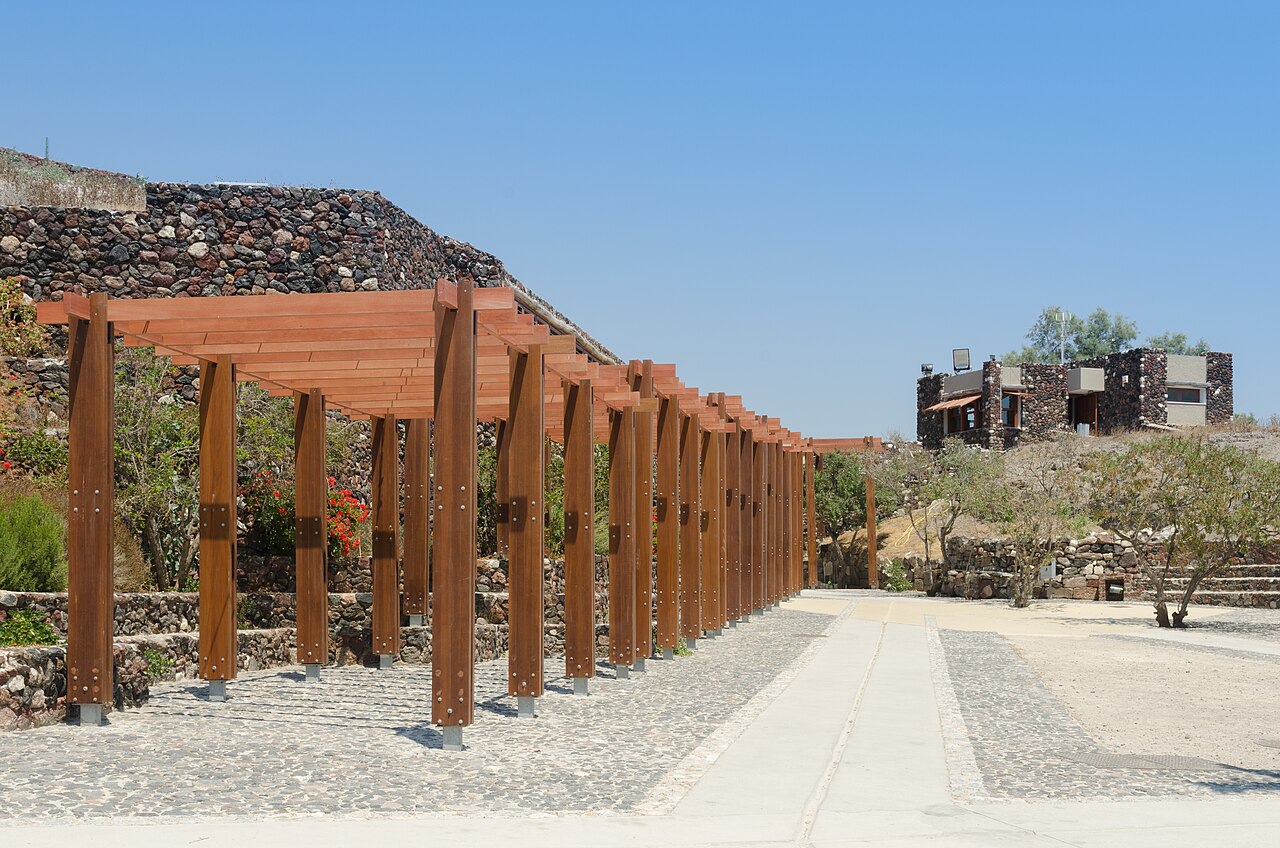
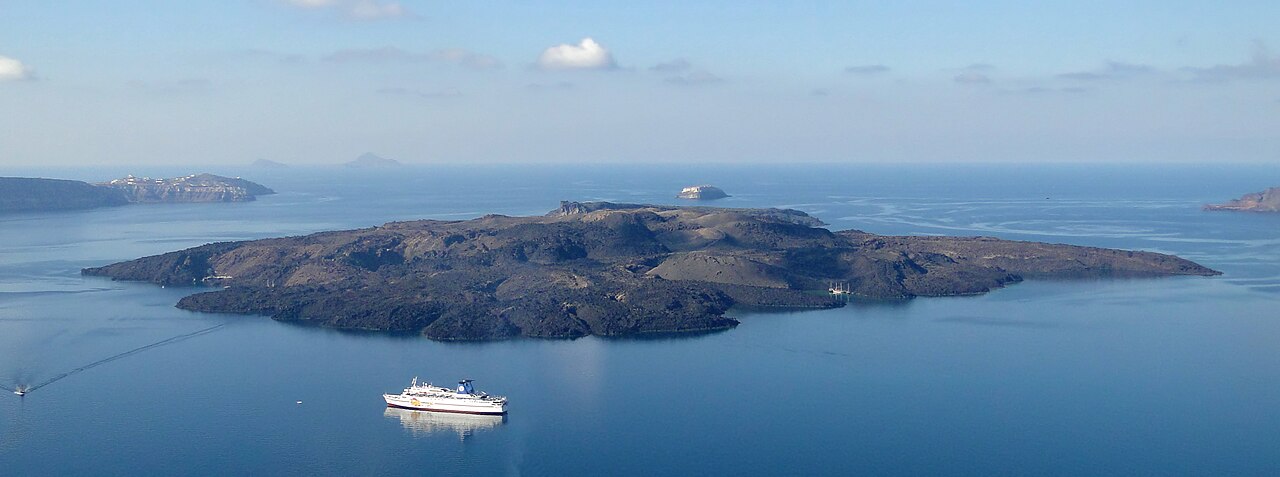
A Bronze Age town of two- and three-storey houses with drains and painted walls (swallows, lilies, boxers, ships), buried by one of the largest eruptions of the last 10,000 years. Unlike Pompeii, almost no bodies or valuables have been found: the people seem to have left after warning earthquakes. Excavated from 1967 by Spyridon Marinatos. Radiocarbon dates point near 1600 BCE; some archaeologists argue for about a century later.
Figures marked ≈ or "about" are estimates or disputed.
Plato’s dialogues Timaeus and Critias tell of Atlantis, a proud island power swallowed by the sea in a single day. Some writers link the story to the Thera eruption and the decline of Minoan Crete. Most historians read Atlantis as a story Plato invented to make a point about pride and good government. A legend can carry a memory, but it is not evidence.
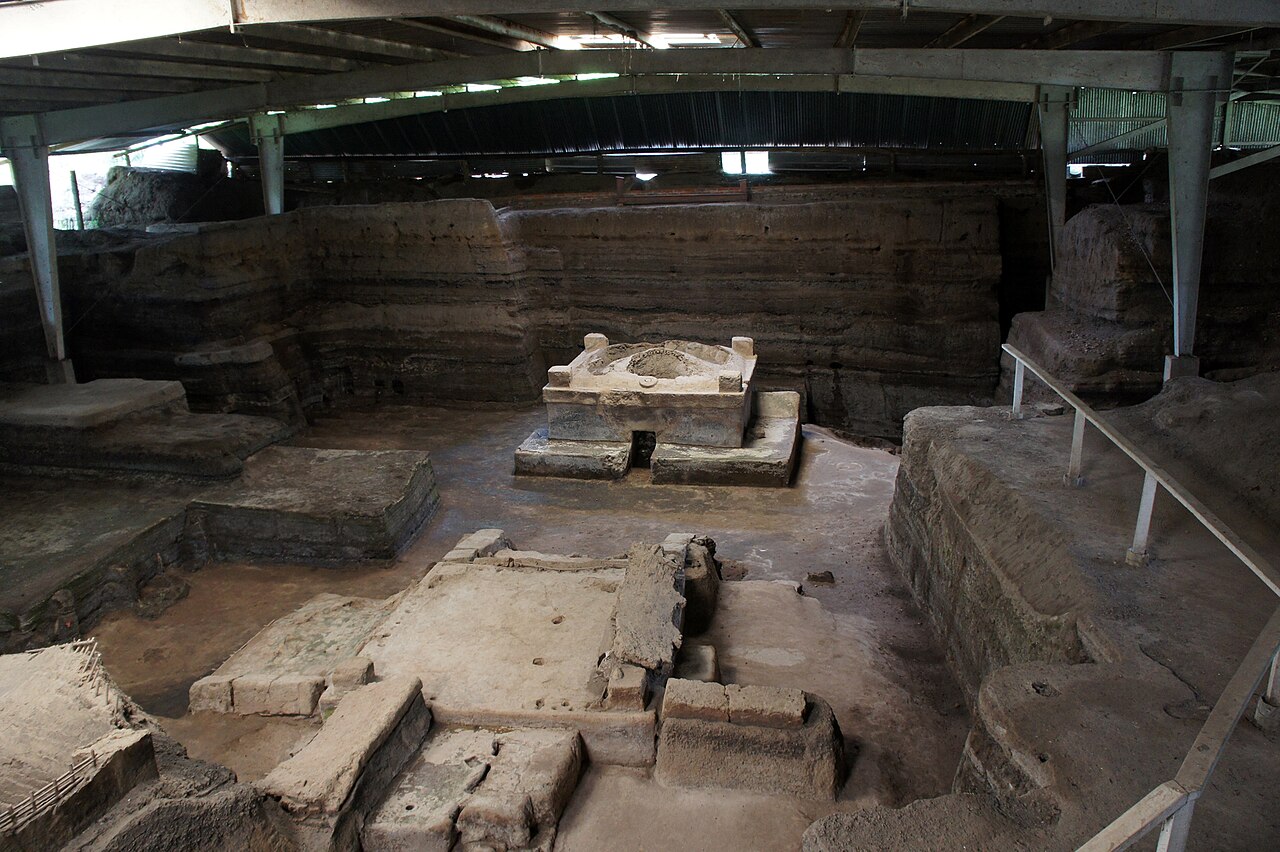
A Maya farming village buried under about 5 m of ash from the nearby Loma Caldera vent. Houses, storehouses, a sweat bath, gardens of manioc and maize, and pots with food still inside survived. No bodies have been found; the villagers seem to have escaped. It is called the “Pompeii of the Americas” and has been a UNESCO World Heritage Site since 1993.
Figures marked ≈ or "about" are estimates or disputed.
Mariordo (Mario Roberto Duran Ortiz) (Wikimedia Commons) · CC BY-SA 3.0
How Pompeii and its neighbors were built (concrete, roads, baths, theaters): Rome: how they built it · Roman sites across the empire: Rome at the edges · Latin project: LAT1 · A day in PompeiiPreview
Part threeEruptions that changed the world
April 1815 · Sumbawa, Indonesia
Tambora, 1815
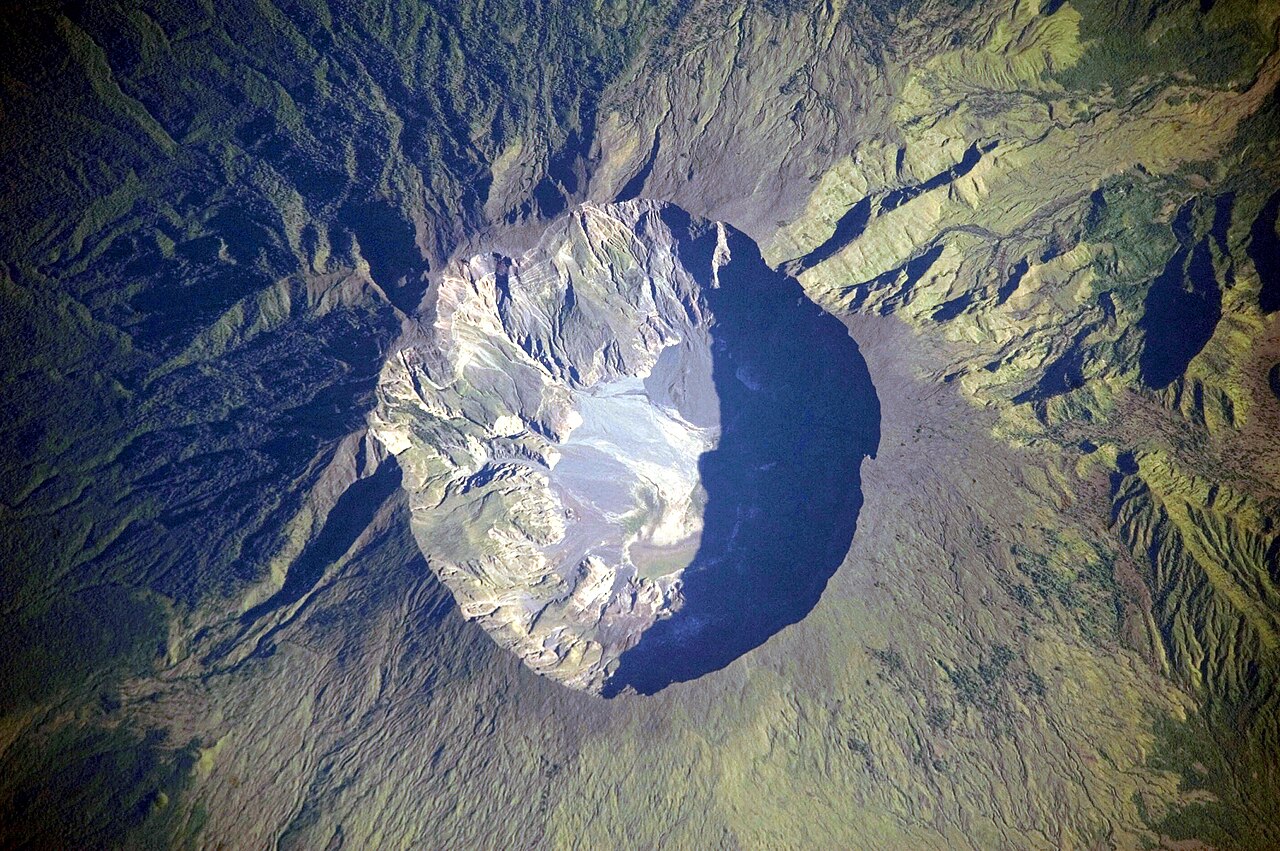
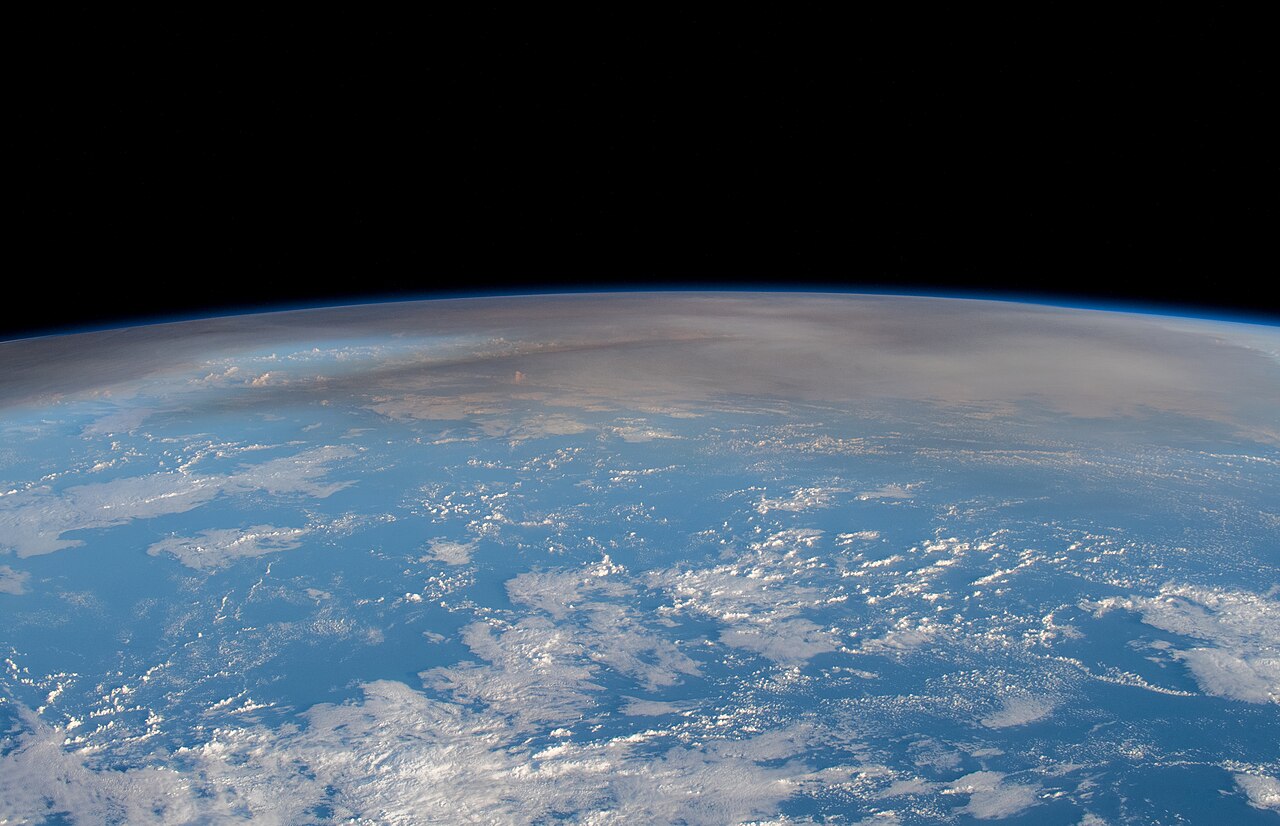
The largest eruption in recorded history, VEI 7. The mountain lost about a third of its height. Around 10,000 people died in the eruption itself and tens of thousands more in the famine and disease that followed (totals of about 70,000 or more are often given; estimates vary).
Figures marked ≈ or "about" are estimates or disputed.
This image was taken by the NASA Expedition 20 crew. (Wikimedia Commons) · Public domain
1816 · Europe and North America
The year without a summer
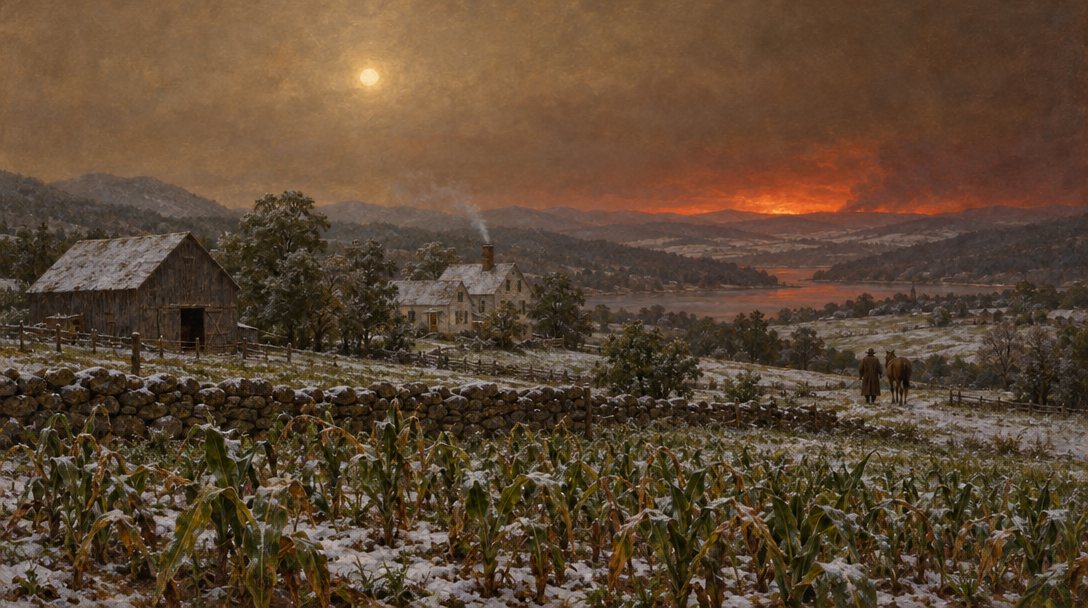
Sulfur from Tambora spread a haze around the world and cooled the climate. In New England snow fell in June and frost killed crops in July and August; in Europe harvests failed and food prices soared. At a villa on Lake Geneva, cold rain kept a group of young writers indoors, and Mary Shelley began the story that became Frankenstein.
SI painting, made for this explainer: an illustration, not a photograph.
26–27 August 1883 · Sunda Strait, Indonesia
Krakatoa, 1883
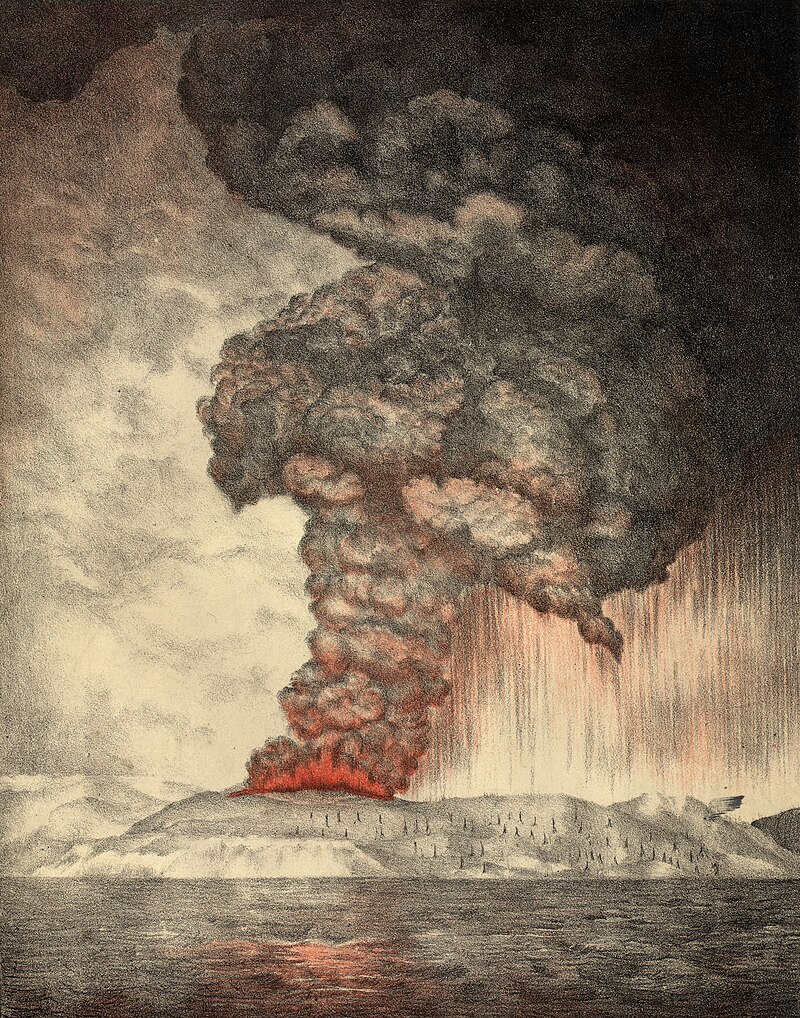
Explosions destroyed most of the island. The loudest was heard about 4,800 km away on Rodrigues Island in the Indian Ocean. Tsunamis killed about 36,000 people on nearby coasts. For months, ash in the upper air turned sunsets red around the world.
Figures marked ≈ or "about" are estimates or disputed.
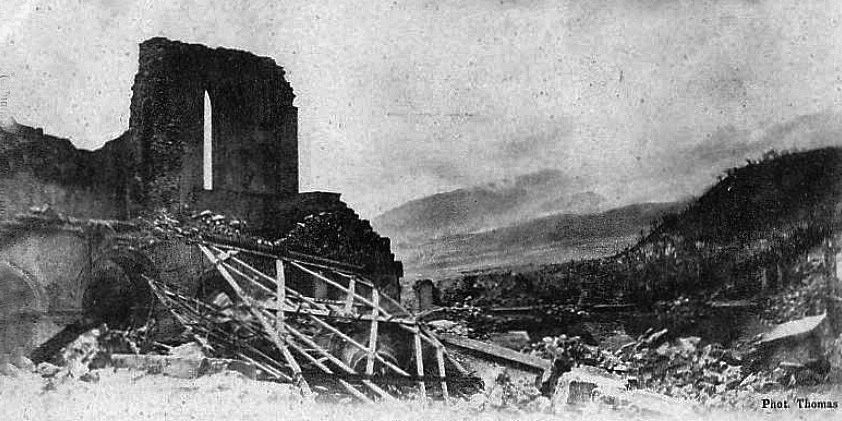
A pyroclastic flow swept over the town of Saint-Pierre in about a minute, killing about 28,000 people. One of the few survivors, Ludger Sylbaris, was held in a thick-walled stone jail cell and was badly burned but lived; he later toured with the Barnum and Bailey circus. Volcanology as a modern science grew out of this disaster.
Figures marked ≈ or "about" are estimates or disputed.
An earthquake set off the largest landslide in recorded history; the north face of the mountain slid away and a sideways blast flattened forests for kilometers. 57 people died, including the USGS volcanologist David Johnston, whose last radio message was “Vancouver! Vancouver! This is it!” The eruption changed how scientists watch volcanoes.
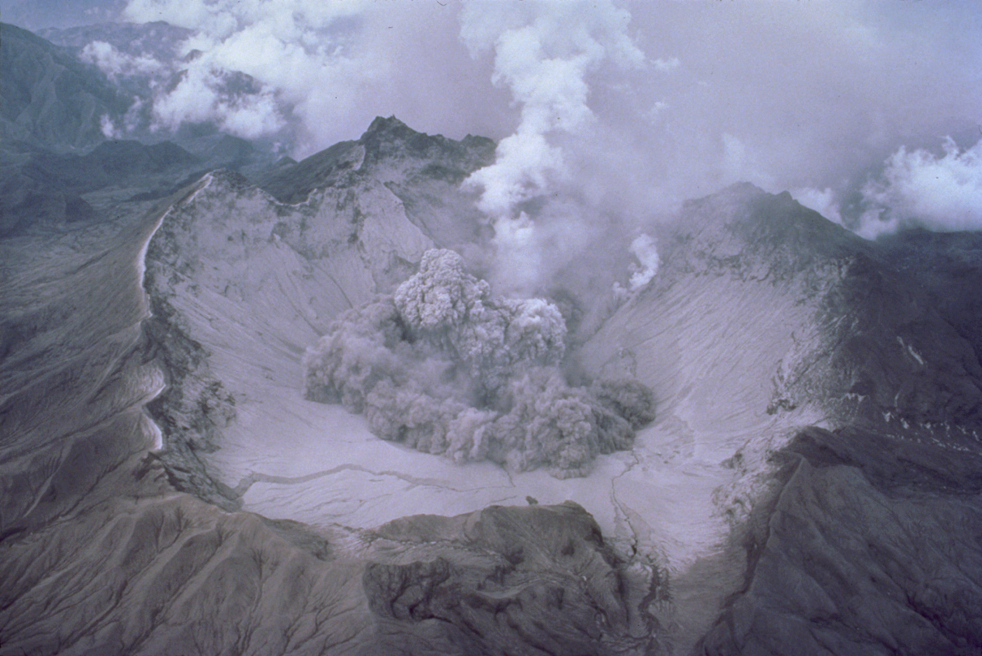
The second-largest eruption of the 20th century, VEI 6. Scientists from the Philippines and the USGS forecast it in time to evacuate tens of thousands of people, saving thousands of lives. It put about 15–20 million tonnes of sulfur dioxide into the stratosphere and cooled the world by about 0.5 °C for about a year.
Figures marked ≈ or "about" are estimates or disputed.
Photo by T. J. Casadevall, U.S. Geological Survey. (Wikimedia Commons) · Public domain
15 January 2022 · Kingdom of Tonga
Hunga Tonga–Hunga Haʻapai, 2022
An underwater volcano exploded with a plume that reached about 57 km, the highest ever measured. Its pressure wave circled the globe several times and was heard as far away as Alaska. It also blasted a huge amount of water vapor into the stratosphere (about a tenth more than was there before, by one estimate).
Figures marked ≈ or "about" are estimates or disputed.
NASA / Kayla Barron (Wikimedia Commons) · Public domain
Try itHow big was it? Erupted volume compared
The VEI scale steps up about tenfold with each number. These bars show the estimated volume each eruption threw out, in cubic kilometers. Switch between a log scale (each grid step is ten times more) and a true scale to feel how small Mount St. Helens was beside Tambora, and how small Tambora was beside Yellowstone’s greatest eruption.
Bulk volumes of erupted material, all estimates that vary between studies (Smithsonian Global Volcanism Program; USGS; Self 2006 for Tambora; Johnston and others 2014 for Thera; Christiansen 2001 for Yellowstone). Thera and Yellowstone dates are approximate.
Go deeper
Lessons:APES · Plate tectonics and the moving groundPreviewAPES · Soil formation, texture and erosionPreviewE23 · The erosion testPreview
Plate boundaries are drawn in orange. Most volcanoes line up along them, where one plate dives under another or two pull apart. A few, like Kīlauea and Yellowstone, sit over hotspots far from any edge. Tap a volcano to read about it.
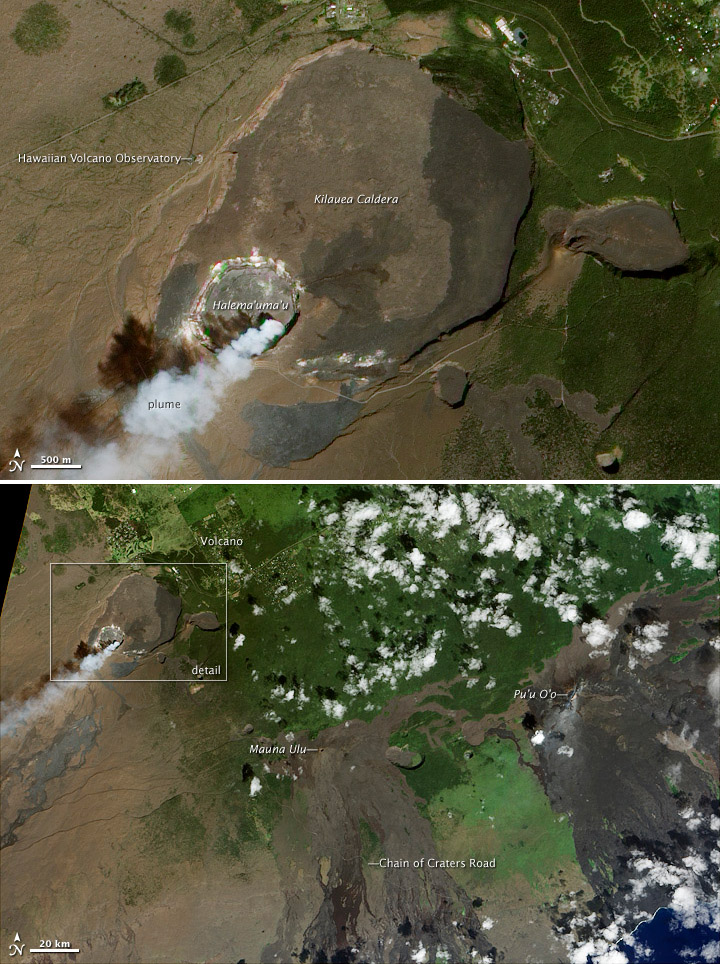
The U.S. Geological Survey runs five volcano observatories (Alaska, Cascades, Hawaiian, California, Yellowstone). They listen with seismometers, measure the ground swelling with GPS and satellite radar (InSAR), sniff gases such as sulfur dioxide and carbon dioxide, and watch with thermal cameras. Alerts move from Normal to Advisory, Watch and Warning.
NASA's Earth Observatory (Wikimedia Commons) · CC BY 2.0
2.1 million years · Wyoming, Montana and Idaho
Yellowstone: facts and hype
Yellowstone has had three giant caldera eruptions, about 2.1 million, 1.3 million and 631,000 years ago. The USGS says it is not “overdue”: eruptions do not run on a schedule. The likeliest future events are steam explosions or lava flows, not a super-eruption, which the USGS puts at roughly a 1-in-730,000 chance in any year.
Figures marked ≈ or "about" are estimates or disputed.
Jim Peaco, National Park Service (Wikimedia Commons) · Public domain
Now · Iceland, Italy, Indonesia
Living with volcanoes
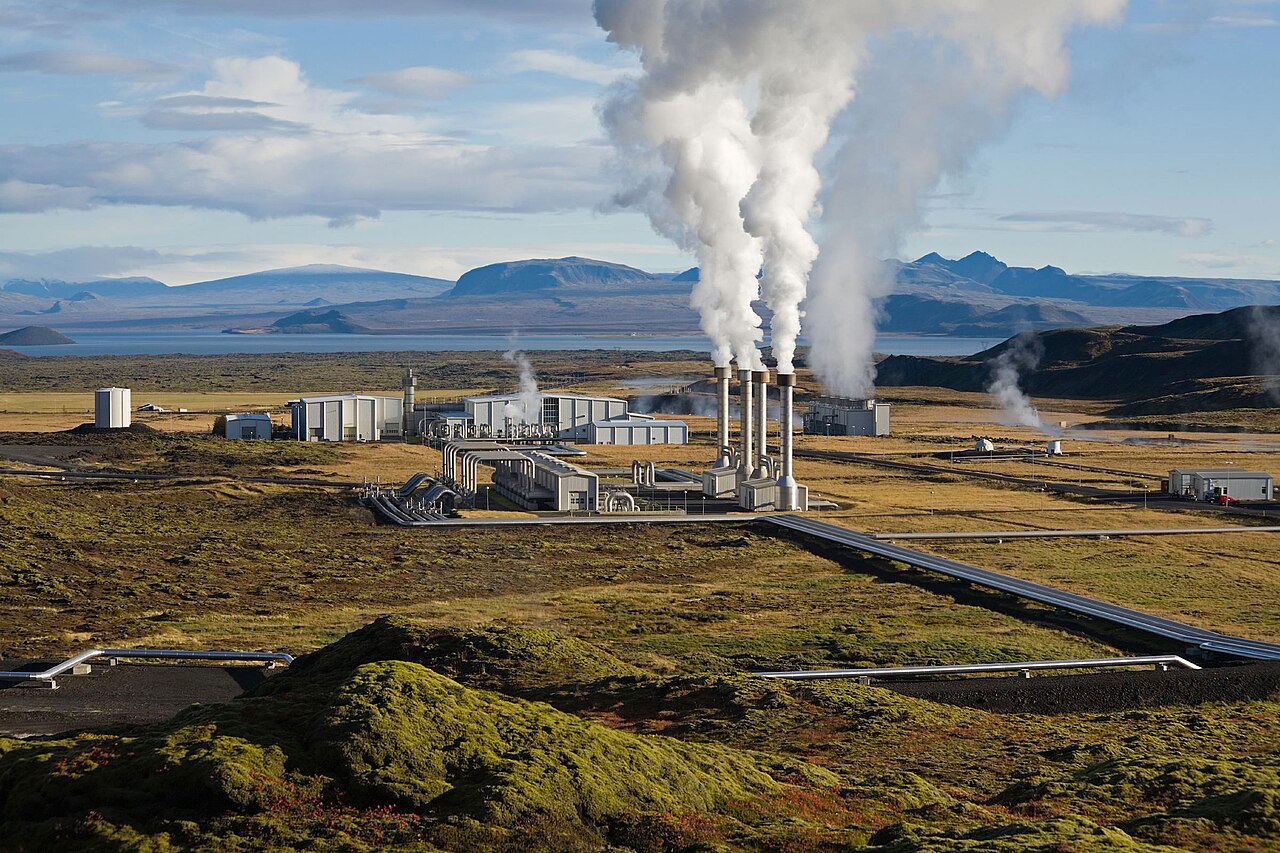
About 800 million people live within 100 km of an active volcano (an estimate). Volcanic soils are rich for farming; heat underground powers geothermal plants (Iceland gets about a quarter of its electricity this way) and heats most of its homes. The task is to live with the benefits and plan for the danger.
Figures marked ≈ or "about" are estimates or disputed.
Gretar Ívarsson – Edited by Fir0002 (Wikimedia Commons) · Public domain
For younger visitors (K–5): Make a mini volcano
A volcano is an opening in the earth where hot melted rock, called magma, comes up. When it comes out it is called lava. Some volcanoes ooze lava like honey; others explode and throw out ash.
Try this with a grown-up: build a cone of clay or sand around a small cup. Put in two spoons of baking soda and a drop of dish soap, then pour in vinegar. The bubbles push up and out, the way gas pushes magma out of a volcano.
Three quick questions (3 questions · runs in your browser, nothing is sent)
Lessons:APES · Plate tectonics and the moving groundPreviewLAT1 · Pliny and the eruption of VesuviusPreviewLAT1 · Project: a day in PompeiiPreviewAP Latin · Vesuvius: Pliny’s eruption lettersPreviewEN6 · Frankenstein and Pride and PrejudicePreviewAP Lit · Frankenstein’s nested framesPreviewE06 · What would convince you?Preview
Read: Mary Shelley, Frankenstein (1818), begun in the cold summer of 1816; Robert Harris, Pompeii (2003), a novel for older readers about the aqueduct engineer in the days before the eruption; Mary Pope Osborne, Vacation Under the Volcano (Magic Tree House, 1998) for younger readers; Simon Winchester, Krakatoa (2003), narrative history. Books are described here, not reproduced.
Quiz: Volcanoes and lost cities (10 questions · runs in your browser, nothing is sent)
Ministry of Culture, Greece, Akrotiri excavations; W. L. Friedrich and others on the radiocarbon date of the Minoan eruption, Science (2006).
UNESCO World Heritage List, Joya de Cerén (1993): whc.unesco.org
S. Self, “The effects and consequences of very large explosive volcanic eruptions,” Phil. Trans. R. Soc. A (2006); C. Oppenheimer, “Climatic, environmental and human consequences of the largest known historic eruption: Tambora 1815,” Progress in Physical Geography (2003).
NASA and NOAA on Hunga Tonga–Hunga Haʻapai (2022) plume height and stratospheric water vapor.
newSchoolWorks.com · The Museum of Everyday Living · Bradenton, FL · SI paintings made for this explainer; photographs from Wikimedia Commons under the licences shown on each card. Figures marked ≈ or “about” are estimates.