The Museum of Everyday Living · Style, Design & Thought · Work & Livelihood
Thread: textiles of the world
Cloth is technology, trade and labor woven together, and it has been for 30,000 years
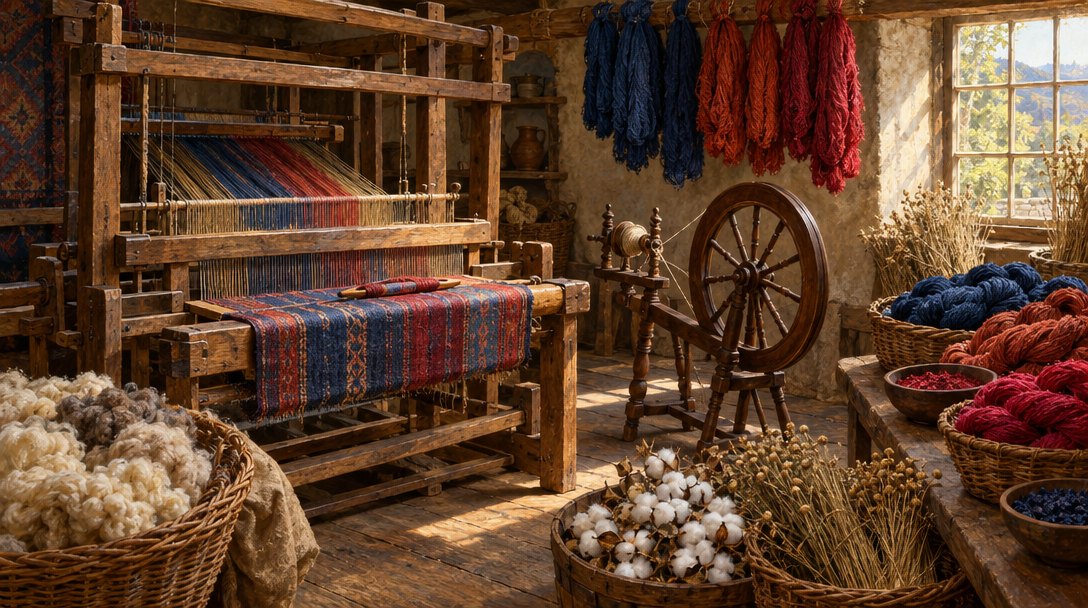
SI painting, made for this explainer: an illustration, not a photograph.
Before plastic, before steel, people spun fiber into thread and wove thread into cloth. Cloth was money, status and sails. The first factories were cloth factories, and the cotton that fed them was grown by enslaved people. Today almost everyone wears clothes sewn far away by someone they will never meet. This room follows fibers, dyes and weaves around the world, then the machines and the people who ran them.
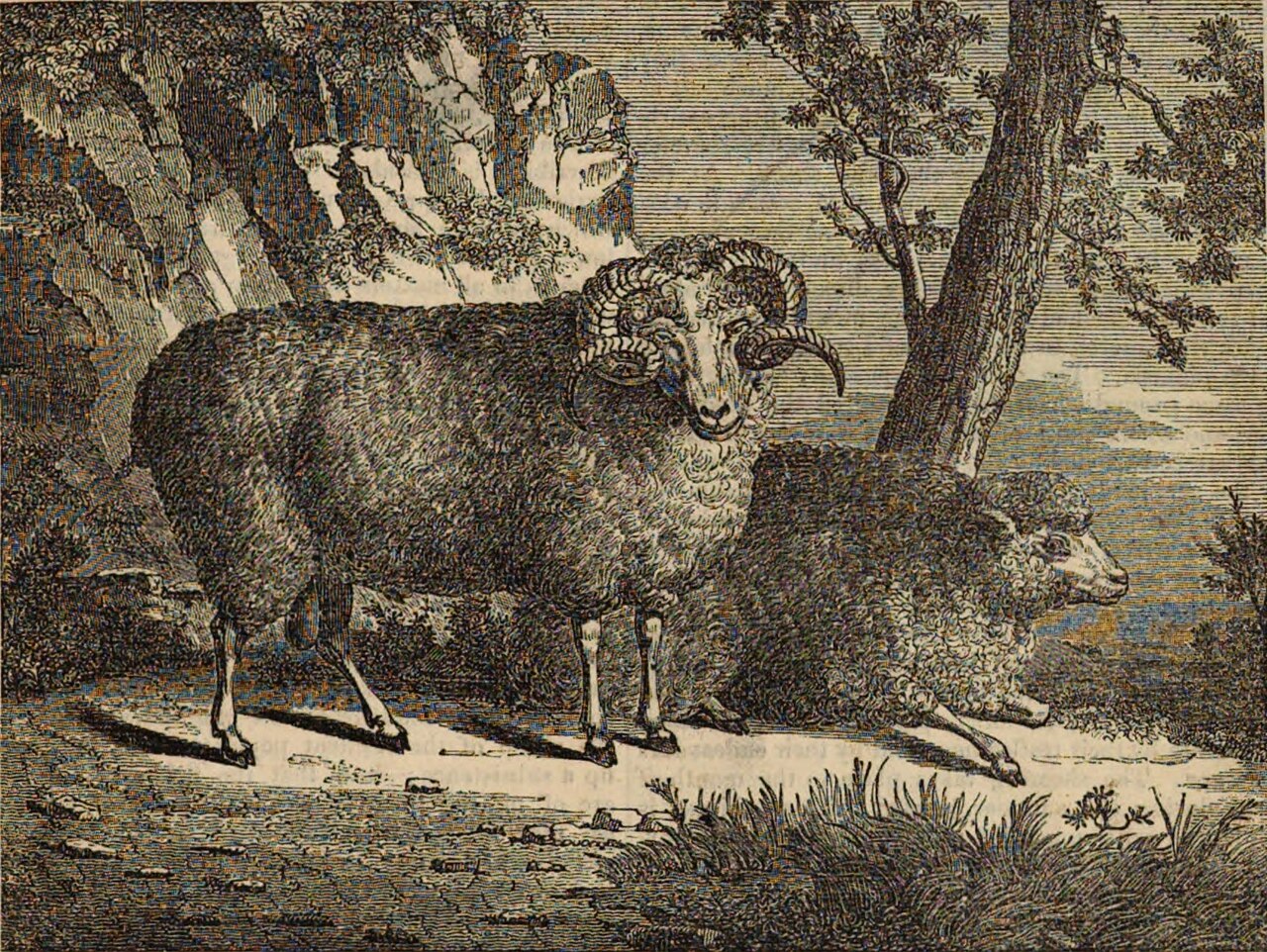
Early sheep were hairy, not woolly; breeders slowly selected woolly fleece over thousands of years. Wool built medieval England's wealth: the Lord Speaker in Parliament still sits on a "Woolsack". See the sheep galleries in the Museum of Friendly Beasts.
Unknown authorUnknown author (Wikimedia Commons) · Public domain
about 30,000 years ago · Dzudzuana Cave, Georgia
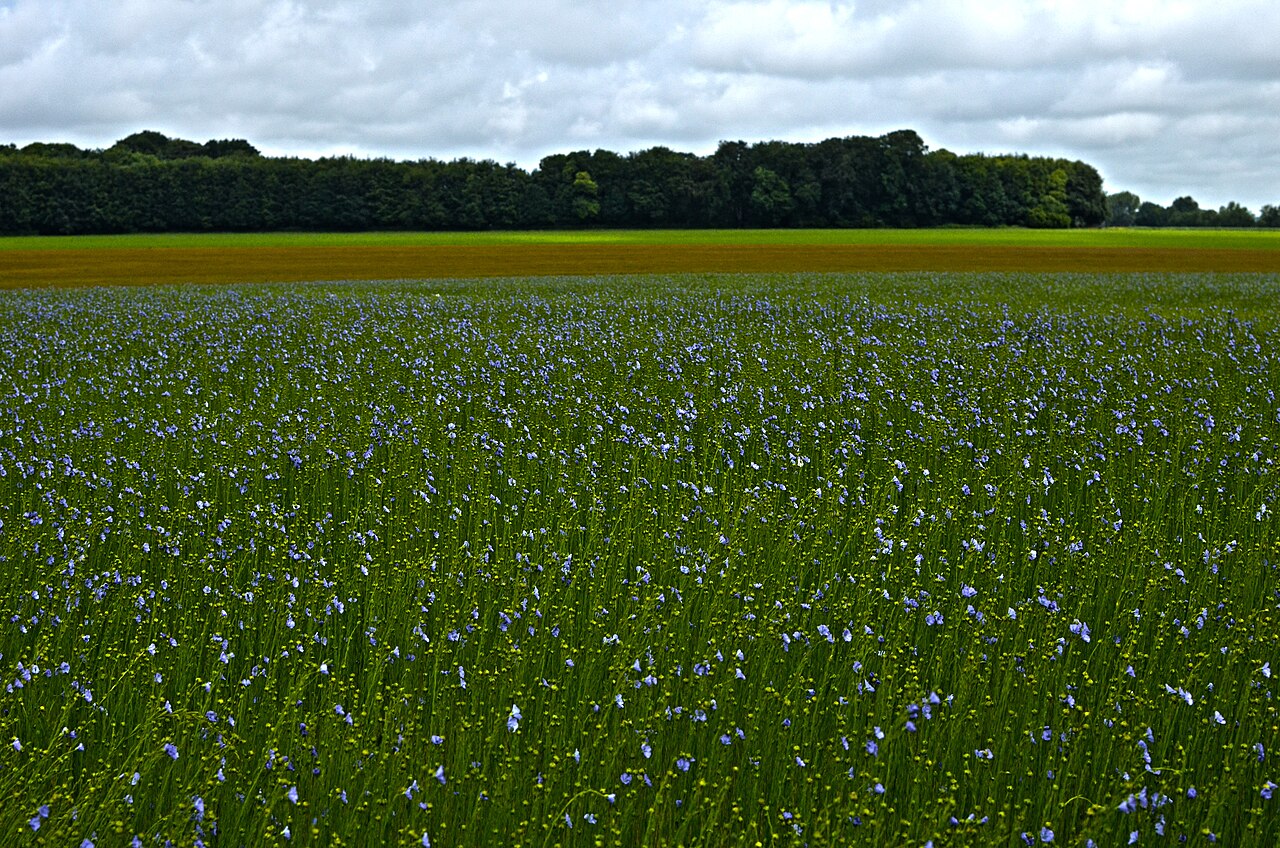
Linen and flax
Twisted, dyed flax fibers found in a cave in Georgia are about 30,000 years old. Egyptians wrapped mummies in fine linen. Flax stems are soaked (retted), beaten and combed before spinning.
Figures marked ≈ or "about" are estimates or disputed.
EllenCherryCharles (Wikimedia Commons) · CC BY-SA 4.0
about 5000 BCE onward · Indus, Peru, Mesoamerica, Africa
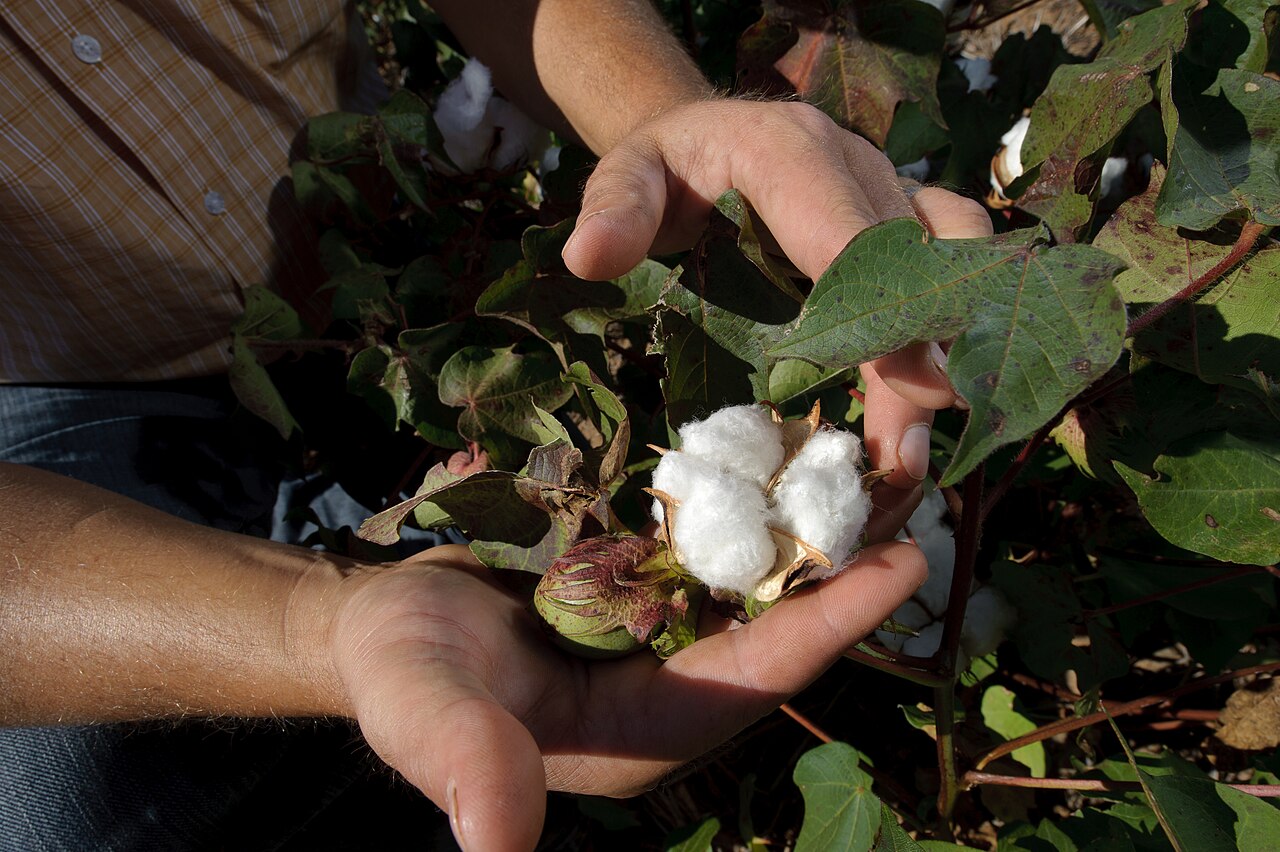
Cotton, four times over
Cotton was domesticated separately at least four times: in the Indus valley (Mehrgarh, about 6000–5000 BCE), in coastal Peru and Ecuador, in Mesoamerica, and in Africa. Indian cotton cloth was the world's leading textile for centuries.
Figures marked ≈ or "about" are estimates or disputed.
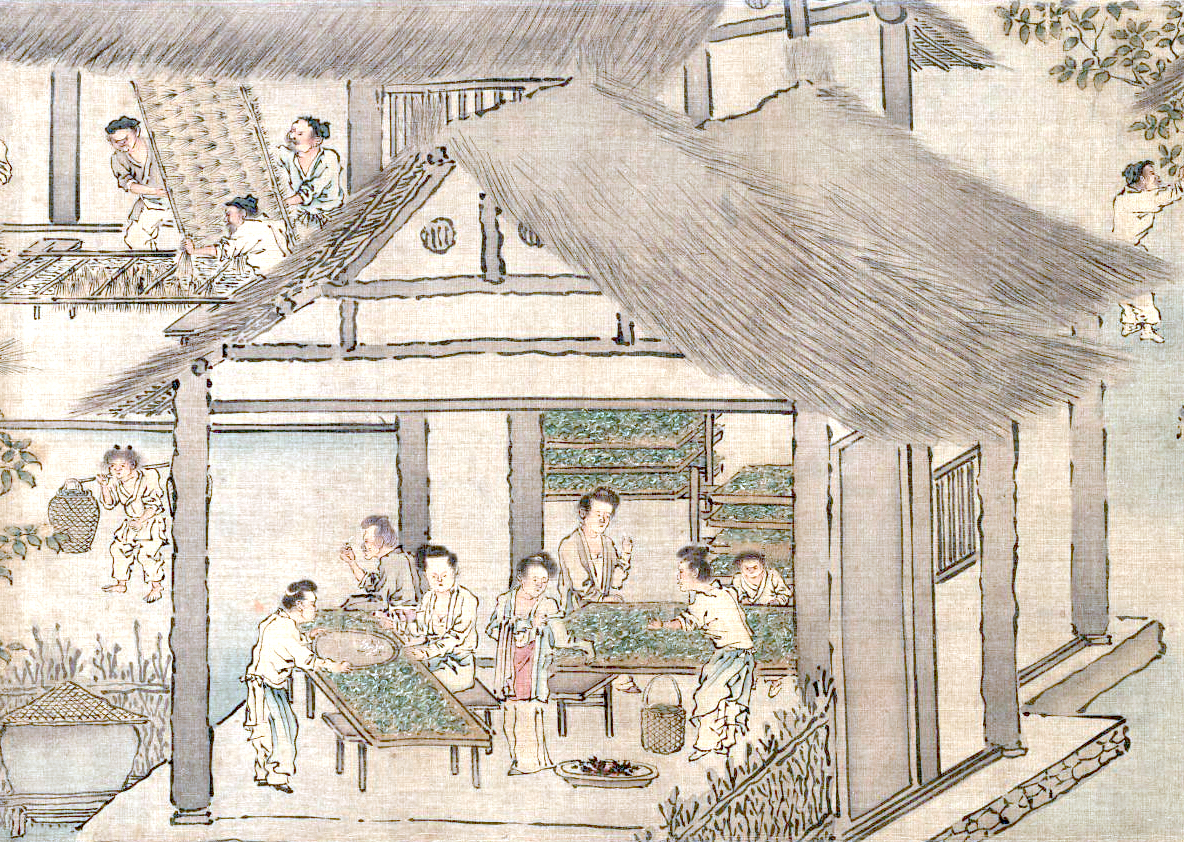
Silk comes from the cocoons of the silkworm, fed on mulberry leaves; one cocoon unwinds into a thread up to about 1 km long. China guarded the method. The Byzantine historian Procopius tells that two monks smuggled silkworm eggs to Constantinople in hollow canes around 552; the story may be partly legend.
Figures marked ≈ or "about" are estimates or disputed.
Attributed to Liang Kai (Wikimedia Commons) · Public domain
Inca empire, 1400s · Andes
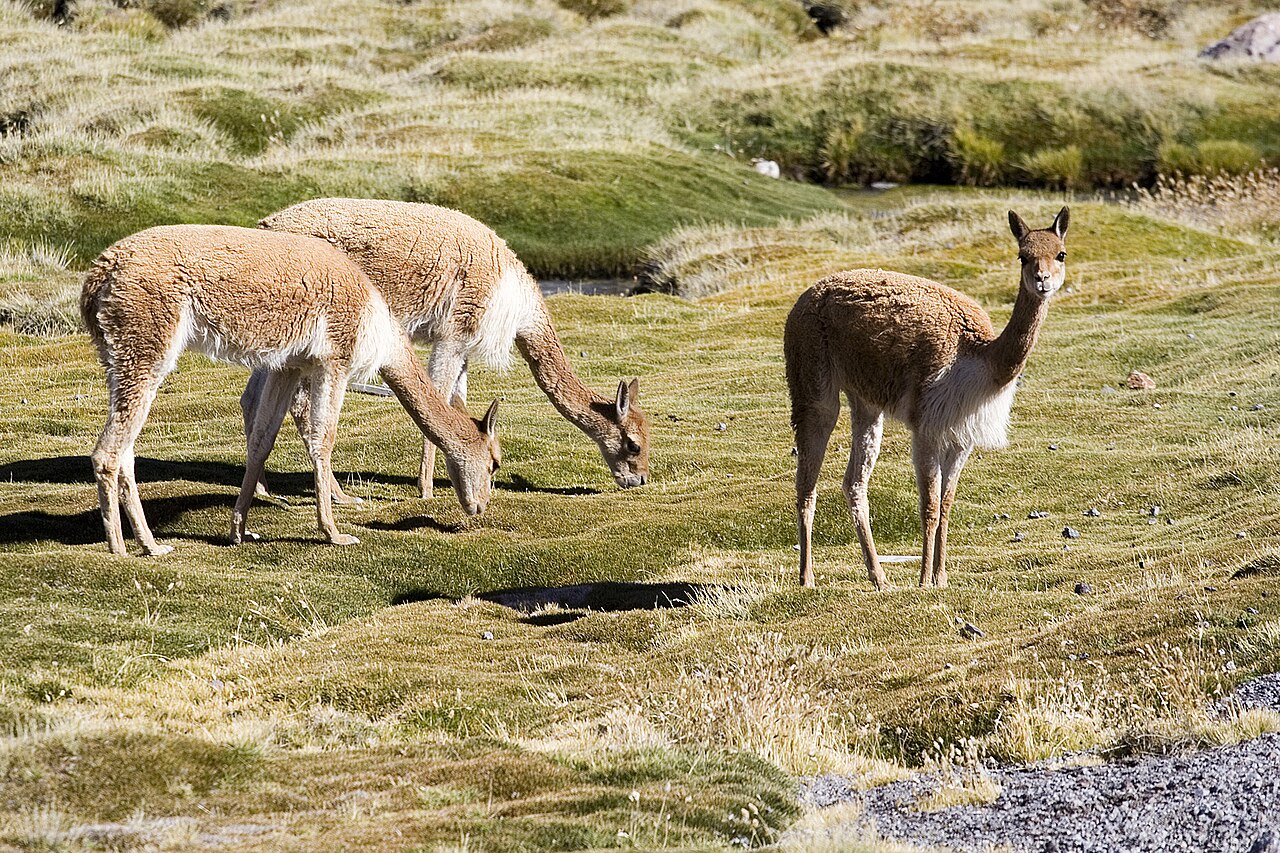
Alpaca, vicuña and Inca cloth
The Inca valued cloth above gold. The finest, qompi, was woven from alpaca and vicuña by specialist weavers and given as royal gifts. Vicuña is still the most expensive natural fiber.
Luca Galuzzi (Lucag) (Wikimedia Commons) · CC BY-SA 2.5
thousands of years · Pacific, Africa
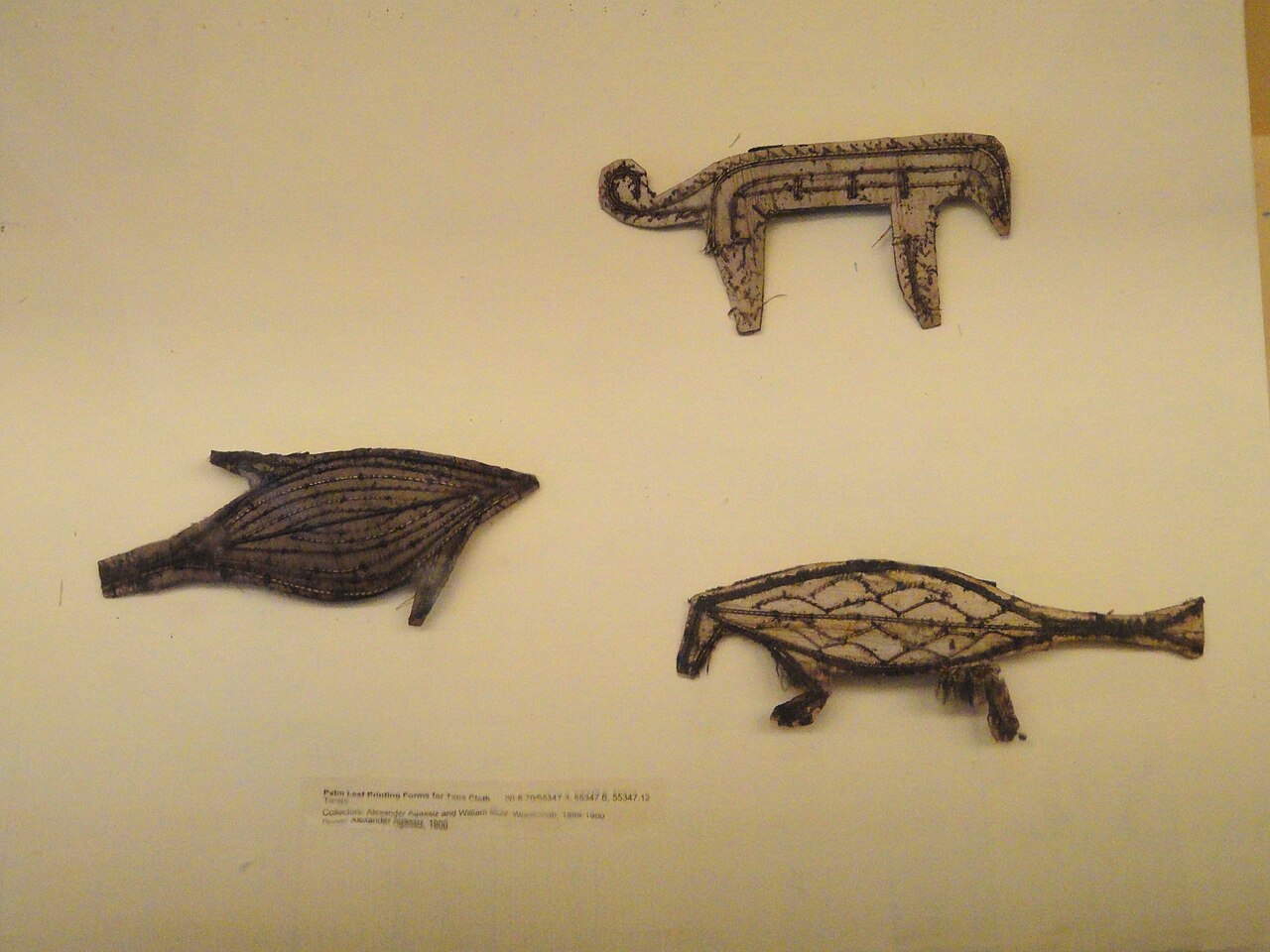
Bark cloth and tapa
Beaten from the inner bark of the paper mulberry and other trees, tapa (Pacific) and bark cloth (Uganda, listed by UNESCO in 2008) are textiles made without spinning or weaving.
Hemp and jute made rope, sails and sacks. DuPont's chemist Wallace Carothers made nylon in 1935; nylon stockings went on sale in 1940. Polyester followed. Today synthetic fibers, mostly polyester, make up about two-thirds of the world's fiber.
Figures marked ≈ or "about" are estimates or disputed.
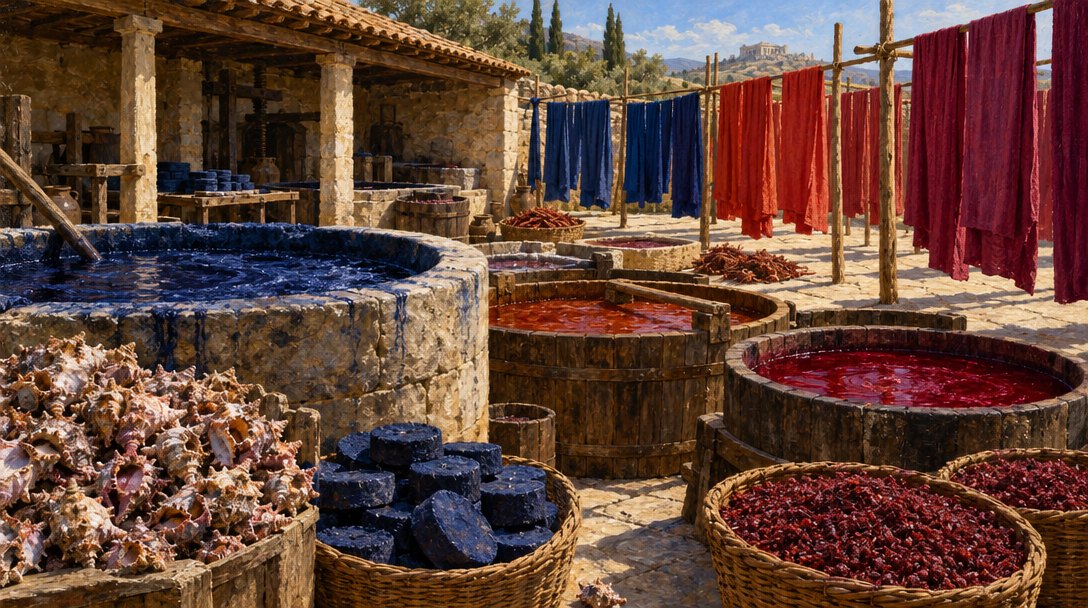
SI painting, made for this explainer: an illustration, not a photograph.
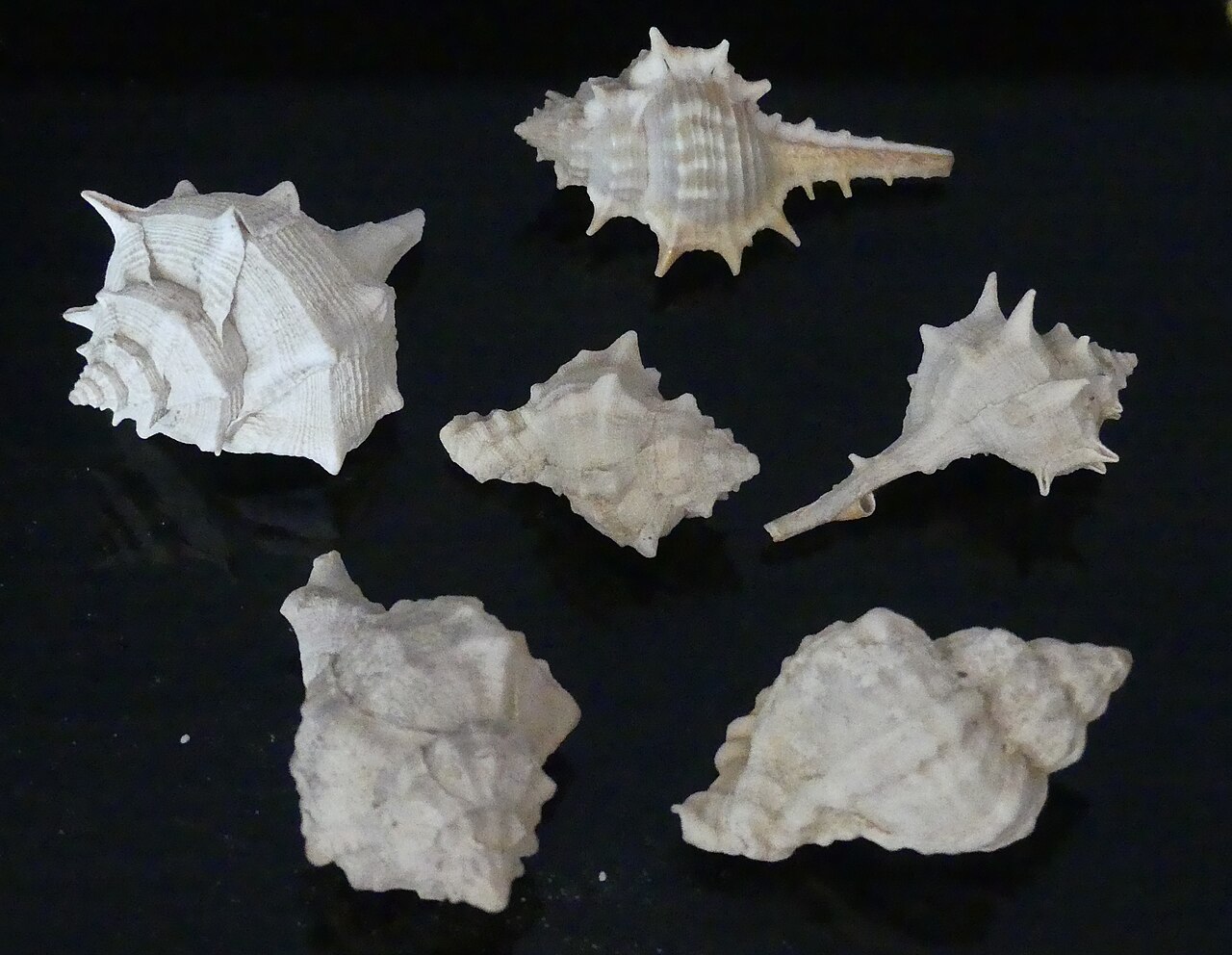
from about 1600 BCE · Phoenician coast
Tyrian purple
Thousands of murex sea snails were crushed to dye one garment. Purple became the color of emperors, and Roman and Byzantine sumptuary laws restricted who could wear it.
Figures marked ≈ or "about" are estimates or disputed.
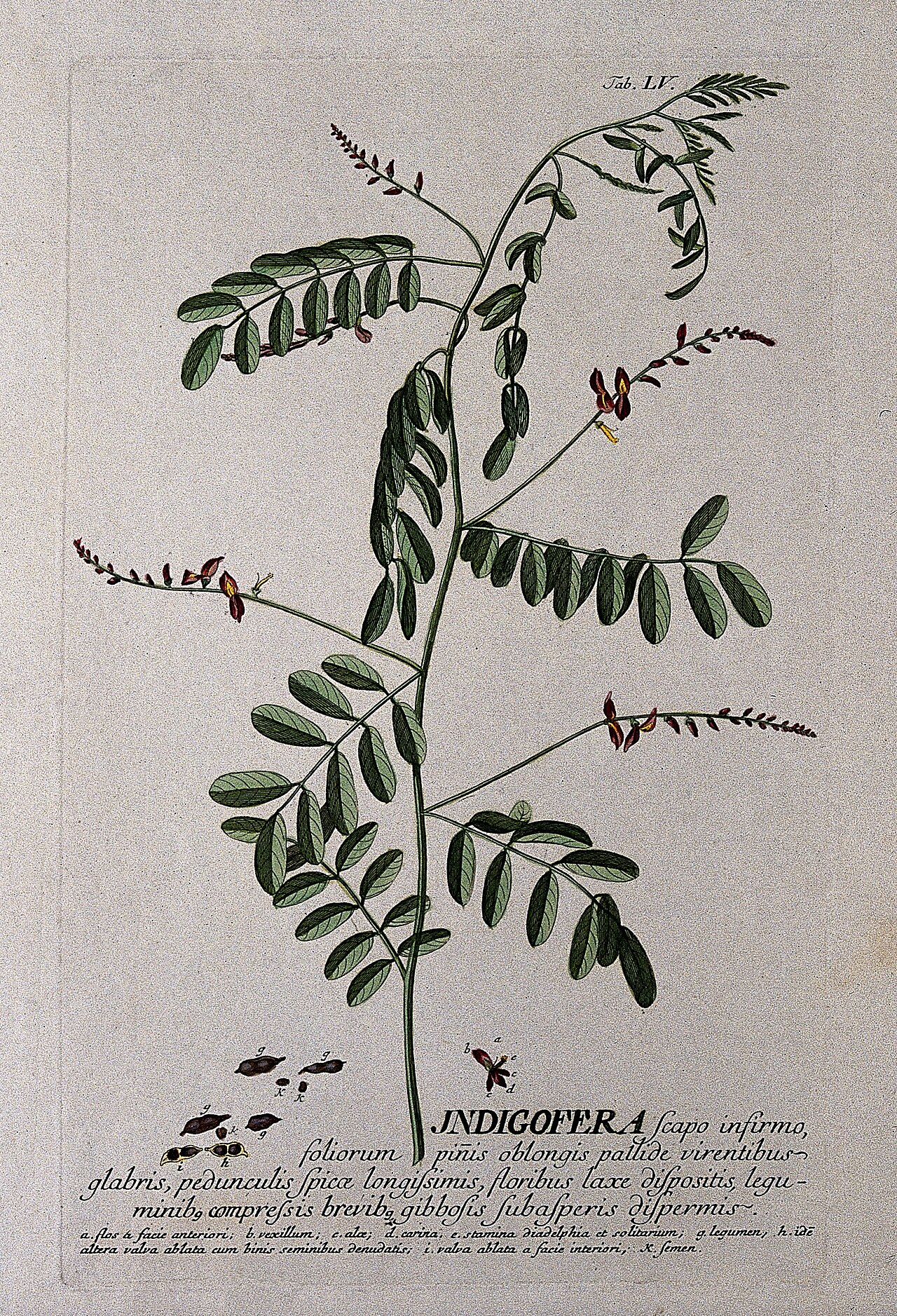
Indigo blue came from India for centuries. In the 1740s Eliza Lucas Pinckney experimented with indigo in South Carolina, and it became the colony's second export after rice. The labor, and much of the know-how, came from enslaved Africans, some of whom knew indigo from West Africa.
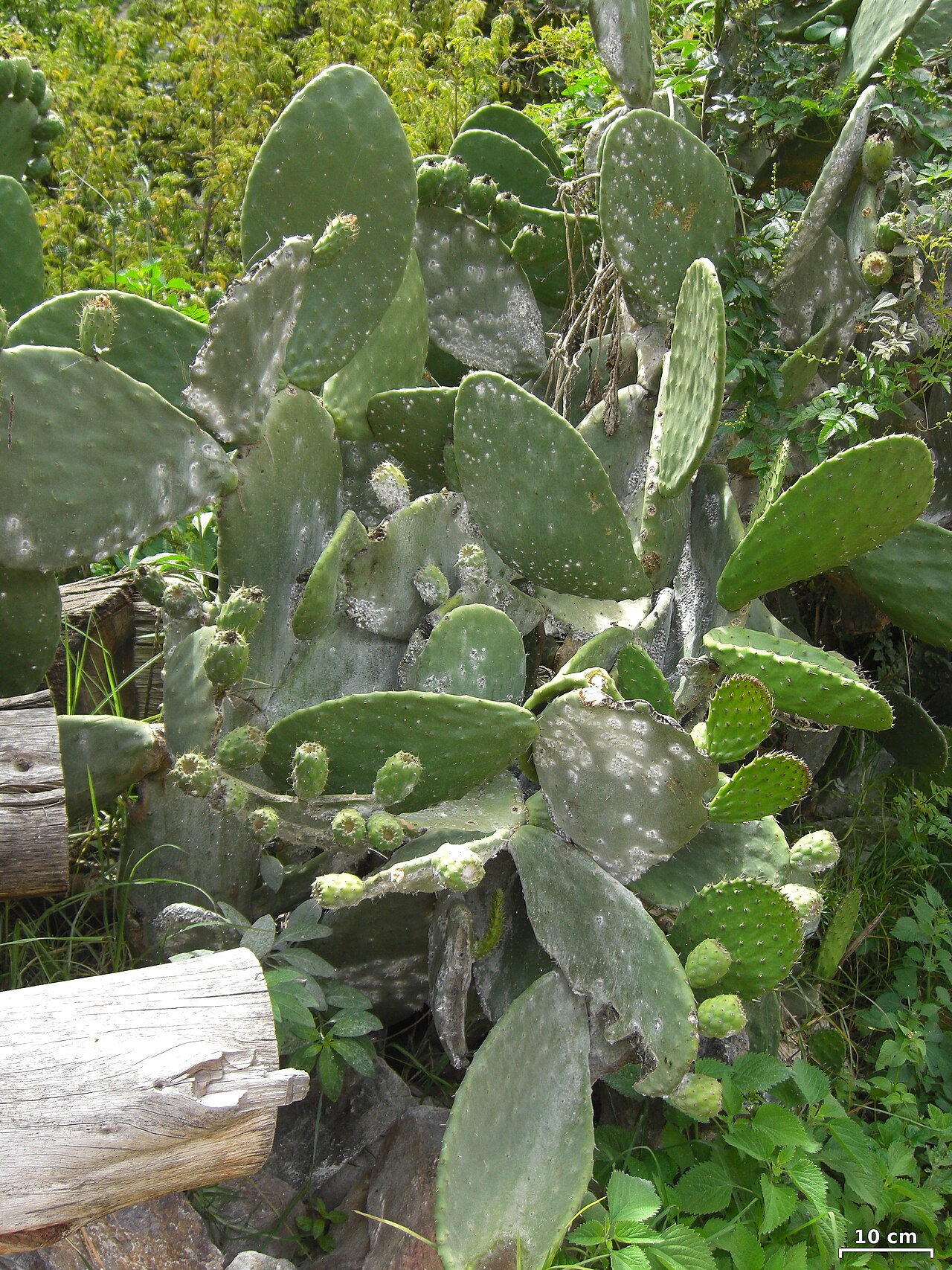
A red dye made from tiny insects living on prickly pear cactus, cultivated in Mexico long before the Spanish came. After conquest it became one of New Spain's most valuable exports, second only to silver by most accounts.
Figures marked ≈ or "about" are estimates or disputed.
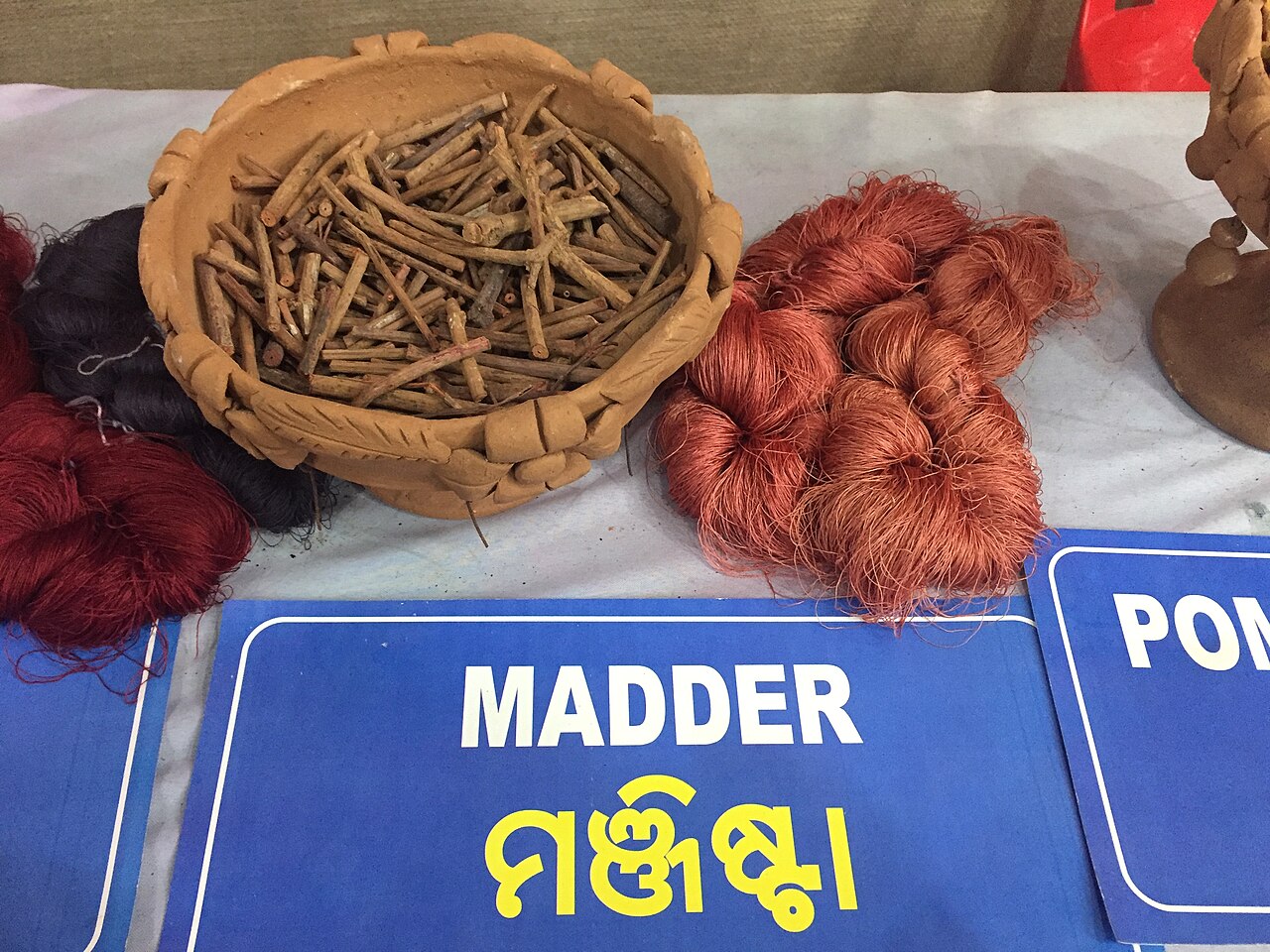
The roots of the madder plant give reds and pinks; the complicated "Turkey red" process made a bright, colorfast red prized in the 1700s and 1800s.
Sailesh Patnaik (Wikimedia Commons) · CC BY-SA 4.0
1856 · London
Mauveine, the first synthetic dye
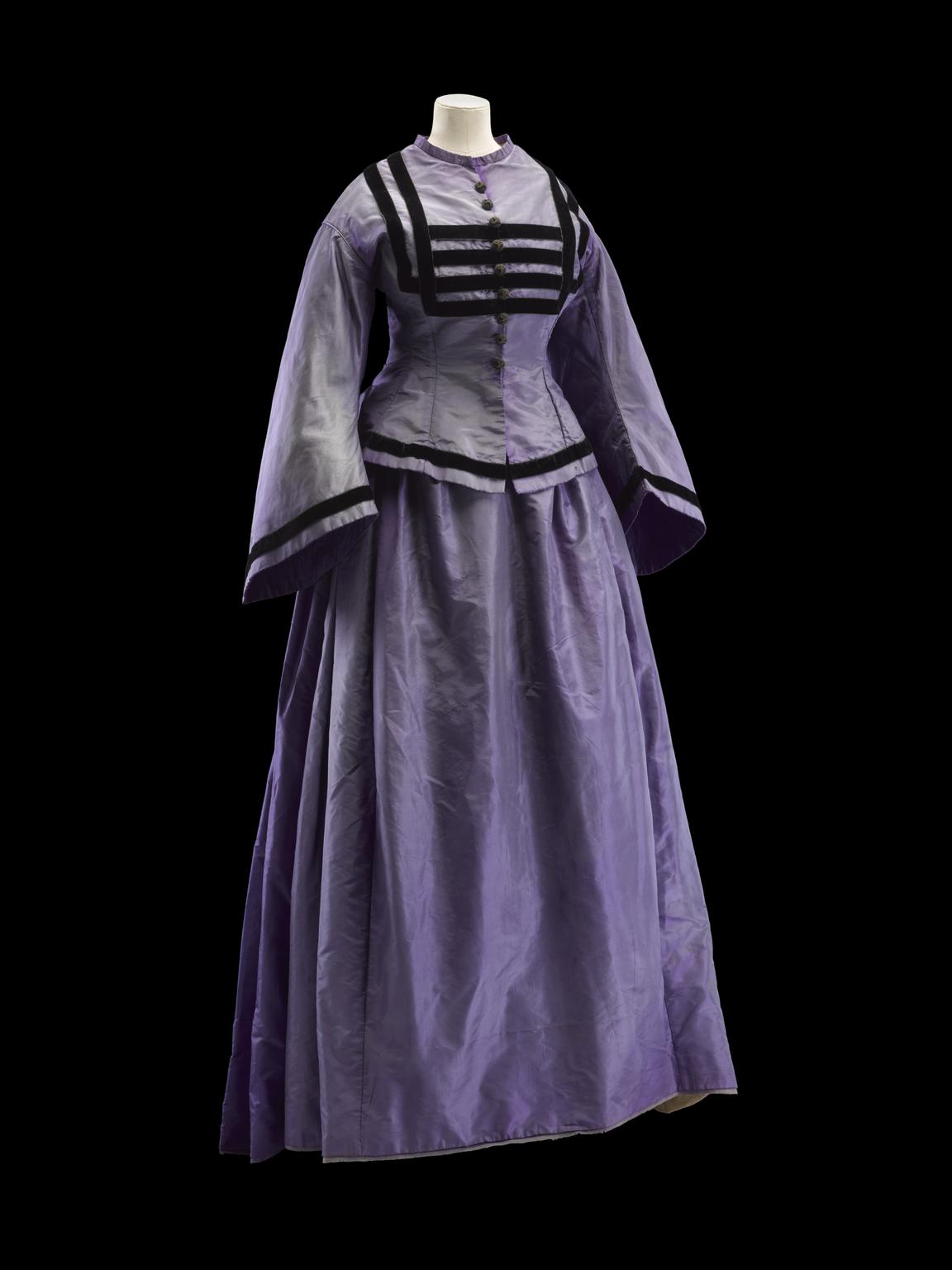
Eighteen-year-old William Henry Perkin was trying to make quinine and got a purple instead. His mauve launched the chemical dye industry and made bright colors cheap for everyone.
Unknown authorUnknown author (Wikimedia Commons) · CC BY-SA 4.0
Go deeper
Lessons:E37 · Rice and indigo: the Carolina fortunePreviewHS1 · Bronze, glaze and dyePreviewSCI7 · The Cloth HuntPreview
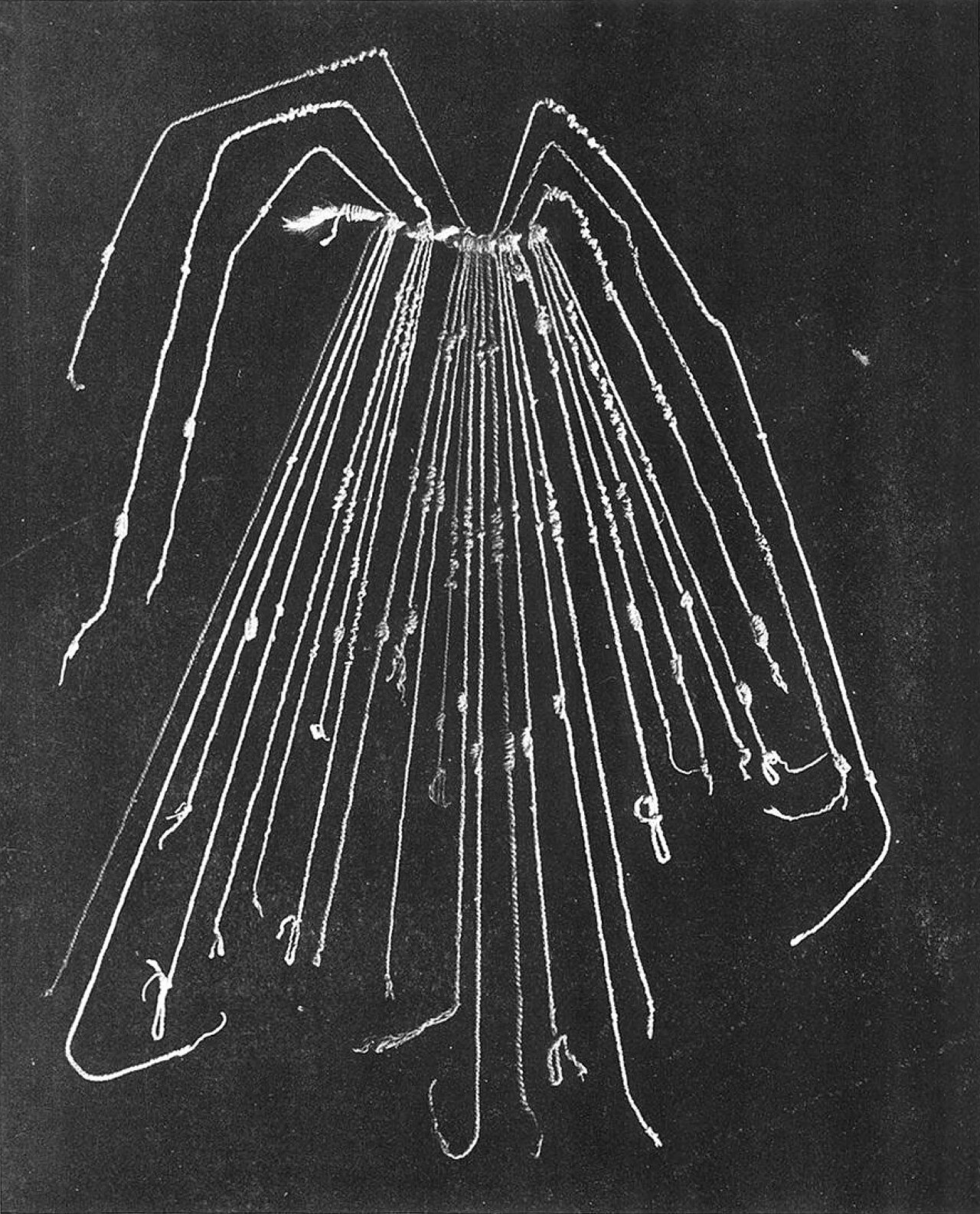
The Inca kept accounts and possibly stories on khipu, cords of cotton or camelid fiber with knots. Numbers are read by knot type and position; scholars are still working on the rest.
Leslie Leland Locke (Wikimedia Commons) · Public domain
from about the 1600s · Ghana (Asante and Ewe)
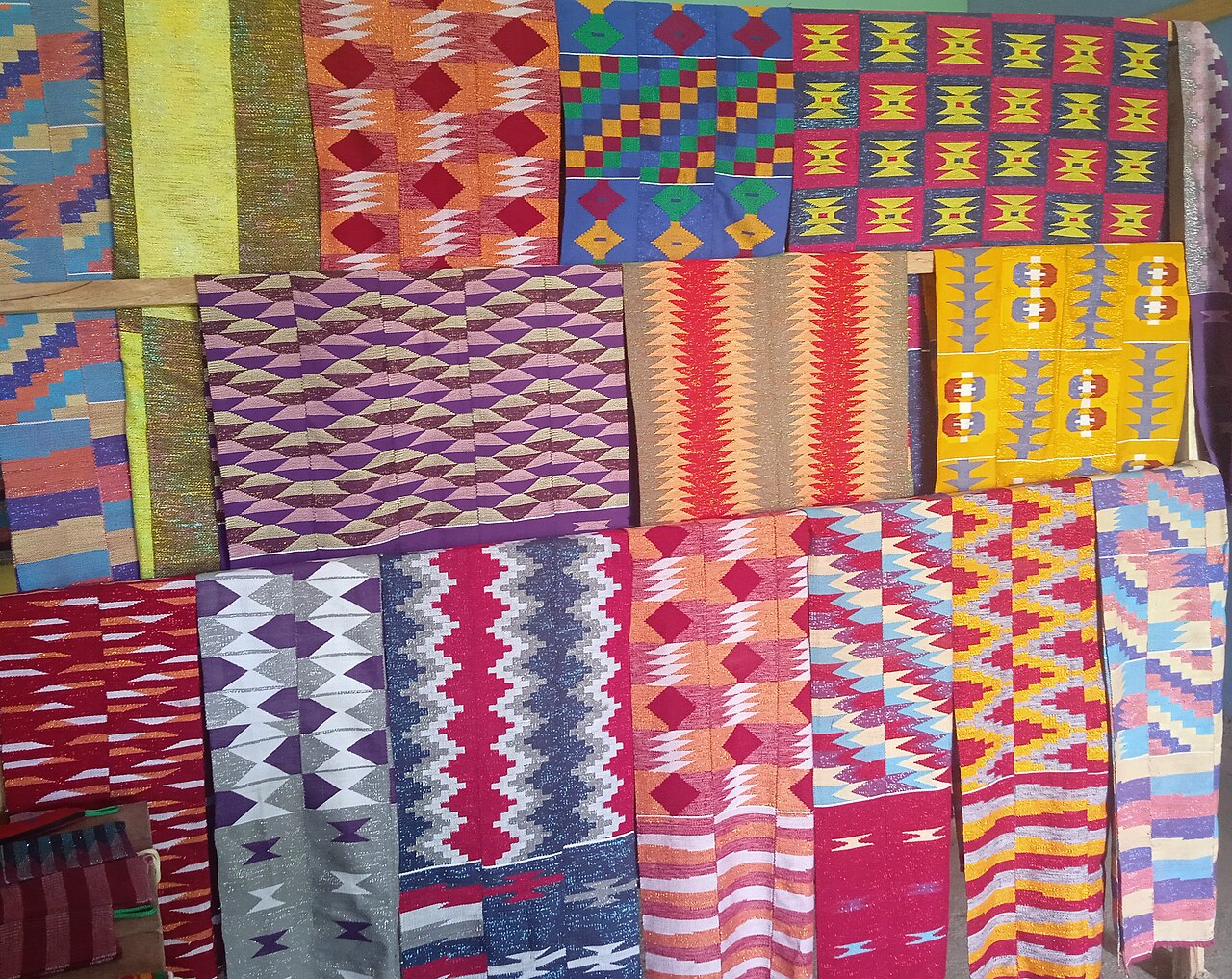
Kente
Narrow strips woven on a strip loom are sewn together into large cloths. Each pattern and color has a name and meaning.
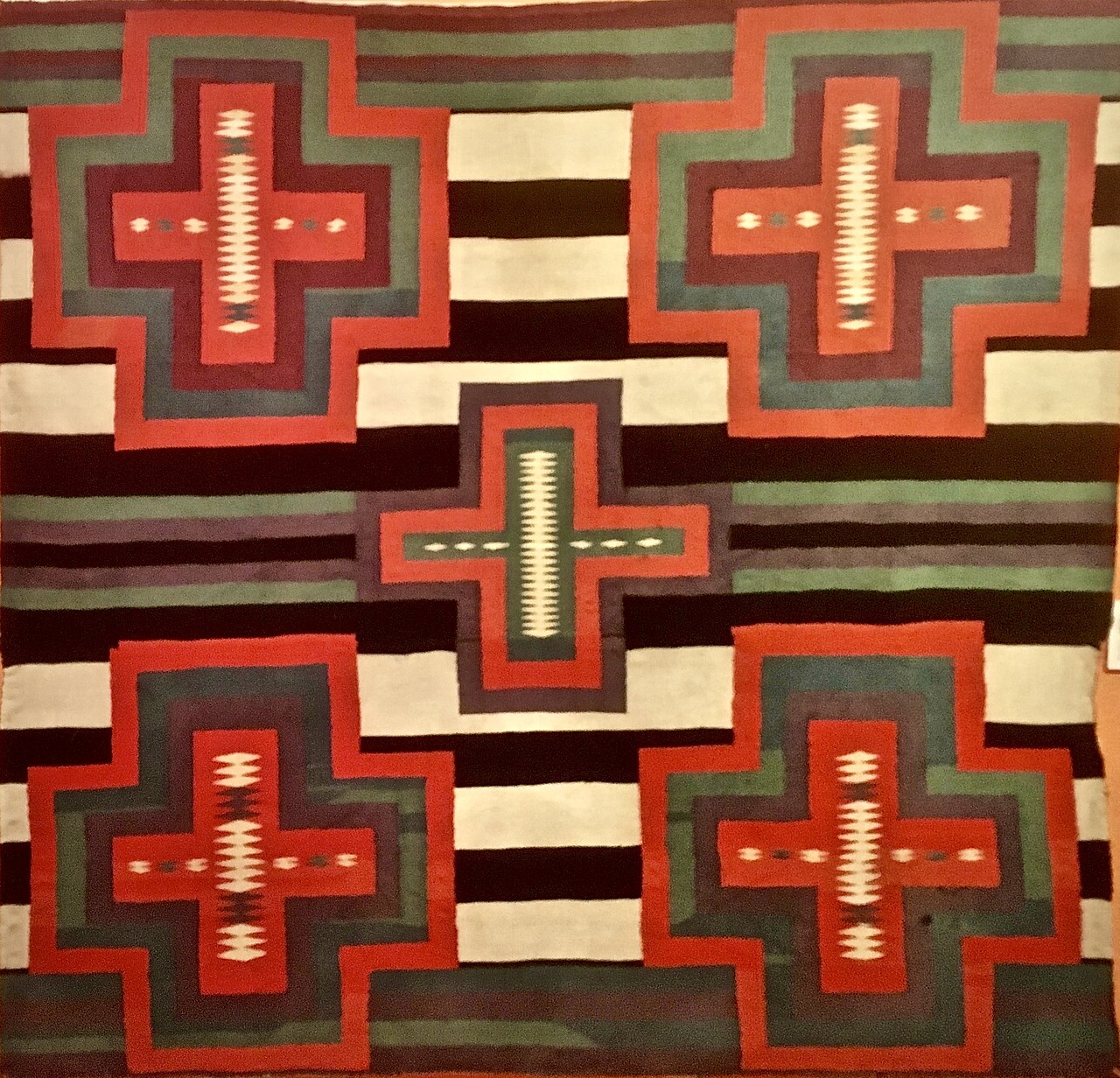
Diné (Navajo) weavers make wool rugs and blankets on upright looms. The Navajo Nation describes weaving as part of Diné teaching and identity, passed down within families; weavers today sell and show their work through the Nation's own markets.
Peter D. Tillman (Wikimedia Commons) · CC BY-SA 2.0
1600s–1700s · India to Europe
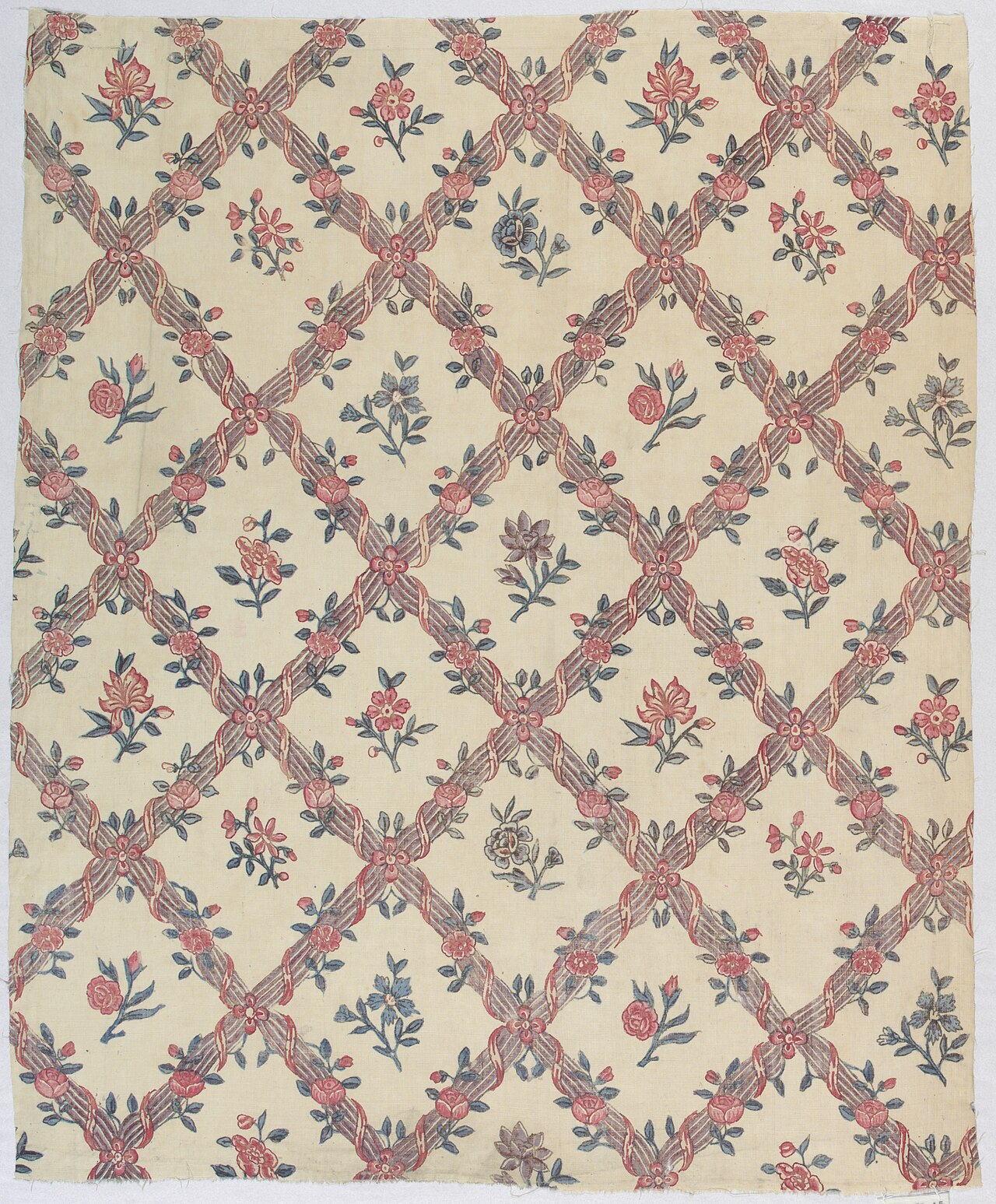
Chintz and calico
Brightly printed Indian cottons became so popular in Europe that Britain and France passed laws banning or taxing them to protect their own wool and silk makers (the British Calico Acts of 1700 and 1721).
Unknown artistUnknown artist (Wikimedia Commons) · Public domain
1070s · England and Normandy
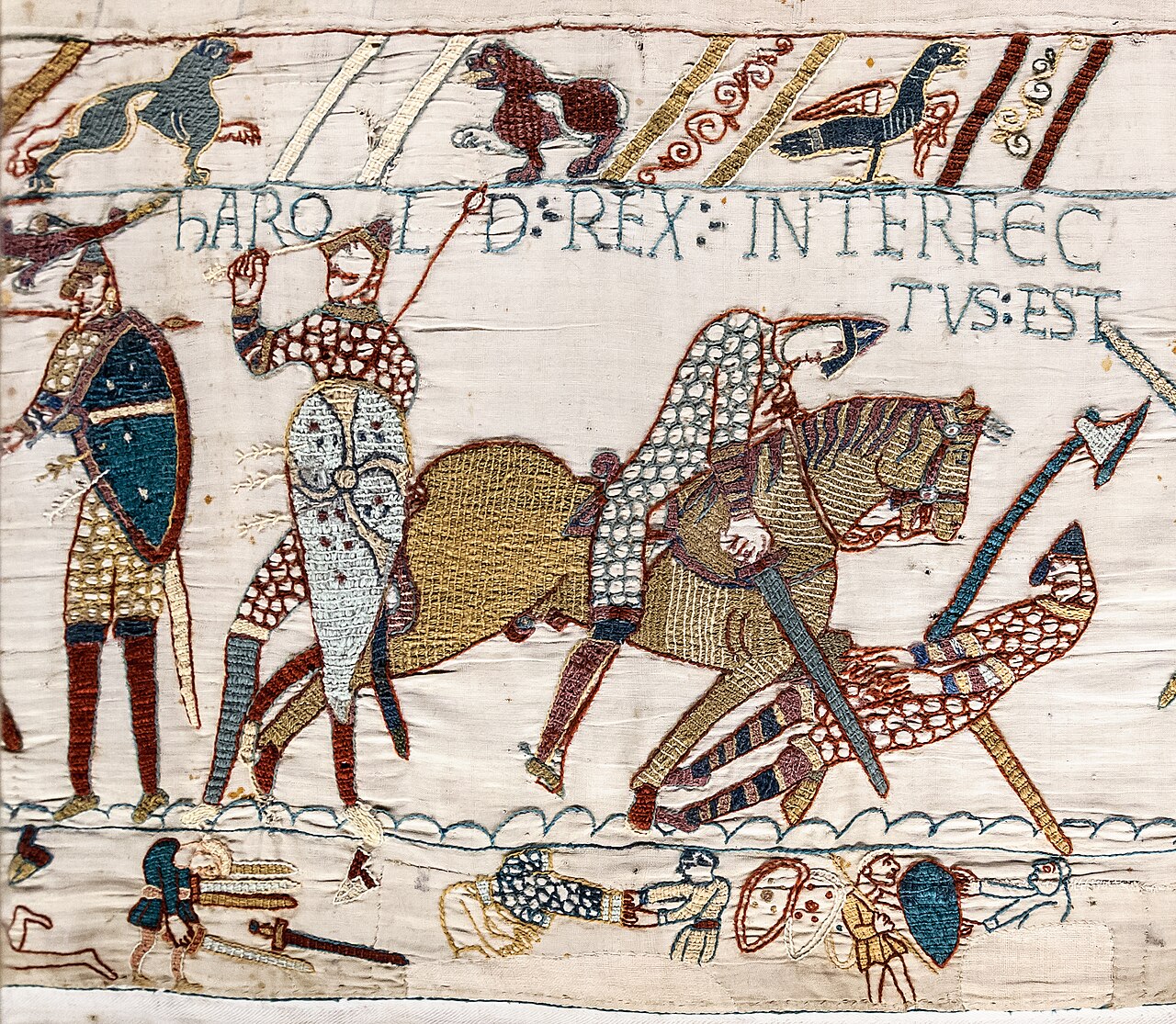
The Bayeux Tapestry
About 70 m long, it tells the Norman conquest of 1066. It is an embroidery, wool stitched on linen, not a woven tapestry.
Every woven cloth is warp threads (up and down, held tight on the loom) crossed by weft threads (side to side). Where the warp passes over, you see the warp color; where it passes under, you see the weft. Choose a weave and two colors and watch the pattern change.
Part fourMachines, mills and slavery
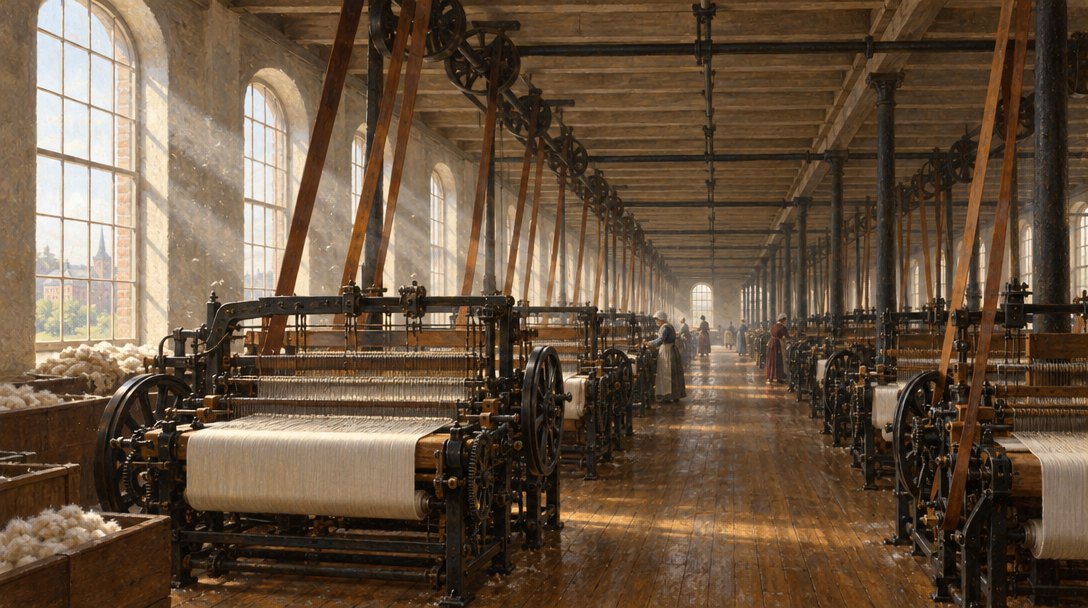
SI painting, made for this explainer: an illustration, not a photograph.
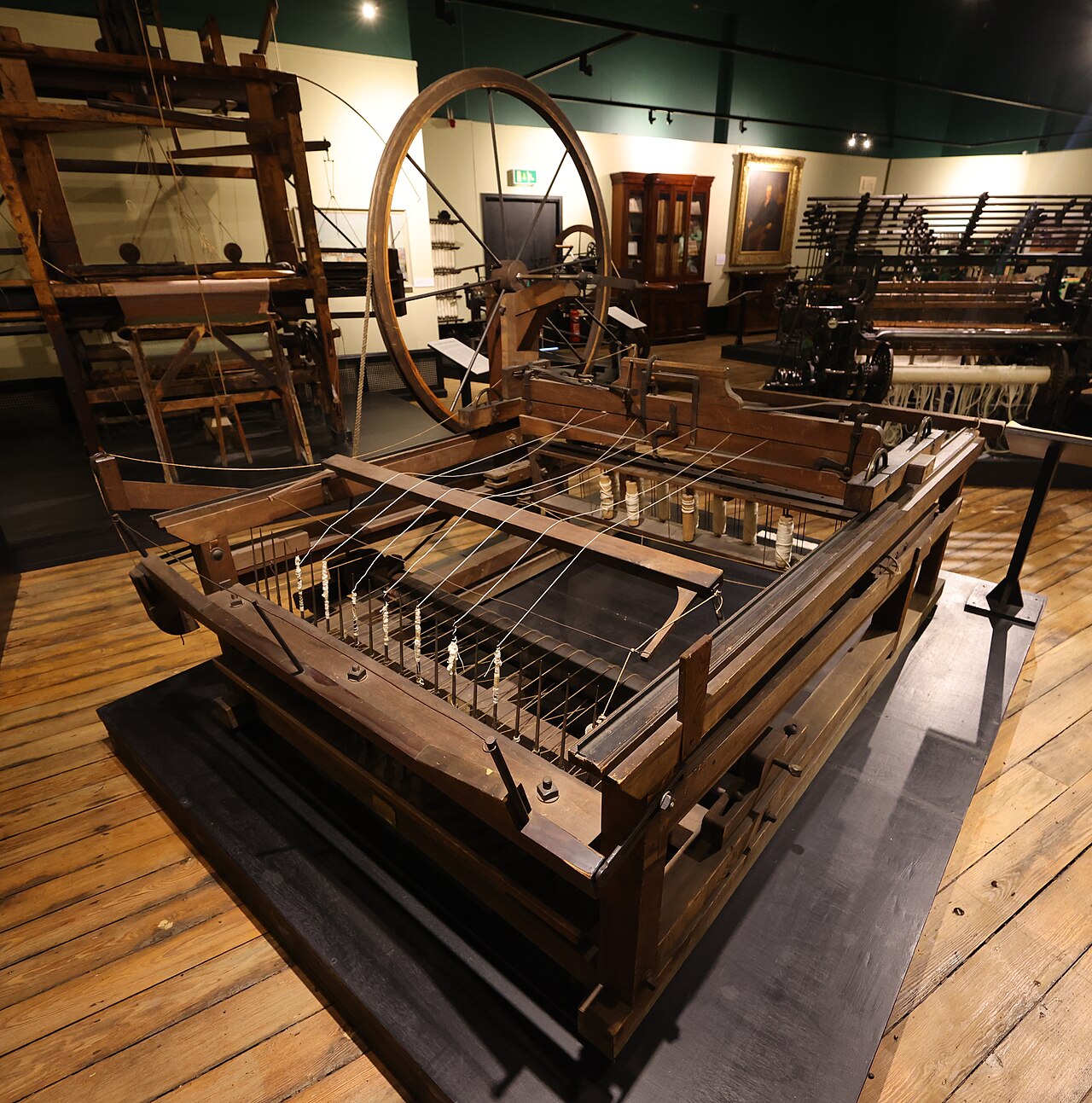
1733–1785 · England
The machines
John Kay's flying shuttle (1733) sped up weaving; Hargreaves's spinning jenny (about 1765), Arkwright's water frame (1769) and Crompton's mule (1779) multiplied spinning; Cartwright's power loom (1785) mechanized weaving. Cloth was the first factory industry.
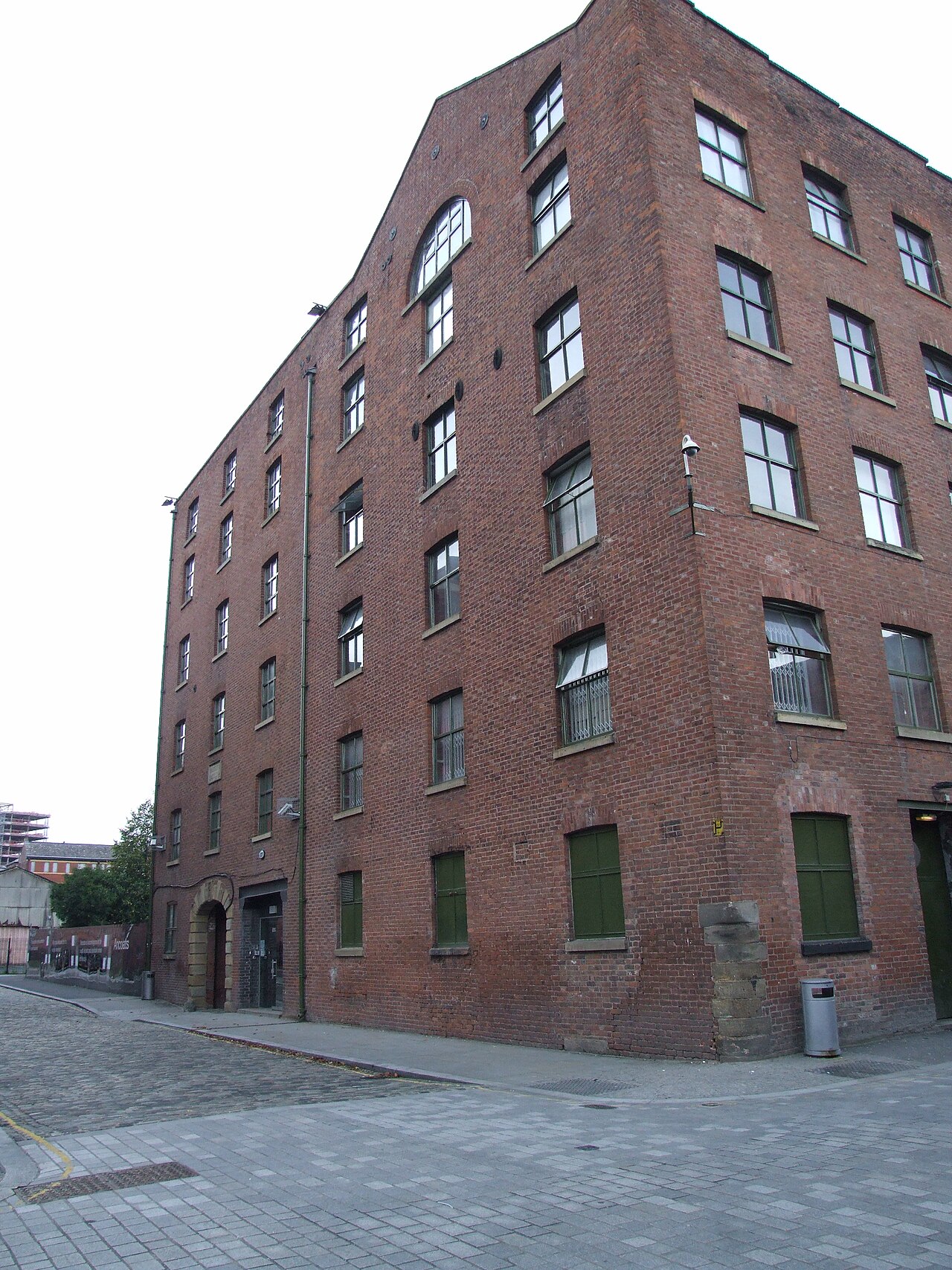
Manchester and the Lancashire mills spun cotton from the American South into cloth sold worldwide. The mills ran on long hours, child labor and coal smoke; Friedrich Engels described the city in 1845.
Clem Rutter, Rochester, Kent. (Wikimedia Commons) · CC BY-SA 3.0
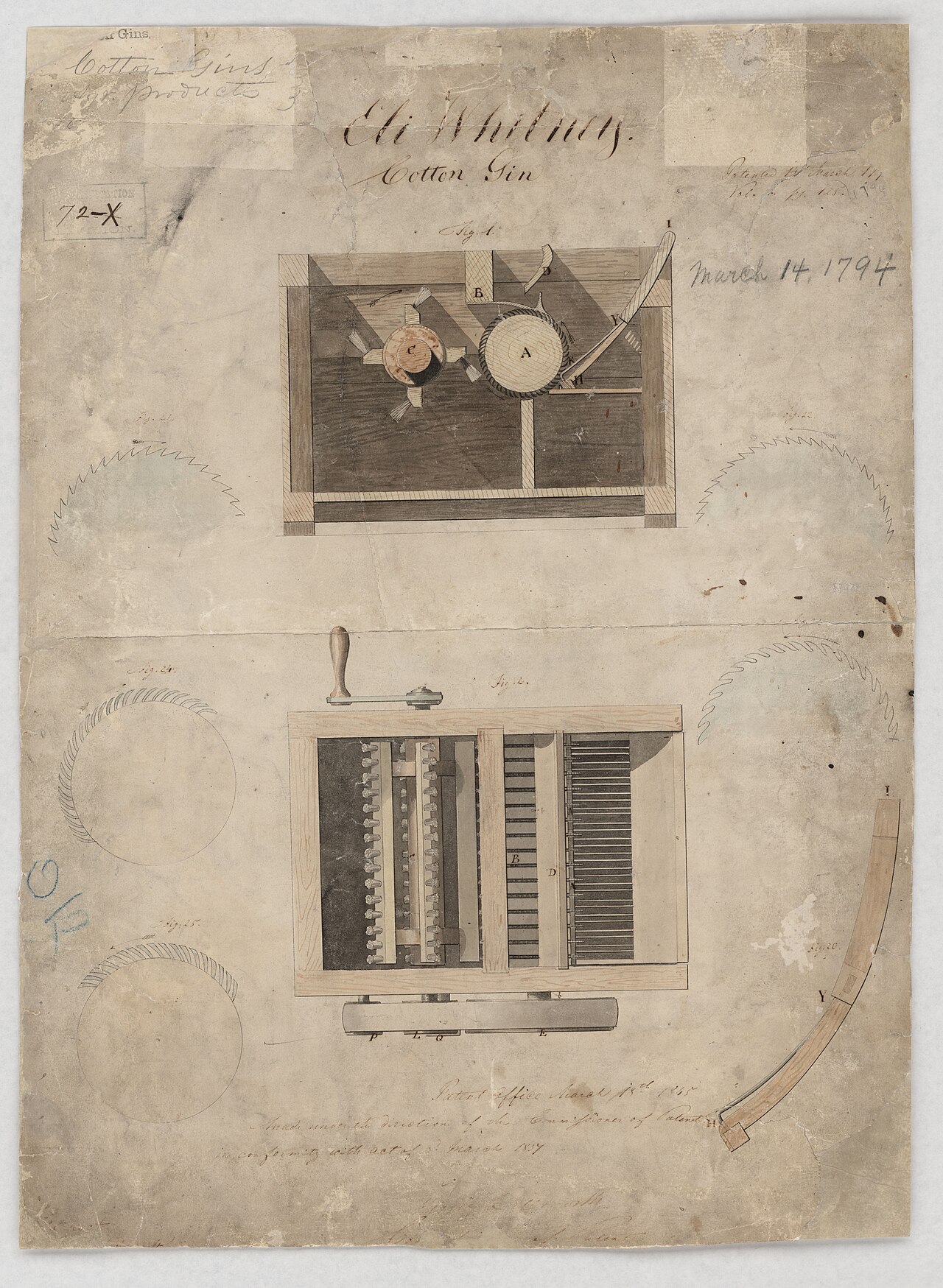
1793 · United States
The cotton gin and slavery
Eli Whitney's gin cleaned seeds from short-staple cotton fifty times faster than by hand. Instead of reducing slavery, it made cotton enormously profitable: the enslaved population of the US grew from about 700,000 in 1790 to nearly 4 million in 1860.
Department of State. Patent Office. (1836 - 1849) (Wikimedia Commons) · Public domain
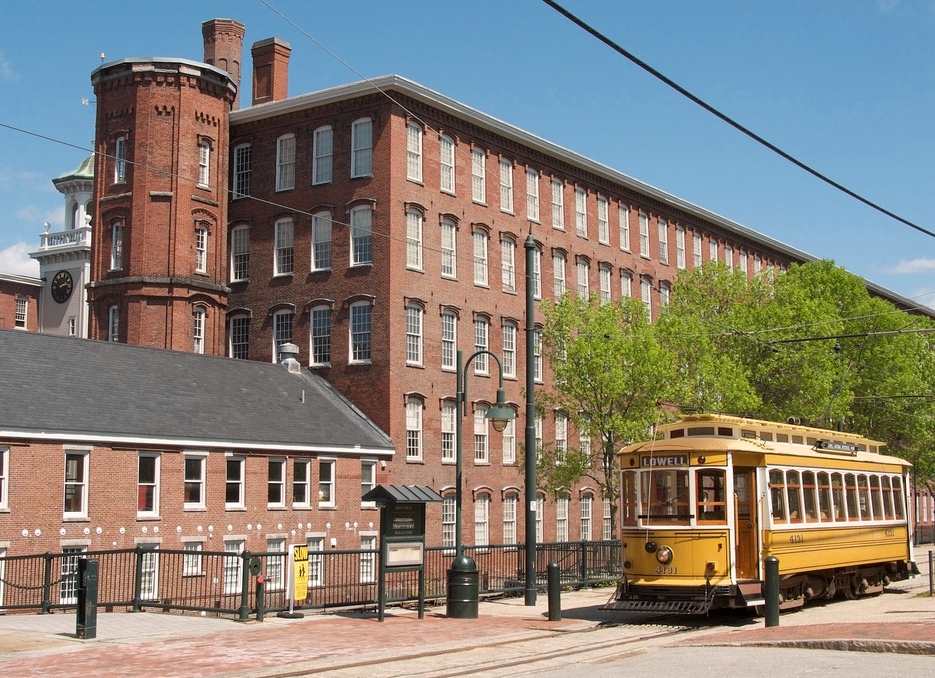
1820s–1840s · Lowell, Massachusetts
The Lowell mill girls
Young New England women worked in the Lowell mills and lived in company boardinghouses. They wrote their own magazine and organized some of the first US strikes, in 1834 and 1836.
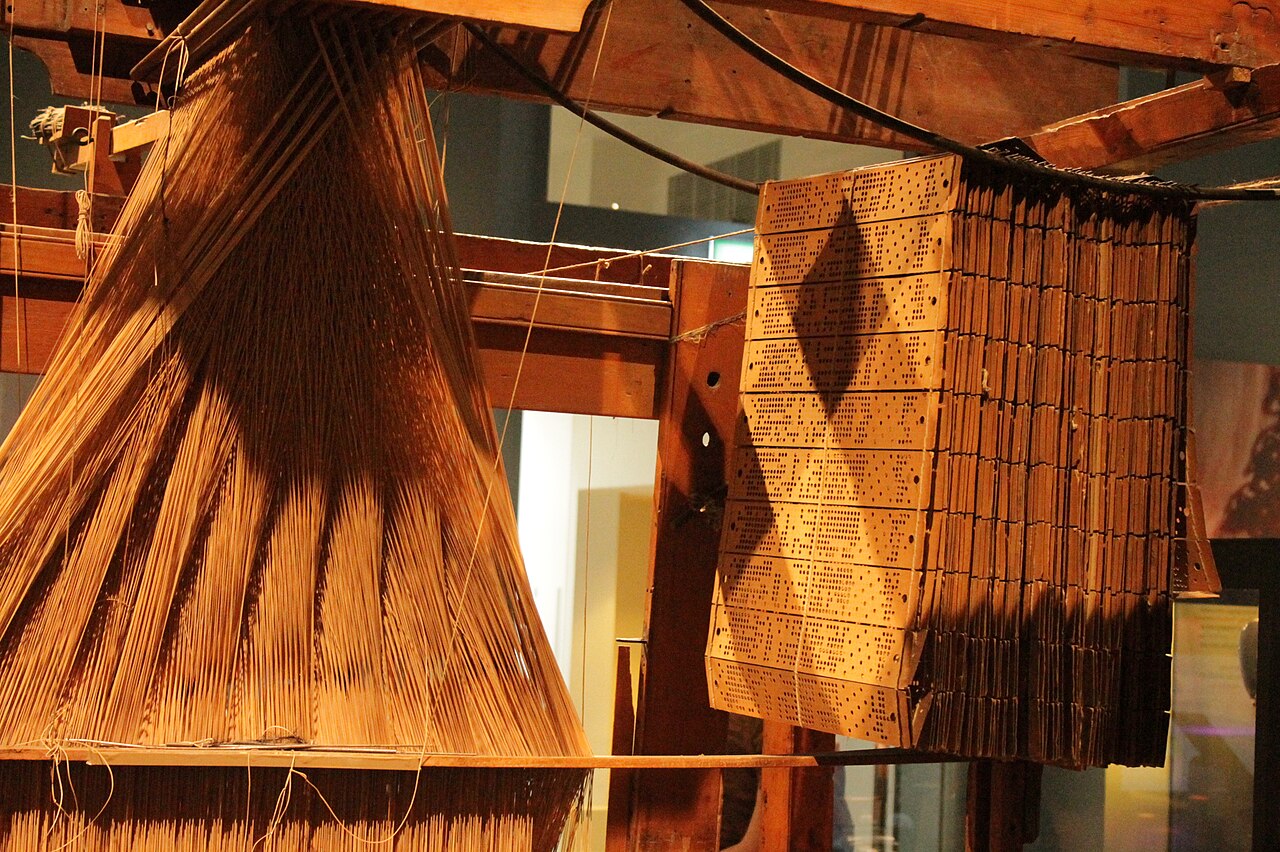
Joseph-Marie Jacquard's loom read chains of punched cards to weave complicated patterns. Charles Babbage borrowed the idea for his Analytical Engine; punched cards ran computers into the 1970s.
Stephencdickson (Wikimedia Commons) · CC BY-SA 4.0
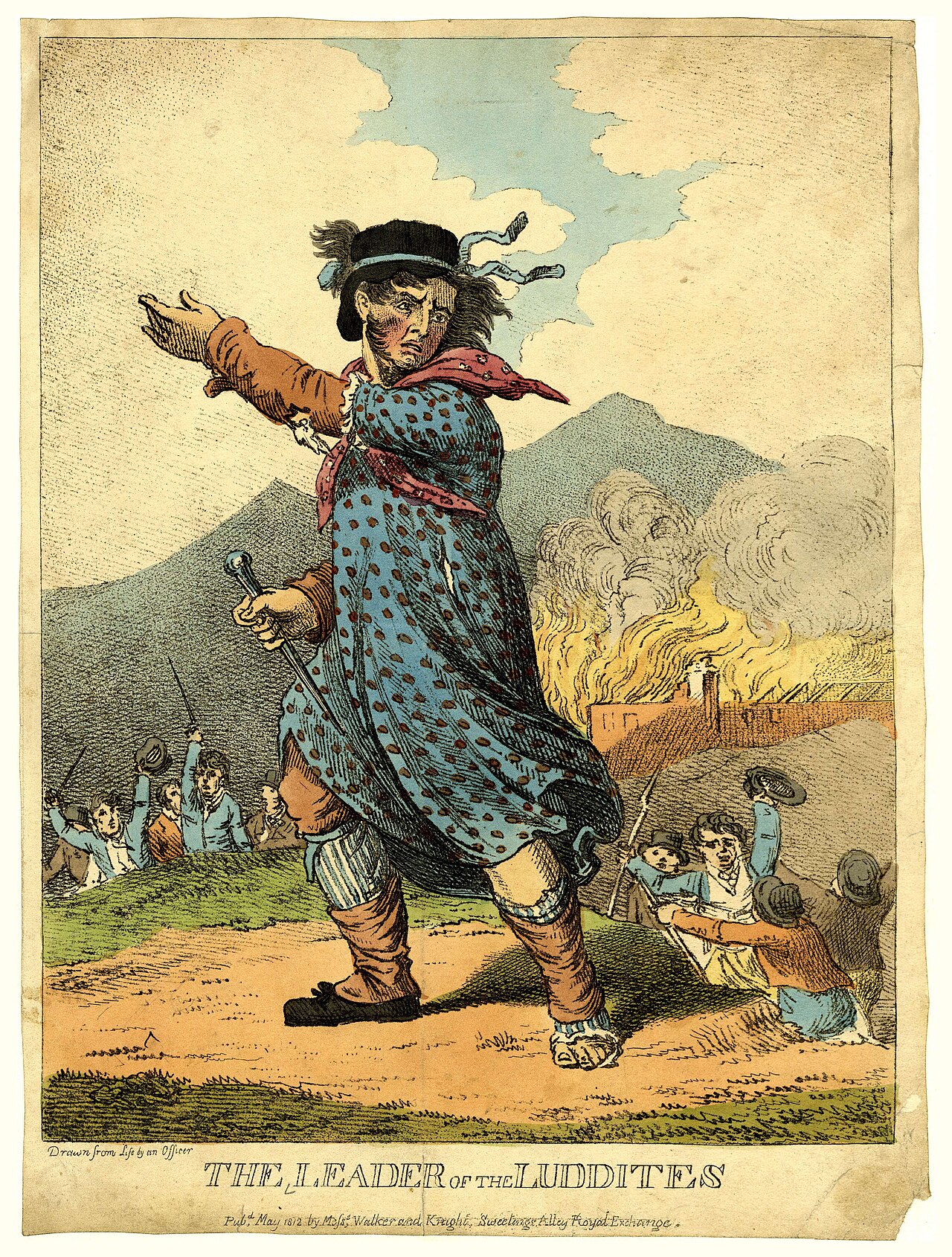
1811–1816 · Northern England
The Luddites
Skilled textile workers smashed machines that threatened their wages and trade. "Luddite" now means anyone against new technology, but their protest was about pay and working conditions.
Unknown. 195 years since publication, copyright extinguished (Wikimedia Commons) · Public domain
Go deeper
Lessons:AM3 · The Cotton EnginePreviewAM3 · The Factory GirlsPreviewWH6 · The New MillsPreviewE08 · The Mill Floor: six in the morningPreview
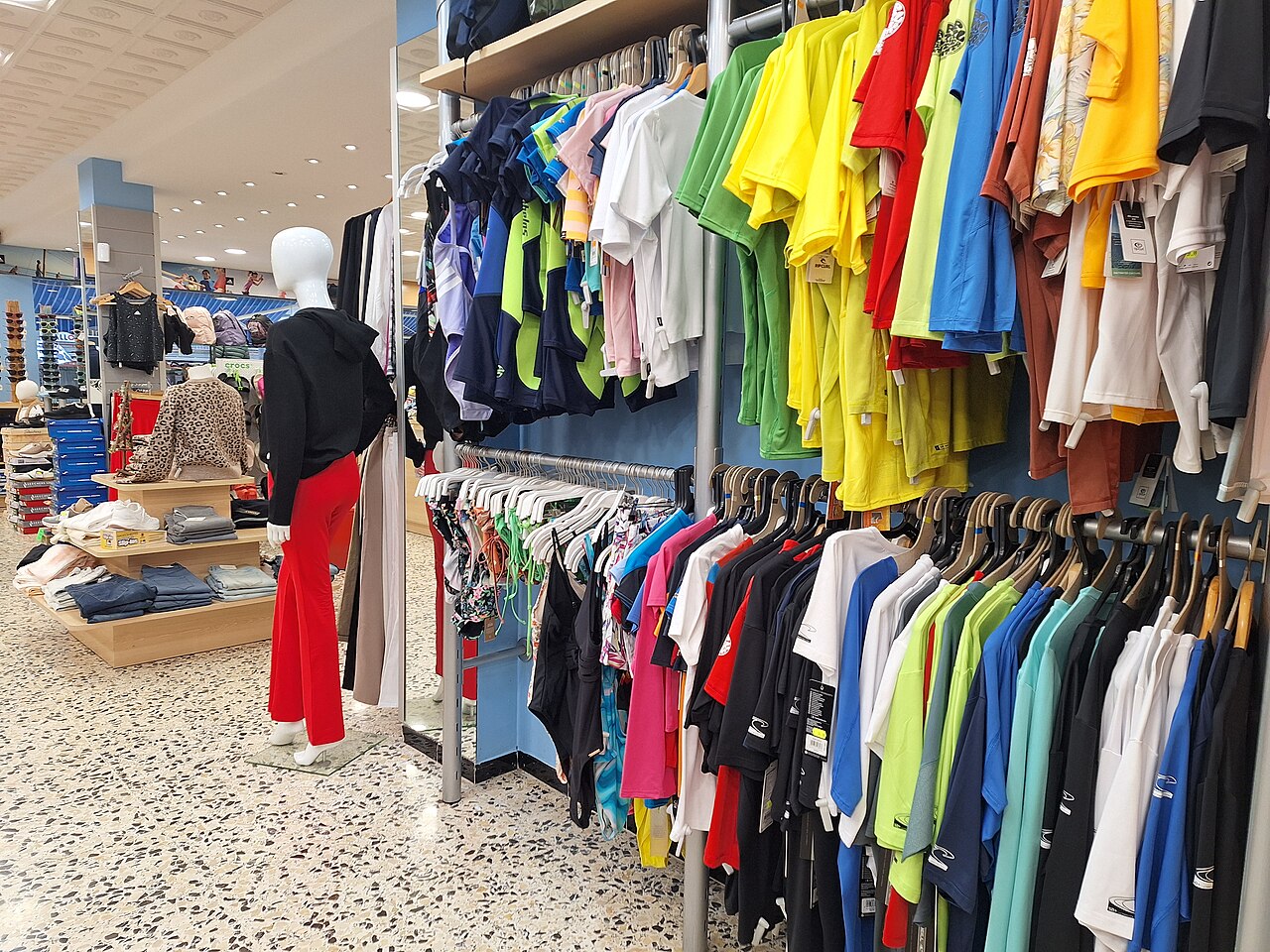
Clothing production roughly doubled between 2000 and 2014, while people kept each garment for a shorter time. Low prices depend on low wages and cheap synthetic fiber.
Figures marked ≈ or "about" are estimates or disputed.
Steffen Mokosch (Wikimedia Commons) · CC BY-SA 4.0
24 April 2013 · Savar, Bangladesh
Rana Plaza
An eight-story building holding garment factories collapsed; 1,134 people died. It led to the Bangladesh Accord on building and fire safety, signed by many clothing brands.
today · Atacama Desert, Ghana
Where clothes end up
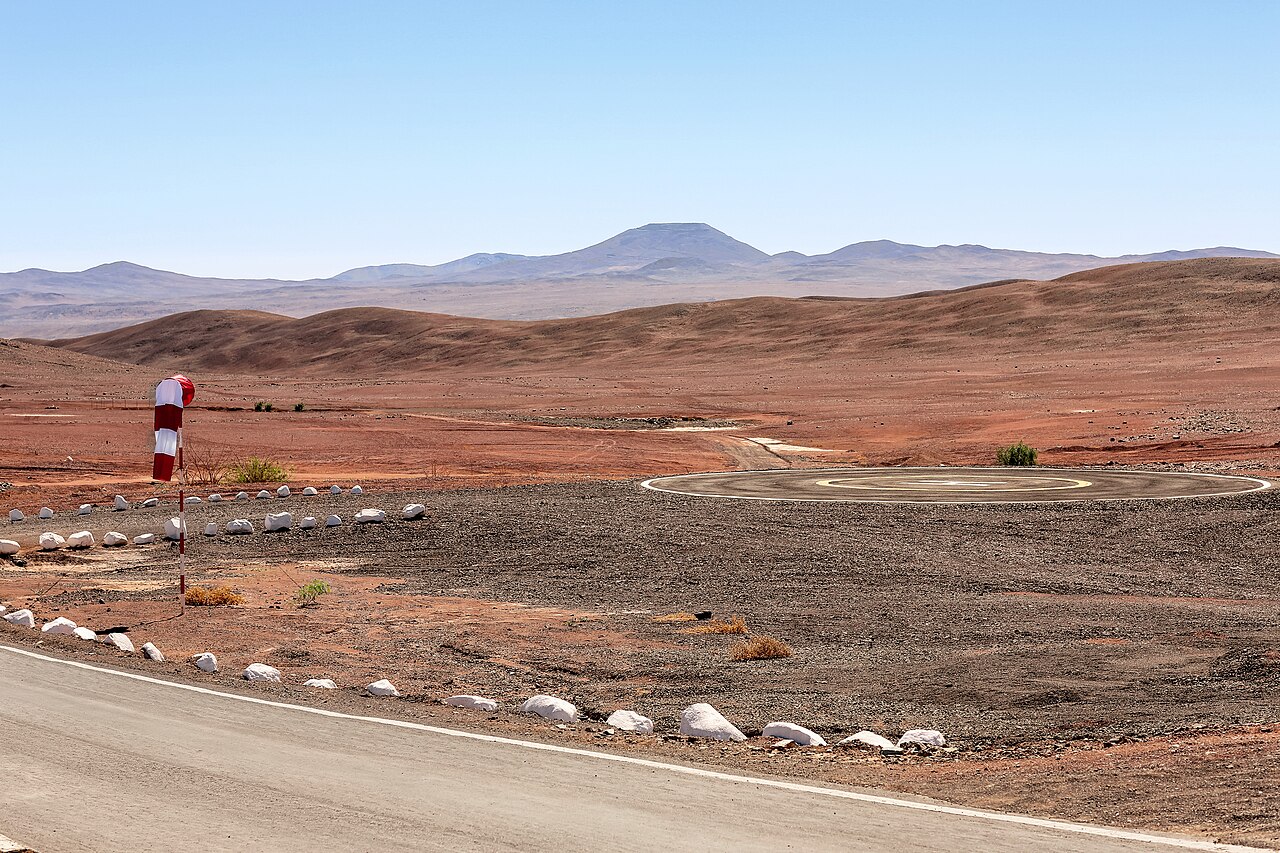
Unsold and used clothing is shipped around the world; tens of thousands of tonnes have been dumped in Chile's Atacama Desert, and Accra's Kantamanto market handles millions of used garments a week. Synthetic fabrics shed microfibers into water each wash.
Figures marked ≈ or "about" are estimates or disputed.
A cotton T-shirt can cross three continents before it reaches a store. Click a stage to read what happens there.
1Cotton field Texas, India, China
2Gin seeds out
3Spinning China, India
4Knitting fabric
5Dyeing water and chemicals
6Sewing Bangladesh, Vietnam
7Shipping container ship
8Store United States
Click a stage.
Who gets what from a $30 T-shirt (estimate)
Shares follow the breakdown published by the Clean Clothes Campaign (based on a €29 T-shirt, 2014) and are rounded; real shares vary by brand, country and year. Treat them as an estimate for discussion, not an audit.
Go deeper
Lessons:OPS1 · Inventory and supply chains: the boxPreviewBZ6 · The pin factoryPreviewE05 · Comparative advantagePreview
Wool comes from sheep, cotton from a fluffy plant, silk from a tiny worm's cocoon. People twist the fibers into thread, then weave threads over, under, over, under to make cloth.
Try this: cut a sheet of paper into strips. Tape six strips side by side at the top (that is your warp). Weave more strips across, over and under. You just made plain weave! Then read Hans Christian Andersen's "The Emperor's New Clothes" and talk about who was afraid to tell the truth.
Three quick questions (3 questions · runs in your browser, nothing is sent)
Lessons:EN1 · The Emperor's New Clothes (3–5)PreviewSCI7 · The Cloth Hunt (6–8)PreviewWH6 · The New Mills (6–8)PreviewAM3 · The Factory Girls (6–8)PreviewE37 · Cotton gin, 1793 (9–12)PreviewE08 · The Mill Floor (9–12)Preview
Read: Kassia St Clair, The Golden Thread (2018); Sven Beckert, Empire of Cotton (2014); Lucy Larcom, A New England Girlhood (1889, public domain, a Lowell mill girl's memoir). Fiction: Katherine Paterson, Lyddie (1991), a Lowell mill girl; Linda Sue Park's A Single Shard; Charles Dickens, Hard Times (1854, older readers), set in a mill town; Andersen's "The Emperor's New Clothes" (1837).
Quiz: Thread, textiles of the world (10 questions · runs in your browser, nothing is sent)
Moulherat et al., "First evidence of cotton at Neolithic Mehrgarh, Pakistan", Journal of Archaeological Science (2002); Wendel and Grover, cotton domestication reviews.
Procopius, History of the Wars VIII.17, on the silkworm smuggling story.
Victoria Finlay, Color: A Natural History of the Palette (2002); Elena Phipps, Cochineal Red (Metropolitan Museum of Art, 2010).
Andrea Feeser, Red, White, and Black Make Blue: Indigo in the Fabric of Colonial South Carolina Life (2013).
Gary Urton and the Harvard Khipu Database Project; UNESCO, Barkcloth making in Uganda (2008).
Navajo Nation Museum and Diné weavers' own organizations (Diné be' iiná); The Smithsonian National Museum of the American Indian.
Beverly Lemire, Cotton (2011), on chintz and the Calico Acts; Sven Beckert, Empire of Cotton (2014).
U.S. Census 1790 and 1860, enslaved population; National Park Service, Lowell National Historical Park.
Science Museum Group, Jacquard loom; James Essinger, Jacquard's Web (2004).
International Labour Organization, The Rana Plaza Accident and its Aftermath; Ellen MacArthur Foundation, A New Textiles Economy (2017); Textile Exchange, Materials Market Report (2024), fiber shares.
newSchoolWorks.com · The Museum of Everyday Living · Bradenton, FL · SI paintings made for this explainer; photographs from Wikimedia Commons under the licences shown on each card.