The Museum of Everyday Living · Shopping · Work & Livelihood
Silk Road and spice routes
Goods, faiths and germs crossed Eurasia in relays, and every hand they passed through raised the price
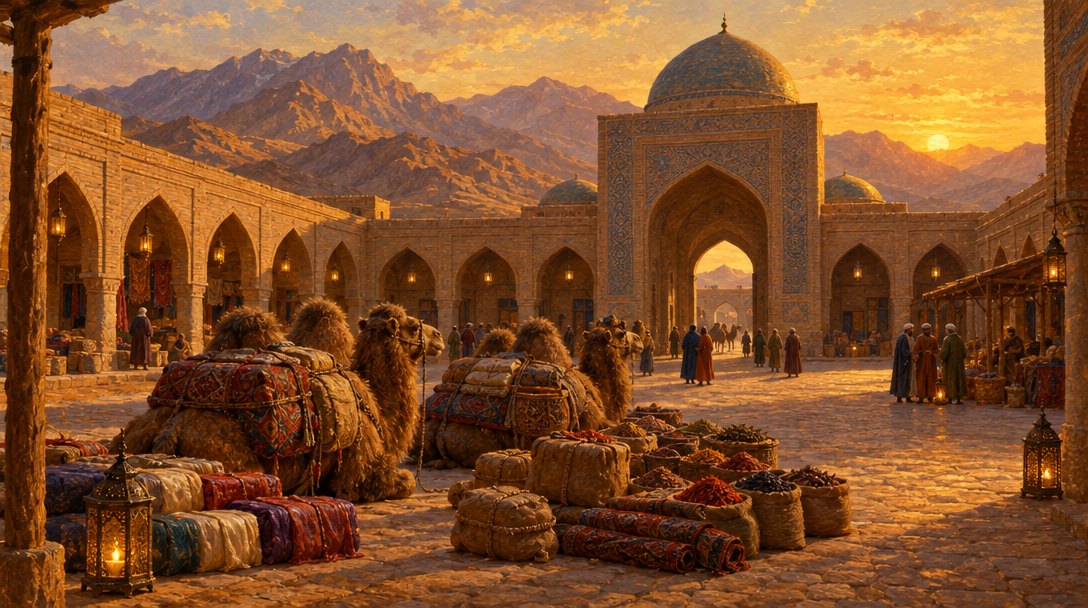
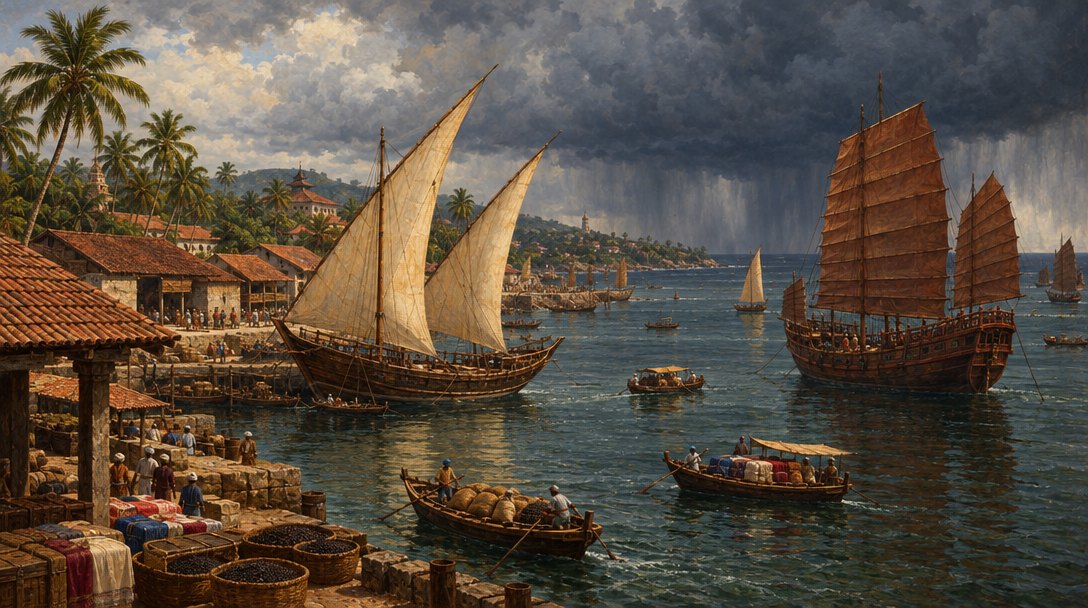
SI painting, made for this explainer: an illustration, not a photograph.
For about 1,500 years, silk, paper and porcelain moved west from China while horses, glass and silver moved east, and pepper, cotton cloth and nutmeg crossed the Indian Ocean. Almost nothing traveled the whole way. Goods passed from merchant to merchant, and each one added transport, tolls, risk and profit. That chain of middlemen explains why a pinch of nutmeg could cost a fortune in London, why Portugal sailed around Africa, and why the Dutch went to war over a few small islands.
Part oneThe caravan roads
138–126 BCE · Han China to Central Asia
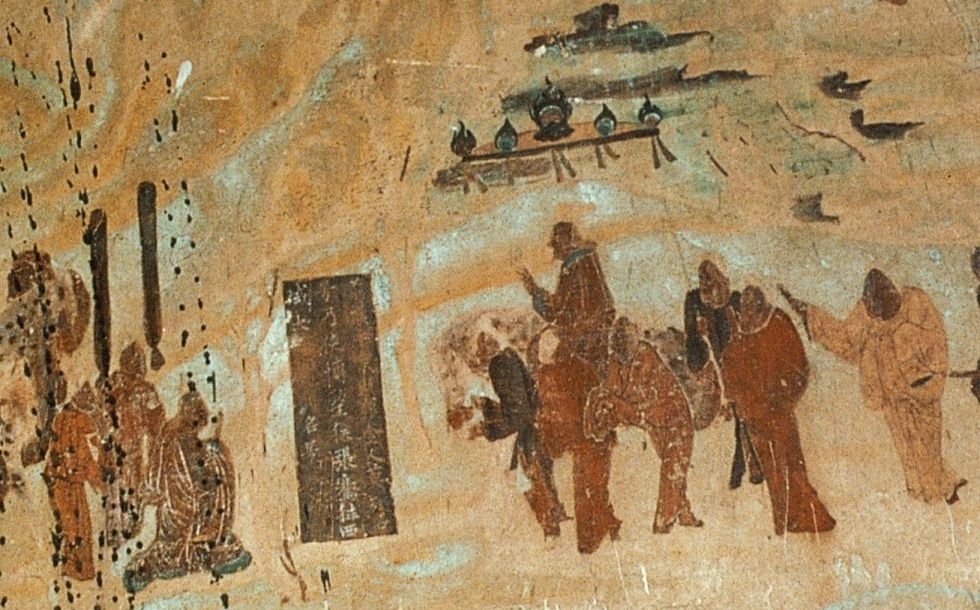
Zhang Qian rides west
The Han emperor Wu sent the envoy Zhang Qian west to find allies against the Xiongnu. He was captured, held for about ten years, escaped and reached Bactria. His reports of horses, markets and kingdoms opened official Han contact with Central Asia, the usual starting date for the Silk Road.
Unknown authorUnknown author (Wikimedia Commons) · Public domain
about 100 BCE – 1450 CE · Eurasia
Chang'an to Constantinople
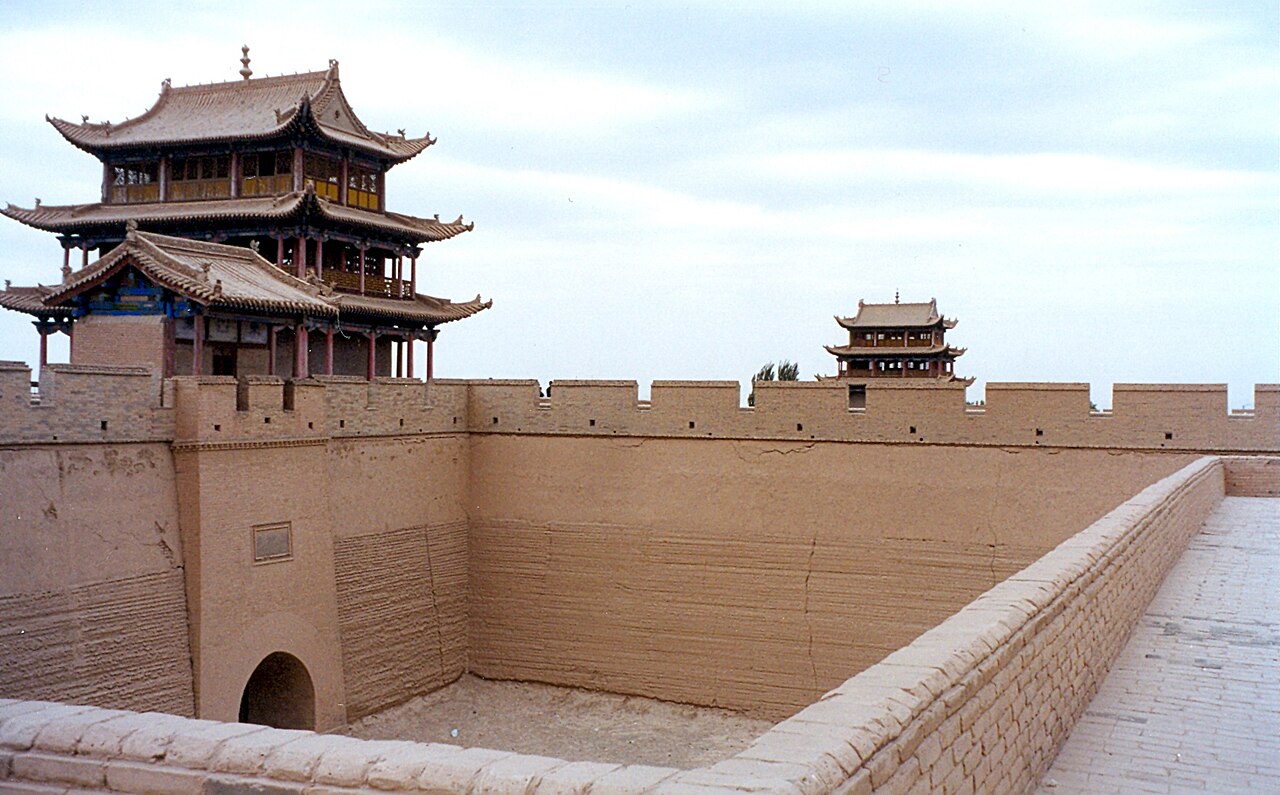
There was never one road. A web of caravan tracks ran from Chang'an (Xi'an) along the Hexi Corridor, around the Taklamakan Desert, over the Pamirs to Samarkand and Merv, and on to Baghdad, Antioch and Constantinople. Few goods traveled the whole way; most changed hands many times. The German geographer Ferdinand von Richthofen coined the name "Silk Road" in 1877.
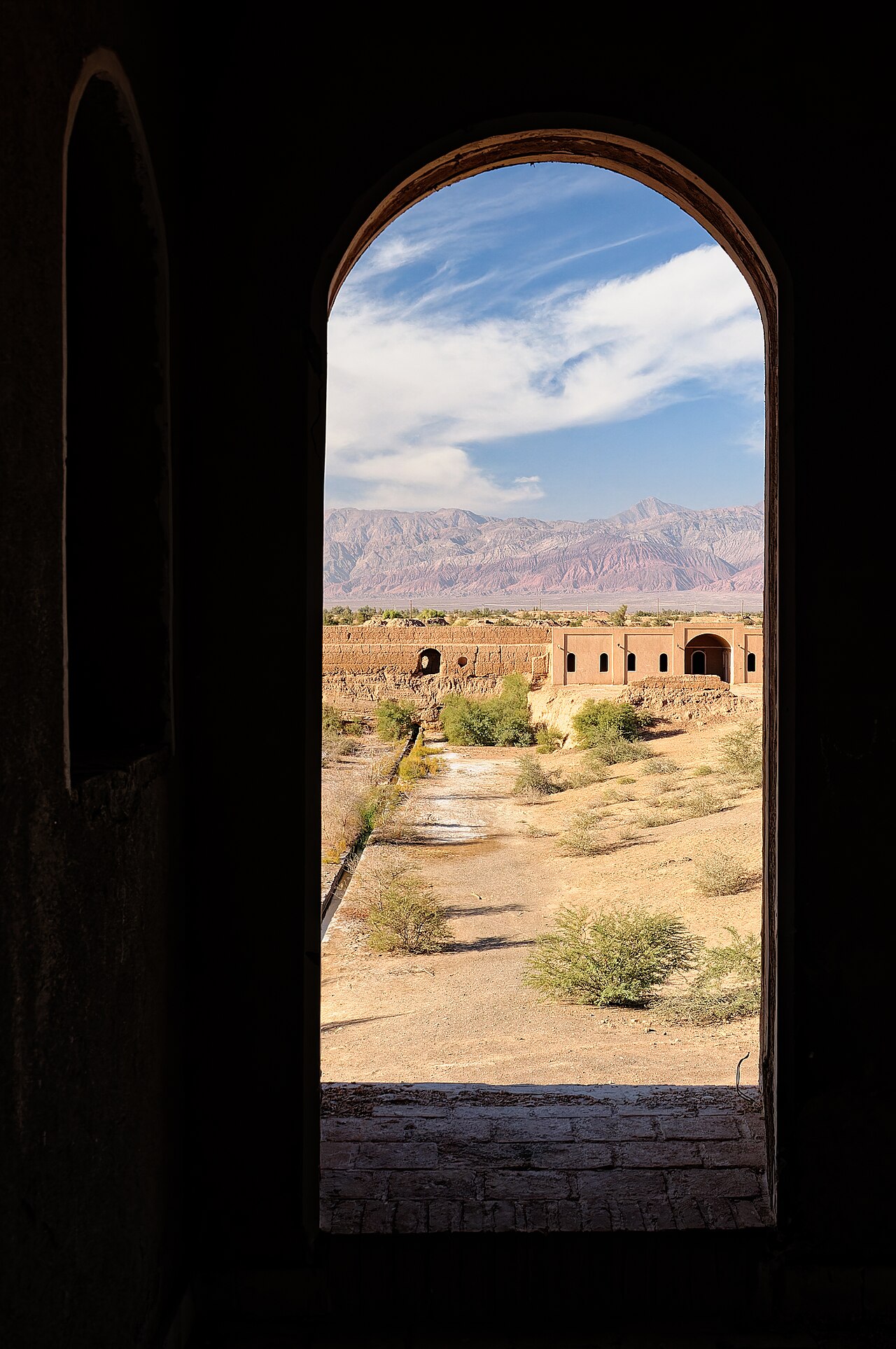
Walled inns for caravans stood about a day's march apart, roughly 30–40 km. A single gate opened on a courtyard with rooms above and stables below. Rulers built them because safe roads brought taxes; many in Iran were listed by UNESCO in 2023.
Sogdians from the Zeravshan valley were the great middlemen of the overland trade, with colonies all the way to China. Their "Ancient Letters", found near Dunhuang and dated to about 313 CE, include a merchant's letter home and a wife's complaint that her husband left her stranded.
Photographer: NORTHEAST ASIAN HISTORY FOUNDATION (Wikimedia Commons) · Public domain
868 CE · Mogao Caves, Gansu
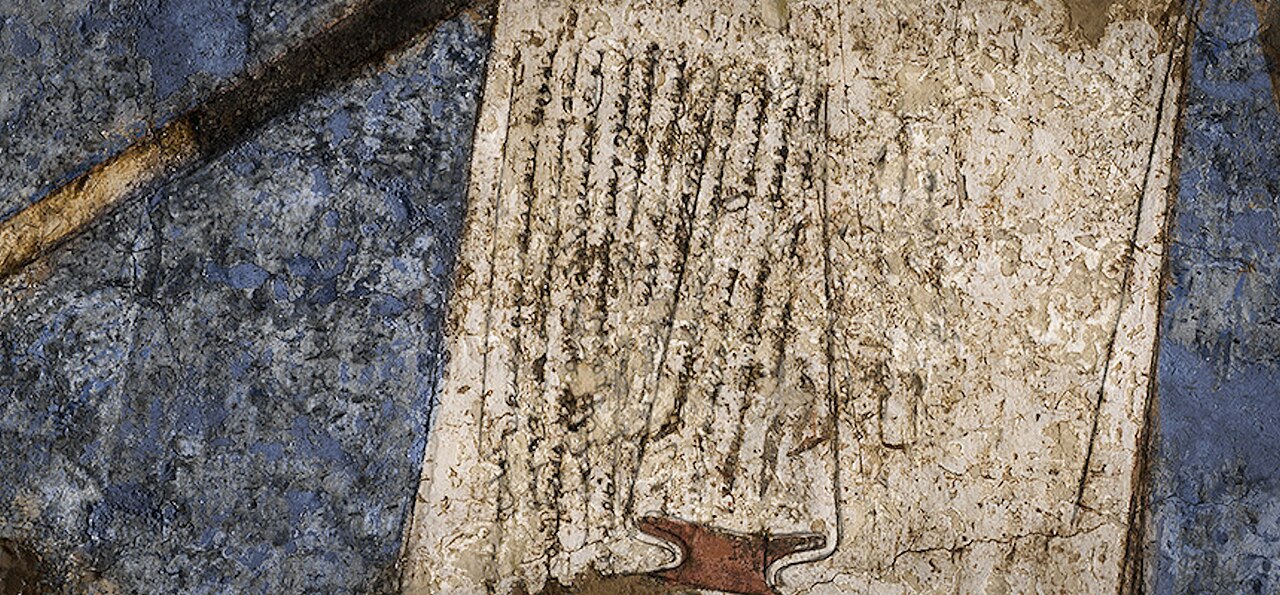
Dunhuang and the Diamond Sutra
In 1900 a sealed "library cave" at Dunhuang was found holding tens of thousands of manuscripts. Among them is a printed Buddhist text, the Diamond Sutra, with a date matching 11 May 868: the oldest complete printed book with a date. It is now in the British Library.
Unknown painter, Mid-Tang Dynasty, 618 to 907 AD (Wikimedia Commons) · Public domain
from about 100 BCE · Ferghana valley
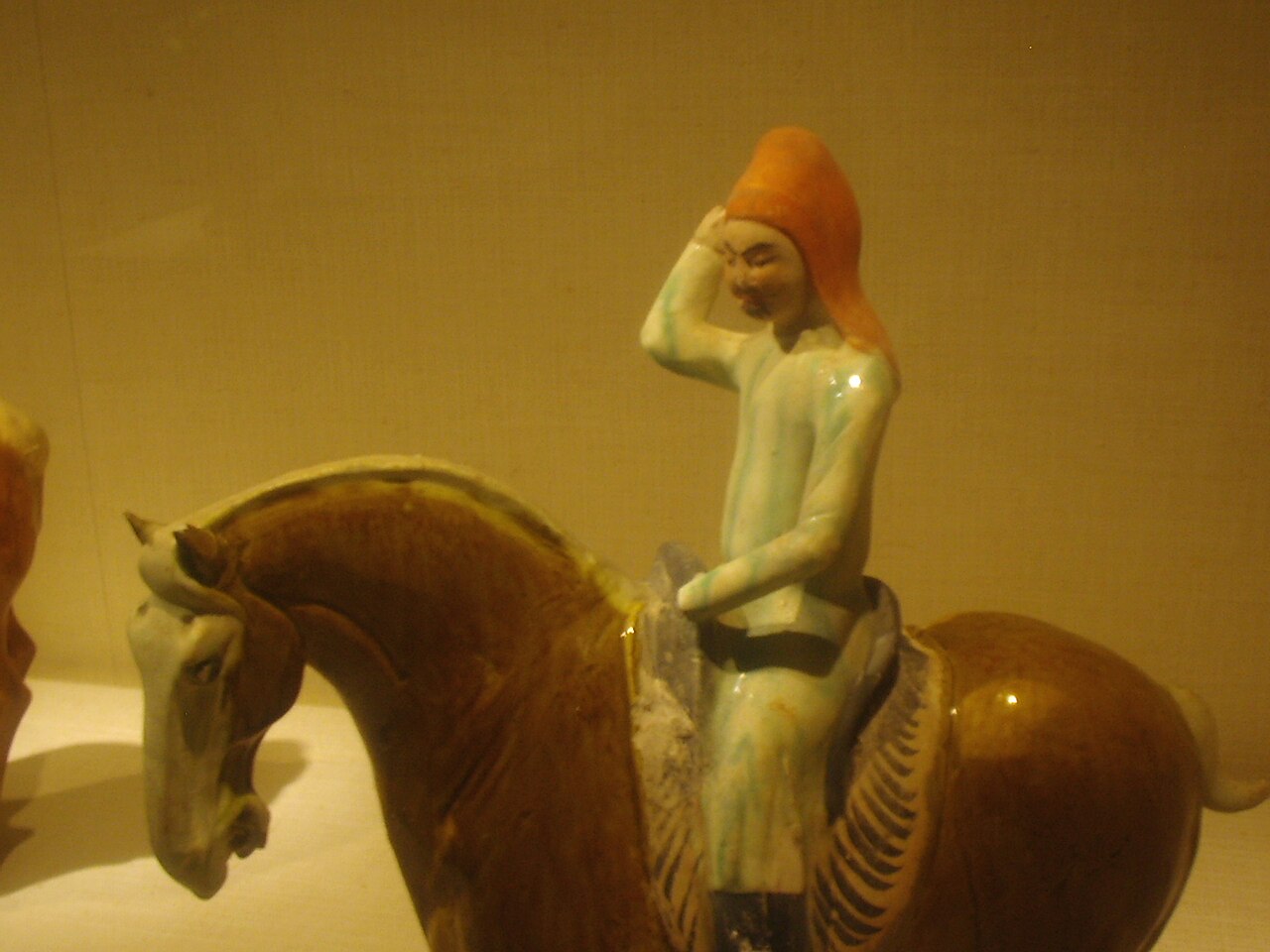
Horses for silk
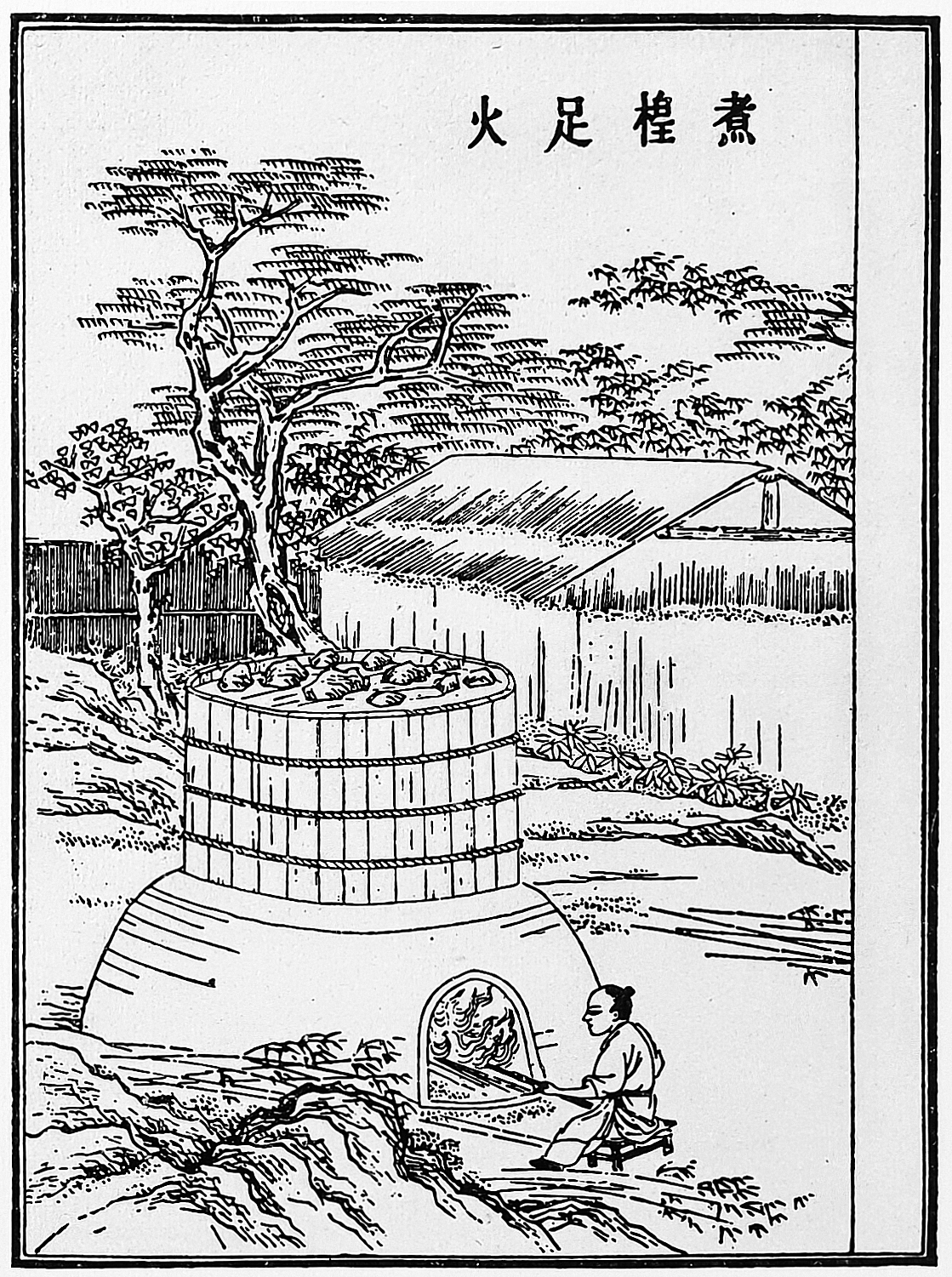
Han China wanted the strong "heavenly horses" of Ferghana for its cavalry and paid in silk. The tea-and-horse trade that followed ran for centuries. Trade moved what each side lacked, not just luxuries.
User:PericlesofAthens (Wikimedia Commons) · CC BY-SA 4.0
Part twoThe monsoon sea roads
SI painting, made for this explainer: an illustration, not a photograph.
from about 100 BCE · Indian Ocean
The monsoon bargain
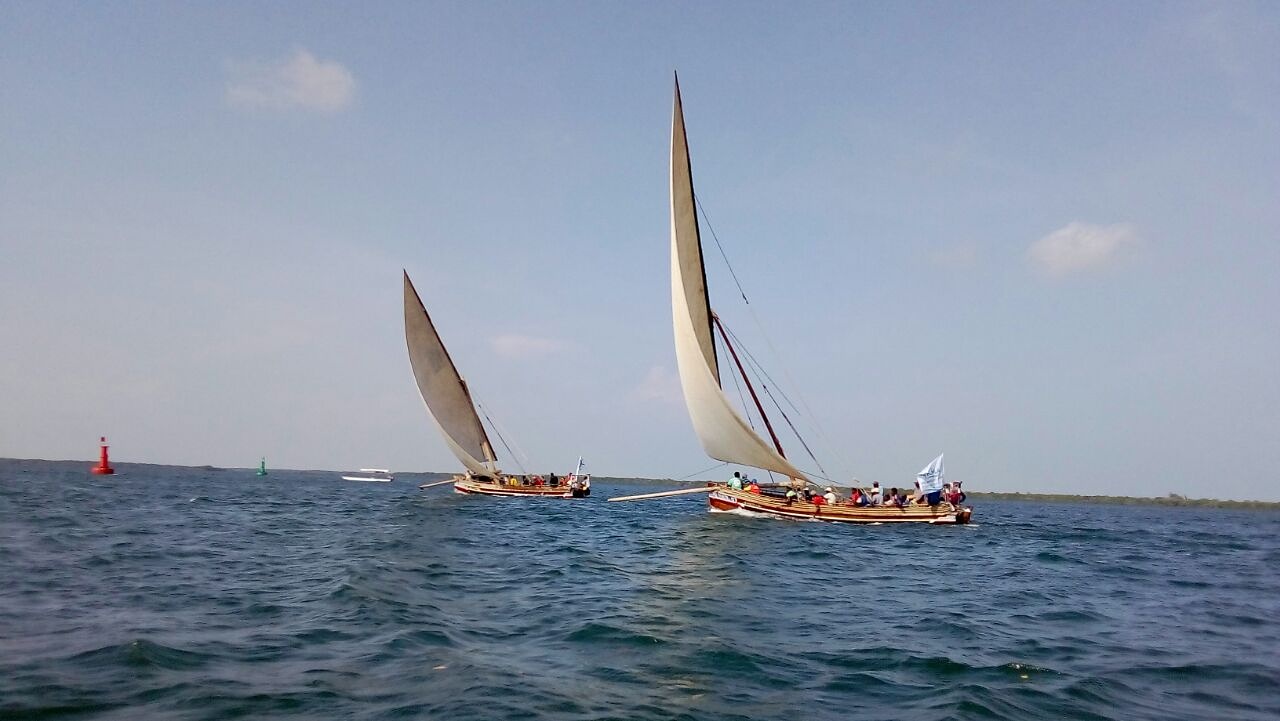
The monsoon winds blow from the southwest in summer and the northeast in winter. Sailors who timed them could cross from Arabia to India in weeks and come back half a year later. A Greek guidebook of about 50 CE, the Periplus of the Erythraean Sea, lists ports and prices from Egypt to India.
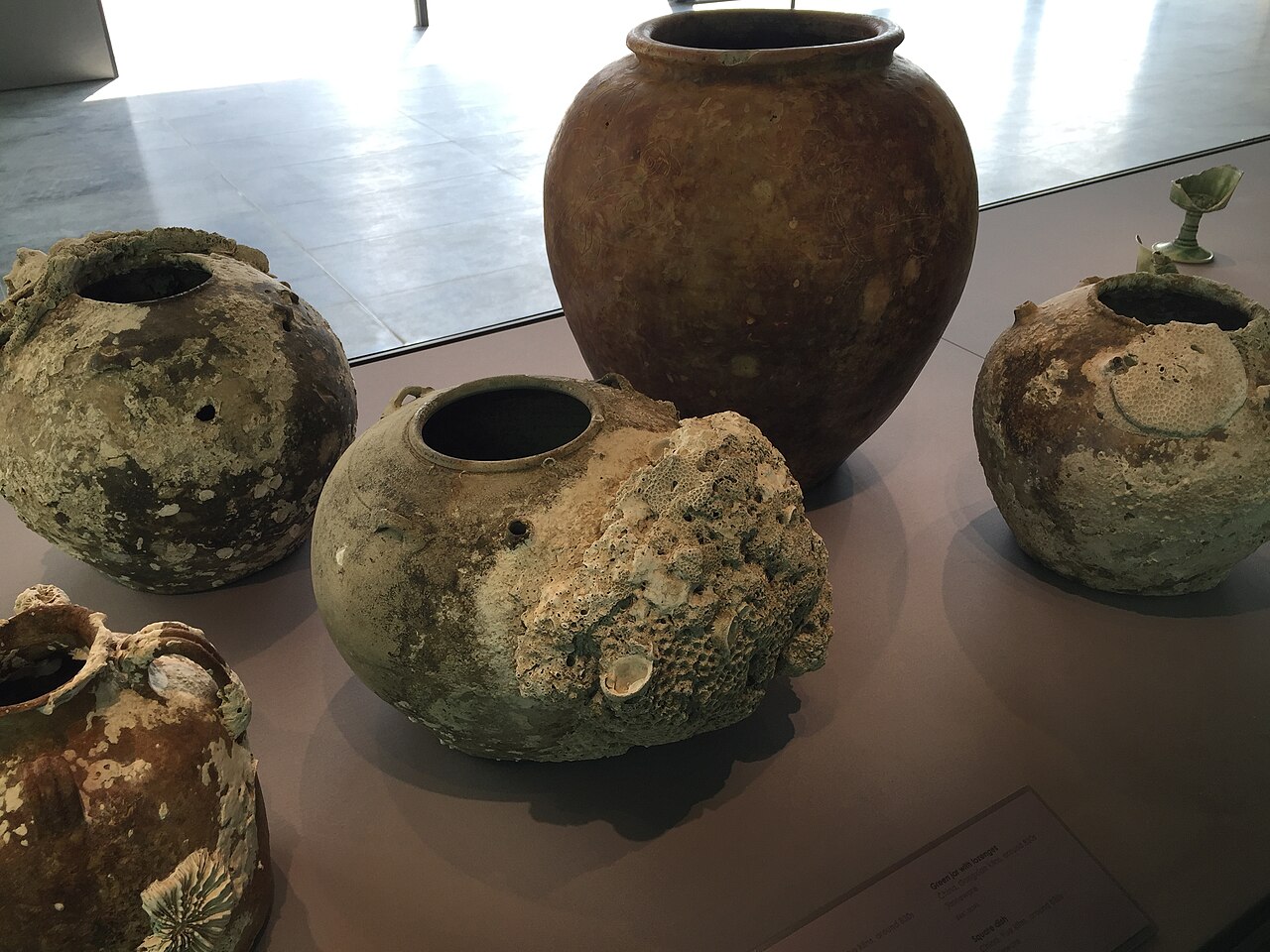
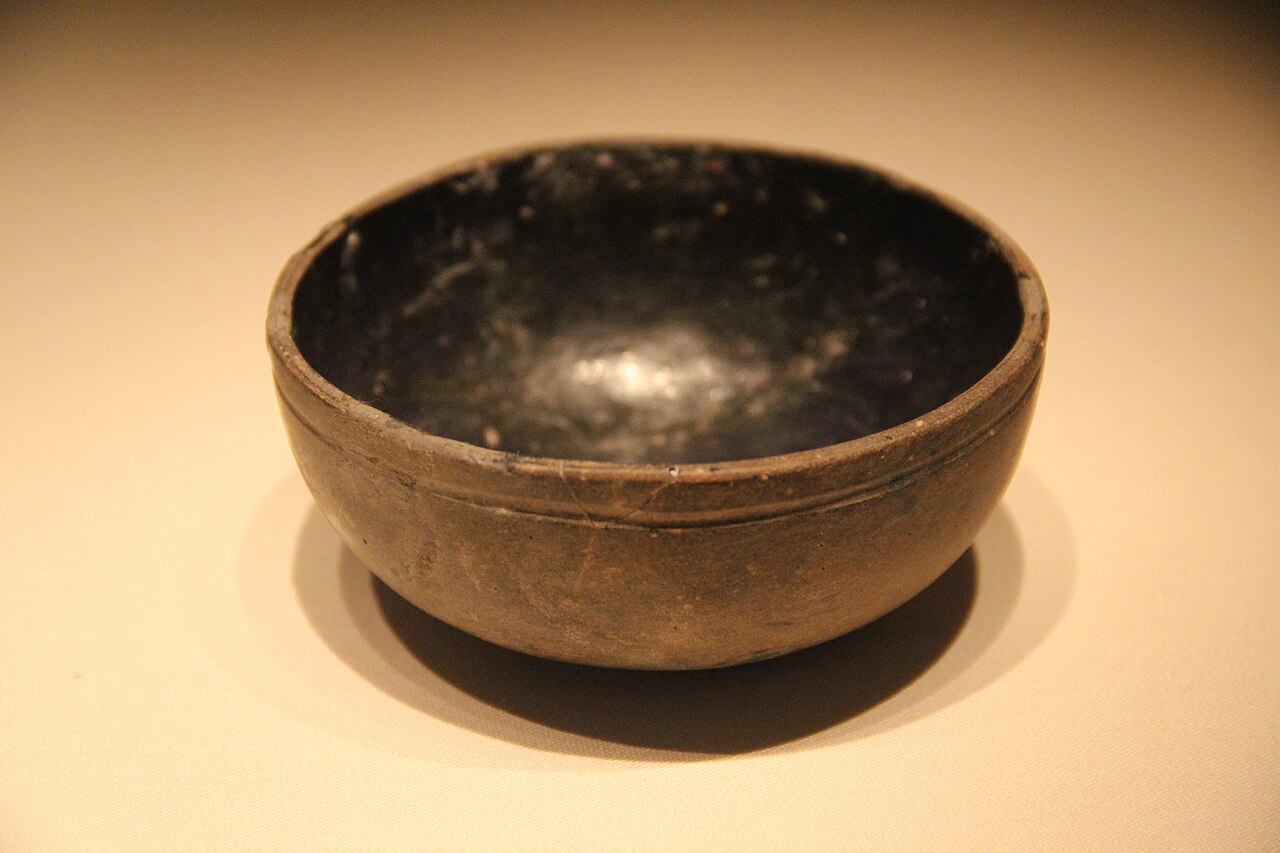
An Arab-built ship sank on its way home from China carrying about 60,000 pieces of Tang dynasty ceramics, gold and silver. Found in 1998, it proves bulk sea trade between China and the Abbasid world in the 800s. Its commercial salvage drew criticism from archaeologists.
Figures marked ≈ or "about" are estimates or disputed.
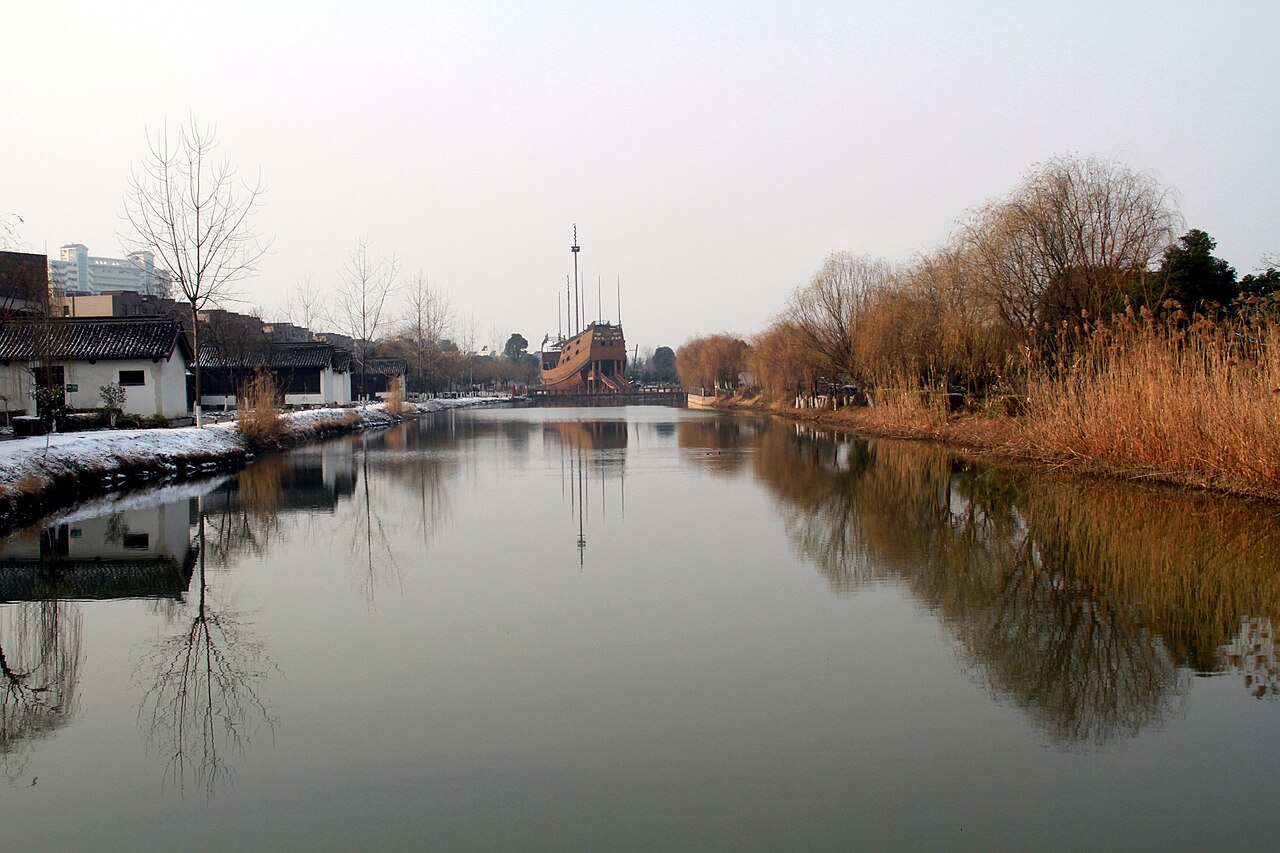
The Ming admiral Zheng He led seven voyages with hundreds of ships, reaching Arabia and the Swahili coast. Chinese records describe "treasure ships" over 120 m long; many historians think they were much smaller. After 1433 the court stopped the voyages.
Figures marked ≈ or "about" are estimates or disputed.
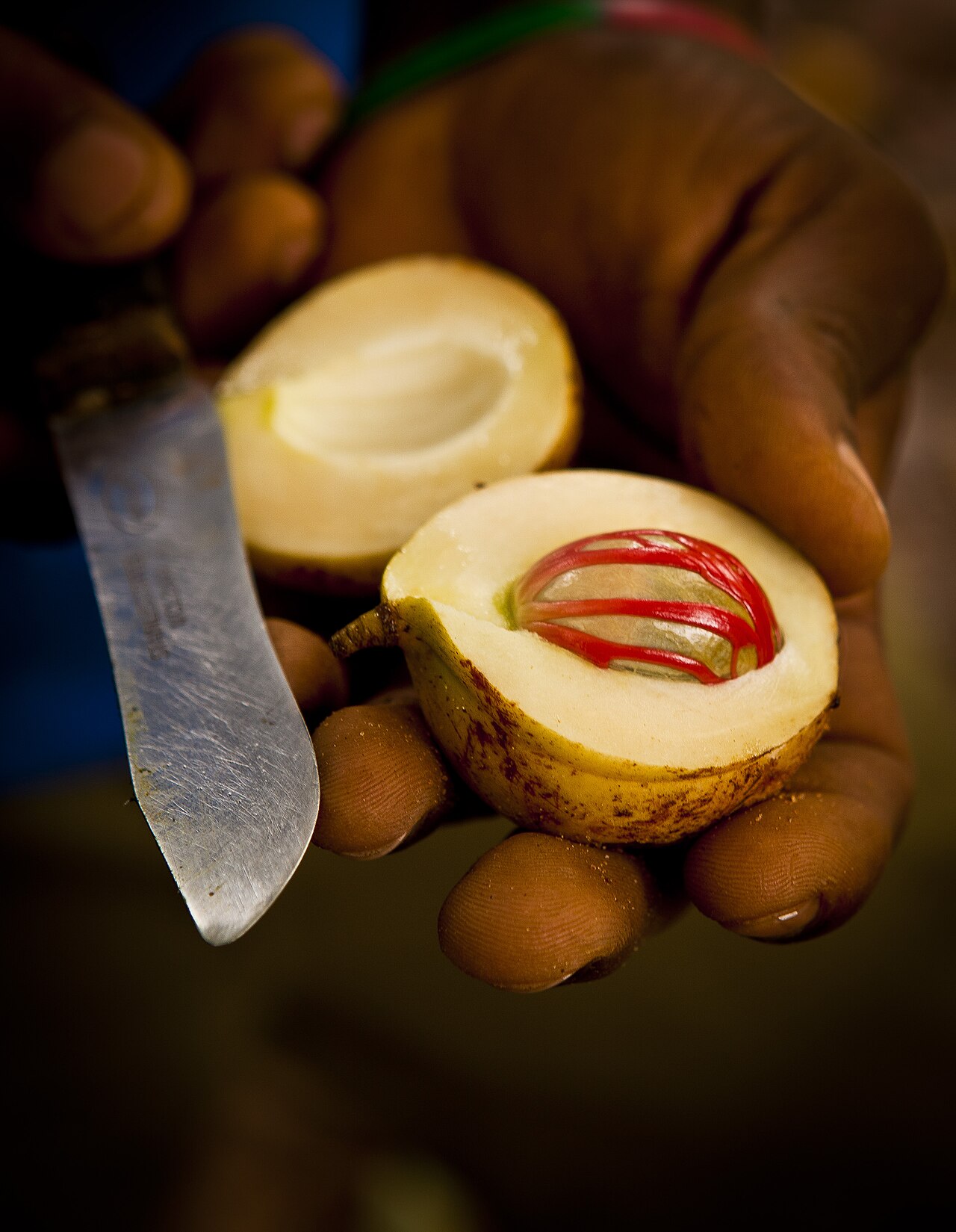
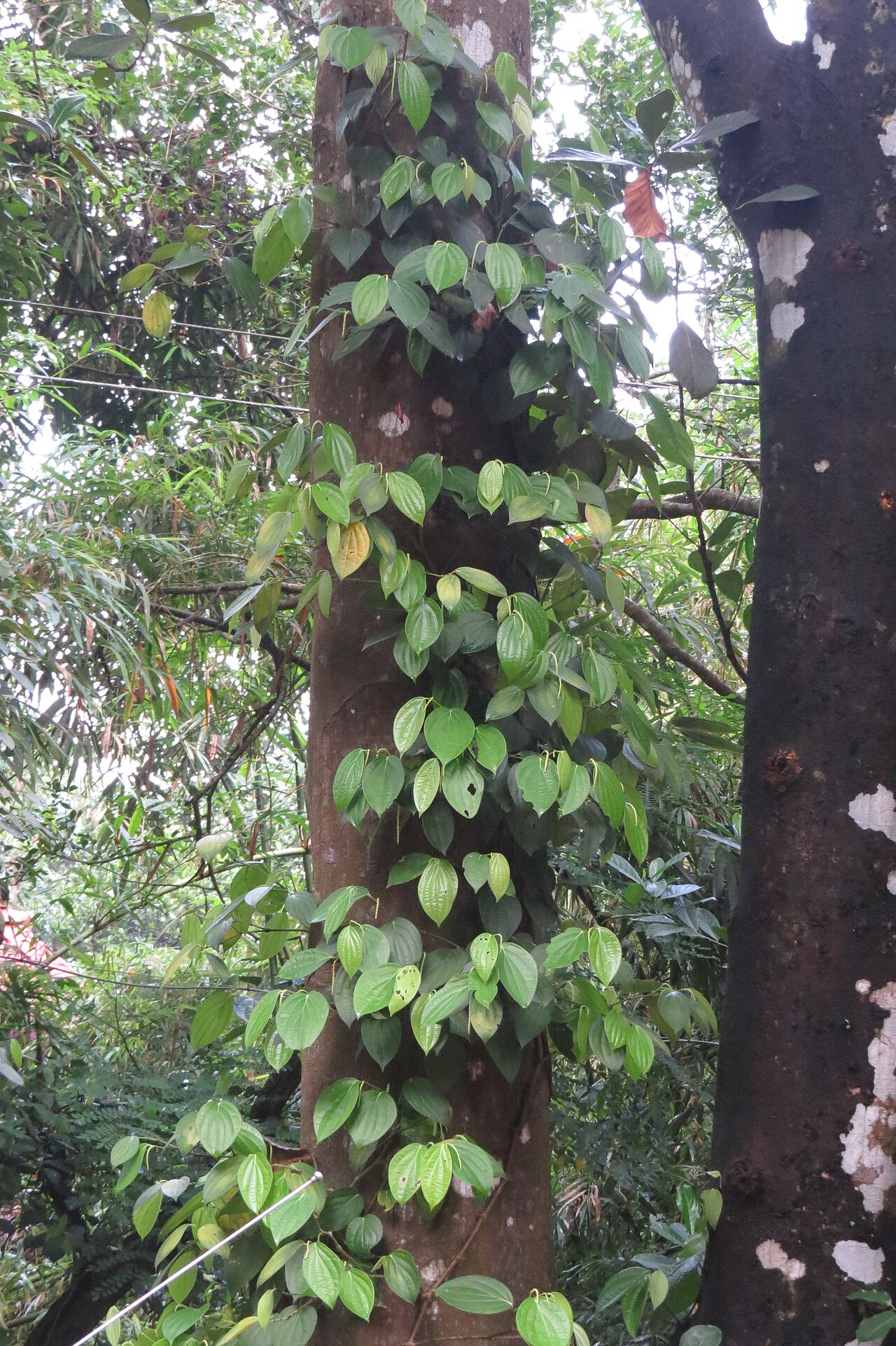
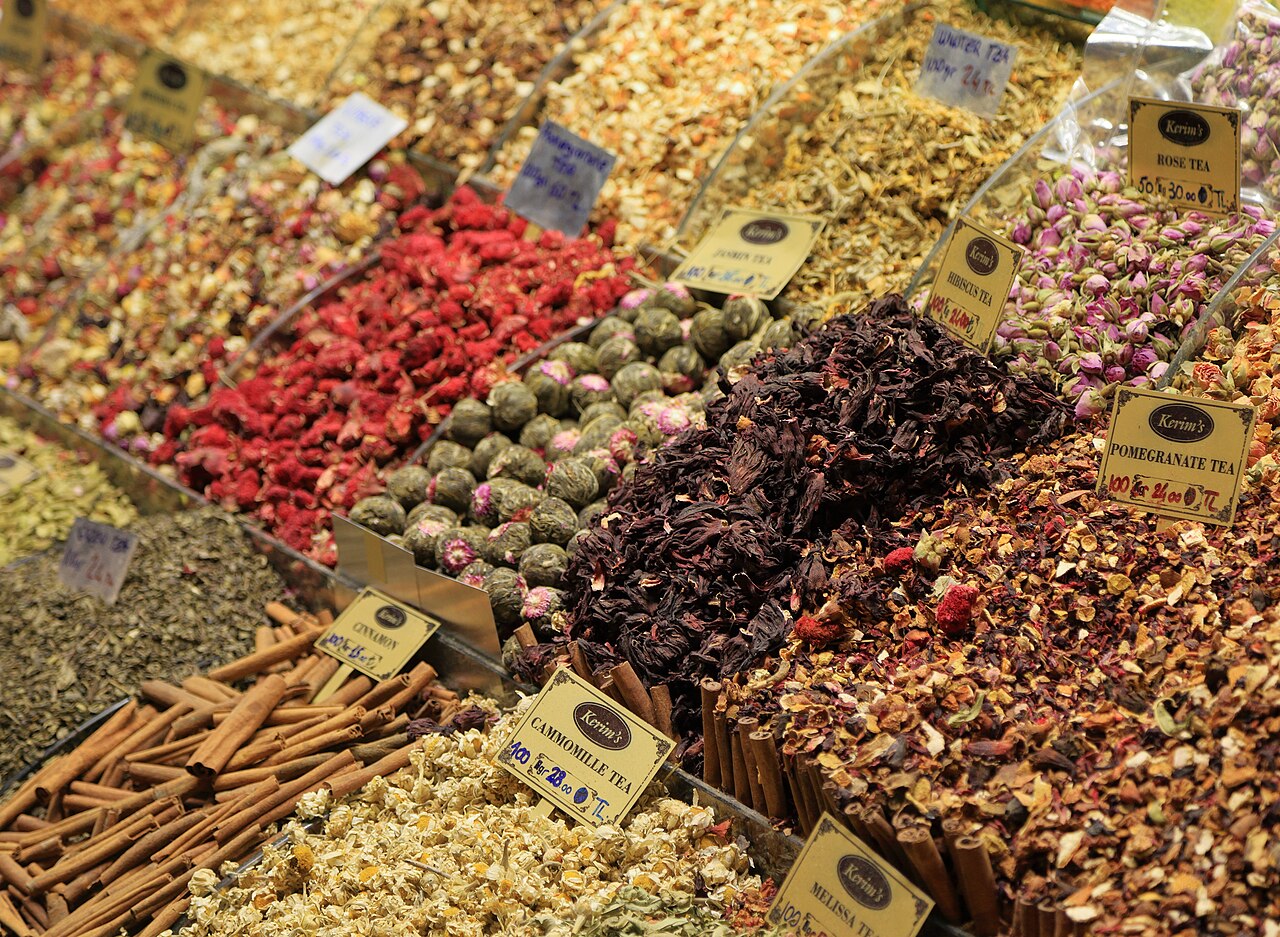
Nutmeg and mace grew only on the tiny Banda Islands, and cloves only on a few Moluccan islands. Pepper came from the Malabar coast of India. That scarcity is why spices were worth fortunes in Venice and London.
Terrence Coombes (Wikimedia Commons) · CC BY-SA 4.0
Chinese porcelain was a sea cargo as much as silk was a land one: see China's porcelain and the Nanhai One wreck in the Pots and objects room, and Rome's own grain ships and harbors in Rome: how they built it.
Try itThe routes through time
Move the slider. Brown lines are caravan roads; green dashed lines are sea lanes. Cities fade when they were not yet, or no longer, major stops. Dates are rounded and the routes are simplified.
750 CE
Country outlines: Natural Earth via world-atlas (public domain). Route dates follow the cards above; they are approximate.
Part threeWhat it cost, and who profited
Follow one sack of pepper from a farm in Kerala to a kitchen in Germany around 1450. The multipliers below are illustrative, built from historians' estimates that European prices ran many times the Indian price; real markups changed with wars, harvests and tolls.
×1Grower, Malabar coast
×2Coastal trader, Calicut
×5Arab or Gujarati shipper to the Red Sea
×10Mamluk customs, Alexandria
×20Venetian merchant
×30Retailer, Augsburg or London
about 1400–1500 · India to Europe
From Malabar to Venice: the price chain
A sack of pepper changed hands many times: grower, coastal trader, Arab or Gujarati shipper, Egyptian customs, Venetian buyer, German retailer. Each added transport, tolls, risk and profit. Historians estimate pepper sold in Europe for many times, often 20 to 40 times, its price in India. Every middleman was a reason to look for a shortcut.
Figures marked ≈ or "about" are estimates or disputed.
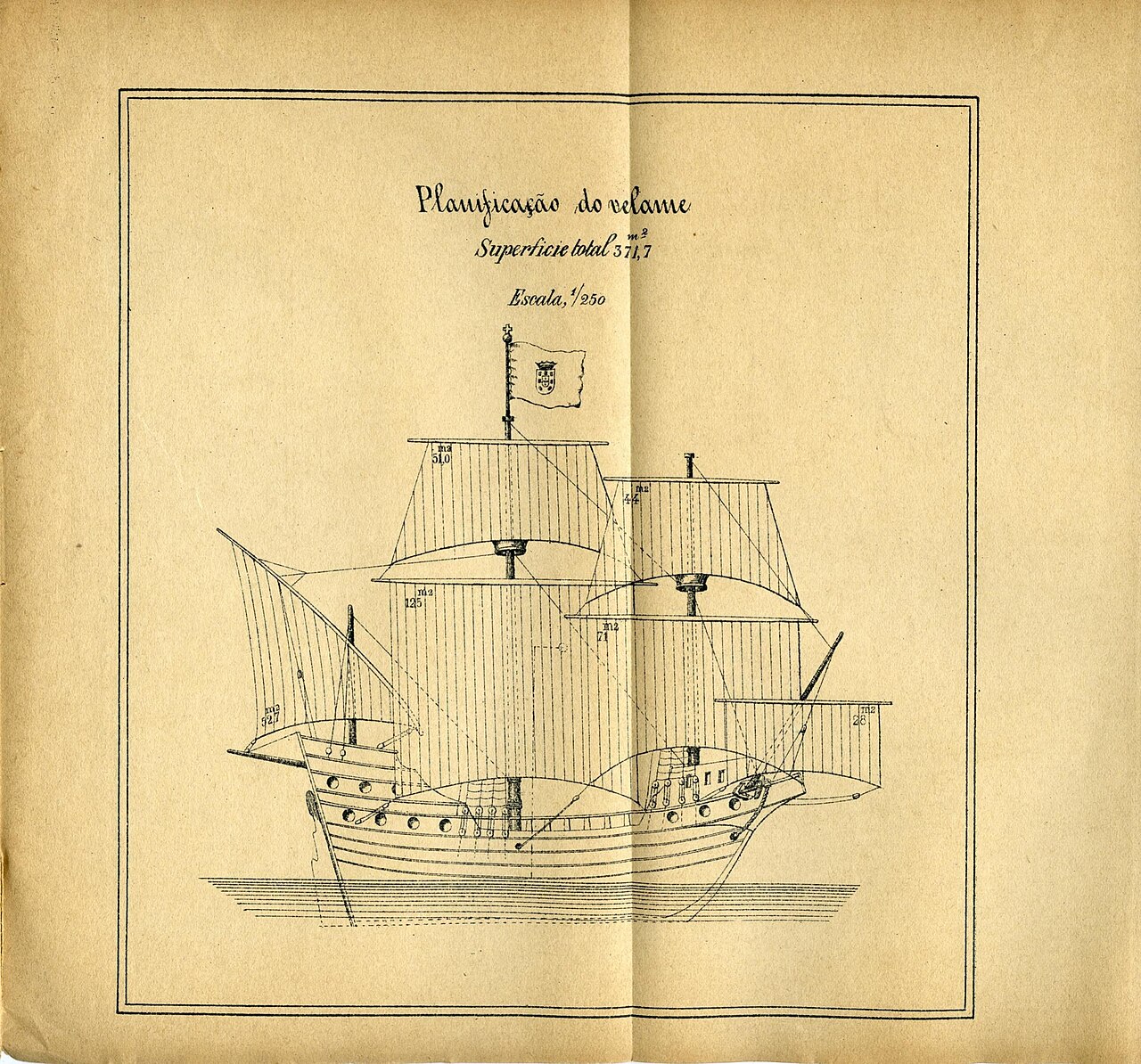
Vasco da Gama sailed around Africa to Calicut and back, cutting out the Venetian and Egyptian middlemen. The voyage lost many of its crew but returned a large profit. Portugal then tried to control the ocean trade by force with fortified ports.
AnonymousUnknown author (Wikimedia Commons) · Public domain
1602 · 1621 · Netherlands and Banda
The VOC and the Banda massacre
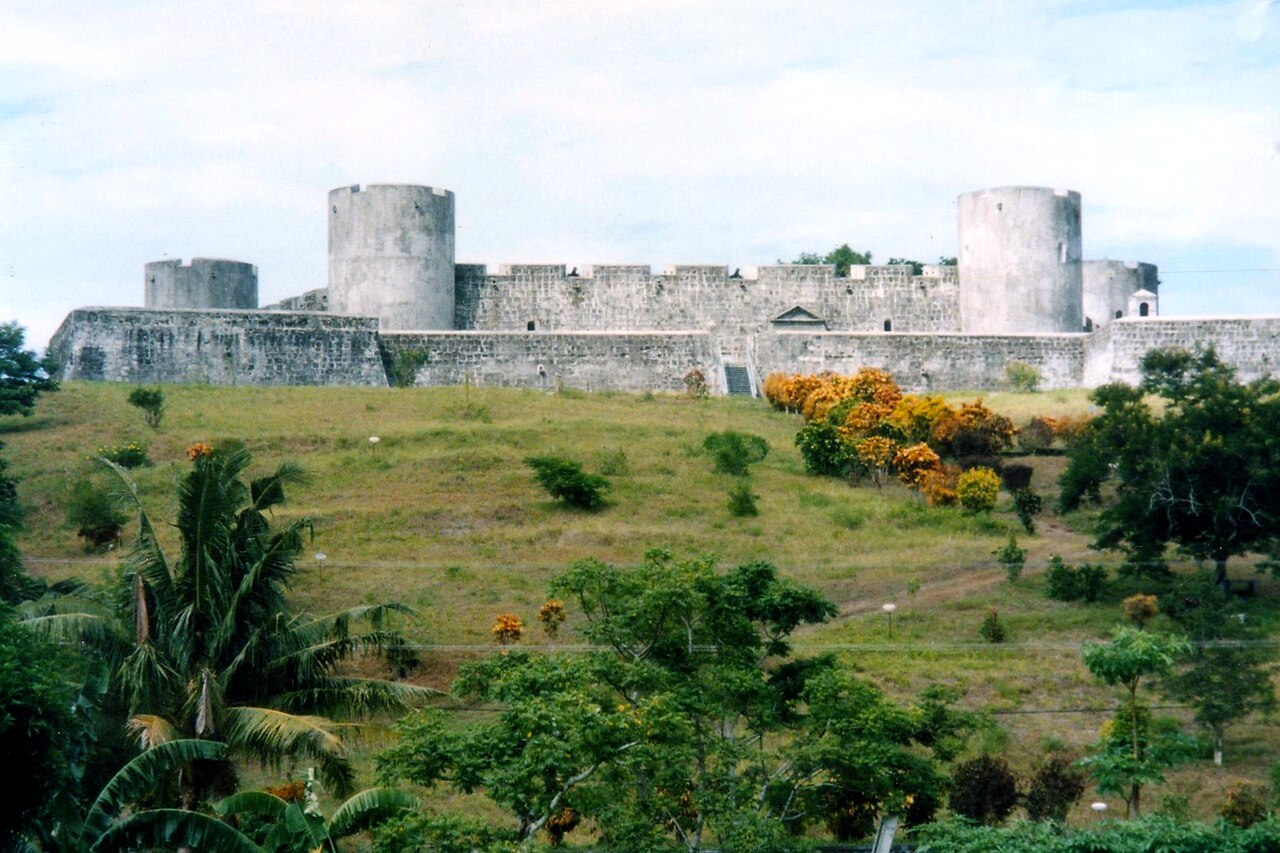
The Dutch East India Company (VOC), founded in 1602, was a chartered monopoly with its own army. In 1621 Governor-General Jan Pieterszoon Coen conquered the Banda Islands to control nutmeg. Most of the Bandanese population, about 15,000 people, were killed, starved, enslaved or driven out, and the islands were worked by enslaved laborers. It is the dark side of a monopoly.
Figures marked ≈ or "about" are estimates or disputed.
Silk, paper, porcelain, tea and rhubarb went west; horses, glass, silver, wool and amber went east; cotton cloth and pepper went everywhere. Silver from the Americas later poured into China after 1571 through Manila, linking the routes to a global economy.
Gary Todd from Xinzheng, China (Wikimedia Commons) · CC0
Go deeper
Lessons:E05 · Comparative advantage, discoveredPreviewAPMIC · MonopolyPreviewAPWH · The Global Weave: empires of the oceanPreview
You start in Chang'an with 100 silver coins and room for 10 loads. Buy where a good is cheap, travel, and sell where it is dear. Every road charges a toll, prices drift each season, and caravans sometimes lose goods to storms or bandits. You have 12 seasons. Can you double your money?
Travel to:
The game runs in your browser and sends nothing. Prices are invented for play but follow the real pattern: silk is cheap in China, horses in Ferghana, glass in the west, pepper on the coast. Then try the estate's market game, where the prices are real.
Part fourIdeas, faiths and germs
about 100 BCE – 1400 CE · Central Asia
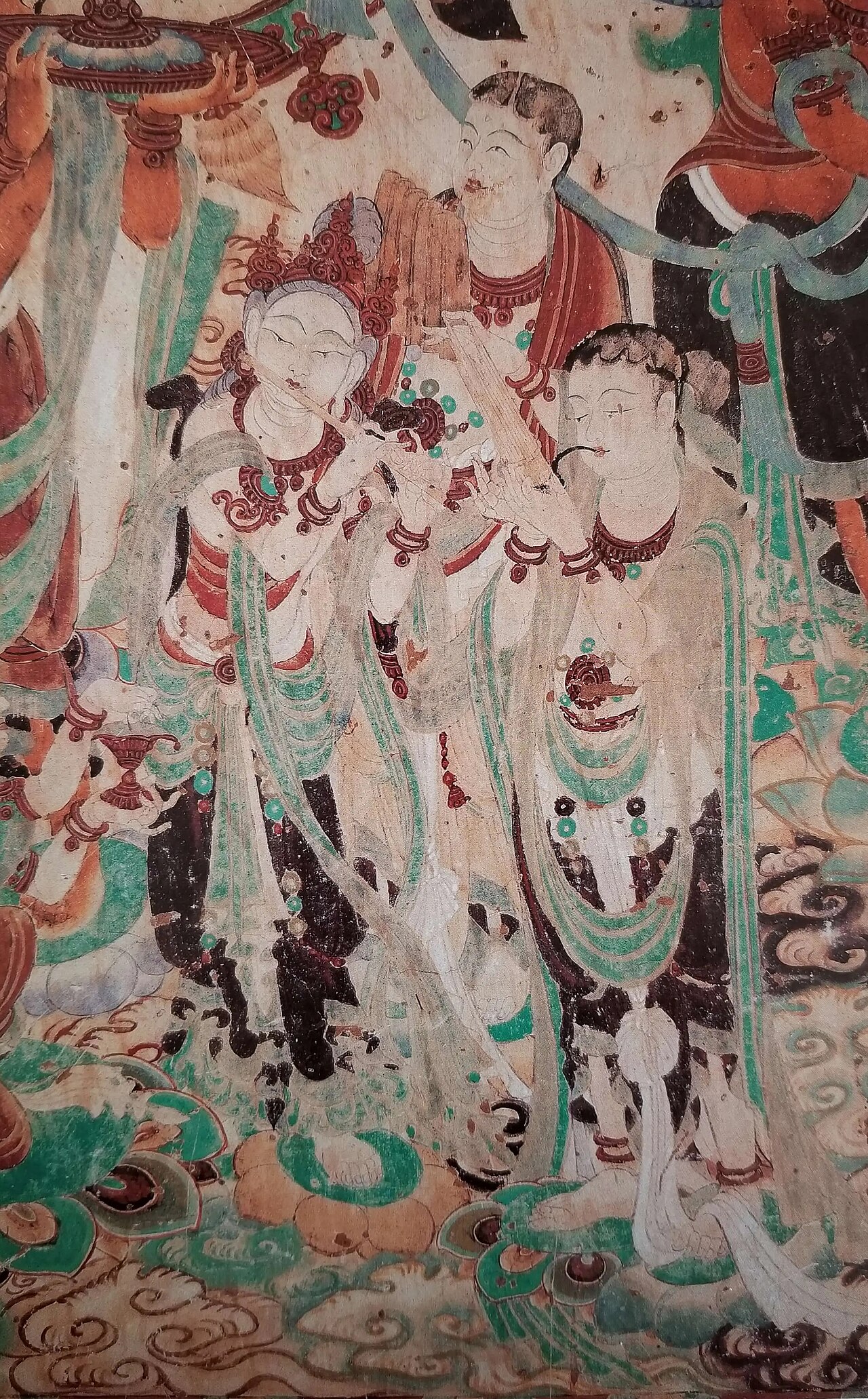
Faiths on the road
Buddhism reached China along the caravan routes; the cave temples at Dunhuang, Bamiyan and Kizil mark its path. Christianity (the Church of the East), Manichaeism and later Islam traveled the same roads with merchants and missionaries.
Photograph: Paul Eugène Pelliot (28 May 1878 – 26 October 1945), published in 1907 Drawing: Albert Grunwedel (-1935), published in 1912 (Wikimedia Commons) · Public domain
751 CE onward · Samarkand to Europe
Paper, printing and gunpowder go west
Papermaking spread from China to Samarkand by the 700s; a tradition says Chinese prisoners taken at the Battle of Talas (751) brought it, but historians debate that story. Baghdad had paper mills by about 800. Gunpowder recipes reached the Islamic world and Europe in the 1200s.
Figures marked ≈ or "about" are estimates or disputed.
Unknown author from the time of Ming dynasty (Wikimedia Commons) · Public domain
1346–1353 · Central Asia to Europe
The Black Death rides the roads
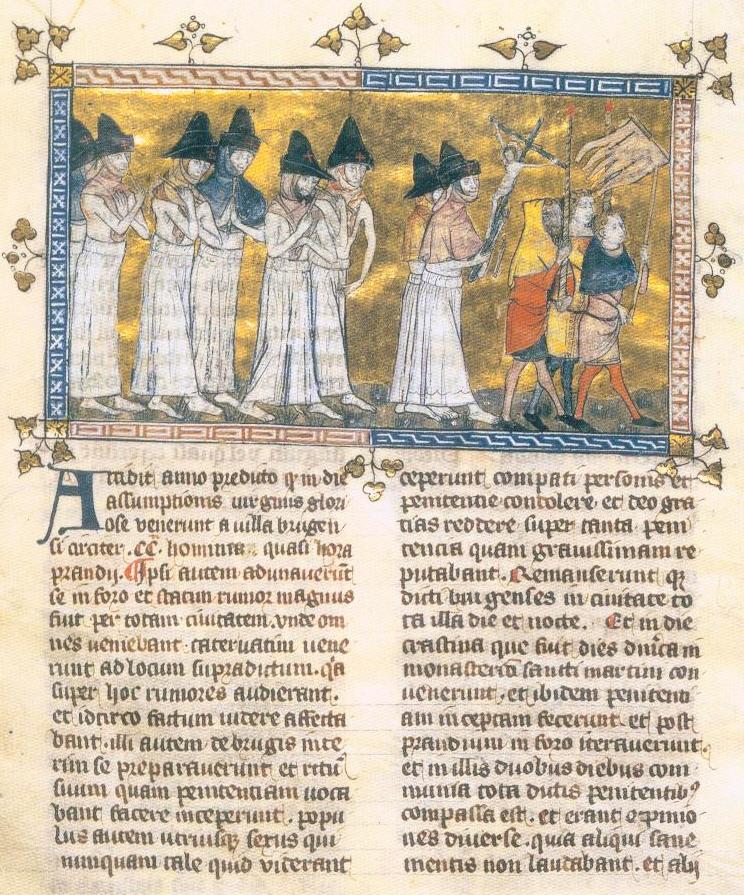
Plague bacteria (Yersinia pestis) moved with people, rats and fleas along trade routes. A 2022 study of ancient DNA from graves near Lake Issyk-Kul in Kyrgyzstan, dated 1338–1339, traced the strain to that region. The plague killed roughly a third to a half of Europe's people.
Figures marked ≈ or "about" are estimates or disputed.
Pierart dou Tielt (fl. 1340-1360) (Wikimedia Commons) · Public domain
an economist's view · everywhere
Middlemen, monopolies and comparative advantage
Trade happens because places differ: China made silk well, Banda grew nutmeg, Ferghana bred horses. Each side gains by trading what it makes most cheaply (comparative advantage). Every border, toll and middleman raises the price; a monopoly raises it further by blocking rivals.
Martin Falbisoner (Wikimedia Commons) · CC BY-SA 4.0
from 2013 · China and about 150 countries
The Belt and Road today
China's Belt and Road Initiative, launched in 2013, finances ports, railways and pipelines across Asia, Africa and Europe. Supporters point to new infrastructure and trade; critics point to debt burdens and political influence. Economists still debate how much it helps the countries involved.
Figures marked ≈ or "about" are estimates or disputed.
Long ago, traders loaded camels with silk, tea and spices and walked across deserts and mountains for months. They slept at walled inns called caravanserais. Ships with big sails waited for the monsoon winds to carry pepper and cloth across the sea.
Try this: find three things in your kitchen that came from far away (pepper, cinnamon, tea, rice, chocolate). Find each place on a globe. How would a camel or a sailing ship have brought it?
Three quick questions (3 questions · runs in your browser, nothing is sent)
Lessons:WH2 · The Silk Corridor (3–5)PreviewWH2 · The Monsoon Bargain (3–5)PreviewMAN2 · Xi'an: Ordering Food on the Silk RoadPreviewMH4 · The Caravan World (6–8)PreviewMH4 · The Black Death (6–8)PreviewE05 · Comparative advantage (9–12)PreviewAPWH · Empires of the ocean (9–12)Preview
Read: Peter Frankopan, The Silk Roads (2015; a young readers' edition, 2018); Valerie Hansen, The Silk Road: A New History (2012); The Travels of Marco Polo (about 1300, public domain); Ibn Battuta's Rihla (1355). Fiction: Linda Sue Park, A Single Shard (2001), about a potter's journey in Korea; Gene Luen Yang's graphic novels draw on Chinese legend.
Quiz: Silk Road and spice routes (10 questions · runs in your browser, nothing is sent)
Valerie Hansen, The Silk Road: A New History (Oxford, 2012); Peter Frankopan, The Silk Roads (2015).
Sima Qian, Records of the Grand Historian (about 94 BCE), on Zhang Qian's mission.
British Library, the Diamond Sutra (Or.8210/P.2): bl.uk
Smithsonian, The Sogdians: Influencers on the Silk Roads: sogdians.si.edu; Sogdian Ancient Letters (British Library).
Lionel Casson, The Periplus Maris Erythraei (Princeton, 1989).
Krahl et al., Shipwrecked: Tang Treasures and Monsoon Winds (Smithsonian, 2010), on the Belitung wreck.
Edward L. Dreyer, Zheng He: China and the Oceans in the Early Ming Dynasty (2007), on the fleets and the ship-size debate.
Fernand Braudel, Civilization and Capitalism, vol. 2; Frederic C. Lane, "Pepper prices before da Gama", Journal of Economic History (1968), on spice markups.
Vincent C. Loth, "Armed incidents and unpaid bills: Anglo-Dutch rivalry in the Banda Islands", Modern Asian Studies (1995); Rijksmuseum, The VOC.
Spyrou et al., "The source of the Black Death in fourteenth-century central Eurasia", Nature 606 (2022): doi.org
UNESCO World Heritage, The Persian Caravanserai (2023) and Silk Roads: the Routes Network of Chang'an–Tianshan Corridor (2014).
Council on Foreign Relations, China's Massive Belt and Road Initiative (updated 2023).
newSchoolWorks.com · The Museum of Everyday Living · Bradenton, FL · SI paintings made for this explainer; photographs from Wikimedia Commons under the licences shown on each card.