The Museum of Everyday Living · Florida · Bradenton, FL
Florida underfoot
A limestone land, its first peoples, its forts and wrecks, and the history under Bradenton’s streets
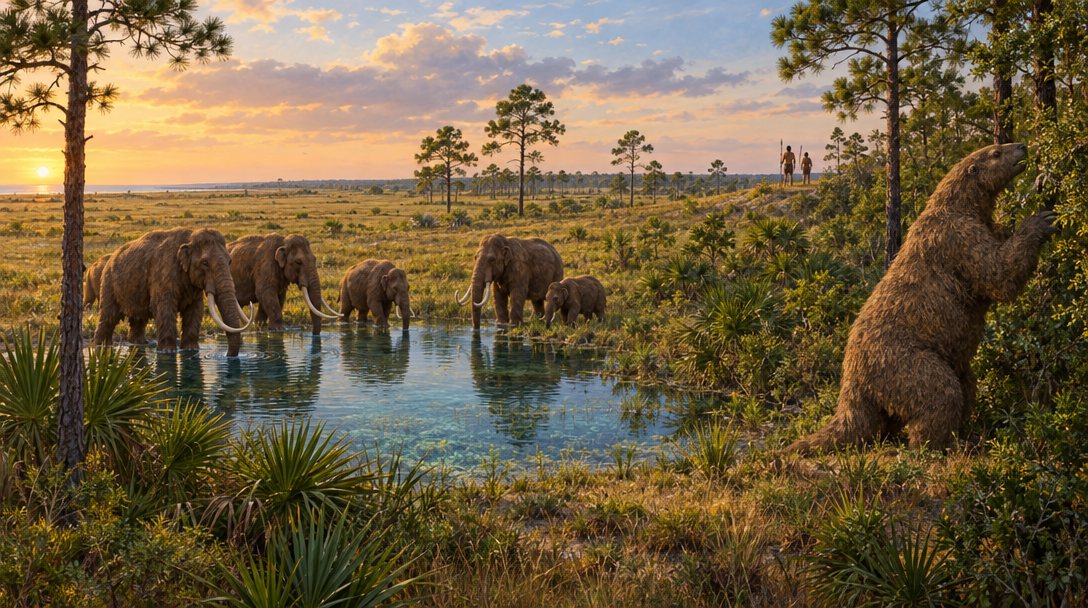
SI painting, made for this explainer: an illustration, not a photograph.
Stand anywhere in Florida and you are standing on the sea floor of long ago: a thick slab of limestone made from shells. Water moves through it, carving springs and sinkholes. People have lived on it for at least 14,500 years, through an Ice Age when the peninsula was twice as wide, through mound-building kingdoms, through the arrival of Spain, a free Black town at Fort Mose and fleets of treasure wrecked on the reefs. Much of that history is underfoot, and much of it is protected by law. This explainer works from the rock up, ending close to home on the Manatee River.
Part oneDeep time: a land built of shells
Over 100 million years · The Florida Platform
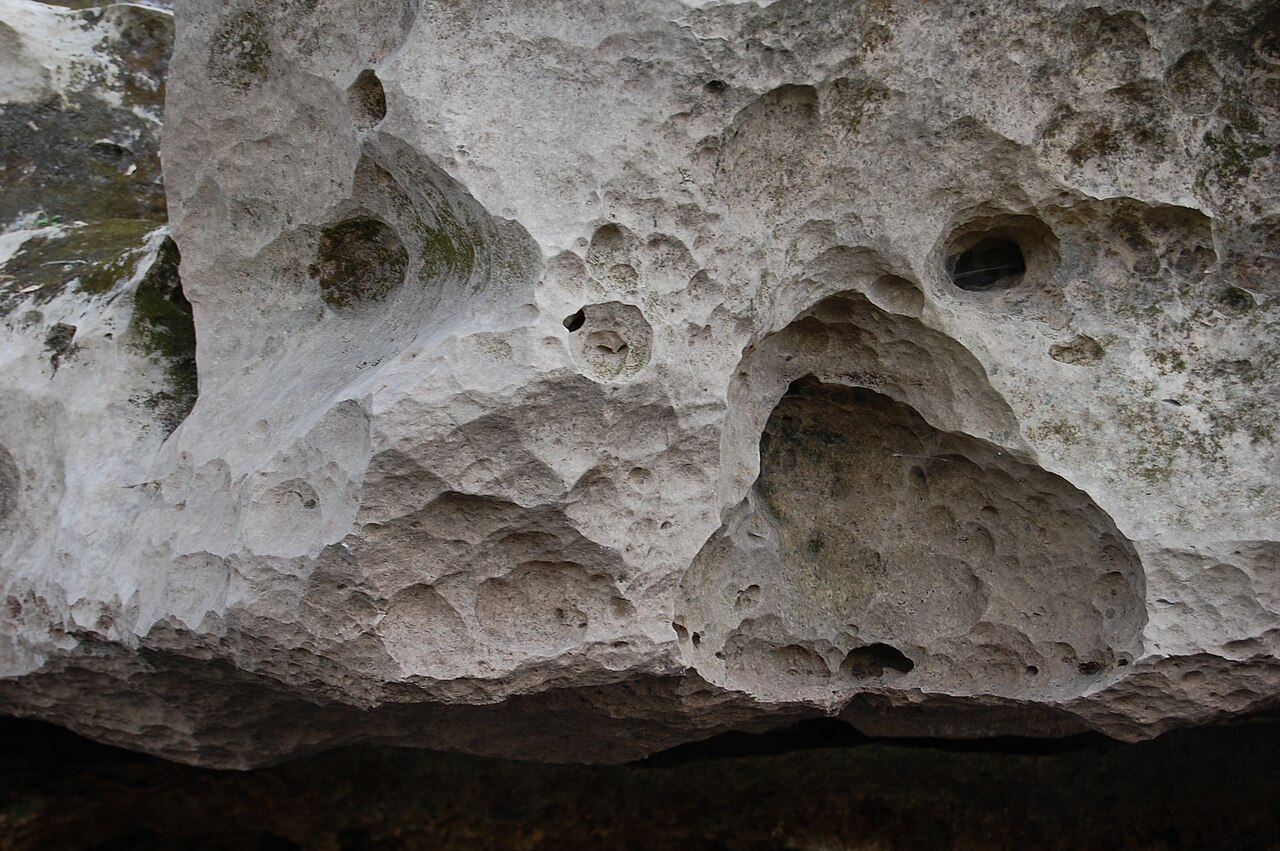
A land built of shells
Under Florida lies a great slab of limestone and dolostone, built from shells, coral and lime mud laid down in warm, shallow seas. For most of its history the peninsula was underwater. That is why Florida has no dinosaur fossils but is rich in sea creatures, sharks’ teeth and Ice Age bones.
Charlie A. Smith (Wikimedia Commons) · CC BY-SA 3.0
Ongoing · Most of Florida
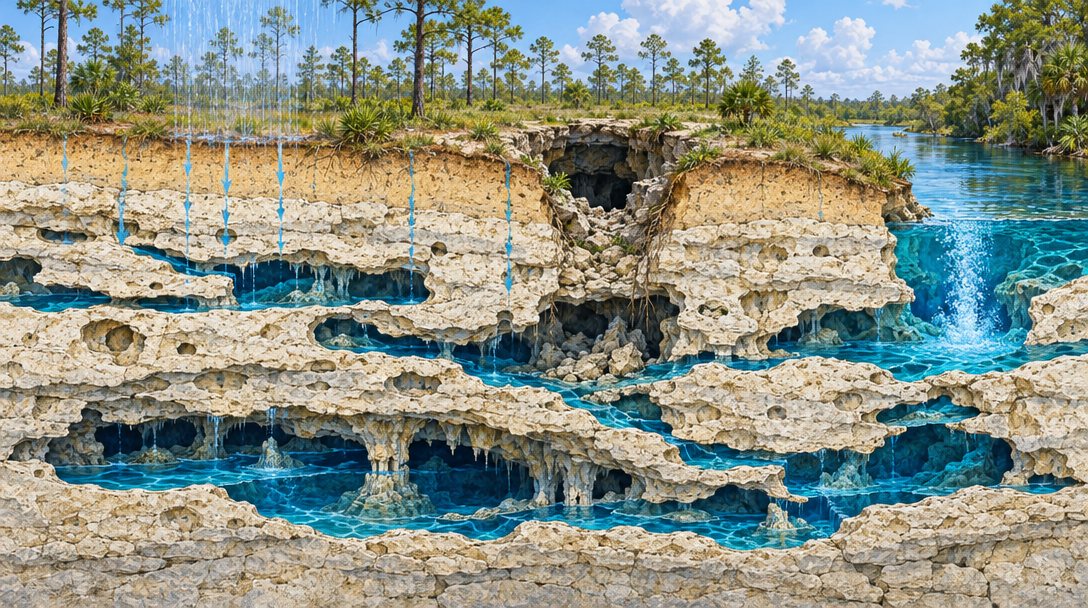
Karst: land that dissolves
Rainwater picks up a little carbon dioxide and becomes a weak acid that slowly eats limestone. Over time it carves caves, tunnels and springs. The rock holds the Floridan aquifer, one of the most productive aquifers in the world, which supplies drinking water to about 10 million people (USGS estimate).
Figures marked ≈ or "about" are estimates or disputed.
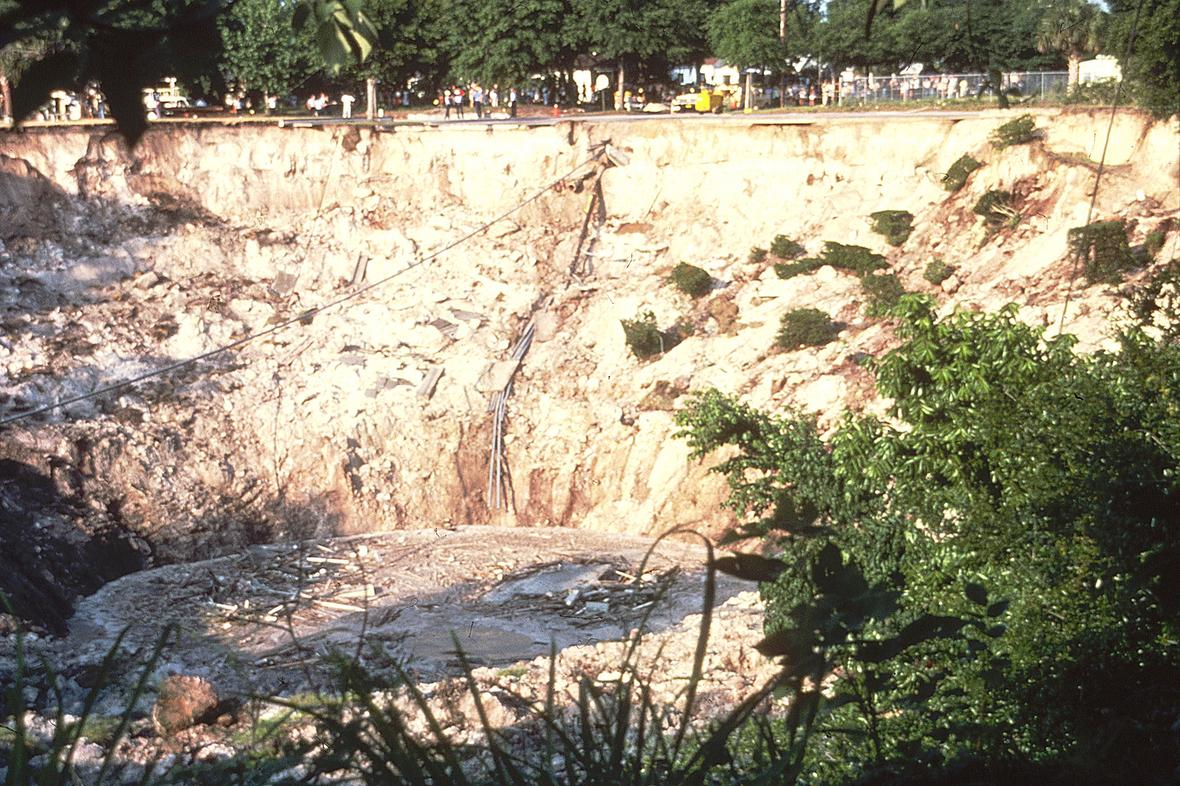
When a cave roof under the sand gets too thin, the ground can fall in. In May 1981 a sinkhole in Winter Park grew to about 100 m across and 30 m deep in a few days, swallowing a house, part of a swimming pool, cars and a car dealership’s lot. It is now a lake.
Figures marked ≈ or "about" are estimates or disputed.
Anthony S. Navoy, USGS, anavoy@usgs.gov (Wikimedia Commons) · Public domain
SI painting, made for this explainer: an illustration, not a photograph.
Now · North and central Florida
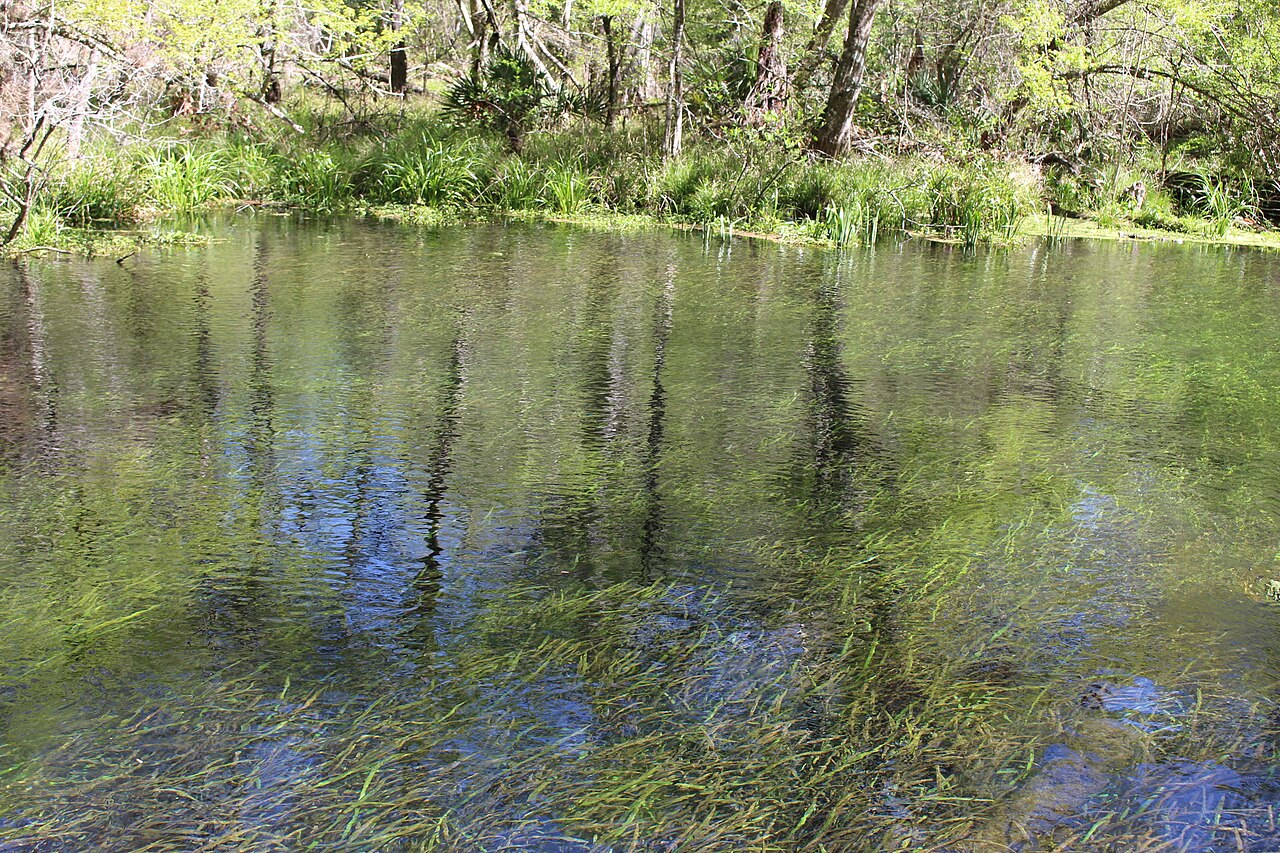
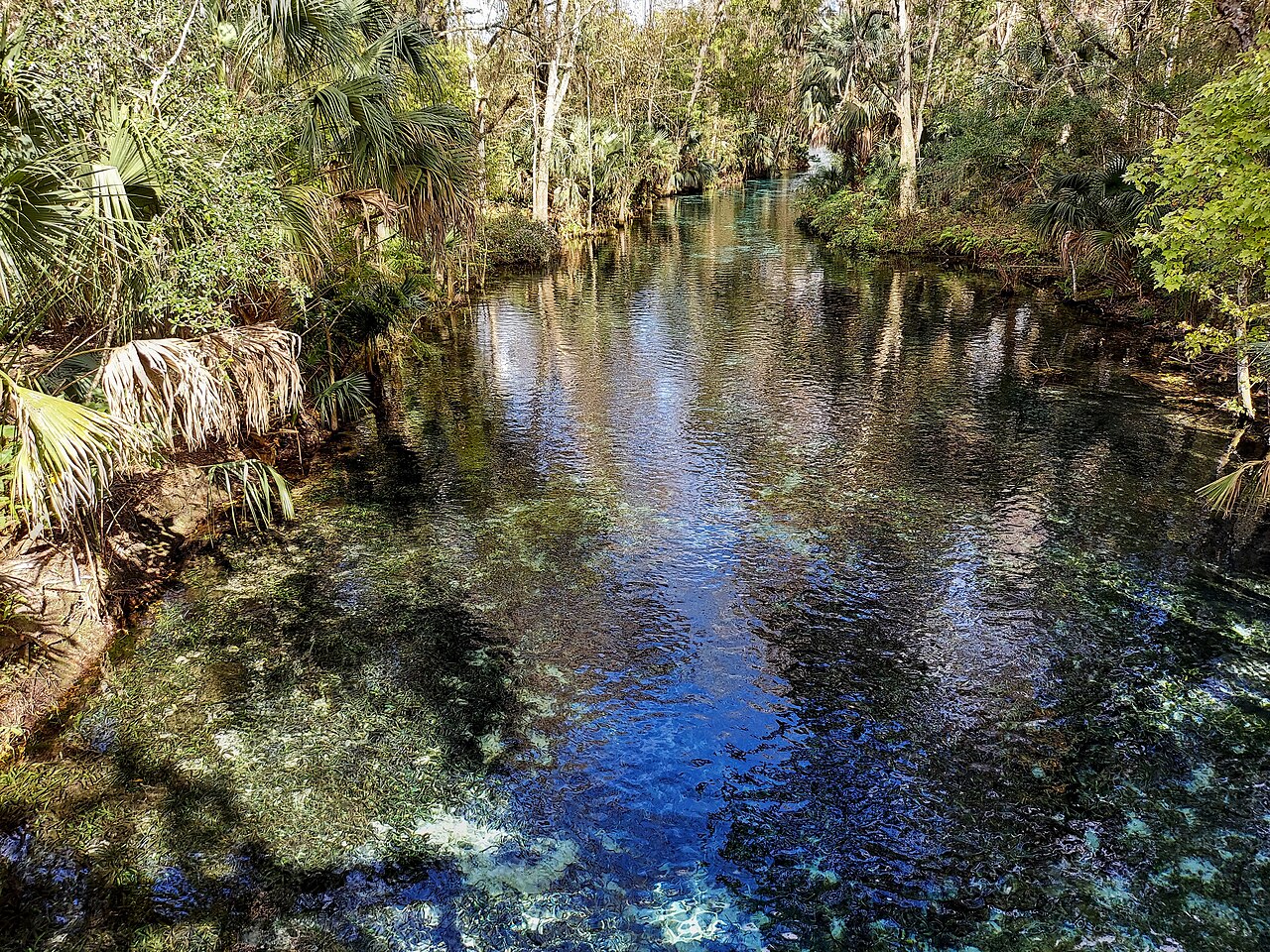
Springs
Florida has more than 1,000 springs, and about 33 first-magnitude springs (each pouring out at least 100 cubic feet of water a second), one of the largest concentrations on earth. Silver Springs, Wakulla, Weeki Wachee and Rainbow are among them. Their clear water comes straight from the aquifer.
Figures marked ≈ or "about" are estimates or disputed.
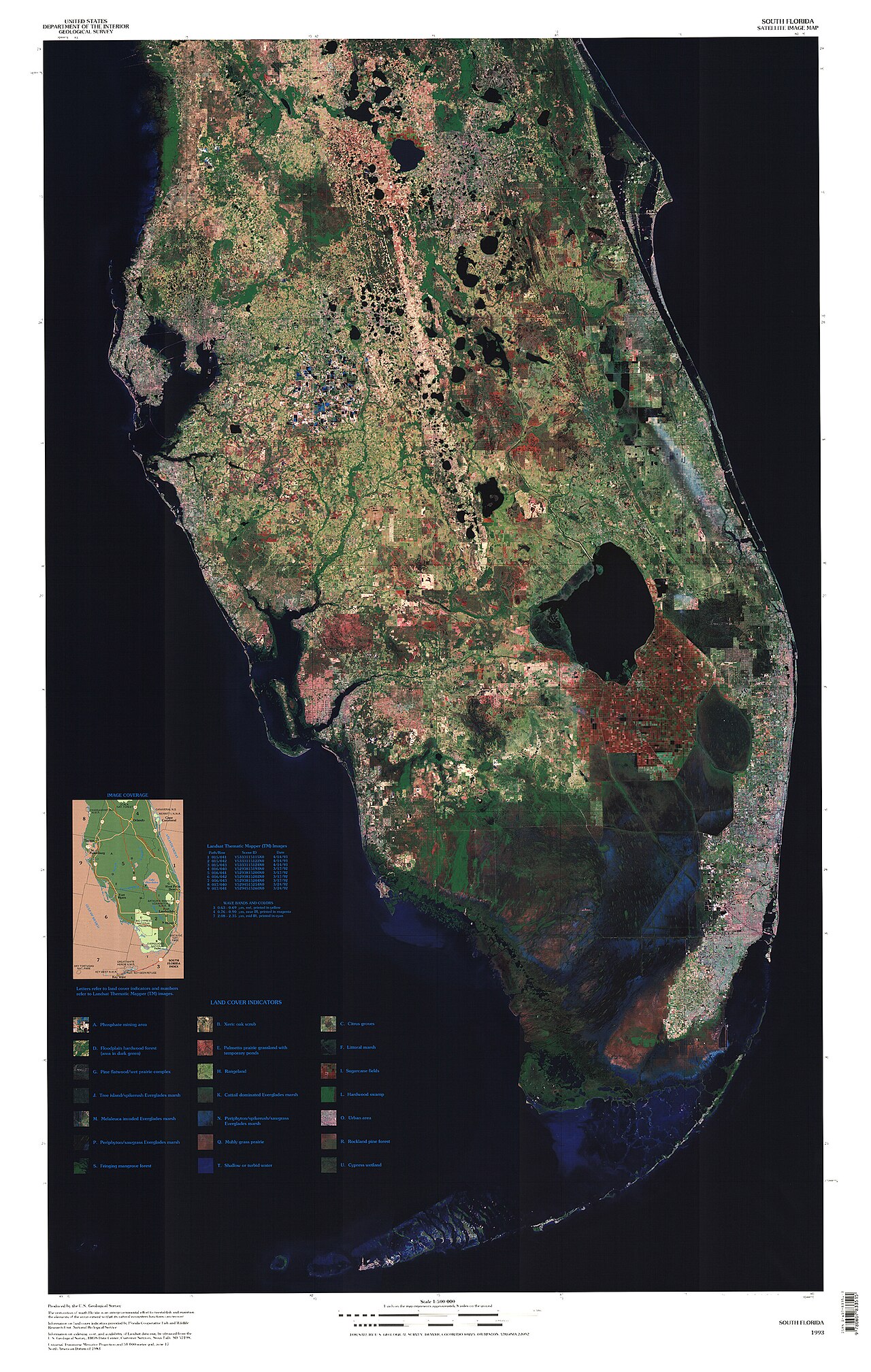
At the height of the last Ice Age so much water was locked in glaciers that the sea was about 120 m lower. Florida’s Gulf coast lay roughly 100–200 km west of today’s shore, and the peninsula was about twice as wide. Many of the earliest Floridians’ campsites are now underwater.
Figures marked ≈ or "about" are estimates or disputed.
US Geological Survey (Wikimedia Commons) · Public domain
Florida has no dinosaurs, but it is rich in Ice Age animals: see mastodons, saber-toothed cats and dire wolves in The Tar Pits: an Ice Age trap, which also covers Florida’s fossil-hunting rules.
Part twoThe first Floridians
A note on respect. Some of Florida’s oldest sites are burial places. We describe them but do not show human remains, and we do not give burial locations beyond what parks and universities publish. Florida law (Chapter 872) protects every grave, old or new.
About 14,550 years ago · Aucilla River, north Florida
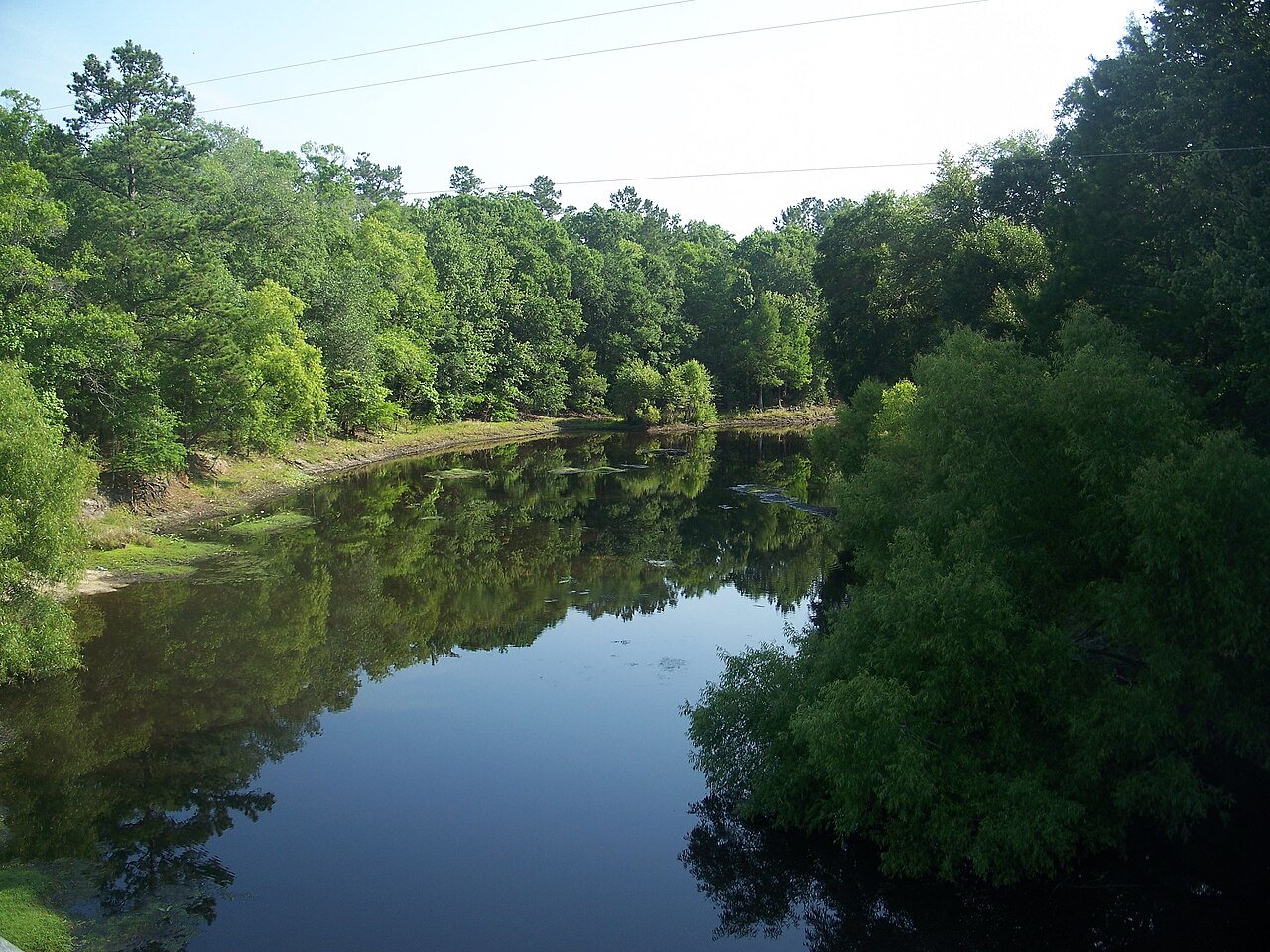
Page-Ladson
In a sinkhole now under the Aucilla River, divers found stone tools and a mastodon tusk with cut marks, dated to about 14,550 years ago (Halligan and others, 2016). It is one of the oldest firm signs of people in the Americas, from before the Clovis culture. See the Ice Age animals in the Tar Pits exhibit.
Figures marked ≈ or "about" are estimates or disputed.
About 12,000 years ago and later · North Port, Sarasota County
Little Salt Spring
A deep sinkhole spring about an hour south of Bradenton. Divers found a giant extinct tortoise with a sharpened wooden stake beside it, dated to roughly 12,000 years ago, and later Archaic-period burials on a ledge. The University of Miami protects and studies the site. We do not show the burials.
Figures marked ≈ or "about" are estimates or disputed.
About 7,000–8,000 years ago · Titusville, Brevard County
Windover Pond
In 1982 a road crew found burials in the peat at the bottom of a small pond. The waterlogged peat preserved what usually disappears: woven fabrics and bags, among the oldest known textiles in North America, and even brain tissue. Archaeologists recovered remains of more than 160 people. We describe the site and do not show the burials, out of respect for the people buried there.
Figures marked ≈ or "about" are estimates or disputed.
Part threeMound builders and kingdoms of the coast
4,000 years ago to the 1700s · Florida coasts and rivers
Shell mounds and rings
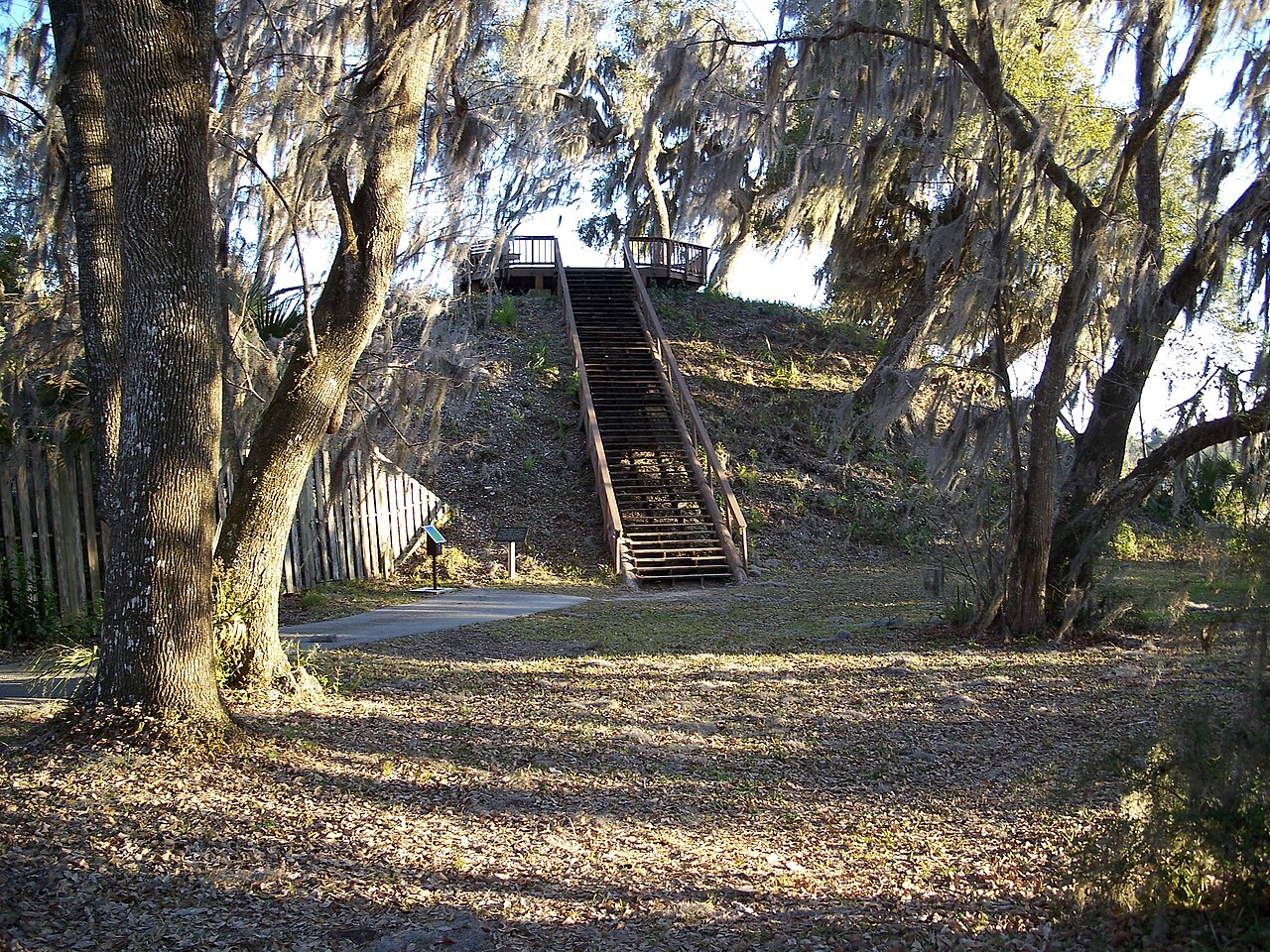
Florida’s first peoples built mounds of shell and earth for homes, temples and burials. Crystal River has temple and burial mounds used for about 1,600 years; Turtle Mound rises about 15 m above the lagoon near New Smyrna; Emerson Point, beside Bradenton, has the Portavant temple mound. Visit the middens room to dig one virtually.
Figures marked ≈ or "about" are estimates or disputed.
The Calusa built a powerful kingdom on fish and shellfish rather than farming, with canals, shell islands and a capital at Mound Key in Estero Bay. Spanish visitors in the 1500s reported a ruler who received tribute from towns across south Florida. Disease, war and slave raids broke the Calusa by the early 1700s.
Figures marked ≈ or "about" are estimates or disputed.
900–1700s · Tampa Bay and the Manatee River
The peoples of Tampa Bay
Archaeologists call the culture around Tampa Bay “Safety Harbor.” Its people, known to the Spanish as the Tocobaga, Uzita and Mocoso, built platform mounds such as the one at Philippe Park in Safety Harbor and the Madira Bickel Mound at Terra Ceia, near Bradenton.
Part fourSpain arrives: forts, missions and a free town
1513 · Atlantic coast
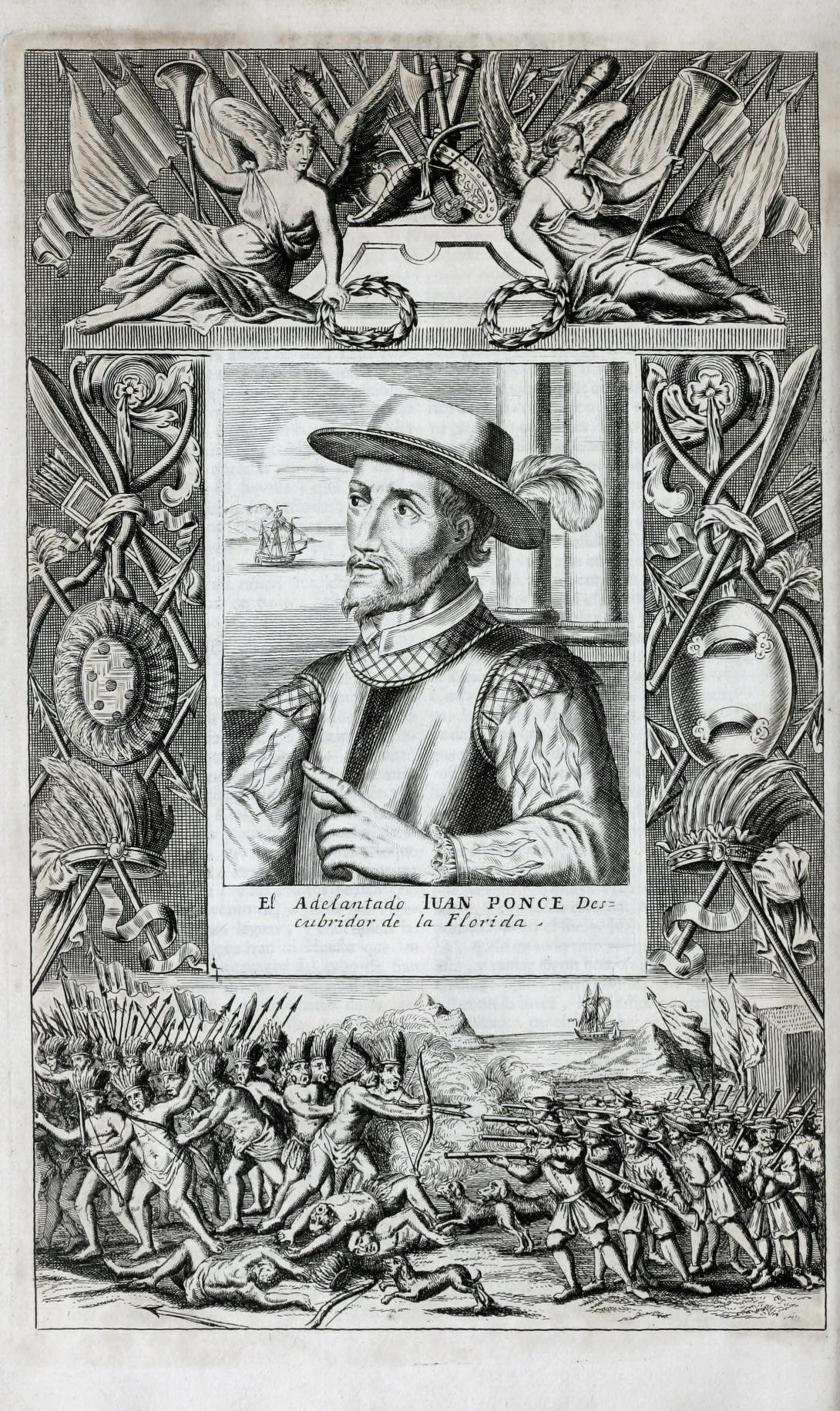
Ponce de León names La Florida
Juan Ponce de León reached the peninsula during the Easter season (Pascua Florida) and named it La Florida. The story that he was looking for a fountain of youth was written down years after his death and is a legend. He was wounded in a fight with the Calusa in 1521 and died soon after.
Antonio de Herrera (Wikimedia Commons) · Public domain
1539 · Tampa Bay, possibly near the Manatee River
De Soto lands on Tampa Bay
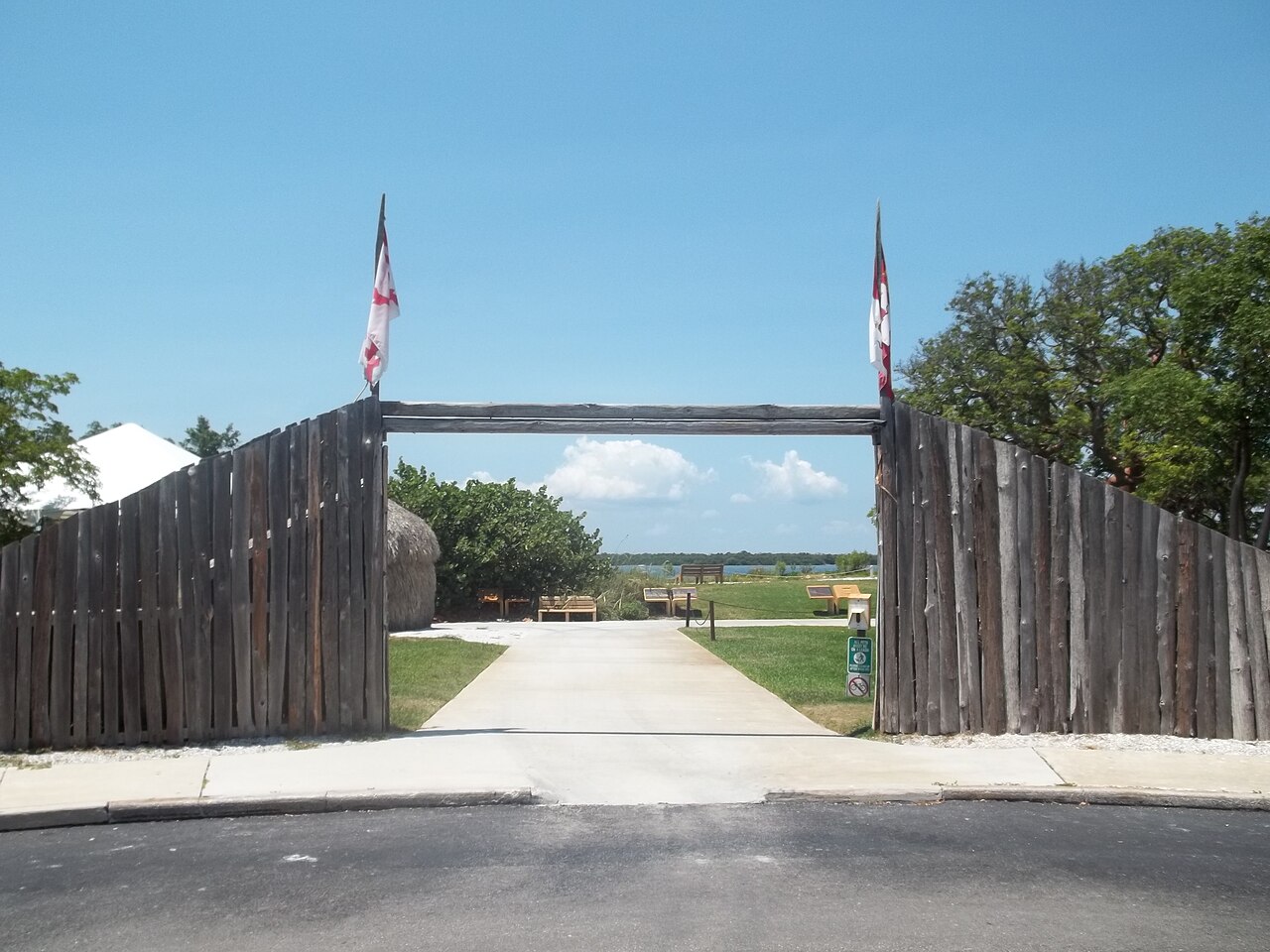
Hernando de Soto landed with about 600 soldiers, horses and pigs, then marched for four years across the Southeast, bringing violence, enslavement and disease. Exactly where he landed is debated; the De Soto National Memorial in Bradenton marks one strong candidate near the mouth of the Manatee River.
Figures marked ≈ or "about" are estimates or disputed.
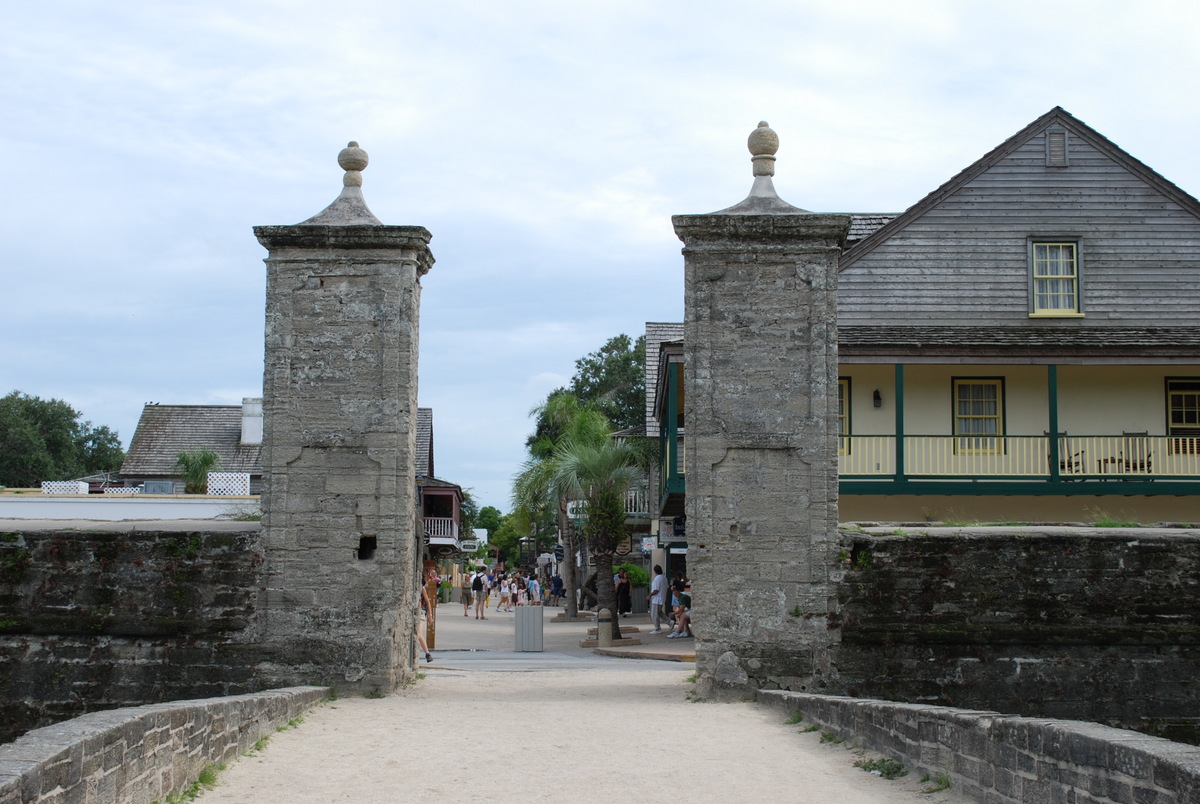
Pedro Menéndez de Avilés founded St. Augustine, the oldest continuously occupied European-founded city in the continental United States, 42 years before Jamestown.
French Protestants (Huguenots) built Fort Caroline on the St. Johns River in 1564. In 1565 Menéndez captured it and then executed most of the shipwrecked French who surrendered to him at an inlet south of St. Augustine, about 250 men by most accounts. The inlet is still called Matanzas, “slaughters.”
Figures marked ≈ or "about" are estimates or disputed.
Matthew Dillon from Hollywood, CA, USA (Wikimedia Commons) · CC BY 2.0
1672–1695 · St. Augustine
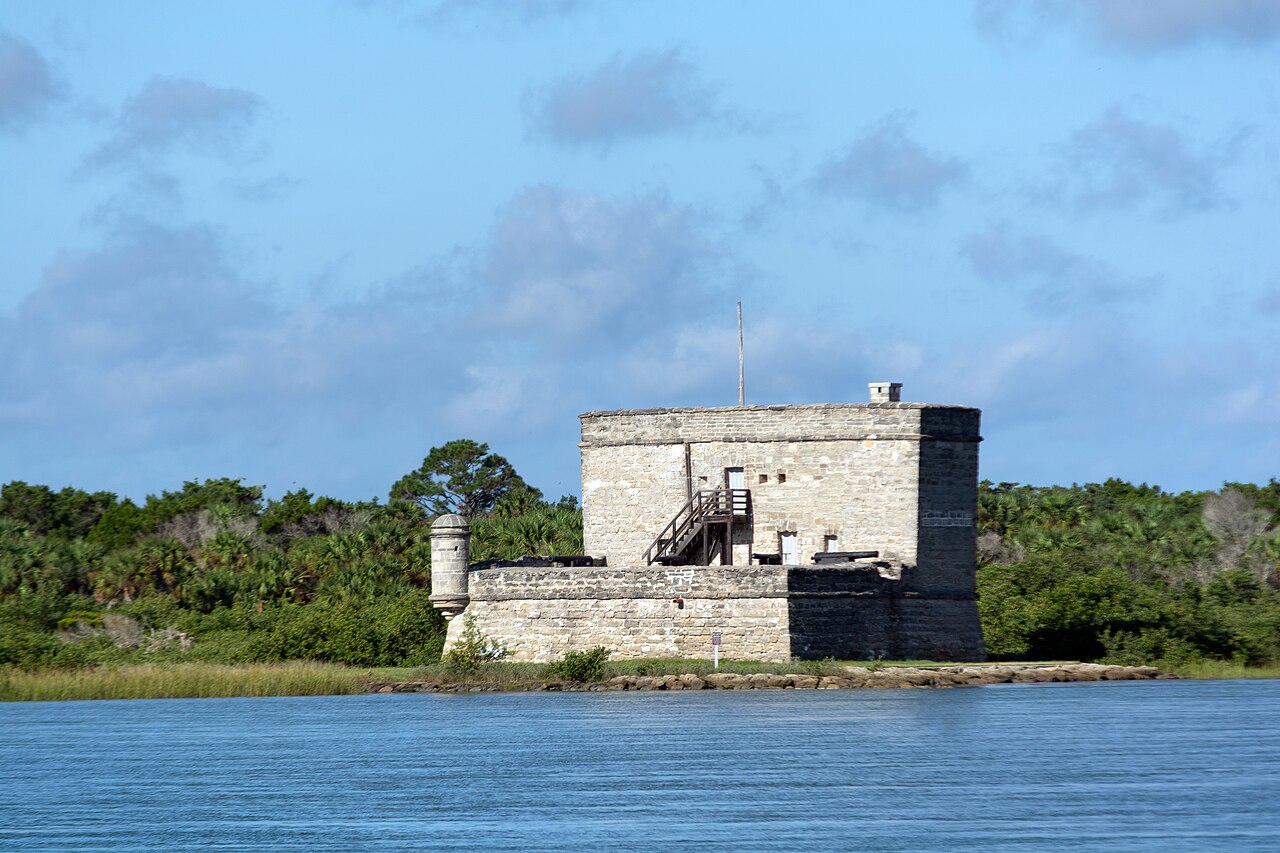
Castillo de San Marcos
Spain built this fort of coquina, a soft rock made of tiny shells. Cannonballs sank into coquina instead of shattering it. It is the oldest masonry fort in the continental United States and was never taken by force.
1600s · North Florida
The Spanish missions
Franciscan friars built a chain of missions among the Timucua, Apalachee and Guale peoples, more than 30 at the peak. Mission San Luis in Tallahassee, the western capital, has been rebuilt from archaeological evidence. English and Creek raids destroyed most of the missions in 1702–1704.
Figures marked ≈ or "about" are estimates or disputed.
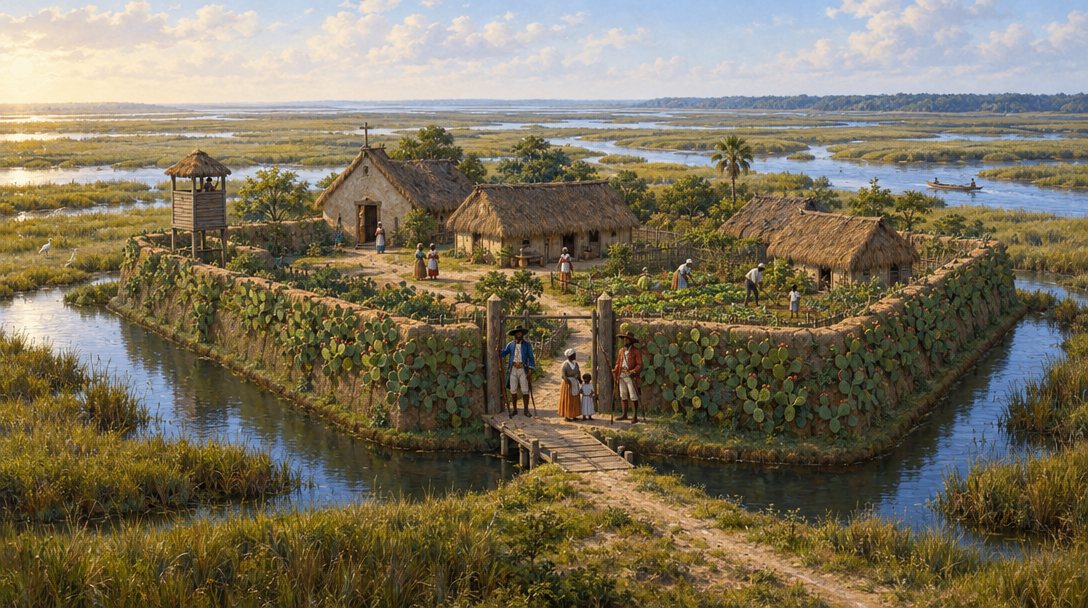
SI painting, made for this explainer: an illustration, not a photograph.
1738 · North of St. Augustine
Fort Mose: a free Black town
Gracia Real de Santa Teresa de Mose was the first legally sanctioned free Black settlement in what is now the United States. Spain promised freedom to people escaping slavery in the British Carolinas if they joined the Catholic Church and served in the militia. Its captain, Francisco Menéndez, had escaped slavery himself. For these freedom seekers the Underground Railroad ran south.
Try itDig at Fort Mose: what does each find tell us?
Archaeologists dug at Fort Mose in the 1980s and found the earthwork fort under the marsh. For each kind of object below, choose what it tells us most about. Then read why. (These are the kinds of finds reported from Mose and from Spanish St. Augustine; the sorter simplifies a real excavation.)
Score: 0 of 8
Go deeper
Lessons:AM1 · The Invisible Arrival: read the sourcePreviewE25 · The landfallPreviewDET1 · The Evidence Case FilePreview
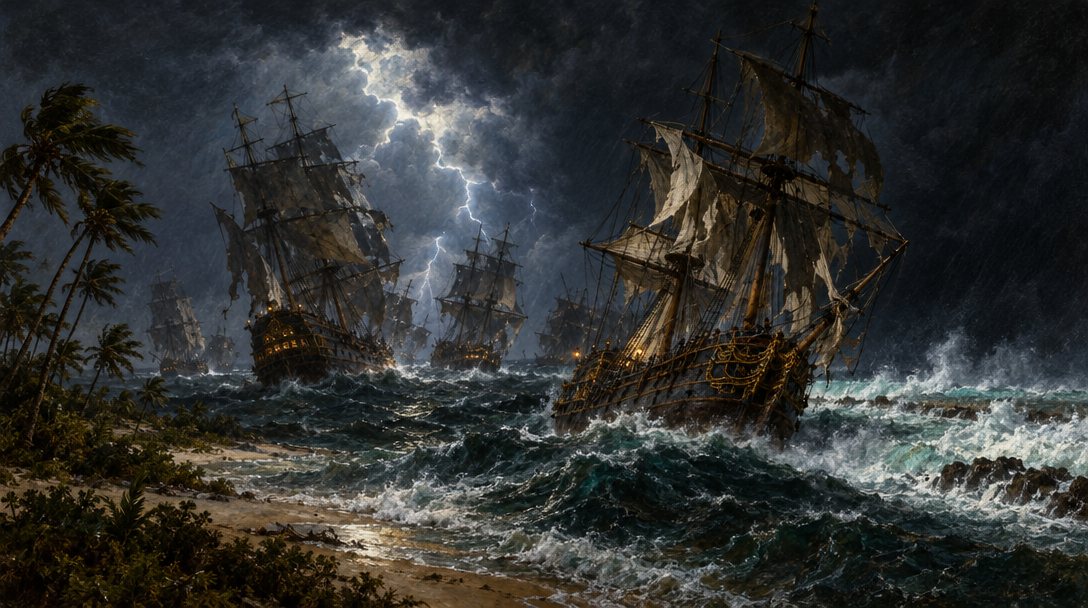
SI painting, made for this explainer: an illustration, not a photograph.
31 July 1715 · Between Sebastian and Fort Pierce
The 1715 Fleet
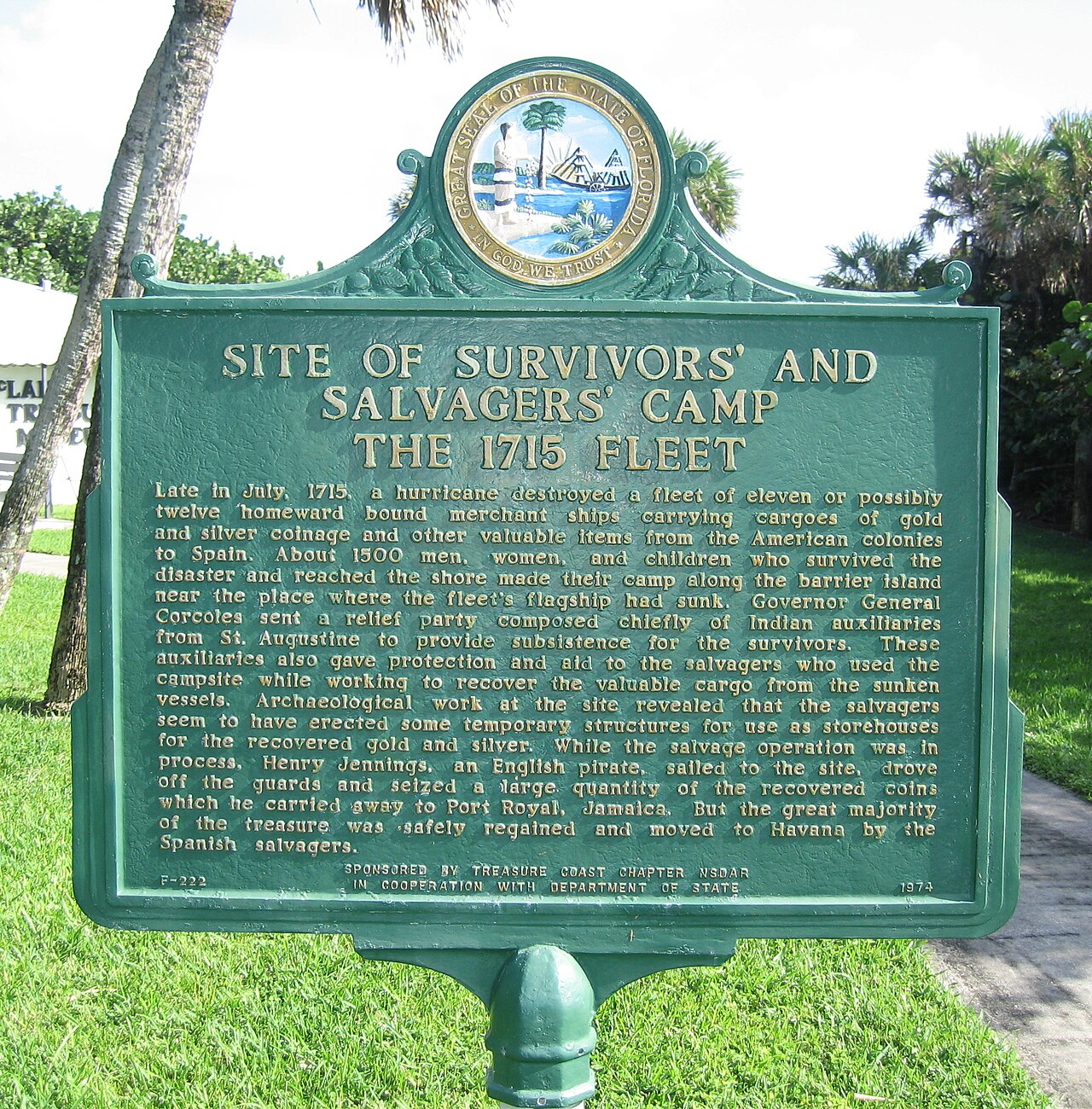
A hurricane drove a Spanish treasure fleet sailing home from Havana onto the reefs of Florida’s east coast. Eleven of the twelve ships were lost and about 1,000 people died. Silver and gold still wash up after storms, and the shore is now called the Treasure Coast. (The Museum of Atlantic Piracy tells the story of the treasure hunters and pirates who followed.)
Figures marked ≈ or "about" are estimates or disputed.
Leonard J. DeFrancisci (Wikimedia Commons) · CC BY-SA 3.0
1622 · found 1985 · Off Key West
The Atocha
Nuestra Señora de Atocha sank in a hurricane in September 1622 loaded with silver, gold and emeralds. Mel Fisher and his crew searched for 16 years and found the main pile on 20 July 1985. A 1982 U.S. Supreme Court case, Florida v. Treasure Salvors, was part of a long fight over who owned it.
Figures marked ≈ or "about" are estimates or disputed.
Since 1987 · Florida waters
Underwater Archaeological Preserves
Florida turns some historic wrecks into underwater museums that divers and snorkelers can visit but not disturb. The first was the Urca de Lima, a ship of the 1715 Fleet, opened in 1987. The preserves include ships of the 1733 Fleet in the Keys and later steamers and warships.
Figures marked ≈ or "about" are estimates or disputed.
Florida law · State lands and waters
Who owns what lies underfoot?
Under Chapter 267 of the Florida Statutes, historic and archaeological objects on state-owned land and under state waters belong to the people of Florida, managed by the Division of Historical Resources. Digging or collecting there needs a permit. Chapter 872 protects graves and burial mounds everywhere. If you find something, leave it, photograph it and report it.
Figures marked ≈ or "about" are estimates or disputed.
Switch eras on and off. The tan shape is an approximate outline of Florida about 20,000 years ago, when the sea was about 120 m lower and the Gulf coast lay far to the west. Many of the earliest campsites are now underwater on that drowned shelf.
First FloridiansMoundsSpanish FloridaWrecksClose to home
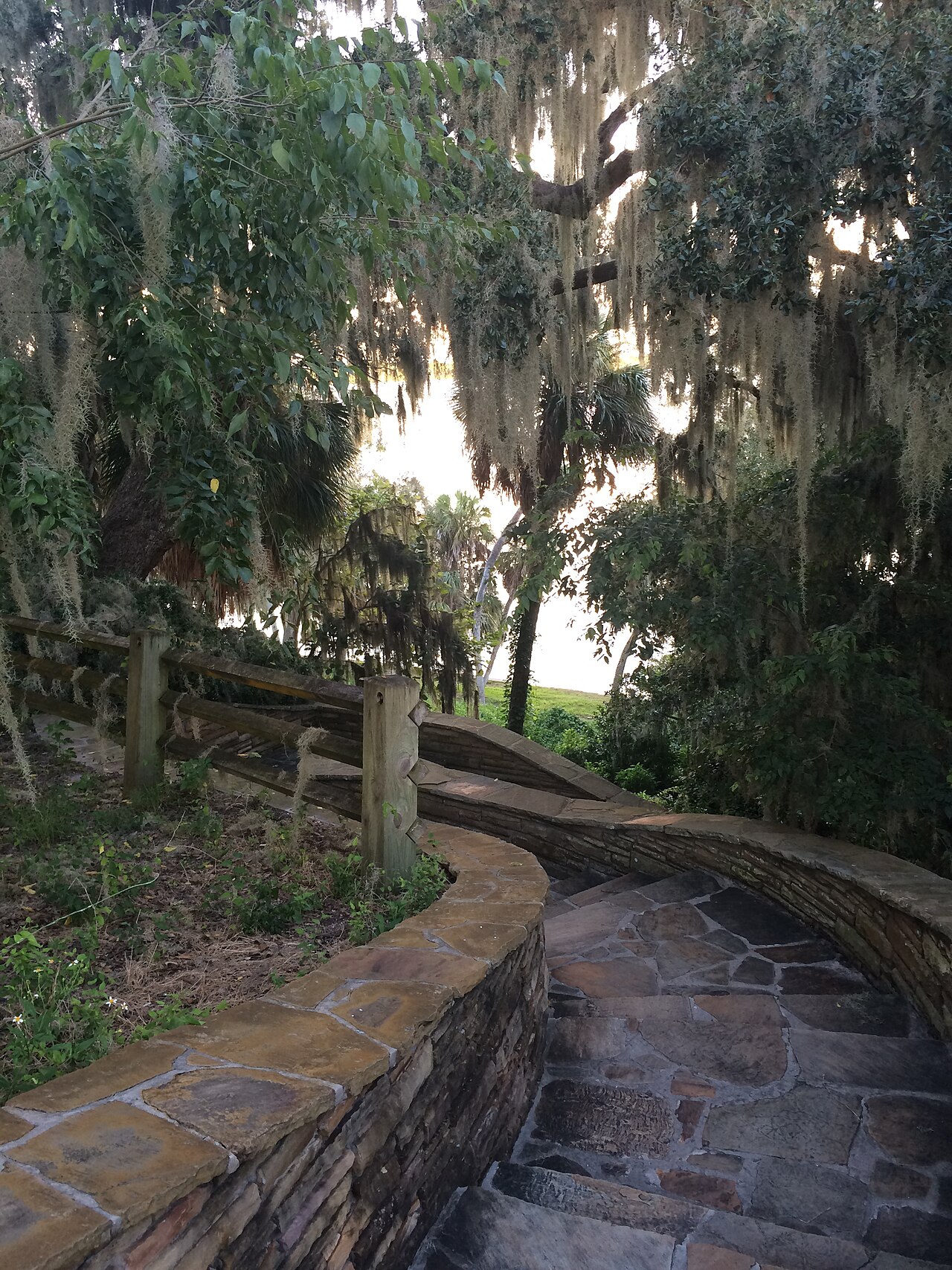
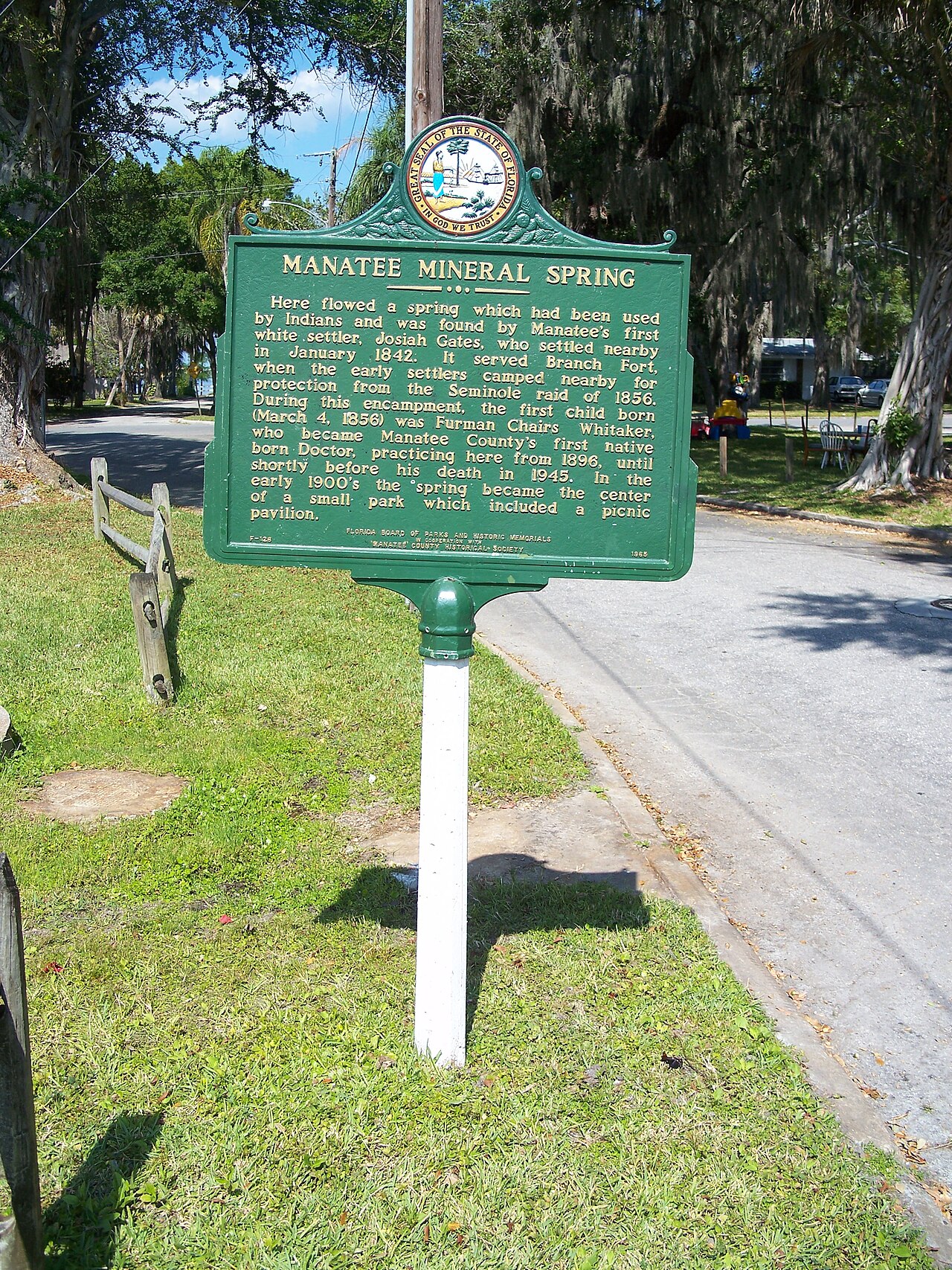
A small spring near the Manatee River drew some of the first American settlers to the Village of Manatee, now part of east Bradenton, in the 1840s. Long before that, Native people used the spring. A small park marks it today.
Figures marked ≈ or "about" are estimates or disputed.
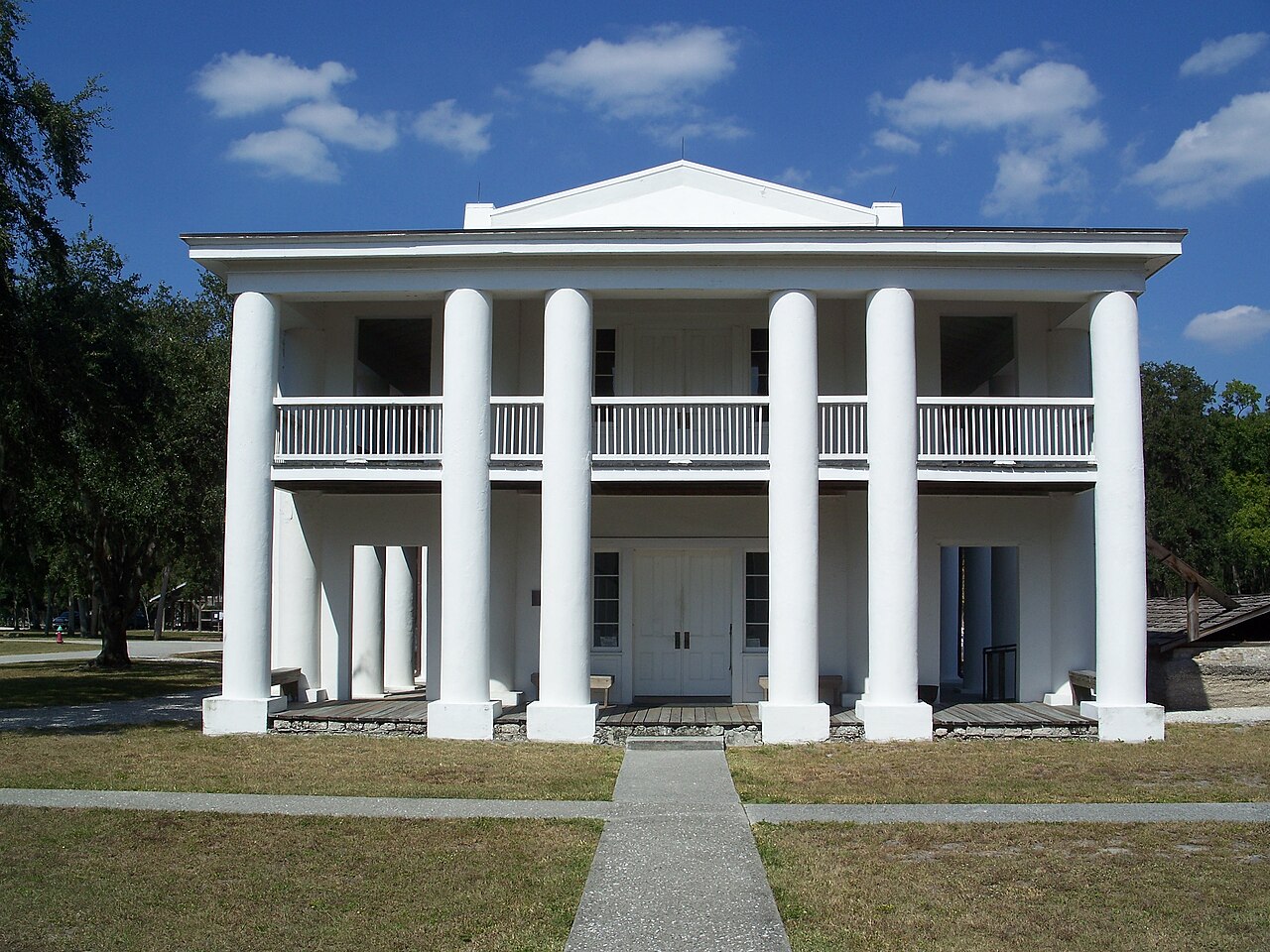
Robert Gamble’s sugar plantation on the Manatee River was worked by enslaved people, about 150 or more at its height (estimates vary). Its mansion is the only surviving antebellum plantation house in South Florida, now a state historic park. The story that Confederate Secretary of State Judah P. Benjamin hid there while escaping in 1865 is told often; parts of it are legend.
Figures marked ≈ or "about" are estimates or disputed.
A community of people who had escaped slavery, and Black Seminole allies, lived along the Manatee River in the early 1800s. Historians call it Angola. In 1821, after the United States took Florida, Creek warriors raided and destroyed it; some survivors fled by canoe to the Bahamas, where their descendants live on Andros Island. The “Looking for Angola” project is searching for the site with archaeology.
Figures marked ≈ or "about" are estimates or disputed.
The De Soto National Memorial and Emerson Point are both a short drive from downtown Bradenton. Map them with flood zones in the Bradenton mini-GIS.
For younger visitors (K–5): What is under your feet?
Under Florida’s sand is limestone, a rock made from old shells. Rain soaks through and makes underground rivers that bubble up as springs. Long ago, mastodons drank at those springs, and the first Floridians hunted nearby.
Try this: drop a piece of chalk (also limestone) into a cup of vinegar and watch it fizz and slowly dissolve. That is how water carves caves in Florida, very, very slowly. And if you ever find something old outside, leave it where it is and tell a grown-up.
Three quick questions (3 questions · runs in your browser, nothing is sent)
Lessons:AM0 · First Peoples: many nations, many homelands (3–5)PreviewAM0 · Native Nations TodayPreviewAM0 · Project: My Mini Museum ExhibitPreviewAM1 · The Invisible Arrival: map it, time itPreviewE25 · Two worlds, unawarePreviewE25 · The plantation machinePreviewAPBIO · Arguing from Silver SpringsPreviewRW4 · Two texts, one topic: Florida’s manateesPreview
Read: Lois Lenski, Strawberry Girl (1945), Newbery Medal, Florida backwoods life (grades 4–7); Marjorie Kinnan Rawlings, The Yearling (1938), north Florida scrub; Zora Neale Hurston, Their Eyes Were Watching God (1937), Eatonville and the Everglades, for older readers; Jean Craighead George, Everglades (1995), a picture book for younger readers. Books are described here, not reproduced.
Quiz: Florida underfoot (10 questions · runs in your browser, nothing is sent)
USGS, Floridan Aquifer System and karst; Florida Geological Survey, springs of Florida (first-magnitude springs).
J. J. Halligan and others, “Pre-Clovis occupation 14,550 years ago at the Page-Ladson site,” Science Advances 2 (2016).
Little Salt Spring: University of Miami Rosenstiel School; C. J. Clausen and others, Science 203 (1979).
Windover: G. H. Doran, ed., Windover: Multidisciplinary Investigations of an Early Archaic Florida Cemetery (University Press of Florida, 2002).
Florida State Parks: Crystal River Archaeological, Madira Bickel Mound, Fort Mose, Mission San Luis, Gamble Plantation; National Park Service: De Soto National Memorial, Castillo de San Marcos, Fort Matanzas, Fort Caroline, Canaveral (Turtle Mound).
Florida Museum of Natural History, Randell Research Center (Pineland) and the Calusa; Kathleen Deagan and Darcie MacMahon, Fort Mose: Colonial America’s Black Fortress of Freedom (1995).
Florida Division of Historical Resources, Underwater Archaeological Preserves; Florida Statutes Chapters 267 and 872.
Florida v. Treasure Salvors, Inc., 458 U.S. 670 (1982); Mel Fisher Maritime Heritage Society on the Atocha.
Uzi Baram, New College of Florida, “Looking for Angola” project; Canter Brown Jr., Florida’s Peace River Frontier (1991).
newSchoolWorks.com · The Museum of Everyday Living · Bradenton, FL · SI paintings made for this explainer; photographs from Wikimedia Commons under the licences shown on each card. Figures marked ≈ or “about” are estimates.